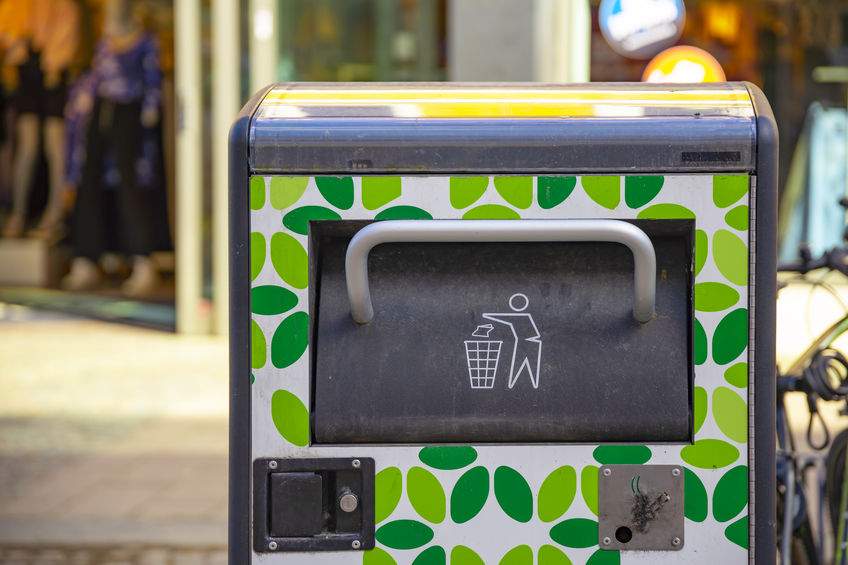
smart bin technology
Smart Cities

More Effective Waste Management with Smart Bin Technology

Smart bins are very effective at airports, malls, schools, campgrounds, beaches, and parks. These innovative trash containers are also particularly useful in large cities.

Smart bin technology is helping municipalities reduce the waste involved with waste removal. Traditional routing has been inefficient since it doesn't take into account how stopping at empty dumpsters wastes energy and time for trucks.

Smart trash bins have already proven to be highly efficient with just a small number of early adopters. What makes these dumpsters smart is that IoT devices have been installed to measure trash levels and other metrics associated with waste removal. As trash bins fill up, sanitation workers are notified, allowing them to route pick-up vehicles more strategically. Additionally, emptying dumpers before they are excessively filled is more efficient than allowing them to overflow, which can be a community health hazard.


The Technology Inside a Smart Waste Bin

At the core of smart bin technology is a series of wireless ultrasonic sensors that detect fill levels. The IoT devices communicate waste data to sanitation department workers in real-time. Workers can then use the insights from this data to make decisions on waste management adjustments. The adoption of these smart waste bins will promote a cleaner and safer environment for companies, citizens, and visitors. Ultimately, this technology will utilize garbage trucks where they are needed most and reduce wasted trips, lowering emissions and, thus, creating a more eco-friendly solution.


Advantages of Smart Bins

  • 80 percent less collections, reducing fuel, emissions, traffic congestion, and labor costs
  • Lower number of dumpsters needed around town
  • Analytics for planning collection routes and bin placement
  • More eco-friendly solution reducing overflowing bins and ensuring community safety


Innovative Smart Bins for Waste Management

A number of smart bin technology companies have surfaced in recent years, giving municipalities a wide variety of solutions for developing smart cities. Here are six firms most likely to thrive in smart waste management.

  • Smartup Cities – This company makes waste containers designed with ultrasonic wireless sensors that monitor fill levels. The firm is paving the way for waste operators to plan and optimize more efficient routing.
  • Ecube Labs – Specializing in sensor-based waste management, this South Korean firm's solar-powered trash compactors use real-time data that triggers automatic compaction. The result is 5-8 times more capacity for bin content. The technology communicates with a cloud-based platform, called CleanCityNetworks, and conducts analysis for optimizing waste management.
  • Smartsensor – Based in Australia, this company manufactures temperature sensors that monitor bin fill levels and temperatures. Data alerts are sent to operators through email when extreme temperatures, like those associated with fires, occur.
  • EvoEco – This American developer manufactures a waste bin called EvoBin, designed with a screen, dashboard, and interactive features. The product communicates messages to operators based on waste data picked up by sensors.
  • Sensoneo – Combining real-time waste-monitoring ultrasonic sensors, this Slovakian software company helps cities make data-driven decisions for waste collection routes. The software also monitors vehicle load and other waste management metrics.
  • Guardforce - Hong Kong's Guardforce has been in the security business since 1977. It now develops IoT-based smart bins for the waste management sector, using ultrasonic fill-level sensors. Other benefits of its bins include solar-powered trash compactors, fleet management, and safety detection that sends alerts for fires and when human hands are present during compaction.

These smart technology developers are at the forefront of modern waste management. Your decision on which companies to partner with depends on your own criteria, so keep in mind there are over a hundred other choices that might meet your needs.


Conclusion

The advent of smart bin technology is another piece of the environmental and economic puzzle to reduce pollution and waste removal costs. It benefits all stakeholders in waste management, in addition to helping promote cleaner communities.

Read More
5g smart city
Smart Cities

Preparing for Tomorrow’s 5G Smart City

The 5G smart city is on the horizon. 5G technology will upgrade network infrastructures for business and home internet use. Although it will take years for its full deployment, the changes will set the pace for accelerated business models and enhanced urban planning.

A fundamental change that 5G brings to urban living is faster internet speeds - up to 20 times faster than 4G speeds. This acceleration will be crucial for reducing network latency issues and enabling mission-critical communications. The increased bandwidth capacity will also allow networks to support a significantly greater number of smart device connections.


How 5G Powers Smart Cities

The upcoming 5G smart city technologies will take time for mass deployment. But once the new system is in place, you will notice multiple improvements in urban quality of life. Smart buildings and sensors will constantly gather data, giving officials evidence for identifying inefficiencies. Here are some of the changes that 5G will make for smart cities:

  • Advanced 5G capabilities - The exponential expansion of data and internet traffic will be felt across all organizations that prepare for 5G. Sophisticated, high-speed connectivity will allow businesses to collaborate and deliver higher quality services. Law enforcement will also have more information at their fingertips to solves criminal cases.
  • Better security - Even though 5G will increase the amount of confidential data in private networks, organizations will be forced to upgrade to higher quality cybersecurity. This factor is one of the key reasons businesses are hesitant to invest in 5G, as it requires deeper investments in hardware and software.
  • Traffic and transportation solutions - Not only will 5G help solve transportation fleet issues, it will also allow for wider data transmission across mobile internet channels.
  • Cleaner, safer, energy-efficiency - Consumers will expand choices with automated purchasing and deliveries that reduce traffic jams and accidents. Wider frequencies will allow for more seamless distribution of data, which will be helpful during emergencies.
  • Personalized healthcare - Hospitals will adopt 5G to create more personalized connections with patients. Doctors will learn more about the health conditions of patients faster, as diagnostics and treatments speed up. Hospitals will save more lives due to faster diagnostic testing. Through predictive machine learning programs, organizations will have greater decision-making capabilities. Medical records will be shared by healthcare professionals more efficiently to meet the needs of patients.
  • More reliable city infrastructure - Connectivity among city infrastructure components will improve, thanks to 5G. The deployment of smart sensors will provide analysts greater insights on how to streamline community services.

City officials can use 5G for many infrastructure improvements, as it will help identify system vulnerabilities quickly. Local leaders will have a clearer idea on what type of equipment needs to be replaced to create higher living standards. They will also be able to hire technical talent more effectively, using AI and algorithms to prioritize the best job candidates.

A smooth transition to 5G will require local governments, businesses, stakeholders, and consumers to work together. Since each group will be affected by permanent changes.


Conclusion

Over the next decade, 5G technology will shape new standards for smart cities across the planet. Governments will be more connected with citizens while businesses will be more connected with supply chains. The result will be greater interconnectivity, less waste, and improved services. Ultimately, operational costs will decrease as cities move into a modernization phase of widespread interconnectivity.

Read More
smart city
Smart Cities

IoT Significantly Improves Smart City Infrastructure, Security, and Sustainability

As the global population approaches 10 billion in the next 30 years, the solution to greater energy efficiency and seamless internet distribution lies in smart city IoT development. Not only will IoT technology reduce the strain of internet traffic in urban areas, but it will also allow for wider use of data transmission.

Omnipresent sensors are the key to interconnected cities, as they can be installed in traffic lights, parking meters, and even trash cans. These sensors communicate with central analysts who monitor activity and formulate infrastructure improvements. Soon, smartphones everywhere will be able to communicate with a multitude of community services to improve convenience.


Setting Sustainable Development Goals

The adoption of IoT in a smart city will involve installing smart devices across internet networks in various public resources. Smart meters, for example, provide measurements of energy consumption, while smart thermostats allow consumers to control room temperatures from remote locations.

Improving the quality of city life is possible through interconnected building blocks of smart technology. These components include Low Power Wide Area Networks (LPWANs), Bluetooth, and 5G. Solar panels and other renewable energy sources will further contribute to energy and cost savings as useful backup power when the traditional grid experiences higher demands.

Cities will reach sustainability goals much faster simply by installing smart sensors. The technology allows officials to better understand traffic flows, energy consumption and Wi-Fi usage. Driving this revolution is big data collection. According to IBM, 90 percent of today's global data has been generated just in the past few years.


Elements of Success Behind Smart Cities

The concept of making city infrastructures more digital and more intelligent began with smart meters and smart thermostats. The use of machine-to-machine (M2M) technology will play a major role in this development for utilities as well as manufacturers. Here are the four main components needed to build smart cities of the future:

  • Nonstop wireless connectivity - A 24-hour "always on" internet connection must be achieved to provide constant services and data collection.
  • Open data - All players within a complex system or supply chain create synergy by sharing data with each other. Combining this information with contextual data will be the key to streamlining operational efficiency.
  • Reliable security - You must be able to trust a robust security system that alerts you and takes action when an intruder enters your network. Stronger encryption and ID management will ensure the right data goes to the right places.
  • Flexible budget planning - Smart electric and water systems help consumers monitor their usage so they can make adjustments to consumption as a way of controlling utility bills.


Heading for a Smarter Future

Here are some of the various niches that smart technology developers have produced so far:

  • Physical and Digital Protection - Utilities need to keep infrastructure and workers protected from attackers using modern digital solutions. Advanced security systems will continue to improve upon detecting intrusion in real-time and alerting security officials for both physical and online danger.
  • Greater Control of Energy Efficiency - Master Energy Control (MEC) gives users remote web access to energy activity from any desktop computer or smartphone. This development gives energy users the ability to conduct fault analysis in real-time.
  • Fleet Management of Transportation Resources - Operators of vehicle fleets will have more data at their fingertips to know exactly where vehicles are located and how much fuel they are consuming.
  • Connected Buildings - This AI innovation interconnects equipment within a building for monitoring and control purposes. It's the key to predictive maintenance, which helps lower operating costs.
  • E-Governance of Community Resources - Municipal and public services will become more connected with smart infrastructure. It will speed up services for communities based on real-time system analysis.
  • Electronic Mobility - Free charging apps provided by local governments will give the public greater access and control for charging electric vehicles and other digital technology.
  • Climate Changes and Monitoring - IoT devices will help collect environmental data so officials can track and evaluate air pollution for a certain region. This technology will even be applied to third world countries.


Conclusion

The emergence of smart city IoT technologies combines smart physical layers such as sensors with smart digital layers, such as AI. This innovative mix turns data collection into actionable and automated decisions. Access to this technology will be the key for future entrepreneurs and homeowners to control energy usage, limit costs, and contribute to a more sustainable society.

Read More
blank
Smart Cities

The Role that Electric Vehicles Play in the Development of Smart Cities

The rapid global growth of electric vehicles is undeniable. The International Energy Agency’s Global EV Outlook 2020 reported that there were approximately 7.2 million electric cars on the world’s roads in 2019. Also, according to an analysis by Bloomberg New Energy Finance, electric car sales are expected to rise to 54 million by 2040, making up 58 percent of all passenger car sales worldwide. With electric cars increasingly coming close to matching internal-combustion cars in purchase price (and already cost less to operate as electricity is cheaper than gasoline or diesel fuel), this exponential growth in sales can be rightly expected.

Additionally, ride sharing services are also planning major shifts to EVs. In June, Lyft pledged for all vehicles on its platform to be electric by 2030. And in early September, Uber announced $800 million to accelerate its transition to electric cars, aiming for 100 percent of drives to be electric by 2040.

Beyond passenger cars, there’s progress in the electrification of commercial vehicles happening as well. According to a report by Wood Mackenzie, commercial EV sales are expected to top 5.5 million a year by 2040.

With so many electric vehicles set to be on the road in the next few decades, here is how this influx will affect the development of smart cities.


Increased Demand for Power

More and more utilities are adopting advanced technologies and systems, like IoT and 5G, to enhance power generation and management. The goal is to ensure that homes, businesses, and buildings have reliable access to power, with very little downtime. However, the addition of EVs and the power required to charge them comes with a greatly increased demand in electricity.

Since the modern electric vehicle era, grid operators have warned of an overwhelm in grid distribution systems. Although this warning has yet to materialize, the massive rise in EVs that is set to come will mean that utilities will need to generate and deliver much more electricity in areas that already experience high demand.

While the power industry has made great strides to develop managed charging initiatives to handle EV load demands on the grid, utilities still have a long way to go. Stakeholders have not converged around a common managed charging open protocol, or set of protocols, that could help reduce costs, avoid stranded assets and streamline the implementation of aggregation programs. Additionally, utilities will need to develop ways to send communication signals between devices and vehicles that are inexpensive, reliable, and user-friendly.


The Potential for EVs to Optimize the Grid

Although the power demand of EVs is high, these vehicles do also have the potential to protect the grid, rather than be a liability on it. Vehicle-to-grid (V2G) systems, which allow EVs to communicate with the power grid to sell demand response services, hold tremendous potential for helping to optimize the grid.

Government agencies around the world are funding multibillion-dollar programs in order to drive development of V2G systems. The US and Japan, for instance, are funding demonstrations of the most advanced form of vehicle grid integration—the type that uses bidirectional chargers. These solutions enable EVs to push power back into the grid, which amplifies the optimization benefits and opens up new opportunities, like powering off-grid electronic equipment or homes during outages.

As smart cities seek ways to improve their transportation systems, V2G solutions should be a major consideration. Cities are well-positioned to utilize municipal fleets in V2G pilots which can help industry stakeholders identify and overcome regulatory barriers and standardize solutions. Investments in V2G systems would also help improve grid operators’ ability to manage a future distribution network heavily reliant on intermittent renewables and demand side management.

To prepare for the massive rise in the use of electric vehicles among residents, businesses, and government organizations, smart cities must pursue innovation and make the necessary preparations to accommodate EVs now. By enhancing managed charging programs and implementing V2G systems, smart cities will be able to not just effectively manage the coming influx of EVs, but also reap the energy benefits that these vehicles can offer.

Read More
smart city technologies
Smart Cities

Top Trends in Smart City Technology

In many ways, the future of smart city technologies is already here, although you may not notice its effects for a while. This futuristic groundwork has been laid and it's now just a matter of adoption and expansion to create an overall more efficient and sustainable landscape for governments, businesses, and consumers.

The concept of the modern smart city is simple, although it will require plenty of investment for stakeholders to enjoy its full benefits. The key for organizations to gain a competitive edge from faster and wider internet connectivity is to learn and prepare for the adoption of emerging technologies designed to improve quality of life.


Smart City Trends to Look For

At the foundation of smart city technologies are smart sensors that deliver big data to central hubs for performance analysis. Manufacturers will particularly benefit from designing more efficient production systems by analyzing big data. Here are major trends to monitor so you can decide when to join this modern digital revolution:

  • 5G Proliferation - Top telecom companies such as Verizon and AT&T are already starting to roll out 5G technology with faster and more seamless internet. Smart vehicles will play a big role in the development of smart cities, leading to less traffic jams and safer streets.
  • Stronger Wi-Fi - Thanks to 5G, download speeds will be three times faster, leading to less latency and internet congestion. It will allow for more gadgets to be connected to the same network without hindering performance.
  • Analytics Will Drive Competition - Processing real-time data will be a major force in wider data distribution. The more data collected, the more decision-makers will be able to detect system vulnerabilities and make appropriate changes. Companies that fail to adopt this new technology will be at risk of being overshadowed by competitors that do embrace new smart solutions.
  • Machine Learning and AI Will Improve Data Analysis - Investing in analytics is an effective step in preparing for more robust 5G solutions. But to be fully prepared, it's also necessary to invest in machine learning and other forms of artificial intelligence to speed up data analysis.
  • Blockchain Will Expand in Applications - Until recently, blockchain technology was mainly associated with facilitating cryptocurrency transactions. In the future, blockchain will be used more for other applications, such as security and storage.
  • Robotic Process Automation Will Improve Productivity - RPA has been around for a while, but is now growing to help meet the needs of 5G users. Some of the development leaders in this field include UiPath, Automation Anywhere, and Blue Prism.
  • Conversational AI Will Become More Practical - Siri is a popular example of conversational AI, which will become more practical to businesses and less of a novelty. Gadgets are increasingly able to understand the human voice and answer questions more directly with in-depth information.
  • Connected Vehicles and Autonomous Drones Will Accelerate Development of Smarter Cities - Tesla has been a leader in developing technology for autonomous vehicles. It has inspired other automakers such as Ford, Volvo, and BMW to join in the revolution.
  • Emphasis Will Grow for XaaS and UX/CX - Everything-as-a-service is helping create noteworthy improvements in industries such as healthcare, hospitality, and transportation.

While each of these technologies seems unique and novel, this is our future, not a series of disconnected trends. As adoption and awareness continue to grow, smart city development and initiatives will gain recognition as the next step in the evolution of city planning and building management. Investors expect to spend up to $158 billion on smart cities by 2022.


Conclusion

The world will become much more digital with the adoption of smart city technologies. The more local governments go digital, the more they will help improve the quality of life for citizens. Almost everything that affects everyday life can be captured and stored as information. By combining this intel with data-driven decision making, urban areas will evolve to provide better living standards for all.

Read More