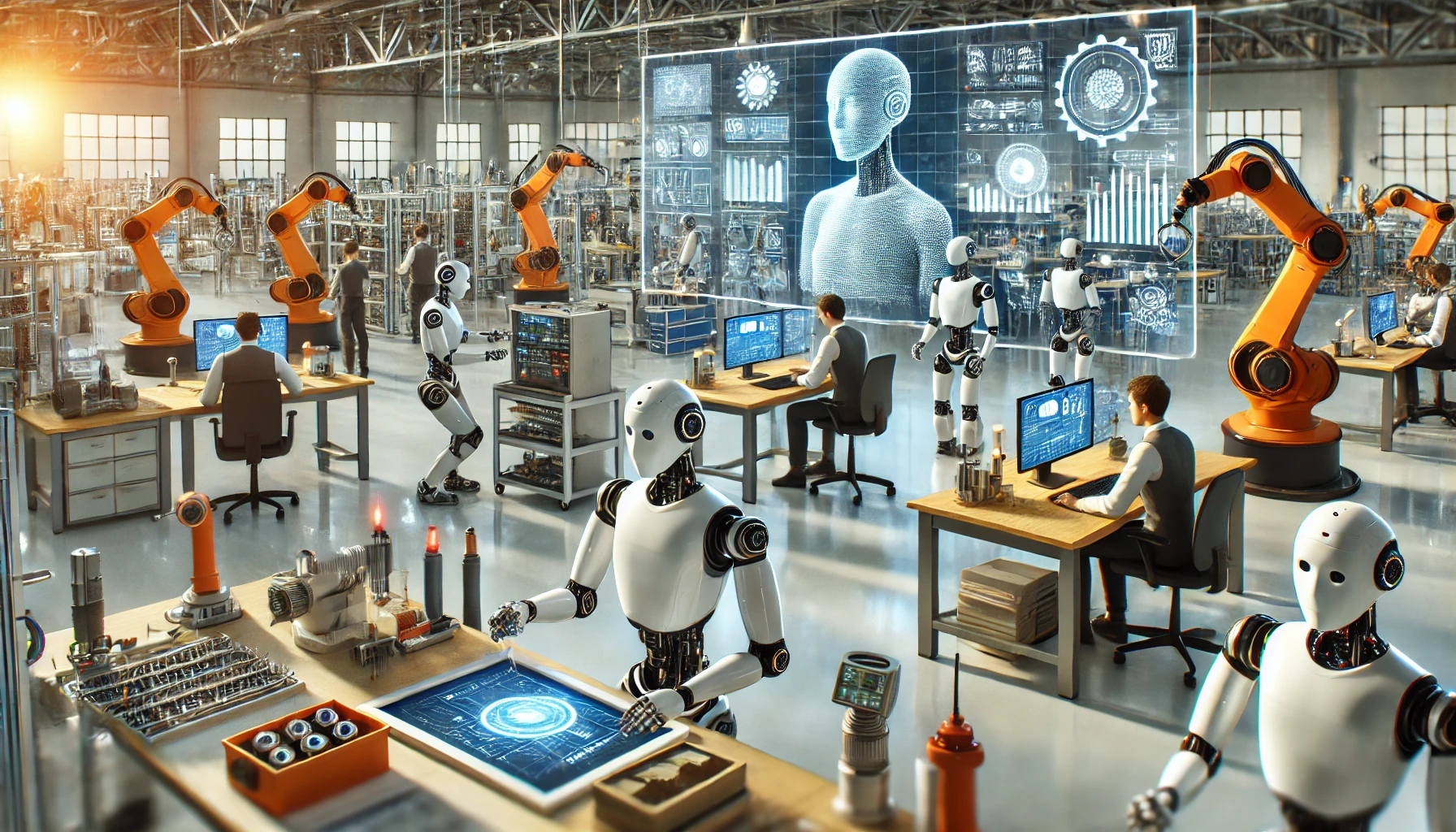
cobot
Automation

The Cobot Market: Revolutionizing Modern Workplaces

In an era defined by rapid technological advancements, collaborative robots, or cobots, have emerged as pivotal players in the transformation of various industries. Unlike traditional industrial robots that operate in isolation, cobots are designed to work alongside humans, enhancing productivity, safety, and efficiency in diverse work environments. The global cobot market, driven by continuous innovation and growing demand for automation, is poised for exponential growth. This article delves into the landscape of the cobot market and the highlights the impact of AI. From small and medium-sized enterprises to large-scale manufacturing giants, the adoption of cobots is heralding a new era of human-robot collaboration, unlocking unprecedented opportunities and redefining the boundaries of what is possible in modern workplaces.


Market Size and Growth

The global collaborative robot (cobot) market is on an impressive growth trajectory. As of 2023, the market was valued at approximately USD 1.77 billion. Projections suggest it could reach around USD 12.71 billion by 2030, reflecting a compound annual growth rate (CAGR) of 32.6% during the forecast period (MarketsandMarkets; NextMSC). Alternative estimates, such as those from Grand View Research, suggest a market size of USD 11.04 billion by 2030 with a slightly lower, yet still significant, CAGR of 32.0%.


Key Drivers

  1. Increasing Demand for Automation: The shift towards more efficient and automated processes in manufacturing and various other sectors is a primary driver of cobot adoption. Cobots are favored for their flexibility and cost-effectiveness in automating repetitive and hazardous tasks (Grand View Research; NextMSC).
  2. Technological Advancements: Ongoing innovations in artificial intelligence, machine learning, and sensor technology are enhancing cobots’ capabilities. These advancements make cobots safer, more intuitive, and better suited for a wide range of tasks (Market Data Forecast; MarketsandMarkets).
  3. Labor Shortages and Rising Costs: Industries grappling with labor shortages and increasing labor costs are turning to cobots as a viable alternative. Cobots can complement human workers, addressing workforce gaps and boosting productivity (Market Data Forecast).
  4. Safety and Collaboration: Designed with advanced safety features, cobots can work closely with humans, reducing the risk of accidents and promoting a safer, more productive work environment (MarketsandMarkets; NextMSC).


Key Players

Here are the top collaborative robot (cobot) companies by market share. For more information, links to Collaborative Robots and AI integration documentation have been added:

  1. Universal Robots A/S
    1. Why Cobots? (UR Cobots)
    2. Guide to Cobots (UR Cobots)
    3. Collaborative Robotic Automation (UR Cobots)
    4. Future of AI and Robotics (UR Cobots)
    5. Four Predictions for 2024 (UR Cobots)
  2. FANUC Corporation
    1. Collaborative Robot CRX series (FANUC)
    2. JIMTOF 2022 (FANUC)
    3. FANUC and NVIDIA AI Collaboration (FANUC)
  3. ABB
    1. Collaborative Robots (Cobots) | ABB Robotics (ABB Group)
    2. Single-arm YuMi Collaborative Robot (ABB Group)
    3. New Frontiers for Robotics and AI in 2024 (ABB Group)
    4. Next Generation Cobots (ABB Group)
  4. Techman Robot Inc.
    1. Collaborative Robots (Techman Robot).
    2. TM Robot Series (Techman Robot).
    3. AI Vision (Techman Robot).
    4. Industry Solutions (Techman Robot).
  5. KUKA AG
    1. Collaborative Robots Overview (KUKA AG)
    2. LBR iisy Cobot (KUKA AG)
    3. KUKA Innovation Award (KUKA AG)
  6. Yaskawa Electric Corporation
    1. Collaborative Robots (Yaskawa).
    2. Integrated Solutions (Yaskawa).
    3. Articulated Robots (Yaskawa).
  7. DENSO Robotics
    1. COBOTTA Collaborative Robots (DENSO Robotics).
    2. COBOTTA Collaborative Robot Product Sheet (DENSO Robotics).
    3. COBOTTA PRO Collaborative Robot Product Sheet (DENSO Robotics).
    4. Global Supplier of Advanced Robotics Technology (DENSO Robotics).
  8. Rethink Robotics
    1. Rethink Robotics Meets German Engineering (Rethink Robotics).
    2. The New Saywer Black Edition (Rethink Robotics).
  9. Comau S.p.A.
    1. Comau Aura Collaborative Robot (Comau).
    2. Racer-5-0.80 COBOT (Comau).
    3. Comau deploys AI-driven collaborative robotics to automate “hands-on” quality control at Fiat (Comau).


Regional Insights

  1. Europe: Europe commands a significant share of the cobot market, driven by applications in electronics, logistics, and inspection. The region benefits from its strong emphasis on manufacturing optimization and human-robot collaboration (Market Data Forecast; Grand View Research).
  2. Asia Pacific: Expected to experience the highest growth rate, Asia Pacific is projected to have a CAGR of over 34.0% from 2023 to 2030. This growth is driven by a focus on quality, precision, and the adoption of advanced automation technologies (MarketsandMarkets; Grand View Research).
  3. North America: The North American market, including the U.S., Canada, and Mexico, is expanding due to its strong technological base and emphasis on automation (MarketsandMarkets; NextMSC).


Future Trends

  1. AI and Machine Learning Integration: The integration of advanced AI capabilities will significantly enhance cobots' intelligence and adaptability, improving their efficiency and effectiveness (Market Data Forecast; MarketsandMarkets).
  2. Expansion into Non-Manufacturing Sectors: The adoption of cobots is expanding beyond manufacturing into sectors such as healthcare, logistics, agriculture, and retail, broadening the market scope (MarketsandMarkets; Grand View Research).
  3. Development of Mobile and Lightweight Cobots: Future developments are expected to produce more mobile and lightweight cobots, enhancing their deployment flexibility and versatility across various environments (Market Data Forecast; NextMSC).


Impact of AI on the Cobot Market

AI is transforming the cobot market by introducing advanced functionalities and improving operational efficiency. The impact of AI on cobots can be examined through several key aspects:

  1. Enhanced Intelligence and Adaptability: AI enables cobots to perform complex tasks with higher precision. Machine learning algorithms allow cobots to learn from their environment and adapt to new tasks without extensive reprogramming. This capability significantly broadens the range of applications for cobots, making them more versatile and valuable across different industries (MarketsandMarkets).
  2. Improved Safety and Interaction: AI-powered sensors and computer vision systems enhance cobots' ability to interact safely with human operators. These technologies enable cobots to better understand and respond to their surroundings, minimizing the risk of accidents and improving collaborative efforts between humans and robots (Market Data Forecast).
  3. Increased Efficiency and Productivity: By integrating AI, cobots can optimize their operations in real-time. They can adjust their actions based on live data and predictive analytics, leading to more efficient processes and increased productivity. This real-time adaptability is crucial in dynamic environments where quick adjustments are often necessary (MarketsandMarkets).
  4. Cost Reduction and Accessibility: As AI technology becomes more integrated and standardized, the cost of implementing advanced cobots is expected to decrease. This reduction in cost will make high-performance cobots more accessible to a broader range of businesses, further accelerating market growth (Grand View Research).


Conclusion

The collaborative robot (cobot) market is undeniably revolutionizing modern workplaces, offering unprecedented opportunities for businesses to enhance productivity, safety, and efficiency. As industries across the globe continue to embrace automation, the demand for cobots is set to soar, driven by the need for more flexible and cost-effective solutions. The integration of advanced artificial intelligence and machine learning technologies further amplifies the capabilities of cobots, enabling them to perform complex tasks with remarkable precision and adaptability.

As we look towards the future, the cobot market is poised for significant growth, with projections indicating a substantial increase in market value by 2030. Key players in the industry are continually innovating, pushing the boundaries of what cobots can achieve. From manufacturing to healthcare, logistics to agriculture, the adoption of cobots is expanding into new sectors, demonstrating their versatility and far-reaching impact.

In summary, cobots are not merely a trend but a fundamental shift in how humans and machines collaborate in the workplace. The ongoing advancements in AI and robotics promise to unlock even greater potential, ensuring that cobots remain at the forefront of industrial innovation. As businesses navigate the complexities of modern work environments, cobots will undoubtedly play a crucial role in shaping a more efficient, safe, and productive future.


Read More
cobots
Automation

Exploring the World of Cobots: AI Integration, Functions, and Industry Impact

Collaborative robots, or cobots, represent a groundbreaking advancement in automation technology. Designed to work alongside human workers in shared workspaces, cobots differ from traditional industrial robots through their advanced safety features and intuitive interfaces. This collaborative approach enhances productivity, safety, and flexibility across various industries. Understanding the key characteristics and functions of cobots highlights their growing significance in today's automated world.


What is a Cobot?

A collaborative robot, commonly known as a cobot, is a type of robot designed to work alongside human workers in a shared workspace. Unlike traditional industrial robots, which are often isolated from humans for safety reasons, cobots are built with advanced safety features and sensors that allow them to operate safely in close proximity to people. Here are some key characteristics and functions of cobots:


Key Characteristics of Cobots

  1. Safety Features: Cobots are equipped with sensors and software that detect human presence and prevent accidents. These features include force-limiting mechanisms that stop the robot if it encounters an obstacle or excess force.
  2. Ease of Use: Cobots are designed to be user-friendly, with intuitive programming interfaces that allow users to set up and operate the robots without needing extensive technical knowledge. Some cobots can be programmed by simply moving them through desired motions.
  3. Flexibility: Cobots are highly adaptable and can be reprogrammed for various tasks. They can be used in different applications, from assembly and packaging to quality inspection and material handling.
  4. Collaboration: Cobots are designed to work alongside human workers, complementing human skills and capabilities. They can perform repetitive, dangerous, or precision tasks, allowing human workers to focus on more complex and creative activities.
  5. Mobility: Many cobots are lightweight and portable, making it easy to redeploy them to different tasks or locations within a facility. Some cobots are also integrated with autonomous mobile robots (AMRs) for enhanced mobility.


Functions and Applications of Cobots

  1. Assembly: Cobots can assist in assembling products, handling small parts, and performing intricate tasks that require precision and consistency.
  2. Material Handling: Cobots can transport materials, load and unload machines, and manage inventory, reducing the risk of injuries and increasing efficiency.
  3. Quality Inspection: Cobots can perform detailed inspections of products, identifying defects and ensuring quality standards are met.
  4. Packaging and Palletizing: Cobots can handle packaging tasks, such as placing items into boxes, labeling, and stacking products on pallets.
  5. Welding and Soldering: Cobots can be used in welding and soldering applications, providing consistent and precise welds while reducing human exposure to hazardous conditions.
  6. Machine Tending: Cobots can tend to machines, such as CNC machines or injection molding machines, by loading and unloading parts, allowing operators to focus on other tasks.


Advantages of Cobots

  1. Increased Productivity: Cobots can operate continuously without breaks, enhancing overall productivity and allowing human workers to focus on higher-value tasks.
  2. Improved Safety: By taking over dangerous or repetitive tasks, cobots help reduce workplace injuries and enhance the overall safety of the work environment.
  3. Cost-Effectiveness: Cobots offer a cost-effective automation solution, particularly for small and medium-sized enterprises (SMEs). Their flexibility and ease of use reduce the need for extensive training and complex infrastructure.
  4. Enhanced Quality: Cobots provide consistent and precise performance, reducing errors and improving the quality of products and processes.
  5. Scalability: Cobots can be easily integrated into existing workflows and scaled up as needed, providing a flexible automation solution that grows with the business.


AI’s impact on Cobots 

Artificial intelligence has a major impact on robotics; cobots are no different. AI significantly enhances the capabilities of collaborative robots (cobots), making them more versatile, efficient, and user-friendly. The integration of AI into cobots drives innovation and transforms their operation alongside humans. Here are several key ways AI benefits cobots:

1. Improved Perception and Sensing

AI enables cobots to process and interpret data from various sensors, such as cameras, lidar, and tactile sensors. This enhanced perception allows cobots to better understand their environment, recognize objects, and detect changes or anomalies. AI-driven image recognition helps cobots identify and manipulate objects with precision. (Market Data Forecast).

2. Advanced Human-Robot Interaction (HRI)

AI algorithms facilitate more natural and intuitive interactions between cobots and human workers. Natural language processing (NLP) allows cobots to understand and respond to verbal commands, while machine learning algorithms enable them to learn from human behavior and adapt accordingly. This fosters a more seamless and collaborative working relationship. (MarketsandMarkets).

3. Enhanced Decision-Making

AI empowers cobots with advanced decision-making capabilities. Machine learning models can analyze large datasets to identify patterns and optimize tasks. This enables cobots to make informed decisions in real-time, improving their efficiency and effectiveness in dynamic environments. (Grand View Research).

4. Predictive Maintenance and Self-Diagnostics

AI-driven predictive maintenance algorithms can analyze sensor data to predict when a cobot requires maintenance or is likely to fail. This helps prevent unexpected downtime and extends the lifespan of the equipment. Additionally, AI-based self-diagnostics allow cobots to identify and troubleshoot issues autonomously, reducing the need for human intervention. (NextMSC).

5. Adaptive Learning and Skill Acquisition

Through reinforcement learning and other machine learning techniques, cobots can acquire new skills and improve their performance over time. AI enables cobots to adapt to new tasks and environments by learning from experience and feedback. This adaptability is particularly valuable in industries where tasks and processes frequently change. (Market Data Forecast).

6. Increased Efficiency and Productivity

AI algorithms optimize the performance of cobots by streamlining workflows and minimizing waste. For instance, AI can optimize path planning and motion control, reducing the time and energy required to complete tasks. This leads to higher productivity and cost savings for businesses. (MarketsandMarkets).

7. Enhanced Safety Features

AI enhances the safety of cobots by enabling them to detect and respond to potential hazards. For example, AI-powered vision systems can identify human presence and adjust the cobot’s movements to avoid collisions. Machine learning models can also predict unsafe conditions and trigger preventive measures to protect human workers. (Grand View Research).

8. Personalized User Experience

AI allows cobots to provide a personalized user experience by learning the preferences and working styles of individual human operators. This customization improves user satisfaction and efficiency, as cobots can tailor their actions and responses to match the needs of each worker. (NextMSC).

9. Integration with Other AI Systems

Cobots can be integrated with other AI-driven systems, such as enterprise resource planning (ERP) and manufacturing execution systems (MES). This integration enables seamless data exchange and coordination across different parts of the production process, leading to more streamlined and efficient operations. (Market Data Forecast).

10. Scalability and Flexibility

AI-powered cobots offer greater scalability and flexibility in automation. Businesses can deploy AI-driven cobots across various tasks and industries, from assembly lines to healthcare settings. AI allows cobots to quickly adapt to different roles and requirements, making them a versatile solution for diverse applications. (MarketsandMarkets).


Conclusion

The integration of AI into cobots is revolutionizing the field of robotics by enhancing their capabilities and expanding their potential applications. AI-driven cobots offer improved perception, decision-making, and adaptability, leading to increased efficiency, productivity, and safety in the workplace. As AI technology continues to advance, the symbiotic relationship between cobots and AI will further drive innovation and transform industries worldwide.

Cobots mark a significant shift in how automation integrates into human-centric environments. With their user-friendly design, advanced safety features, and versatile applications, cobots offer a collaborative solution that enhances productivity, safety, and operational flexibility. As industries continue to evolve and adopt more automated processes, cobots will play an increasingly vital role in optimizing workflows and maintaining competitiveness in an ever-changing market. The future of cobots is promising, with continued advancements and expanding applications ensuring their critical role in modern industrial and service sectors.


Read More
HR automation
Automation

Why Automation is the Key to Better Revenue Management for Your Business

Automation technology is innovating different aspects of business from the ground up. Human Resources can now utilize HR automation solutions to monitor employee training and development, process administrative paperwork, and oversee payroll processing. The manufacturing sector of your business can use warehouse execution systems to keep track of inventory, order data, and program pick zone routing.But if you’re looking for one part of your business to test automation and achieve high-impact results, you’ll want to apply it to your revenue management. Automation technology can give your company many advantages when it comes to orchestrating your financial inflows. Here’s an overview of some of them.

It allows for continuous accounting

Your business slows when critical information needed to make data-driven decisions is unavailable or still being processed during crucial moments. That’s why every business should aim for continuous accounting—a financial approach that allows stakeholders to attain revenue info on an ongoing basis rather than at the end of accounting cycles. For this, you’ll need a comprehensive revenue management system that can combine complex billing and revenue recognition for optimal streamlining. This automated revenue system, integrated with your ERP, CERM, and CPQ systems, will help you and your team stay updated with your finances and make knowledgeable choices for the next steps of your business strategy. By continuously providing updates and forecasts, this system can help you better manage revenue for further business growth.

It ensures auditing accuracy

Revenue management in the past required painstakingly inputting information on spreadsheets and a slow validation process that demanded employees to show their work. Unsurprisingly, these procedures could be long and arduous—which could tire accounting teams out and cause them to make mistakes. An excellent automated revenue management system can change that with its system audit functions. These functions process work that would’ve taken your accounting team prolonged and meticulous effort to produce and fulfill the task in far less time with greater efficiency. Your accounting team can then simply review the results and report any irregularities. With this combination of automation efficacy and human skill, you’ll have accurate financial and revenue information that you can be fully confident in.

It allows your team to focus on value-adding tasks

Qualified accounting teams bring much value to your company—they can analyze your budget for useful, cost-saving insights, identify invaluable investment opportunities, strategize your business’s overall financial direction, and other revenue-adding jobs. Previous revenue management systems forced you to sacrifice the team’s problem-solving ingenuity in favor of hours of double-checking spreadsheets and formulas. With automation neatly taking that problem away, your personnel can now exercise their abilities to further improve your revenue management with the creativity and human inventiveness you hired them for. Research substantiates the prospect of this occurring: according to a survey, 83% of automation solutions users say that the technology has allowed them to take on more challenging projects. Another 83% say it has also granted them the time to upskill. Giving these functional outcomes to your accounting team can only benefit your business’s revenue management and your company as a whole.

It facilitates resource-efficient business growth

As your business thrives and grows, so does the intricacy of your revenue management system. Previously, that would require you to expand your accounting team to handle the workload. Automation renders this unnecessary. According to a 2021 article, not only did automation cut costs for the company—it also boosted the company’s speed and agility by 52%. Instead of procuring additional resources for your revenue management system to work well, your technology will be able to handle your business’s expansion. You can then spend the money you’ve saved on other financial opportunities, hire more staff to elevate your team further or upgrade your automated revenue management system to give it even greater capacities.

Automation can revolutionize your revenue management, saving costs and increasing the efficiency of your business. This is a technological tool you’ll surely want to leverage.Curious to learn more about how automation and other advanced technologies can help your business?

Last but not least

Check out the sessions from the Summit of Things 2023 on demand!

Read More
Kitchen Robots
Automation

Bringing Robots to the Kitchen

Imagine robots are making the food you order in the kitchen at your favorite restaurant. You order an exotic dish and it's made on time to perfection. While this scenario may sound like funny science fiction, it's now an actual possibility. Here's a look at how artificial intelligence and automation have become so advanced, robots designed with this innovative technology can now be integrated into a consumer or commercial kitchen.


Robotic Kitchens Have Arrived

The world's first robotic kitchen has been introduced and demonstrated by Moley Robotics. The company is based in London, UK, but the concept was developed in Russia. Its founder and CEO Mark Oleynik is a computer science engineer who holds degrees from St. Petersburg State University of Aerospace and Instrumentation and Harvard Business School.

His robotic kitchen that costs $335,000 features a robotic chef with automated hands that can cook dishes based on thousands of recipes. This robot, which can also clean dishes, is guided by optical cameras and sensors to map ingredients. Only wealthy individuals and organizations can afford this robot at the moment, so it's not about to suddenly take over mainstream society.

Oleynik, though, envisions selling his robotic kitchens to commercial entities such as restaurants and hotels in the future. There will still be affluent enthusiasts and early adopters who want to experiment with this innovation in their own homes and businesses. In the future, these smart kitchens are expected to come down in price and be more affordable for conventional restaurants.

Oleynik began building the first robotic kitchen prototype in 2014, the year he founded Moley Robotics. The company showcased the prototype at a few exhibitions the following year. It was officially launched in December 2020 at the GITEX exhibition in Dubai. The project took into account that a robot needs to be integrated with the kitchen structure in order to operate reliably and safely. Moley showcased the exhibit again at the prestigious Consumer Electronics Show in 2021.

These robotic kitchens are available in various styles. Some of the more elegant models include marble worktops and customized kitchen cabinet finishes. Moley offers its kitchens in two formats: IoT-driven technology that comes with or without an integrated robot. The smart kitchen sensors can alert the robot or user when food is about to expire. In the future, Moley intends to offer robotic kitchens at various price levels including affordable options to make mass adoption possible.

connected food

Find out more about the latest innovations in the food, agritech, restaurant and grocery sectors. Click the button below to watch the replay of our "Connected Food" webinar.

Moving Toward Robots and Automation

The foundation of the robots in the kitchen concept is automation software in which the machine follows programmed instructions. Since cooking is a process involving sequential steps, it can be expressed by software. The kitchen robots are designed to have hands that simulate a real chef. The robot's arms move on a rail that provides access to all areas of the kitchen relevant to duties a robot can perform.

These robots are based on the type of industrial machines used to perform redundant or dangerous tasks. They function the same way a human chef does in a kitchen. Not only are they able to monitor temperature, they can put ingredients together based on recipes. They can move pots and pans with their arms and do everything required to cook a meal safely and accurately.

Moley developed the robotic arms with German partner SCHUNK. The project went through 11 development cycles that led to the ability of the robots to reproduce human hand movements. The robots can remove ingredients from a refrigerator or other storage unit, pour food into pans and operate a stove or oven to cook food.

You have the power to program the robot how you want to do tasks on your checklist. While a skilled pro chef might still be able to outperform a robot at cooking delicious meals, the robot is better than an untrained new employee. Another less talked about benefit of kitchen robots is they don't complain about scheduling or how much work you assign. During high-demand seasons with labor shortages, kitchen robots can relieve some of the pressure.


How Commercial Kitchens Will Get Smarter

Moley's platform is multifunctional and can be used in either residential or commercial settings. The robotic kitchen can prepare the same types of foods served in restaurants. It can make a multitude of dishes from soups and salads to main entrees and desserts. Moley is now working on a design specifically for commercial kitchen applications with more sophisticated features. The hardware and software are modular, allowing flexibility for different customized kitchen environments.

The current Moley system can deliver meals from over 5,000 different recipes by clicking a button. Most professional human chefs do not know this many recipes, but may have access to them through a database. Moley envisions robotic kitchens for hotel and restaurant chains. In the near future, robots are likely to populate kitchens by focusing on specific operations, such as redundant tasks that humans get tired of.

One of the main risks that restaurant cooks face is they can get badly burned on the job. Employing robots as chefs, though, eliminates such injuries, which can help a restaurant lower its insurance costs. The use of kitchen robots will create safer working conditions and allow managers to use human workers in more productive ways. One of the key challenges Moley faces is increasing demand for robotic solutions at busy restaurants.


3D Printing for Kitchen Technology

Another type of kitchen innovation beginning to appear on the horizon is 3D printing technology. It's now possible for 3D printers to make edible food items. PancakeBot is currently a 3-axial machine that loads batter and cooks pancakes. Similar machines can make chocolate treats. Columbia School of Engineering is currently developing a method for 3D printers to print any kind of food item.


Kitchen Robots of Future Generations

Will kitchen robots of the future be able to take care of everything, replacing the need for a chef? The likelihood of mass adoption in the restaurant industry of kitchen robots for the near future depends on economic factors. But over time, elements of the technology will likely be integrated with major restaurant chains. Moley's robots can be used for both automation and to assist humans.

At the moment, the transition to such a business model would be very expensive, which is why the development of robotic kitchens will be most visible with high-end hospitality and restaurant establishments. Since the robots have hands that can grip utensils, they can also be used as waiters that serve customers. One reason adventurous restaurants will want to invest in robotic kitchens is because robots don't have to be told to clean up their messes, they just do it.

If there are any health concerns about robotic kitchens, Moley's technology has that covered as well. The robots are equipped with UV lamps that make cooking free of germs. The kitchens of the future will have even more features that ensure safety and benefits related to sustainability. It's even possible that kitchen robots will train humans how to be better cooks.


Conclusion

Hospitality organizations and restaurants should prepare for the future of robots in the kitchen, which will make life simpler for human owners. Robots won't cost as much as human labor in the big picture and can handle many tasks that humans think are boring. There will still be a need for humans to manage the robots, but it's clear robots will help make businesses that involve cooking more efficient.


Read More
autonomous systems
Automation

Autonomous Systems Heading for Outer Space

Today’s aerospace industry is working on autonomous systems to launch in space. Current satellite constellations in Low-Earth Orbit (LEO) are paving the way for future robotic experimentation in space. Here’s a look at how autonomous systems are evolving for aerospace applications


Ushering in the Space Age of AI

When the International Space Station (ISS) was launched in 1998, it marked a new partnership among the United States, Russia, Japan, Europe, and Canada. It signaled a beginning of international collaboration in space. The station features autonomous systems and functions as a research lab for the global science community. The ISS completes its orbit around Earth every 93 minutes, which amounts to 15 orbits per day.

This century, several thousand satellites have joined the ISS in space, occupying various altitude levels in low-earth orbit. The ISS houses long-term space travelers who work with autonomous machines that gather and transmit data. It also utilizes forms of AI such as machine learning (ML) software, which can provide analysis of data captured in space. Robotic equipment manages the spacecraft and its inhabitants, providing tools to measure and enhance diagnostic and prognostic performance.


Autonomous vs. Automation

Within the context of space, it is important to note the difference between autonomy and automation. An automated system does not make choices for itself. It simply follows a highly advanced script where all possible courses of action have already been made. When an automated system is met with an unplanned situation that does not have a previously identified solution, it stops and waits for human intervention

When it comes to an autonomous system, it can respond to and rectify issues without human intervention. This problem-solving functionality is crucial because the communications latency between spacecraft and earth-based mission control centers can be as long as 40 minutes. Fundamentally, the ability to run thousands of solution scenarios in a short time frame can mean the difference between mission success or failure


Machine Learning in Space

One of the most important forms of AI used in space is fault management. ML software is constantly scanning systems looking to predict and detect vulnerabilities that trigger automated response. Fault management is a process that involves verification and validation. ML is a subset of AI and is distinguished in the sense that ML teaches itself through scanning a constantly growing database.

As big data is fed into an algorithm, ML programs process information similar to how humans do. People typically make decisions based on choosing the best solution from a set of options. ML-based robots are able to make decisions based on historical data and probability factors. The machine will make decisions based on how the options are prioritized by the programmer. ML can also be used to send alerts to analysts when new risks arise.

Advanced ML encompasses specialities such as deep learning (DL), in which the machine teaches itself to perform complex tasks such as image recognition. By feeding the system various photos of an object from different perspectives, the machine builds an image “in its mind” capable of memorizing and recognizing visuals. These capabilities have yet to be fully utilized for space applications


Groundwork for Future Space Applications

NASA scientists are currently exploring AI for space applications particularly to improve satellite operations. The fact that satellites only have a lifespan of about 15 years means they need to be monitored to determine when end-of-life conditions appear. Robots are more capable than astronauts of gathering and analyzing thousands of data points in mere seconds.

ML can further play a deep and powerful role in gathering Earth observation data from a spacecraft perspective. More knowledge is likely to be learned from robots than humans that travel in space. Mars rovers, for example, are already smart enough to teach themselves how to navigate on another planet, whereas that achievement might be difficult for a human without the help of robots. The concepts of space travel and space communications have been around a while, but the technology has finally come of age to generate actionable data about space that’s useful to humans. AI still has limitations, though, as it will still take decades for robots to take over the aerospace industry. In the meantime, researchers will continue to work on technology solutions that address gaps in the availability of human input during spacecraft operations. Altogether, the rise of autonomous systems in outer space will help increase equipment longevity for deep space exploration out into the farthest corners of the universe.


Read More
Robots in the Travel Industry
Automation

The Arrival of Robots in the Travel Industry

Robots have come a long way in the past century from science fiction stories to active members of the modern workforce doing stationary real-world assembly line tasks for the automotive industry. Their presence has also been helpful for increased safety level in the workplace since robots could be assigned dangerous high-speed tasks. Today, they are crossing over into new occupations, and sightings of robots in the travel industry are becoming more common.


Automated Tasks

One of the key characteristics of robots is they are machines programmed to execute specific tasks, often with precision and speed. The different forms of robots include virtual assistant software, machine learning software, algorithmic software, and autonomous to semi-autonomous vehicles. The field of artificial intelligence generally overlaps deeply with advancements in robotics and automation.

AI is helping usher in a new era of robots in the travel industry since it’s now possible to automate booking and communicate with chatbots that can be better at answering questions than humans. Voice-activated software is now making online booking even easier. Talking with and getting recommendations from computers is now part of the mainstream.

Keep reading: How AI is Driving Industry 4.0


Robots as Hosts and Monitors

Monitoring an operation such as a hotel can now be conducted with IoT sensors as well as Hollywood-style robots. The growing adoption of smart technology allows a hotel to gather extensive data about guests and accommodations in various ways. Analyzing this information can lead to streamlining the operation to become more cost-efficient and eco-friendly.

The idea of human-like robots was popularized in novels and movies to the point it spilled over into science. Now it’s possible for toy dolls to come to life in the digital age. In 2015, Marriott introduced its robot Mario to welcome guests, then the following year Hilton’s robot Connie also debuted as a concierge. While Mario was designed by Belgian company QBMT, Connie is a product of IBM. Both robots resemble toy dolls for children.

AI technology has made the Henn-na Hotel in Nagasaki, Japan, the first lodging facility on earth staffed entirely by robots. These humanoid robots can be used for meetings and conventions to make welcome and farewell speeches, which is a memorable experience for business travelers. Tourist attractions can further benefit from the use of human-like robots that are able to answer tourist questions.

Related blog: Travel Industry Embraces Tech Innovations Amidst the Pandemic


Problem-Solvers

Nearly every type of business can benefit from machine learning software that resolves problems. This type of robot exists more in the digital realm as it reviews vast amounts of data from multiple sources in seconds to generate a conversation about the information. The combination of voice recognition and machine learning technology allows a guest to ask for complex directions based on current weather and traffic conditions. The robot can then provide routing recommendations based on scoring multiple factors.


Assistance at Your Service

But a robot doesn’t have to take the form of software, a machine, or a humanoid. It can be a suitcase, which is practical for travelers. Yes, travelers can now bring with them a rolling robotic suitcase called Travelmate. The smart suitcase contains a GPS chip so you know its exact location at all times and can be controlled wirelessly through a Bluetooth connection. The battery can also be charged with wireless technology.

Robots can further provide assistance in many other ways for travelers, such as with machines that move luggage at airports. Don’t be surprised if you see an uptick in security robots that assist security officers at airports. Knightscope is a company that manufactures human-size autonomous security robots that assist security personnel in providing real-time intelligence.

Read on: Applications of IoT in the Hotel Industry


Conclusion

You’ll likely see more and more robots in the travel industry as time goes on. You may be greeted by a doll-like robot at a hotel desk or you may have informative conversations with chatbots through digital portals. Robots are diversifying and expanding in the travel industry to make travel more convenient, efficient, and in some ways, even entertaining.

Read More
warehouse automation
Automation

Automation Solutions Are Key to Solving Warehouse Challenges

Warehouses are a silent partner in the global supply chain industry. With nondescript facades, these commercial buildings are typically associated with low tech services around the storage of raw materials and parts for manufacturing operations and distributions centers. Globalization and the continued growth of e-commerce have increased the need for manufacturers to outsource inventory management and supply chain services for warehouse, distribution, and order fulfillment. In the North American market, demand for value-added warehousing jumped 8% in 2018 to reach $43.3 billion. As package and shipping demands increase year over year, warehouse and logistics operators are adapting and innovating to stay competitive. Warehouse businesses worldwide have started to embrace warehouse automation. Let’s take a closer look at why it’s time for warehouse professionals to ride the automation wave when developing their warehousing strategy.


Increased Demand and Shrinking Demographics

Similar to the manufacturing industry, ongoing talent gaps in storage and logistics services has caused many companies to turn to technology for a solution. However, the issue is more than truck driver shortages or finding dedicated talent for labor-intensive hourly positions. Demographically, the aging workforce is leaving behind a labor pool too small to fill the demand. According to Datex estimates, 60 million Baby Boomers will retire in the coming years, but there are only 40 million Generation X candidates to replace them, and not all of them are qualified to fill necessary positions.

Customer demands have also evolved; customers now expect higher levels of service at a lower cost. Once a premium service, expedited shipping must now be offered as a standard option to stay competitive. Warehousing has become a high-tech big business with global names in retailing, manufacturing, and distribution. All these businesses are depending on the warehousing industry to grow in volume and technical complexity to meet the rigorous demands of globalization.


Value-Added Storage Solutions

Logistics companies have begun to address this need with value-added services that are turning traditional warehouses into light manufacturing operations. These services often include kitting and the conversion of subassemblies into finished goods, which reduces procurement, assembly, and receiving costs for manufacturers.

Due to the demand for quick conversions and same-day shipping, these are growing service segments. Kitting reduces purchasing and receiving time by condensing recurrent reorders with multiple parts to a single line item. Subassembly allows manufacturers to receive parts preassembled and organized, allowing them to spend less time assembling pieces in-house. Subassembly can include a host of services from measuring and cutting, custom labeling, product testing, and pre-mounting. These services help reduce labor costs and maximize floor space usage for manufacturers.


Upskilling the Workforce

The automated warehouse will require several traditional positions such as dockworkers and material handlers to expand their skill sets. Automation technology will help free up workers for new value-added subassembly and kitting services. It will take over previous roles that involved time-consuming tasks like product picking, packing, restocking, sorting, and loading inventory for shipment.

Warehouses will eventually need to be staffed by engineers and technicians with the ability to implement, operate, and repair complex machines. The automation of repetitive tasks gives existing workers the freedom to focus on kitting and subassembly, which bring a higher value-add to warehouse operations.


Warehouse Execution Systems

Warehouse Execution Systems (WES) are essential software platforms to manage the flow of products from receiving to shipping. for automation. A hybrid of warehouse control systems (WCS) and traditional warehouse management systems (WMS) it helps manage inventory and controls automated processes, order data, and program pick zone routing. Several companies provide this software alone with different consulting companies to help you decide the best solution for your needs as well as system integrators that can take over implementation and maintenance.


Enabling the Automated Warehouse

Conversations around the competitive benefits of automation are expanding as more companies adopt the technology. UPS recently announced the deployment of AMRs from Locus Robotics to optimize distribution center operations and enhance productivity. Companies like Omron have designed many self-guided mobile robotics solutions to help efficiently move products and materials around different work environments. Amazon has also utilized pick-to-light systems for automation. In this light-guided solution, storage zones illuminate to indicate required pick locations, which minimizes operator travel and increases accuracy.

Below is a table graphic showing some warehouse automation solutions already being adopted for warehouse operations:

blank

Warehouses of the future will be able to handle more materials, provide more services, and operate with less labor. It is essential to approach all new automation initiatives with the SMART Goal framework to ensure objectives are Specific, Measurable, Achievable, Realistic, and Timely. Warehouse and logistics services looking to reduce overhead and increase efficiency may require different solutions than one with a skilled labor shortage. No single system can fully meet all the requirements of a fully realized warehouse automation system, but actions taken now will build the foundation for companies to achieve sustainability and growth post COVID-19.


Read More
collaborative robots
Automation

How Collaborative Robots Are Building More Efficient Workplaces

The idea of collaborative robots, or cobots, has crossed over from fiction to the real world of production applications. You’ll increasingly find them in manufacturing facilities and warehouses around the world as more and more businesses explore all the possibilities of these smart robots.


How Robots and Cobots Assist Manufacturers

Conventional robots used in manufacturing provide efficiency for assembly line work that’s high risk for humans, such as tasks that require coming in contact with dangerous chemicals or moving machine parts. These robots facilitate high-speed production of high-volume manufacturing and are particularly useful at cutting costs on redundant tasks, giving human workers the ability to work on more in-depth, meaningful work, like data analysis. One limitation of these robust robots, however, is that they are extremely heavy, making them hard to deploy in other applications once they are positioned for an assembly line operation.

The new emerging offspring of these heavy industrial robots is the lightweight, teachable, and mobile cobot, which is designed to work alongside human workers, rather than separately from them as is the case with conventional robots.

Manufacturers utilize cobots to improve production efficiency. They are capable of performing certain human tasks, like tending to computer numerical control machines or performing quality inspections, which allows firms to get more work done with less staffing.

In the larger automotive and aerospace fields, manufacturers are incorporating an increasing number of smart solutions, such as collaborative robots. These machines are capable of performing certain human tasks, which allows a producer to get more work done with less staffing.

Questions for manufacturers to ask when deciding on investing in large robots or smaller, more adaptable cobots will revolve around production speed, volume, and task diversity.


Where Cobots Came From

Cobots originated from a 1995 research project backed by the General Motors Foundation. The concept was to design robotic machines that could safely interact with people and achieve tasks once performed exclusively by humans.


Cobot Safety Standards

Cobots are required to be designed following the safety standards laid out in ISO 10218 and IOS/TS 15066. The safety features embedded in cobots include:

  • Safety Monitored Stop
  • Capacity for Hand-guiding
  • Monitoring for Speed and Separation
  • Limits for Power and Force


Industrial Robots and Cobots

The future of industrial robotics will be toward diverse activity at lower costs. Cobots will be the key to improving profit margins for operations of various sizes. Companies that invest in cobots will have a competitive advantage over those that avoid this technology.

Cobots help manufacturing firms enhance their production efficiency through:

  • Sorting and Installing – Cobots can be designed to accurately pick and place parts in the manufacturing process, especially on a conveyor belt.
  • Machine Monitoring – Overseeing multiple machine processes at once is part of how cobots are revolutionizing manufacturing, as they are able to move supplies to a machine and install or remove parts with high precision based on programming.
  • Packaging – Cobots can now wrap, box, collate or load items in the preparation of shipping.
  • Finishing – Product refinement tasks, such as polishing and grinding, can now be accomplished by cobots, which relieves humans from engaging in dangerous work.
  • Quality Control – The final gatekeeping task of production can now be performed by a cobot, which can completely inspect finished parts to ensure quality compliance and the elimination of human error.

Demand for cobots in the manufacturing community is growing and projected to reach $9 billion by 2025. Major objectives for investment in cobot technology include greater automation, flexibility, cost efficiency, and ease of use. Cobots will likely be embraced by small and medium manufacturers due to their enormous cost-cutting and time-saving appeal. Before investing in cobots, make sure you conduct a comprehensive risk assessment to determine necessary safety features.

Do not underestimate what modern collaborative robots can do for improving manufacturing processes. The global market for robotic systems is expected to rise 45 percent to $36.84 billion by 2026, according to Research and Markets. Over time, cobots will continue to be improved and become less expensive and more valuable to human workforces for getting more work accomplished at a faster pace.


Read More
Collaborative robots
Automation

Powering Through the Crisis: Accelerating Onshore Manufacturing with Cobots and CNC Machining

Before the pandemic, it was well known that several industries in the U.S. have been facing a skilled-labor shortage. According to Deloitte, the manufacturing industry was no exception, with estimates of 2.4 million unfilled positions by 2028.


The Road to Recovery

Around the world, shelter-in-place orders are beginning to lift, and companies will have to restart production without the benefit of a vaccine or treatment being available anytime in the foreseeable future. In response, leaders and medical professionals are recommending a phased approach that uses social distancing to prevent the spread of the coronavirus in offices, retail stores, restaurants, and even on the factory floor.

In the reopening effort, companies are dealing with a lowered production capacity due to COVID-19 testing, staggered shifts, reduced floor staff, and the need to isolate processes to maintain social distancing protocols. How can the manufacturing industry rebuild supply chains to pre-pandemic levels with an even smaller pool of available labor?


Enter Collaborative Robots

Over the past two decades, to combat labor shortages, companies have started to introduce collaborative robots. Also known as cobots, this technology is useful for labor-intensive and repetitive jobs that might otherwise cause worker fatigue, which can contribute to high scrap and rework rates. Unlike the giant industrial robots designed to work autonomously in cages safely isolated from human contact, cobots are designed to work alongside human employees.


Are Cobots Safe to Work With?

Cobots must be designed following safety standards outlined in ISO 10218 and IOS/TS 15066. Cobot safety features include safety monitored stop, hand guiding, speed and separation monitoring, and power and force limiting. They are made safe with tech and software that senses when they have collided with a person or object, monitoring all aspects of the robot’s movements and immediately stops the robot when anything unexpected is detected.


What Cobots Can Accomplish

Typically constructed with lightweight material, cobots are designed for ease of use and mobility, with rounded edges and preset limits on speed and force. Cobots are usually used to tend machines such as CNC, injection molding, press brakes, or stamping presses. Other cobot applications are pick and place, packaging, finishing, and quality inspection. They provide a cost-effective solution to automate thousands of mundane, boring, and dangerous tasks formerly done by workers. With their efficiency and productivity, cobots could well bring manufacturing back onshore, at a lower cost point than the offshore equivalent.


Cobots Can Work “Hand” in Hand with Humans

Manufacturing often requires dozens of people to touch the same product on an assembly line. Collaborative robots can help alleviate those touchpoints and increase human productivity by allowing the operator to focus on quality inspection and other duties. This also allows workers and technicians to focus on more skilled tasks like setting up and running the machines. When operators share workstations with a cobot, it significantly reduces the number of physical (human) touchpoints necessary to move parts through the production process, which helps to follow social distancing protocols.


Keeping Assembly Line Workers Safe and Productive

The protection of workers returning to the factory floor is a priority, and their safety will be handled through the implementation of several recommended health and safety measures. By taking over repetitive tasks, cobots provide a solution that allows employees to work further apart while maintaining the production capacity. Large automated robotic systems require dedicated square footage, but cobots are generally small and mobile. Their flexible form factor allows them to move between tasks and workstations easily. Because of their programmable nature, cobots can fulfill multiple roles in the factory. Peripheral technology such as proximity sensors can also be connected to the cobot, alerting it to pick up parts, change position, or other movements.


Conclusion

Due to the devastating supply chain and labor disruptions of the pandemic, more companies are considering re-shoring or moving production closer to the end consumer. Rather than strictly replacing jobs, human-robot collaboration allows more types of manufacturing to be done at a lower cost with fewer workers. They also help the shift towards industry 4.0 by reducing barriers to entry for automation and robot implementation. The ability to manufacture an expansive catalog of components efficiently and competitively will accelerate onshore manufacturing capabilities and allow more businesses to serve the needs of diverse industries within the global supply chain.


Read More