Industrial IoT
Internet Of Things

How Industrial IoT Is Paving the Way to a Smarter World

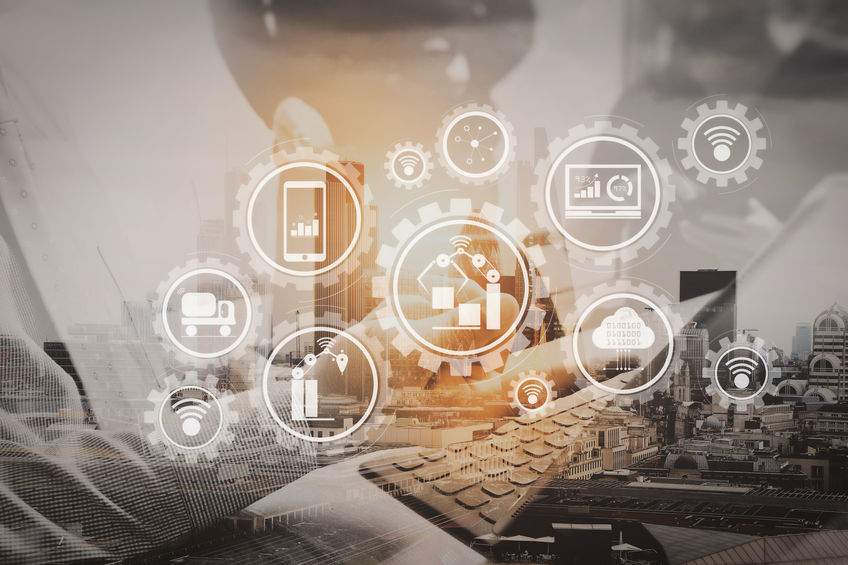
New names are emerging from the modern industrial world such as "Industry 4.0," which comprises Industrial IoT and smart manufacturing. The term refers to factories with digital infrastructure that collect big data on production processes. As smart factories continue to demonstrate the benefits of digital transformation, society will begin to enjoy the improvements these new technologies bring to their surroundings.


The Link Between Industry 4.0 and Smart Cities

At the foundation of today's smart factory is Industrial IoT, in which core processes are monitored by machine learning software through a network of interconnected devices. This new paradigm opens the door to merging physical and digital activity so that equipment and processes can be better managed.

The technologies that will help define smart cities beyond sensors will include AI and 5G. More smart cities will surface when early players can quantify the enormous cost savings from monitoring software used to refine operations. Another dimension to smart city success will be how well robots and self-driven vehicles are integrated into local infrastructure to benefit the community.


Manufacturing and Logistics

Global spending on IoT has increased over the past couple of years and is predicted to surpass the $1 trillion mark in 2022. The fuel behind this momentum has been in the form of cybersecurity, automation, machine to machine (M2M) communications, and device connectivity through an intranet-based infrastructure. Data protection has become a high priority in factories and warehouses from the need to meet government compliance and establish robust security protocols.

By installing IIoT sensors in factories and warehouses, manufacturers will pioneer new ways to make factory floors safer for human workers. The use of robots to handle higher-risk assignments will further contribute to a safer workplace. Through the use of IIoT, sensors can deliver data to partners in real-time, allowing for improved efficiency throughout the supply chain.

While many may worry that robots will replace human jobs, the truth is that automation and machines are freeing up time for humans to work on tasks that computers can't do yet. For example, machine learning software cannot close a sales deal, and AI, while helpful for decision making, cannot replace decades of experience and cultured relationships. These examples illustrate that technology's role is not to take over but only to enhance the workplace by relieving humans of repetitive tasks.


Heading Toward a Smarter Future

The smart revolution will pick up momentum with the deployment of 5G, which will allow for broader connectivity and the capability of delivering more data at once. Large manufacturers are in a position to influence the development and deployment of smart technology by reporting how the analysis of big data has helped create safer working conditions and increased productivity.

One of the biggest contributions to city infrastructure IoT technology can make is in traffic control monitoring systems as a measure to reduce traffic accidents. The use of smart lighting systems can track traffic data, which can help officials decide where to reduce speeds or create detours. The use of portable solar-powered digital signs can also help direct traffic with messages. In the future, the more cars that connect wirelessly with the internet, the better they can be monitored for traffic safety.

Manufacturers and city governments have much to gain by collaborating on the development of smart infrastructure. Learning from each other's data will help lead to more efficient technologies and devices. New ideas for efficiency that improve the community can develop from brainstorming when engineers are aware of local leaders’ needs.

The future of manufacturing and logistics will likely be influenced by 3D printers, eliminating the need for a large factory for production. Not only are these machines designed to reduce production waste, but they also allow for the elimination of certain traditional supply chain components, which can help significantly cut costs.


Conclusion

Production factories that have implemented Industrial IoT solutions are leading the way toward mass implementation of smart technology. Not only does IIoT cut costs and waste but it also strengthens productivity and efficiency. You can expect increased discussion over the next decade about this evolution and how it will help improve the quality of life for industrialists and society as a whole.


Read More
smart city technologies
Smart Cities

Top Trends in Smart City Technology

In many ways, the future of smart city technologies is already here, although you may not notice its effects for a while. This futuristic groundwork has been laid and it's now just a matter of adoption and expansion to create an overall more efficient and sustainable landscape for governments, businesses, and consumers.

The concept of the modern smart city is simple, although it will require plenty of investment for stakeholders to enjoy its full benefits. The key for organizations to gain a competitive edge from faster and wider internet connectivity is to learn and prepare for the adoption of emerging technologies designed to improve quality of life.


Smart City Trends to Look For

At the foundation of smart city technologies are smart sensors that deliver big data to central hubs for performance analysis. Manufacturers will particularly benefit from designing more efficient production systems by analyzing big data. Here are major trends to monitor so you can decide when to join this modern digital revolution:

  • 5G Proliferation - Top telecom companies such as Verizon and AT&T are already starting to roll out 5G technology with faster and more seamless internet. Smart vehicles will play a big role in the development of smart cities, leading to less traffic jams and safer streets.
  • Stronger Wi-Fi - Thanks to 5G, download speeds will be three times faster, leading to less latency and internet congestion. It will allow for more gadgets to be connected to the same network without hindering performance.
  • Analytics Will Drive Competition - Processing real-time data will be a major force in wider data distribution. The more data collected, the more decision-makers will be able to detect system vulnerabilities and make appropriate changes. Companies that fail to adopt this new technology will be at risk of being overshadowed by competitors that do embrace new smart solutions.
  • Machine Learning and AI Will Improve Data Analysis - Investing in analytics is an effective step in preparing for more robust 5G solutions. But to be fully prepared, it's also necessary to invest in machine learning and other forms of artificial intelligence to speed up data analysis.
  • Blockchain Will Expand in Applications - Until recently, blockchain technology was mainly associated with facilitating cryptocurrency transactions. In the future, blockchain will be used more for other applications, such as security and storage.
  • Robotic Process Automation Will Improve Productivity - RPA has been around for a while, but is now growing to help meet the needs of 5G users. Some of the development leaders in this field include UiPath, Automation Anywhere, and Blue Prism.
  • Conversational AI Will Become More Practical - Siri is a popular example of conversational AI, which will become more practical to businesses and less of a novelty. Gadgets are increasingly able to understand the human voice and answer questions more directly with in-depth information.
  • Connected Vehicles and Autonomous Drones Will Accelerate Development of Smarter Cities - Tesla has been a leader in developing technology for autonomous vehicles. It has inspired other automakers such as Ford, Volvo, and BMW to join in the revolution.
  • Emphasis Will Grow for XaaS and UX/CX - Everything-as-a-service is helping create noteworthy improvements in industries such as healthcare, hospitality, and transportation.

While each of these technologies seems unique and novel, this is our future, not a series of disconnected trends. As adoption and awareness continue to grow, smart city development and initiatives will gain recognition as the next step in the evolution of city planning and building management. Investors expect to spend up to $158 billion on smart cities by 2022.


Conclusion

The world will become much more digital with the adoption of smart city technologies. The more local governments go digital, the more they will help improve the quality of life for citizens. Almost everything that affects everyday life can be captured and stored as information. By combining this intel with data-driven decision making, urban areas will evolve to provide better living standards for all.

Read More
online healthcare
Smart Health

How 5G Will Improve Online Healthcare

COVID-19 and social distancing have changed society while blazing the trail for online healthcare in its wake. Fewer people are going to hospitals as more people seek medical help through the internet. Wireless communication plays a major role in this transformation toward telehealth, and 5G will greatly improve connectivity and real-time capabilities.


Types of Telehealth Services

The rise of online healthcare services has raised awareness about telehealth, which at one time referred to healthcare advice delivered over the telephone.

Here are some of the many applications associated with merging healthcare with the internet:

  • Video conferencing for virtual consultations
  • Remote patient monitoring (RPM) for analysis
  • IoT wearables that track blood pressure, heart rate, and other processes
  • Remote robotic surgery
  • The Internet of medical things (IoMT) – a blend of medical devices and applications that can improve health care outcomes
  • Digital communication through email, messaging or chat


Challenges of Telehealth in the 2020s

The main limitation of telehealth in a pre-5G world is network capacity. Many organizations lack the necessary bandwidth and transmission speed to meet the needs of telehealth on a mass scale. But when 5G becomes more widely available, organizations across all industries, particularly healthcare, will strengthen their networks with faster and more reliable connectivity. Internet speed will increase to 20 Gbps while bandwidth widens to support 10,000 times more capacity.

Another challenge for medical organizations is meeting government compliance with privacy laws and regulations. Hospitals will be generating large volumes of data that track information for confidential medical records. A wider use of remote monitoring devices, such as patient wearables, will demand even tighter data protection. Doctors will be using a broader range of data for analysis that leads to providing instructions through digital communications.

Various stakeholders, such as healthcare providers and insurance companies, are working toward the expansion of telehealth services. Government policy changes are expected this decade to clarify responsibilities involved with telehealth data collection. Modern telehealth pioneers must further face the challenges of consumers becoming comfortable with new technology, such as augmented reality (AR) and virtual reality (VR).


Bandwidth, Connectivity, and Security

The reason 5G will likely gain rapid adoption with the healthcare industry is because it facilitates seamless transmission for massive amounts of data. In fact, it was designed precisely to support robust data transmission of applications, such as telehealth. The rapid development of IoMT devices made for 5G will further contribute to the widespread adoption of telehealth.

Enhanced mobile broadband (eMBB) will be an integral dimension of 5G to support real-time 3D video. Media streaming will be free of latency issues, making it more practical for webinars, meetings, and training sessions. Video conferencing can replace a large number of in-person hospital appointments. The convergence of 5G and devices designed for it will mark a new era in technology that sets new standards for industries, particularly healthcare.

Complex medical procedures, such as remote robotic surgery, will become easier to perform, thanks to more robust bandwidth and connectivity. Remote operations will save time, and in the process, help save lives.


Post-Pandemic Planning

Hospitals were already steadily moving toward telehealth prior to the pandemic. Many healthcare organizations were already preparing for 5G by working closely with telecom companies. The rapid growth of patient wearables that communicate directly with hospitals is clear evidence that the healthcare industry is merging with digital technology.

Real-time monitoring will play a significant role in new service models aimed at addressing health issues at a much faster pace. Traditionally, telehealth was focused on connecting with people in rural areas. But as both patients and healthcare organizations increasingly realize the benefits of virtual care, this pattern will continue and extend to include areas of all population sizes. Ultimately, 5G will solidify telehealth as a vehicle for more efficient, personal, and affordable patient care.


Conclusion

Offering online healthcare is becoming the new norm for medical professionals and facilities around the world. Beyond telehealth helping to reduce overcrowded hospital waiting rooms, it also helps patients resolve health issues quicker, create better relationships with doctors, and save some money on health care.

Read More
5G Technology
Networking

Exploring the Adventurous Crossroads of IoT and 5G Technology

Moving to the cloud and investing in IoT devices are important steps in preparing for 5G technology. Every business should be concerned about the new networking technology that will speed up the internet and data collection. Here's a look at how this game-changing development will maximize opportunities for gathering a wealth of valuable data to improve your business.


How 5G Will Advance IoT

The upcoming fifth-generation cellular communications world is commonly called 5G technology. It marks a new era in how business will use the internet to connect with internal and external data. This new interconnected world will be visibly cost-saving for both consumers and producers. Not only will access to big data benefit homeowners to know more about how they spend money on utilities, it will also help advance manufacturers toward higher operational efficiency.

Many traditional processes will need rethinking between now and the widespread deployment of 5G and IoT infrastructure. You will be able to manage your business more effectively and collect increasing amounts of data through modern IoT sensors. Since the data will be in real-time, this access will allow you to accelerate decision-making. Health care professionals, for example, will be able to diagnose illnesses more quickly by monitoring wireless devices worn by patients.


Revolutionizing IoT

The arrival of a faster internet will be one of the keys that 5G will deliver to maximize the utility of data collecting IoT sensors. You'll be able to collect much more data due to wider bandwidth and more reliable transmission. Here's a deeper look at how these changes will improve enterprises:

  • Reduced latency - Even though 4G networks already provide millisecond transmission, 5G will reduce latency further to the point of instantaneous network response. This faster connection will enhance mission-critical activity. For medical patients, it can mean the difference between life and death.
  • More capacity - Although IoT devices don't usually require much bandwidth, the wider capacity that 5G provides will allow for a greater number of IoT sensors to be deployed. You'll be able to route tremendously more data through your system.
  • Greater reliability - IoT devices are only as good as the networks that deliver their data, especially when it comes to real-time scenarios. One of the ways 5G will make data transmission more reliable is through the new technical standard known as Ultra-Reliable Low-Latency Communication (URLCC).


What 5G and IoT Will Do for Business

The massive 5G rollout over the next five years will lead to manufacturers maximizing profit margins by cutting unnecessary tasks in production. You'll be able to cut costs more effectively and eliminate waste through data analysis, which will be assisted by machines. Here are some of the major innovations to expect:

  • Better automation - The new 5G-IoT ecosystem will be more circular with integrated logistics that allow for more efficient data processing with less human intervention. Look for 5G to enable better automation for smart homes and smart cities.
  • Industrial 5G - Automakers and other manufacturers will get more instantaneous accurate data for faster streamlining of their production processes. Quicker calibration will be a huge benefit for manufacturers with the advent of smart factories, drones, and augmented reality headsets.
  • Internet of Everything (IoE) - People, data, and processes will all be connected through 5G, which will spawn IoE. It will create a more intelligent environment as the right data will go to the right people.


Are You Ready for the Next-Gen Connectivity?

Every business sector will be affected by 5G technology and the proliferation of IoT technology, which will someday overshadow current LTE technology. If you've already deployed IoT devices across your operations, then you are well-positioned to integrate with the next wave of business technology. It's wise to prepare for this revolution for a smooth transformation toward a faster, more robust network.


Read More
5G connectivity
Networking

How 5G Connectivity Will Pave a New Future for Businesses

The entire business world will be impacted by 5G connectivity in one way or another. Either a business prepares for 5G and grows with the new technology or it may fall behind competitors if it doesn't. The new technology is considered a game-changer for the internet because it will greatly increase speed and capacity.

Planning for 5G connectivity will separate businesses of the future from businesses of the past. By monitoring the development and trials of the new standard, you will get a clearer understanding of where everything is headed. Data-centric processes will be at the core of this nextgen transition. IoT devices and data collection will be key drivers that define which companies are modern.


Ways 5G Will impact Businesses

As 5G takes off over the next decade, it will be a core force for several industries to improve efficiency at multiple levels. Autonomous vehicles, virtual reality, wearable communication, and automation processes will all become more powerful by the faster connectivity with greater data capacity. Here's a more in-depth look at what the effects of 5G will be.

  • Better Industrial IoT and Data Collection - A recent Gartner survey found that 57 percent of business respondents are preparing for 5G and expect to utilize IoT communication. Industrial IoT is expected to grow by double digits over the next five years. About 20 percent of businesses will experience a 20 percent increase in sales due to more robust Industrial IoT and data collection. Smart factories and wireless industrial control will become the new normal for manufacturers in the coming years.
  • Smart Technology - As energy demand grows globally, smart technology will be the key to monitoring, analyzing, and adjusting processes to reduce waste. Smart grids are developing across many cities, as data analysis will heavily impact how utilities are run. Smart grids integrate well with cost-saving solutions such as Virtual Power Plants (VPP), solar and wind energy, microgrids, and blockchain.
  • Enhanced Connectivity in Vehicles - Self-driving cars have been around for a while, but they will display a noticeable difference in the age of 5G. Built with intelligent driving systems, semi-autonomous vehicles will appear in many places by 2021. Smart technology will play a major role in strengthening fleet management.
  • More Efficient Smart Cities - Soon you will see cities full of smart technology that integrates with LED street lights, CCTV systems, and smart parking meters. Traffic management systems will improve from the use of connected traffic lights and real-time data analysis. It will help make roads safer and less congested. Smart homes have been springing up more often as consumers use their smartphones to gauge energy costs at any time.
  • Connected Healthcare - More and more health patients will use wearables and the internet to replace doctor visits. Health professionals can already remotely monitor patients who wear devices that measure and monitor biological activity such as pulse, blood pressure, and heart rate. It will allow medical experts to receive data and act more quickly to help save lives.

Aside from the technological benefits of 5G, it's important to understand the public issues that go with it, such as spectrum availability, costs, privacy, and security. Your business will have plenty of options for security, including Authentication and Key Agreement (AKA) and Extensible Authentication Protocol (EAP). Another security challenge will be to protect against growing cyber threats, as more data and devices require stronger security measures.


Conclusion

The reason there's so much talk around 5G connectivity is that it will create a more seamless internet experience. The changes, however, will not happen all at once, as it will take time for deployment and widespread adoption. Some people are calling 5G the fourth industrial revolution. It will be a world of more massive connections with digital devices. Ultimately, it will transform the quality of business and open the door to new industries.


Read More