
How brief encounters and unseen introductions shape what happens next
In a previous article, we noted that in today’s AI-first world, an AI model can shape a buyer’s first impression of your company. Let’s pause here for a moment. We all know first impressions matter. But what makes them so powerful?
First impressions happen every day, everywhere, often in moments too ordinary to attract our attention. A new neighbor says hello as you hurry toward the car. A colleague introduces someone just as you glance at your phone. Later, you open a business’s website and try to work out whether it offers what you need. Each encounter gives someone a starting point for deciding what to do next.
A first impression is the initial understanding and judgment we form about someone or something from the information we encounter first. We notice a few details and begin to interpret them: knowledgeable, approachable, trustworthy—or perhaps not quite what we are looking for.
We prepare for the occasions we recognize: a job interview, a conference, a meeting with a prospective customer. Yet some introductions happen before we enter the room, or without us entering it at all. A friend mentions us to someone we have never met. A customer reads a review. An AI assistant describes our company to a potential buyer.
An Impression Can Form Before the Conversation Begins
First impressions can form remarkably quickly. Psychologists Janine Willis and Alexander Todorov found that people formed judgments about a stranger’s trustworthiness, competence, and other traits after seeing a face for just 100 milliseconds—one-tenth of a second. Those judgments closely resembled judgments made with unlimited viewing time. Additional time could increase confidence without substantially changing the impression.
In a study of mock job interviews, observers who watched only the opening 20 to 32 seconds formed impressions that predicted interviewers’ evaluations after the full 15- to 25-minute interview. The observers had seen the greeting and settling into a chair, before the first formal question.
Speed is only part of their power. In another study, participants rated strangers from photographs and met one of them, on average, more than four months later. Even after twenty minutes together, those initial impressions still predicted how much they liked the person. A later encounter did not automatically replace the first impression. Persistence does not make an impression accurate. But it gives us a reason to take introductions seriously—and to pay attention to who is making them.
When Someone Else Makes the Introduction
When you ask someone to introduce your company, you prepare them. You explain what you do, which capabilities matter to the audience, and what you want people to remember. You might give them a short description or a few talking points. You want some control over the message because that introduction could shape what happens next.
You take similar care with your website, where first impressions involve more than appearance. Gitte Lindgaard and colleagues found that participants could assess a webpage’s visual appeal after just 50 milliseconds. That finding concerns visual appeal, not a complete understanding of the business.
Presentation can also affect credibility. David Robins and Jason Holmes found that people rated the same content as more credible when it received a more polished visual treatment. The information had not changed; its presentation had.
But looks are not the whole introduction. Research by Meinald Thielsch and colleagues found that content, perceived usability, and aesthetics all contributed to first impressions of websites. A visitor might think, “This looks professional,” yet still leave without understanding whether your company can solve their problem. A favorable impression of the design is not enough if the content fails to make your capabilities clear.
We choose our website’s images, layout, typography, and language because we want visitors to leave with a particular understanding of our company. We want to look professional, make our capabilities clear, and give the right people a reason to continue.
But what happens when an AI assistant makes the introduction before a potential buyer sees any of that? The question is no longer just how our website looks. It is what the buyer has been led to believe we do.
The assistant supplies the description; the buyer forms the impression. Before visiting your website or speaking with your team, the buyer may already have decided whether you are worth investigating. You may never see the description behind that decision.
A Brief Impression Can Have a Lasting Cost
A first impression does not have to last for years to matter. It only has to last long enough to influence a decision.
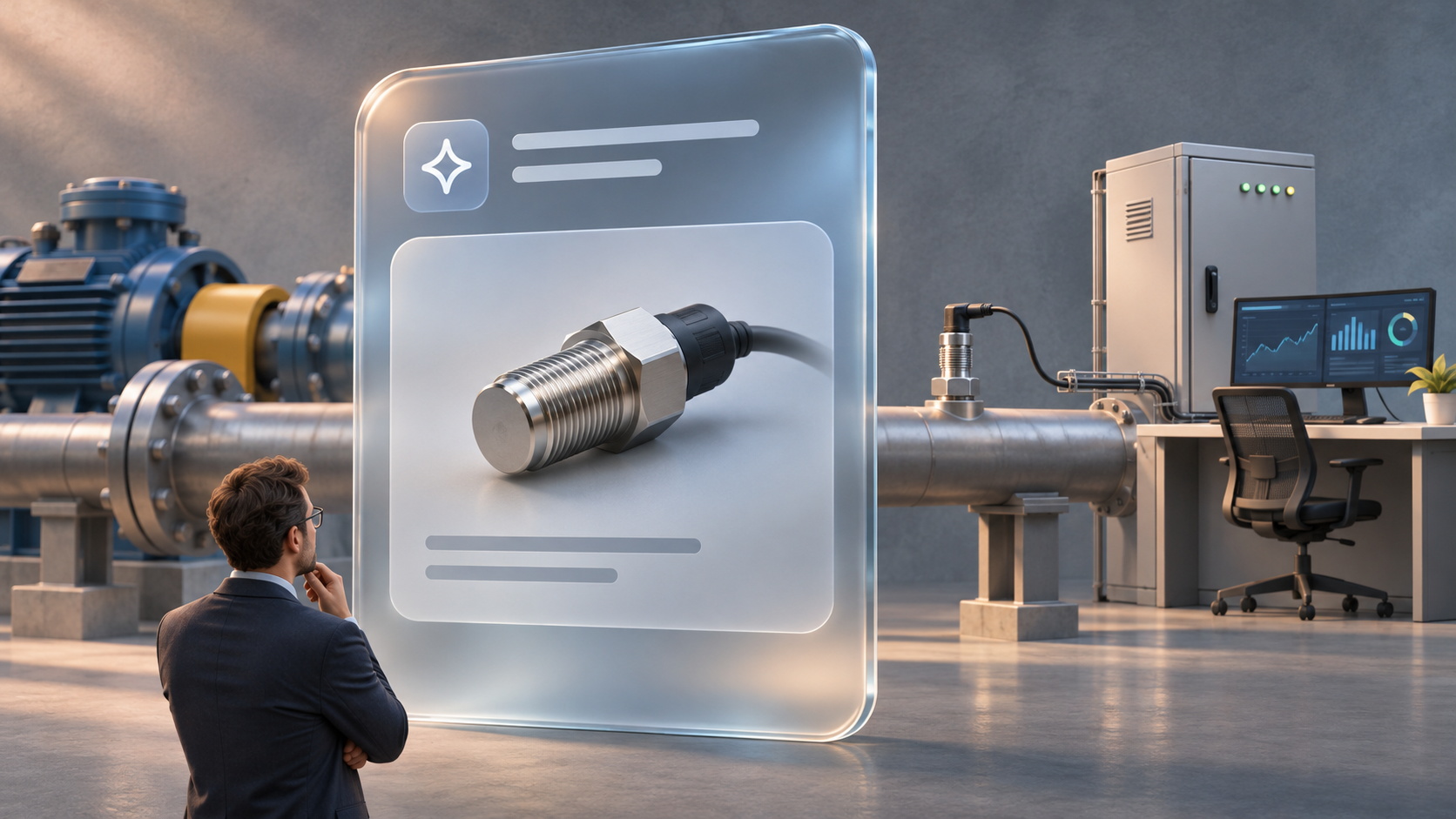
Suppose your company sells industrial sensors and also designs and installs complete monitoring systems. A buyer needs a working system and asks an AI assistant about your business. The description correctly identifies the products you sell but barely mentions your engineering and installation capabilities. The buyer puts you in the equipment-supplier category and continues looking for someone who can handle the project.
That description may contain no obvious falsehood. It can identify the company and its products correctly while omitting the capability that would make it relevant to this buyer. Your website might explain the missing service perfectly, but this introduction has given the buyer little reason to visit. The problem is not necessarily a bad impression. It can be an incomplete impression that leads a suitable buyer to rule you out. And the buyer has not raised an objection for your sales team to answer. They have simply moved on.
What Does the AI Associate with Your Company?
The issue is not simply whether the AI recognizes your name. It is whether its description connects your business to the work the buyer needs. That is where your model profile comes in. In this context, a model profile is the picture of your business reflected in a model’s responses: what it says you do, which products and services it associates with you, and which capabilities it emphasizes or leaves out.
For the sensor business, recognition alone would not resolve the problem. The buyer needs someone who can deliver a working monitoring system. Does the model’s description include the engineering and installation work, or does it stop at the hardware?
Now consider a buyer who does not know your company’s name. Instead of asking what you do, they ask an AI assistant to suggest businesses that can design and install a complete monitoring system. Does your company enter the conversation at all? Describing your company and recommending it are related questions, but they require different tests.
What Is AI Telling Your Next Customer?
First impressions happen all the time. But in an AI-first world, whether your company gets to make one can depend on its model profile.
You prepare for meetings, choose your words, and make sure your team can explain what your company does. But when an AI assistant introduces your company to a prospective customer, do you even know what it is saying? If it leaves out the capability that buyer needs, you may never get the meeting—let alone the chance to explain what the AI left out.
Compare the introduction you have prepared with the descriptions an AI assistant produces. Which capabilities appear? Which are missing? Would a buyer understand that you handle the kind of project they need completed, or simply learn that you sell a related product?
But your usual AI assistant may draw on what you have already told it about your business. You or your team cannot assume that a reassuring answer reflects how it would introduce your company to someone new.
Our Model Profile Check, or MPC, provides a structured snapshot of how three models describe your company, independent of your team’s personalized conversations. It shows the products, services, and capabilities those models associate with your business, giving you a starting point for identifying omissions or misunderstandings. It is a baseline for comparison—not a record of what any particular buyer has seen.
Run a Model Profile Check to see how three AI models describe your company.
Oh, one more thing. Did that buyer reject your company—or just the AI’s version of it?
Sources:
First Impressions: Making Up Your Mind After a 100-Ms Exposure to a Face | journals.sagepub.com
The Importance of First Impressions in a Job Interview | researchgate.net
Attention Web Designers: You Have 50 Milliseconds to Make a Good First Impression! | tandfonline.com
User Evaluation of Websites: From First Impression to Recommendation | academic.oup.com