
3D Printed Sensors
3D Printing

How 3D-Printed Sensors Help Advance Space Communications

The age of 3D-printed sensors has brought the world to a stage of meaningful integration with satellite communications. New 3D-printed plasma sensors are being used to measure atmospheric conditions for orbiting satellites. Here's a look at where this exciting space technology is going and how it will help businesses on Earth.


Monitoring the Atmosphere

One of the key functions of 3D-printed sensors embedded in lightweight, low-power satellites is to collect data on the Earth's upper atmosphere. Plasma sensors can also track the atmosphere's chemical composition of ion energy distribution.

MIT researchers have developed sensors for monitoring conditions in the Earth's upper atmosphere called retarding potential analyzers (RPAs). These sensors can be produced inexpensively in a matter of a few days. The first use of RPAs was in a 1959 space mission.

RPAs must be designed to be well insulated and weather-resistant. Some of the more durable 3D-printed models are made from a glass-ceramic material rather than silicon. Designers of spacecraft sensors favor polymers because they can be shaped in infinite ways. This material can also withstand extreme temperatures in Earth's lower orbit.


Evolution of Space Sensors

The evolution of RPAs has led to versatile use, including for the spacecraft CubeSat. The sensors used for these space projects comprise a series of electrically charged meshes with tiny holes for plasma to pass through. Through a filtering process, particles are stripped away, leaving just ions that form an electric current. The sensors can measure different aspects of the current.

Durable materials such as vitrolite can withstand high temperatures without breaking down. Polymers, however, begin to melt at 400 degrees Celsius. Scientists are currently working on new ideas for fabricating 3D products.

3d printing

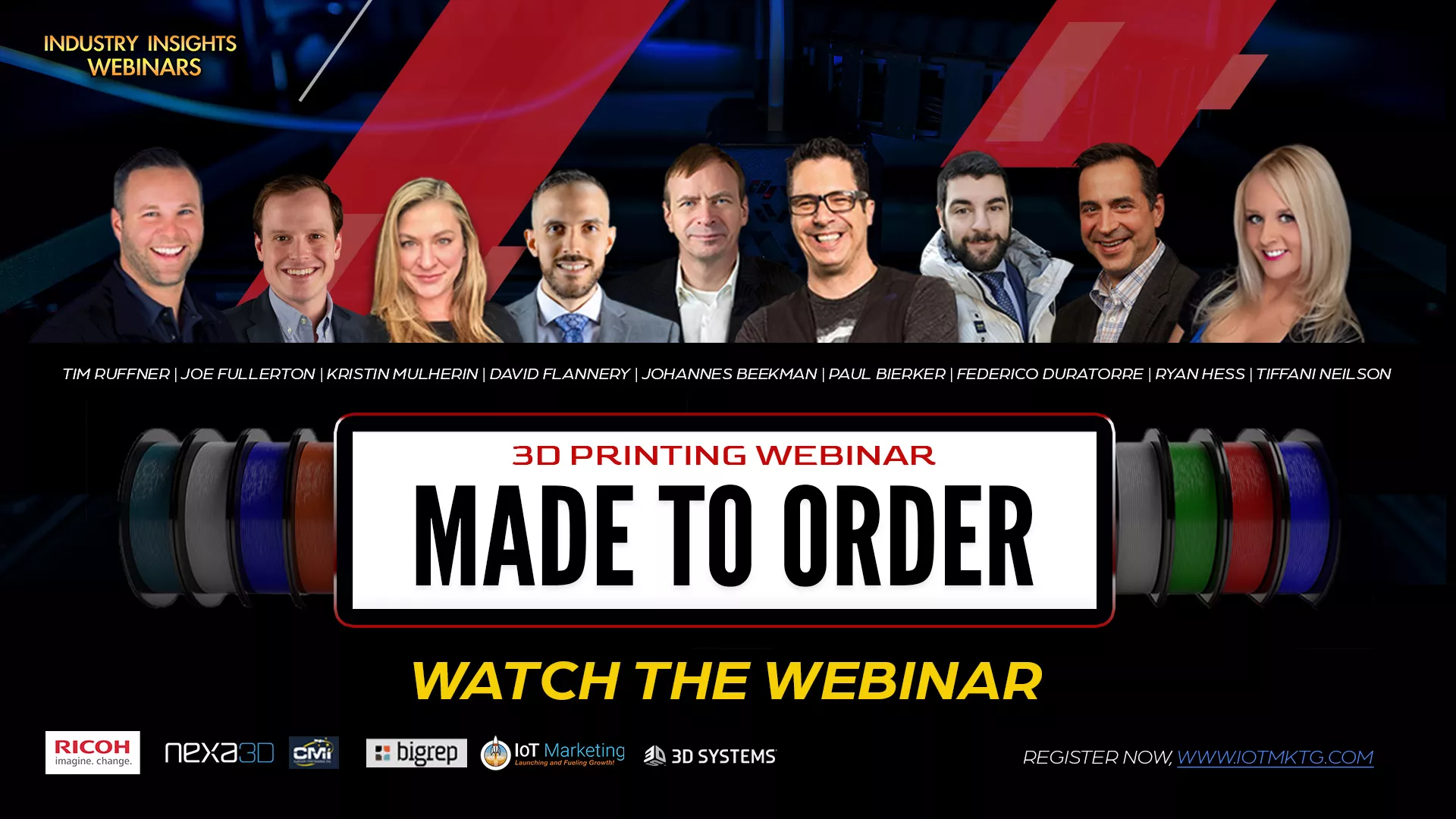
Watch the replay of "Made to Order" to learn about the latest trends, challenges, predictions, tips and more, surrounding 3D printing technology.

The use of ceramic material involves pointing a laser at ceramic powder, then shaping the layer. This method has advanced quickly due to the ability of a 3D printer to generate multiple prototypes in a short period. MIT scientist Luis Fernando Velasquez-Garcia is working on reducing the thickness of sensor layers and improving their precision.

The current trend in space satellites is that 3D printing is being used more frequently. Some of the companies engaging in additive manufacturing for satellites include Boeing, Airbus and Fleet Space. Pioneers in this development are preparing for future space missions including the possibility of colonizing another planet. A goal of the aerospace company SpaceX is to colonize Mars by 2050.


Future Development of Satellite Sensors

While it's difficult to predict how advanced satellite sensors will be in twenty years, it's safe to say they will be superior to today's technology. Data collection will be more precise and data transmission will be more seamless. The hardware designed for satellites can be quickly replaced when vulnerabilities are detected. The most advanced satellites will be equipped with self-healing AI software that resolves technical issues quickly.

Satellites of the future may not need to be as large as they are now. The expansion of tiny sensors that measure activity in several layers of the atmosphere will help optimize orbital paths of satellites. Automated 3D printers in space can be useful for manufacturing hardware solutions when the satellite encounters technical trouble.

NASA has been a major developer of space-based 3D printing for many years. In the past, NASA has printed wrenches on the International Space Station. One of the space agency's projects for the future is developing spacecraft that can build a solar array. The more technology advances to support energy-harvesting solutions, the greater chance of the same equipment being used for space missions indefinitely.

As far as deep space explorations, there's starting to be chatter about building spacecraft that can build self-healing devices with 3D printers. AI will be part of the infrastructure, as machine learning software can scan a wealth of data to arrive at the best hardware solution that can be made with a 3D printer. Since 3D printers can print food and medicine, long-distance space travel will become possible for humans.

The advent of 3D-printed robots will be a major leap forward for space technology. These robots might even become the first inhabitants of other planets such as Mars. Their duties will include digging tunnels and manufacturing 3D-printed structures.


Conclusion

There's a bright future for 3D-printed sensors in space to improve satellite communications and data collection. The more this technology advances, the more you'll see startups launch in space.
Read More
3D Printing Wearables
3D Printing

Healthcare in the Age of Widespread 3D Printing Wearables

The advent of 3D printing wearables has tremendously helped elevate the efficiency of the healthcare industry. It has improved the doctor-patient relationship to be ongoing and quicker at resolving health issues, thanks to wearables that transmit patient data to the hospital in real-time. Here's a look at what this amazing portable wireless technology can do to improve society.


Innovative New Medical Wearables

Today's most powerful 3D printers are capable of printing products in any shape. Medical wearables can be made completely by a 3D printer, which includes the printed circuit board. New ideas for 3D printing wearables can now be formulated and tested on a regular instead of occasional basis. The recent development of self-charging medical wearables, along with self-healing medical wearables, is taking medical research to a more sophisticated level.

Hearing aids are among the many types of medical wearables that can be prototyped and tested in a short time frame. The use of 3D printing makes it possible to test different hearing solutions without running up a huge bill. Harvard was a pioneering university at paving the way toward low-cost hybrid 3D printing of wearables.

One of the keys to the flexibility of wearables is the use of thermoplastic polyurethane (TPU) as a printing material with bendable qualities. This material can be blended with metals such as silver for the conductive elements of an electronic device.

The 3D printing wearables of this century are revolutionizing several industries, particularly the medical industry. Wearable devices that track patient data are saving lives and helping patients improve at a faster pace.

3d printing

Watch the replay of "Made to Order" to learn about the latest trends, challenges, predictions, tips and more, surrounding 3D printing technology.

Energy Harvesting

The concept of energy harvesting can be implemented with solar, RF, thermal, mechanical or chemical methods. The main drawback to solar is that it doesn't provide much power over the short term. Otherwise, it's free energy from the sun. The pairing of solar panels and longer-lasting batteries will be the key to broader use of wearables indoors and at night.

RF energy harvesters use specifically-tuned antennas to communicate data with wireless devices over the air. Powering RF devices depends on proximity and size of the power source. It's now possible for devices to draw power from surrounding RF signals. Thermoelectric devices called "rectennas" operate like car antennas, except they capture light and heat and convert it into energy.

Energy harvesting devices can be made by 3D printers, as the materials are based on plastics and metals. The more scientists develop the concept of energy harvesting, the more it will resolve issues related to "always on" concerns about digital technology.


Medical Wearables in the Future

Wearable technology is in its infancy and will be much more advanced by the next decade. The development of customized "bio-symbiotic devices" has opened the door to TPU-based printing on a wider scale in the medical industry. The most modern wearable devices are made to fit under clothing with lightweight material. The idea of carrying around a heavy portable device is long gone.

New wearables will be made for appropriate placement on the body for gathering data. The comfort of the user will be a priority in the design, as well as keeping the device unnoticeable. Wearables will include energy storage systems such as batteries that provide a 24/7 connection with the hospital. The smart device will combine compact energy storage with wireless energy harvesting.

The odds favor future wearables being less conspicuous, making them easy to hide in clothing or even jewelry. Beautiful earrings may also house data-collecting sensors. The placement of sensors can be anywhere on clothing, such as on the shoulders. Shoes of the future will be designed to capture energy from movement, which will help power wearable devices. Sensors in shoes will also be able to cool your feet when you want.

The batteries in future wearables will be more durable, which will cut costs over time. Some wearables will draw energy from body heat or motion. Solar wearables will become more common the more solar technology advances in energy efficiency. Wearing solar-powered products helps raise awareness of the many things nature can do to cut costs while reducing impact on the environment.

To protect the user, wearables will be equipped with stronger security systems, such as those that require authentication. Some wearables may even be embedded underneath the skin for certain applications. Perhaps the most advanced achievements in wearables will be the direct and continuous connection with a virtual assistant who can answer medical questions.

The 3D printing wearables of this century are revolutionizing several industries, particularly the medical industry. Wearable devices that track patient data are saving lives and helping patients improve at a faster pace.

Read More
3D Printing and Tourism
3D Printing

How the Tourism Industry is Meeting 3D Printing Challenges Concerning Authenticity

Today, 3D printing is rapidly resolving production issues for certain products, making more economic sense due to lower costs and zero waste. But these amazing machines that print physical objects one layer at a time based on digital designs face challenges surrounding the issue of authenticity in the tourism industry. Here are important 3D printing challenges to keep in mind if you plan to invest in this innovative technology.


Authenticity Issue of Souvenirs

When tourists visit an historic site, they expect to see authenticity, meaning real artifacts. But not all relevant artifacts can be preserved at a museum, so for educational purposes, it sometimes helps to present props that represent antiques. The advent of 3D printers has made it possible to create replicas of items with historic interest. One of the 3D printing challenges for the tourism industry to overcome is making printed objects that represent history look authentic.

The concept of authentic itself may need deeper discussion, since different people have different perceptions of what "authenticity" means. For some people it means recapturing the past but for others it can mean having qualities that invite discovery of something new and creative. Both of these ideas can be embedded as brand value in souvenirs, which tourists enjoy purchasing as tangible evidence of their experiences. Well-crafted souvenirs help tourists preserve memories of their visit.

Tourist perceptions of 3D printed products are important, although many people are still unfamiliar with the technology. The key to selling 3D printed items within a heritage site is to retain the emotional value associated with the original reference. A souvenir must already be an object that triggers memories of a visit to a site that embodies historical knowledge. Tourists naturally make emotional associations with the places they visit, so it's a matter of how well a 3D printed object provides matching memory cues.


Understanding the Aura of Original Art

Authenticity has been a concern among purists since the beginning of the industrial revolution, which opened the door to mass production. Duplicated items can lose their emotional value in the context of perceiving them as part of a mass production process. Economic theorists have pointed out that workers can become detached from the products they produce through labor, while hand-crafted objects have a more human artistic "aura" associated with them.

Understanding the relationship between authenticity and aura is not a new or futuristic topic. Philosopher Walter Benjamin (1892-1940) wrote a compelling 1935 essay called "The Work of Art in the Age of Mechanical Reproduction" that identifies how duplication counters the perception of authenticity in relation to art. While mechanical reproduction ushered in many benefits of convenience, it defies the meaning of art, according to Benjamin.

Benjamin viewed "aura" of art to be a quality of emotional presence in time and space that cannot be communicated through mass-produced items. An obvious example of this perspective is a painting of the Mona Lisa by Leonardo da Vinci. The original painting was made in 1503, but in the modern world there are many replications of the painting that simply do not carry the same aura.

Tourism businesses must pay attention to 3D printing challenges relating to authenticity and preserving the integrity of original artwork. If the products are made with these concepts in mind, they can be accepted as mass-produced artifacts that serve as reminders of a visit to an historic site.

3d printing

Watch the replay of "Made to Order" to learn about the latest trends, challenges, predictions, tips and more, surrounding 3D printing technology.

Tourists understand that copies of the work do not have the same aura as the original. That's why there's a greater sense of value for tourists to witness the original painting of the Mona Lisa in the Louvre Museum in Paris, France. This legendary museum has existed since 1793. While tourists still appreciate seeing replicas of the art in other museums, there is a much more profound aura associated with the original. Due to its expensive value, the original artwork is well-guarded, as observers must view it from a certain distance.

The authentic aura of an original artifact is reduced or eliminated when people are allowed to hold a replica of it in their hands, according to Benjamin. He viewed the aura of original artwork as traditionally dependent on ritual. His perceptions on this concept developed in the age of flourishing photography in which a negative can be the basis of endless copies of the same photograph. He believed that film and photography altered perceptions of art.

At one time, art appealed to elitists who could afford traveling to a physical site to view an original painting. The concept of reproduction made it possible for broader audiences to experience the art, but in a different way with a diminished aura. This loss of aura contributed to the devaluation of art. Benjamin, a German Jew associated with the Frankfurt School, feared this loss of aura could facilitate a fascist state. He was concerned that artists or politicians could use mass-produced art as propaganda to alter community views. Making art available to the masses through duplication challenged the way art could be interpreted by an individual.


Research on 3D Printer Authenticity

In 2014, design researchers conducted an art study at Stirling Castle in Scotland, funded by the UK's Arts and Humanities Research Council. The study sought to compare visitor impressions of onsite 3D printed souvenirs versus generic souvenirs. Tourists were able to observe the 3D printer as researchers observed how tourists engaged with the machine. Participants were interviewed about their perceptions of the 3D printer as it printed souvenirs.

Researchers wanted to know how much the presence of the 3D printer affected the perceptions of the products it made. They found that the printer noise and its lights in a dark space attracted people to get a closer view. The study found that impressions of 3D printed souvenirs related to values associated with:

  1. Function as imitation of local culture
  2. Expression of individuality and identity
  3. Factual significance
  4. Material dimensions and mode of production

Visitor comments revealed the tourists perceived 3D printed souvenirs to be "constructively authentic" if the reproduced materials matched the historic nature of the attraction. In other words, they perceived the items to have authenticity if they were true to traditional materials.

The study further found that children were more likely to view plastic items as "toy-like," resulting in a positive impression. On the other hand, adults 46 and older were less impressed by the plastic products, but saw the educational benefits of the 3D printer.


How to Deal with Authenticity Challenges

The concerns of Benjamin still exist today relating to the duplication of art. Another concern about 3D printed art that replicates earlier work is that it can have defects in mechanical reproductions that create nuances an artist did not intend. Size and dimensions may become distorted, which can misrepresent the original work.

The 3D printer is here to stay but must be used in strategic ways when it comes to duplicating art, antiques or other items that associate with historic value. Tourist attractions can market souvenirs from 3D printers as long as the finished products maintain a connection with the original work they represent.


Conclusion

Tourism businesses must pay attention to 3D printing challenges relating to authenticity and preserving the integrity of original artwork. If the products are made with these concepts in mind, they can be accepted as mass-produced artifacts that serve as reminders of a visit to an historic site.

Read More
3D Printing NFT
3D Printing

How NFT 3D Printing Creates New Market Opportunities

The rise of the non-fungible token (NFT) has opened the minds of young entrepreneurs to explore new markets never imagined before. NFTs exist on blockchains, making them exclusive and secure. These digital items can house designs for physical products. Here's a look at how NFT 3D printing is leading the way to a new world of digital products and ways to sell tickets to events.


NFTs Demystified

The concept of NFT 3D printing is fairly new and has plenty of room to grow. An NFT can be thought of as digital property with a unique identification code. NFTs can come in the form of videos, songs, photos, social media posts and other types of digital media. A 3D printer makes it possible to turn an NFT design from an STL file into a physical product.

Certain issues affecting quality exist among different types of 3D printers. The STL file, for example, does not provide its owners digital protection from infringement. In other words, it's easy for a third party to duplicate the file. One way creators can protect intellectual property is to only issue one authentic digital copy available for sale, creating a rare digital product with a unique ID code.

Popular creators can sell high-demand unique NFTs at high prices through auctions. To make the NFT more attractive, the creator might grant a variety of permissions for using the 3D printed product in profitable ways.


How 3D Printing Creates Value for NFTs

A 3D model can be sold as a unique NFT on platforms such as OpenSea and Rarible. A musical artist can offer one copy of a live performance, making it special and exclusive for the buyer. The fashion industry can experiment with new designs as special NFTs that can be used as models to 3D printed products.

The way it's possible to sell NFTs as codes for 3D printed clothing is to create an identification code for a 3D model and sell it as part of a digital folder. The code contains the instructions for printing the physical product. The buyer must get permission from the seller to own or license content from the NFT folder.

3d printing

Watch the replay of "Made to Order" to learn about the latest trends, challenges, predictions, tips and more, surrounding 3D printing technology.


So far the biggest selling NFT online has been a JPEG collage called "Everyday: The First 5000 Days," which sold for $69 million. Christie's sold the item created by artist Beeple (Michael Joseph Winkelmann) in an early 2021 auction. This sale far surpassed the value of an NFT that received more media coverage, which was the $3 million sale by Twitter co-founder Jack Dorsey of his first Twitter post. Only time will tell if NFTs can sustain value over many years.


Future Markets for 3D Printed NFTs

The market for 3D printed NFTs has yet to become as popular as digital NFTs. One of the early successful pioneers venturing into 3D printed NFTs is Danit Peleg, who sells products on Rarible. She sells designs for 3D printed clothes, that buyers can customize. Buyers can choose the material and color of the fabric.

Another pioneer in 3D printed NFTs is Ioan Florea, who supports open source models for technological design. He gained interest in 3D printed NFTs from displaying a 3D printed liquid metal Ford Torino in a 2014 New York show for Inside Bitcoin. Florea believes that 3D printed NFTs are a new kind of art form.

The popularity of NFTs grew substantially in the early 2020s, against the backdrop of high inflation and an uncertain economy. NFTs represent a new way for artists and other creators to earn money, not just from products, but ideas for products. Unlimited unique versions can be made of any given 3D printed item, as designs for 3D models are easy to edit.

Customization is a service that makes any business unique. The growing interest in 3D printing and NFTs opens the door for expansion in digital markets. Offering custom art designs is a viable business model, especially in an age of omnipresent visuals. The main constraint for 3D models of NFTs is both digital and physical size. Large digital files for large physical items are impractical, while smaller physical products make sense for 3D printed NFTs.


Conclusion

The NFT 3D printing market is young and exciting, allowing artists new ways to promote and sell their work. It's an excellent way for a business to interact with its community, creating personalized products. Not online do 3D printed NFTs create new revenue streams, they make it possible to sell many special versions of the same product.

Read More
3D Printing Supply Chain
3D Printing

Benefits of 3D Printing in Supply Chain Operations

A growing number of large facilities such as warehouses are starting to consider 3D printing for their supply chain processes. Instead of finished products taking up physical inventory space, products can be made on demand. Here are important reasons why supply chain managers should envision 3D printing in their operations.


Emergence of the 3D Printing Industry

The global 3D printing market has grown rapidly in the past decade. It's currently worth about $12.6 billion and is expected to grow 17 percent by 2023. Early adopters of 3D printing in supply chains have been manufacturers, third-party logistics (3PL) firms and inventors who want to test multiple prototypes.

Even though 3D printers are expensive, they represent a more cost-effective way to produce low-volume products. They are particularly more efficient when making customized items. The products are designed in computer-assisted design (CAD) software that generates an STL file or other 3D print formats such as CAD, OBJ, and 3MF.

A key reason why 3D printers are important to supply chains is they can keep supply at zero until demand calls for printing products. Each product can then be printed without leaving behind any material waste. This process eliminates the problem of overproduction, which can lead to huge losses. It also saves warehouse space, avoiding the problem of low-demand items creating clutter.


Serving the On Demand Model

The on demand model of 3D printed products is efficient in multiple ways. Not only does it save space and prevent waste, but it also allows the customer to personalize the product through options in the ordering process. The more power you give the consumer to customize their own products to suit their individual tastes and needs, the more valuable you become as a resource.

Purchasing a 3D printer then selling services can be a lucrative business that grows quickly when you consider most people cannot afford to buy one. But once you own the means of modern production, you can find a market of creative tech enthusiasts willing to invest in 3D printing as an efficient process for testing new ideas.

An entrepreneur who envisions multiple prototypes can benefit by investing in a 3D printer to make fresh ideas materialize into test products. Medical equipment and prosthetic developers can benefit enormously from 3D print machines to make personalized products for patients.

The original idea behind the first 3D printers that appeared in the 1980s was for fast prototyping. All along 3D printers have been more about refining one-off or low-run products to fit specific needs of buyers.

The fact that 3D printers can actually print food makes it more possible for automated restaurants to populate the landscape in the future. Just like with any other 3D printed products, the food is made in layers like pizzas, wafers, or sandwiches. The layers, of course, are made of edible products, vitamins, and nutrients.

3d printing

Watch the replay of "Made to Order" to learn about the latest trends, challenges, predictions, tips and more, surrounding 3D printing technology.

Contributing to Sustainable Production

One of the most relevant themes spreading across all businesses in the 21st century is sustainability. The supply chain crisis of the pandemic era serves as a reminder that businesses must always have backup plans in order to be resilient. Creating a list of backup suppliers is one way of practicing sustainability. Another way is to invest in a 3D printer.

By using a 3D printer as the means of production, you can promote your business as going green, since it contributes to waste reduction. It also avoids the problem of producing a room full of products that go to waste due to low demand. Many of these products end up in a landfill, whereas a 3D printed product only exists if there's a demand for it.

Maintaining an accurate balance between supply and demand can save a warehouse thousands of dollars per year. A common challenge with inventory management is making accurate consumer demand forecasts to determine the amount of units to keep in storage. Sometimes wrong guesses can lead to financial losses in traditional warehousing. But with a 3D printer, you don't have to base supply on forecasted demand.

Another way 3D printing offers a sustainable solution from a manufacturing perspective is that it can be used to serve different niche markets. While each niche may involve low-volume production, the combination of niches can add up to a large market. Nurturing niche markets can save marketing costs since it doesn't require expensive media advertising to reach a mass market.


Simplifying the Supply Chain

Once you have a 3D printer to create specific products, you don't necessarily need a complex supply chain to support it. In fact, you may not need a warehouse at all if you only sell 3D printed products, depending on the volume of your business. It's best to limit 3D production to low-volume runs, since today's 3D printers aren't designed for mass production.

You can trim your supply chain to producers of materials for your 3D printed products, which are often in the form of metal, polymers or ceramics. Just add a shipping service and you have a lean modern supply chain. Each business can better streamline its supply chain once it has a 3D printer on deck. High levels of precision may require an investment in a CNC machine with 3D printing capabilities.

Another advantage of 3D printing is it will lead to less returns for inaccurate order fulfillment. The fact that no product exists if no order for it exists saves you from the problem of lost, stolen, or broken items in inventory.


Conclusion

Embracing 3D printing in supply chain management can resolve many storage and waste problems for manufacturers. You can manage inventory much more efficiently with an on demand form of production. Eliminating waste and serving customers with more customized options are other encouraging reasons to invest in 3D printing.

Read More
Additive Manufacturing in Production
3D Printing

Sustainable and Business Benefits of Additive Manufacturing in Production

Additive manufacturing gets its name from adding layers of materials in the production process. Traditionally products have been made from subtractive manufacturing that involves cutting or hollowing materials, which generates waste. Here are reasons why additive manufacturing in production is a much more sustainable solution.


Rise of Additive Manufacturing

The physical fabrication of a 3D object resulting in layered materials stacked together is the basis of additive manufacturing. The process is based on only using the amount of material needed, eliminating production waste. In its early years, this process was mainly used for rapid prototyping, but not mass production. Today, 3D printing is the basis for producing thousands of different products, but still more for short runs.

Additive manufacturing, which is dominated by 3D printing to the point the terms are used interchangeably, has been steadily growing among global producers throughout this century. The market size in terms of U.S. dollars has grown from $4.4 billion in 2013 to $21 billion in 2021, according to Citi Research. Keep in mind the industry only had four major companies in 2000 but now has over 170 different players.

The concept of AM provides a viable solution to cutting production waste that has been traditionally sent to landfills. The buildup of pollutants in landfills elevates the risk of these harmful toxins seeping back into ground water. In recent years, companies have increasingly turned to recyclers to dispose of toxic waste or they've figured out how to repurpose items. With a 3D printer, you can actually make products that generate zero waste while significantly lowering production costs.


Types of 3D Printing Used for Production

A proliferation of 3D printers is emerging in the 2020s. An early type of additive manufacturing for production in the eighties was based on stereolithography (SLA). This method uses liquid resin as the basis for machine parts and prototypes. Early experiments commonly yielded brittle products, but today's 3D printed products are more flexible and durable.

In 1989 came the introduction of fused deposition modeling (FDM), which pushes melted material through a nozzle to create layers of filament. Today the two main categories of 3D printers are the cheaper more common FDM machines for making consumer products and the more advanced SLA printers. Here are some of today's options for 3D printing in production.

Polymer Part Production

Built on stereolithography, polymer part production delivers improved material compared with a few decades ago. The production process involves curing liquid resin into solid objects through a point-to-point layering system.

Digital Light Processing

This process is similar to polymer part production, converting liquid resin into finished products. The difference is this method is capable of generating an entire layer at once.

Metal Part Production

Additive manufacturing options to consider for producing metal products include binder jetting, power bed fusion (PBF) and wire or metal powder solutions. With metal, you'll need to take the extra step of post-print machining for most 3D printers. Binder jetting is a process that applies glue to metal powder as it transforms into dense metal.

Open-Source 3D Printers

Many young entrepreneurs and hobbyists are attracted to participating in open-source 3D printing, in which individuals design their own cost-efficient printers. By 2007 industry leader 3D Systems offered a commercial kit to build a 3D printer for under $10,000.

3d printing

Watch the replay of "Made to Order" to learn about the latest trends, challenges, predictions, tips and more, surrounding 3D printing technology.


How 3D Printing Works

Designing a prototype or product begins with a software application such as AutoCAD. This software lets you create a 3D digital model that is then sliced into multiple layers as the model is written in machine code. The 3D printer reads this "G-Code" for producing a physical object.

The most commonly used material in additive manufacturing is ABS plastic because it's soft and can be easily manipulated into any shape. At the same time, it's a durable material. There are various other materials used as filaments in 3D printers such as metal and nylon.

One of the common components in an SLA printer is a light source such as a laser that shines through and heats resin to transform it from a liquid into a solid. The laser precisely cures and hardens areas of resin to form a solid layer.

An FDM printer houses a gun that applies hot glue, based on the programmed design. A motor powers the gun to feed the filament through the heated nozzle as it creates a plastic layer. The gun is designed to move on an X, Y and Z axis to create the proper shape. It's instructed by the computer to apply glue at specific coordinates. The machine uses the glue to draw the design one layer at a time.


Growth of 3D Printing

The 3D printing industry has been initially embraced by industrial producers in the automotive, aerospace, utilities, tech and construction industries. The medical industry has also played a giant role in AM development in the form of equipment, instruments, prosthetics and implants.

Even food producers have gotten involved with additive manufacturing by printing food. Instead of using plastic for the material, 3D printed food is made from edible materials. These items are created with layers, similar to making a pizza. The materials typically start out in liquid or powder form as multiple ingredients are added. One layer might encompass protein, while another consists of vitamins.

The 2030 revenue forecast for 3D printing, according to Grand View Research, is $76.16 billion, which represents 20.8 percent growth from 2022 levels. The metal segment currently accounts for half of revenue from 3D printed products, while polymer is the next largest revenue-generating segment. A future segment to watch for is ceramic, which is poised for significant growth.

Keep in mind the automotive industry still dominates the 3D printing market. Other industries benefitting from AM include dental, jewelry, art and apparel. Companies leading the 3D printer revolution include 3D Systems, Protolabs, FARO Technologies, Materialise, and ExOne. Other major players include GE Additive, Strayasys and Autodesk.


Additive Manufacturing Scenarios in Production

The most practical and productive place for a 3D printer is a manufacturing facility. But these machines are also still very useful for their original purpose of rapid prototyping. Prior to 3D printers, an inventor could spend enormous amounts of time, money and energy on just making and refining different prototypes until arriving at a finished product for commercial use. A 3D printer cuts these costs and makes it easy to edit your model quickly.

In many ways, additive manufacturing is the best solution so far for customizing one-off products, which can be made from multiple materials. Today the maximum number of materials a 3D printer could use to make a product is over a dozen, but certain materials such as paper, wood and rocks are not suitable for 3D printing.

Identifying mistakes quickly in prototypes is part of advancing a product to the next level. A 3D printer can be integrated with machine learning technology for making automated quality control decisions. Just imagine how much time, money and labor this feature alone can save.

MIT startup Inkbit is a pioneer in this technology, designing a precision 3D printer that stores digital replicas of end products. It has developed an AI-based automation system that can instantly correct errors in the production process. Some of the companies Inkbit has made 3D printers for include Amgen, Johnson & Johnson, Novartis and Lockheed Martin.


Investing in a Quality 3D Printer

One of the key issues you should know about when you shop for a 3D printer is that just because these machines are expensive doesn't guarantee they'll do what you expect. Some machines are light-sensitive with low accuracy and other limitations. Certain 3D printers are good for high speed but underperform in other areas. Some machines are more durable than others.

First you need to decide how you're going to use the machine then determine which model best fits your budget and your needs. Is it just for prototyping or do you want to distribute a product? Be sure to look for video reviews of the machines on your wish list.

Closing Thoughts: Additive Manufacturing Can Revolutionize Production
The most advanced 3D printers can make highly detailed products at a fraction of the cost compared with traditional manufacturing processes. Some products that might normally cost $10 to make can be produced for a dollar per unit. Although additive manufacturing technologies are still not practical for high-volume production on large heavy items, certain small items such as machine parts can be mass produced efficiently.

The reason interest is growing among producers in additive manufacturing is that it provides multiple sustainable and profitable solutions. It reduces waste, cuts costs, allows for customization and can accelerate turnaround time.

Read More
Hybrid Manufacturing
3D Printing

Opportunities and Benefits of Hybrid Manufacturing

While additive manufacturing (AM) is game-changing, hybrid manufacturing that includes subtractive processes is even more empowering. This hybrid solution is often used for metal products. Essentially, additive and subtractive processes mixed together amount to combining machining with 3D printing. Here's a deeper look at what hybrid manufacturing can do.


Hybrid Manufacturing Systems

If you decide to invest in a hybrid manufacturing system, the equipment you'll need beyond a 3D printer may include a lathe or mill. In a hybrid manufacturing environment, subtractive tasks can be applied to products after additive layers are created. It's possible to design a hybrid production process of alternating between additive and subtractive elements, if it makes sense. Ultimately, many companies are looking for an all-in-one hybrid 3D printer.

The use of machining typically involves removing material such as polishing metal. Common materials that can be 3D printed and used for hybrid manufacturing include powder from various metals including aluminum, titanium, chrome, copper and stainless steel. In fact, the hybrid system makes it easier to create products mixed with different types of metal.

A typical example of a hybrid process is crafting a product using the additive method then refining with a subtractive finish. Another example includes the production of low-volume machine parts. Some large-scale hybrid processes use injection molding pellets that work well with polymers. The modern hybrid solution usually involves performing additive and subtractive processes on the same machine.


Limitations of Additive Processes

Additive manufacturing clearly is paving the way to greater sustainability simply by eliminating waste in the production process. Many producers gravitate to 3D printers because they are precise about dimensional accuracy. At the same time, a conventional 3D printer cannot do everything certain manufacturers need. It's not a good final solution, for example, when it comes to making metal parts since it can produce rough surfaces.

By adding a subtractive element, the combination of modern and traditional processes generates higher quality metal products that cannot be made otherwise. There are countless products and prototypes that don't require subtractive manufacturing, but some of the most robust industrial parts do require both processes. So no one should dismiss the traditional manufacturing process as outdated, as it still serves important functions in the making of contemporary products.


How Much Are Hybrid Systems in Demand?

The demand for hybrid 3D printers is strong in specific regions of the world. North America dominates the hybrid manufacturing market, accounting for 40 percent market share in 2019. Original equipment manufacturers (OEMs) in the aerospace industry have a growing demand for hybrid 3D printers that make metal parts. Asia Pacific is expected to become the fastest-growing market for these machines in the next decade. Europe will also expand its growth in hybrid manufacturing nearly 15 percent by 2027.


Advantages of Hybrid Manufacturing Systems

There's no reason to view additive and subtractive manufacturing as competing systems when each one offers solutions that can be integrated together. The post-processing of 3D printed parts, for example, often involves a computer numerically controlled (CNC) machining process to ensure greater accuracy. There's less chance of errors when parts are made by the same precision platform.

One of the biggest advantages to hybrid manufacturing systems is that they can accelerate low-volume production schedules for prototypes and certain products. Detailed metal parts can be produced much faster, though, with the hybrid approach. Parts can be printed and machined within a single operation. Mould-making businesses also see more efficient results when including additive processes to form a hybrid solution.

3d printing

Watch the replay of "Made to Order" to learn about the latest trends, challenges, predictions, tips and more, surrounding 3D printing technology.

Hybrid manufacturing technology can be a sustainable solution for maintenance and repair work, particularly for designing customized metal parts. It's very useful for repairing degraded parts of large aircraft. The part's precise dimensions can be 3D printed and then refined with even greater precision to fit with another part.

Two key industries that have embraced hybrid manufacturing are automotive and aerospace. Both require what a hybrid solution provides, which is additive processes for complex geometric designs and subtractive processes for higher precision. Another industry in which hybrid manufacturing makes sense is jewelry design.


Options for Available Hybrid Manufacturing Solutions

One of the most effective hybrid solutions on the market for manufacturers is Direct Energy Deposition (DED). This process involves a laser or electron beam melting material as it moves through a nozzle. The part can then be milled in a CNC machine to create a smoother surface. DED is a practical solution for working with large metal shapes.

A leading developer in hybrid manufacturing solutions is Hybrid Manufacturing Technologies. It released its first hybrid deposition and milling system called the AMBIT in 2013. This automated system can be integrated with a CNC machine. DMG MORI is another pioneering firm with its LASERTEC 65 3D hybrid machine.

Imperial Machine & Tool Co. develops hybrid manufacturing solutions for complex 3D printed metal parts that are treated in a CNC machining process to ensure accurate dimensions. The company's hybrid process begins with the design and collaboration phase, as the CAD model must take into account additive and subtractive processes. The completed design is then fed into a 3D printer, which develops the part's layers. After a thermal conditioning phase, the part runs through a finishing process in a multi-axis CNC machine.


Development of New Metal Alloys

A key factor that will expand the market for hybrid manufacturing will be investments in new ways to make metal alloys. These new solutions that blend metals can help improve the quality of shipbuilding. Aluminum alloys are particularly resourceful for the automotive and aerospace industries due to the lightweight and durable quality of aluminum. Hybrid solutions are very useful for adding touches to prototypes, particularly for large-scale aerospace projects.

Titanium is a significant metal used in hybrid manufacturing systems because like aluminum, it's lightweight and strong at the same time. Since it has an excellent weight-to-strength ratio, it works well with aircraft, which achieves greater fuel efficiency with lighter loads. The metal is also resistant to corrosion because it forms passive oxide coating when exposed to air at high temperatures. For these reasons and its versatility, aerospace manufacturers choose titanium to mix with other metals.

An overlooked condition of metal manufacturing is that it cannot rely on just the additive process, since making metal parts typically requires elements of traditional production. Mixing metals is now a key to reducing costs, as scarce metals can be blended with cheaper metals without sacrificing quality. Hybrid printers will be useful for experimenting with different alloys to make prototypes that can be refined by the same machine's subtractive features.


How Hybrid Manufacturing Improves Quality Control

A strong argument for using a hybrid manufacturing system is for the sake of quality control. The additive method puts the proper ingredients together without leaving residue or other waste products behind, while the subtractive process provides a final stage that improves the part's integrity. In order to further ensure quality control, finished parts should be inspected by specialists for evaluation. The choice of appropriate technology and experienced personnel is crucial for a quality control system to empower a business.


Where Hybrid Manufacturing Is Going

Hybrid manufacturing appears to be here to stay, as it's been growing steadily in recent years with the market reaching $80.5 million in 2019. The market is projected to grow 14.8 percent by 2027, according to Grand View Research. Part of this expected growth will be in healthcare, in which hybrid solutions may help reduce the degradation rate for medical implants.

The medical industry will continue to benefit from its adoption of hybrid 3D printers. Optomec introduced a hybrid 3D printer in 2018 for the medical industry. This laser-equipped machine is expected to contribute to the development of dissolvable magnesium medical implants. Universities that study science projects are adopting hybrid manufacturing technology to help develop medical procedures that eliminate second surgery of permanent implants. On a global level, the medical industry currently accounts for about a quarter of the hybrid additive manufacturing market, while aerospace accounts for half.

So where is hybrid manufacturing going? The short answer is outer space and beyond. Two major themes in the future will be AI and automation. Robots building machines sounds like a project in space for satellite communications development. Hybrid 3D printers will play an important role in food production to accommodate space travel. The subtractive process removes certain ingredients while the additive process adds ingredients to optimize nutritional value.

The concept of an all-in-one manufacturing plant is possible, thanks to the combination of additive and subtractive production processes. For some businesses a hybrid 3D printer might be a turnkey solution in their transition toward a digital infrastructure.

Read More
What is 3D Printing
3D Printing

What Is 3D Printing, and How Is It Being Used Today?

The 3D printer is changing business and society in more profound ways than photocopiers in the sixties or home recording equipment in the seventies. It's a revolutionary way to present prototypes or to even manufacture a finished product. Thanks to 3D printing technology, you can create physical objects from digital files.


Evolution of 3D Printing

The first documentation of what shaped the 3D printing concept came from a 1945 short story called "Things Pass By" by science fiction author Murray Leinster. He called it a "construction machine" and described it as efficient and flexible with the capability of producing machine parts more cheaply than any other method. The end product based on scanned drawings was made of plastic.

The first patent for 3D printing was secured in 1986 by Charles Hull, who co-founded 3D Systems Corporation. The company issued its first commercial 3D system in 1988. Other types of 3D printing machines soon followed. Early 3D printing was used for industrial purposes, typically for prototyping new inventions.

By the 2000s, the term "additive manufacturing" gained attention as an alternative production process to "subtractive manufacturing." While subtractive manufacturing removes material, such as hollowing out a piece of metal, additive manufacturing, in which 3D printing is a subset, builds products by adding material layers.


How 3D Printing Works

Light shining through a container of resin forms the basis of how 3D printing works. Materials used in the production process include plastics, liquids, and powder. These components allow for making a wide range of products from tools to appliances, furniture, and even food.

One of the various methods of 3D printing is called "stereolithography" (SLA), which was introduced by Charles Hull in 1986. This method uses photopolymer resin to create object layers. When UV light from a laser beams through the liquid resin, it creates a chemical reaction that hardens the resin into durable plastic. The object's layers are created one at a time through a tracing process.

3d printing

Watch the replay of "Made to Order" to learn about the latest trends, challenges, predictions, tips and more, surrounding 3D printing technology.


Continuous liquid interface production (CLIP) is among the fastest 3D printing processes, based on digital light synthesis technology, in which LED light projects UV images to resin. Another 3D printing method is called "digital light processing" (DLP), which is similar to SLA but uses different light sources such as arc lamps.

Once you create a printable file in a CAD program, you can store it in a virtual library. From there, you can export the CAD or STL file to a 3D printer through USB, SD, or Wi-Fi. The files can be easily edited at any time. The next step is slicing, which prepares the file for a 3D printer. This step involves slicing the file into hundreds or thousands of layers using slicing software.

Turnaround time for printing an object is a matter of hours. Not only do 3D printers speed up production for a prototype, but they also eliminate the need for other expensive tools and molds. These modern machines can further be used for short-run production. But trying to mass-produce items with today's 3D printers has limitations and diminishing returns.


Today's 3D Printing Industry

Current 3D printing is used for both one-off prototyping and for limited production, still mainly in the industrial realm. According to Acumen Research and Consulting, the global 3D printing market will reach $41 billion by 2026.

Today, various industries use this technology as part of a major digital transformation to make production more efficient. Here are some of the ways it's now being used in making products:

  • Automotive and Aviation - engines and other parts
  • Construction - buildings can be prefabricated
  • Dental - artificial teeth and crowns
  • Education - creation of open-source scientific tools
  • Fashion - shoes and apparel
  • IT - formation of digital twins
  • Jewelry - detailed, customized rings
  • Medical - prosthetics
  • Military - firearms
  • Pharma - formulations for tableting

Countless consumer products can now be manufactured with 3D printers. These machines are particularly useful for industries that offer custom solutions. Original Equipment Manufacturers (OEMs) can use 3D printers to make proprietary machines, parts, and tools.

A major advancement for 3D printers has been in healthcare, as the technology can provide implants. During the past decade, 3D printed implants have accounted for over 100,000 hip replacements. A more subtle healthcare milestone has been the use of hidden 3D-printed hearing aids. Prior to this century, hearing aids were much more complex to create, going through multiple manual processes.


How 3D Printing Contributes to Sustainability

One of the main reasons 3D printing is considered a sustainable manufacturing solution is because it reduces waste. It only uses the right amount of material necessary to create a product, whereas traditional methods involve generating a certain percentage of wasted material. A 3D printer can also reduce the amount of energy used in manufacturing since it only uses power to a certain threshold.

The fact that a 3D printer can serve a local community elevates its sustainability profile even more. Local production reduces the need for long-distance transportation, which typically relies on burning fossil fuels. Due to global supply chain congestion with rising fuel and storage costs, it's much more sustainable for communities to adopt local 3D printing.


Learning to Use a 3D Printer

A common way to enter 3D printing is to learn computer-assisted design (CAD) software, which is used by architects, designers, engineers, and manufacturers. Universities offer courses in graphic design and CAD software, which can be applied to 3D printing. An easier way to get started is with free Tinkercad software, which is browser-based, so you don't have to install it on your device.


Future Concerns of 3D Printing

As 3D printing evolves, various challenges surround its adoption. Intellectual property protection is a major issue since products can be duplicated by a 3D printer. This activity can cut into the profits of a manufacturer, which may try to sue for infringement. Another concern is the expensive cost of a 3D printer, but a solution is to outsource to a third-party firm that specializes in 3D printing.

There are other issues that manufacturers should consider before investing in 3D printing technology. One drawback is that it doesn't reduce the cost of individual units when they are mass-produced, making large volumes somewhat impractical. Larger items require post-processing such as removing support material and applying finishing, which potentially slows down production.

Finally, some people worry that emphasis on 3D printing will reduce manufacturing jobs. This fear has been growing throughout the industrial age as machines keep appearing that handle human tasks. But there will still be a need for quality control specialists to evaluate finished products to ensure they are safe and accurately produced before selling them on the market.


Conclusion

Key advantages to 3D printing include manufacturing lightweight yet durable products in a flexible manner without wasting materials. Overall, the process saves time, money, and energy compared to traditional production methods. Ultimately, the process can be automated, which speeds up production and cuts labor costs. It's also an environmentally-friendly solution as it helps pave the way toward greener manufacturing.

Read More