
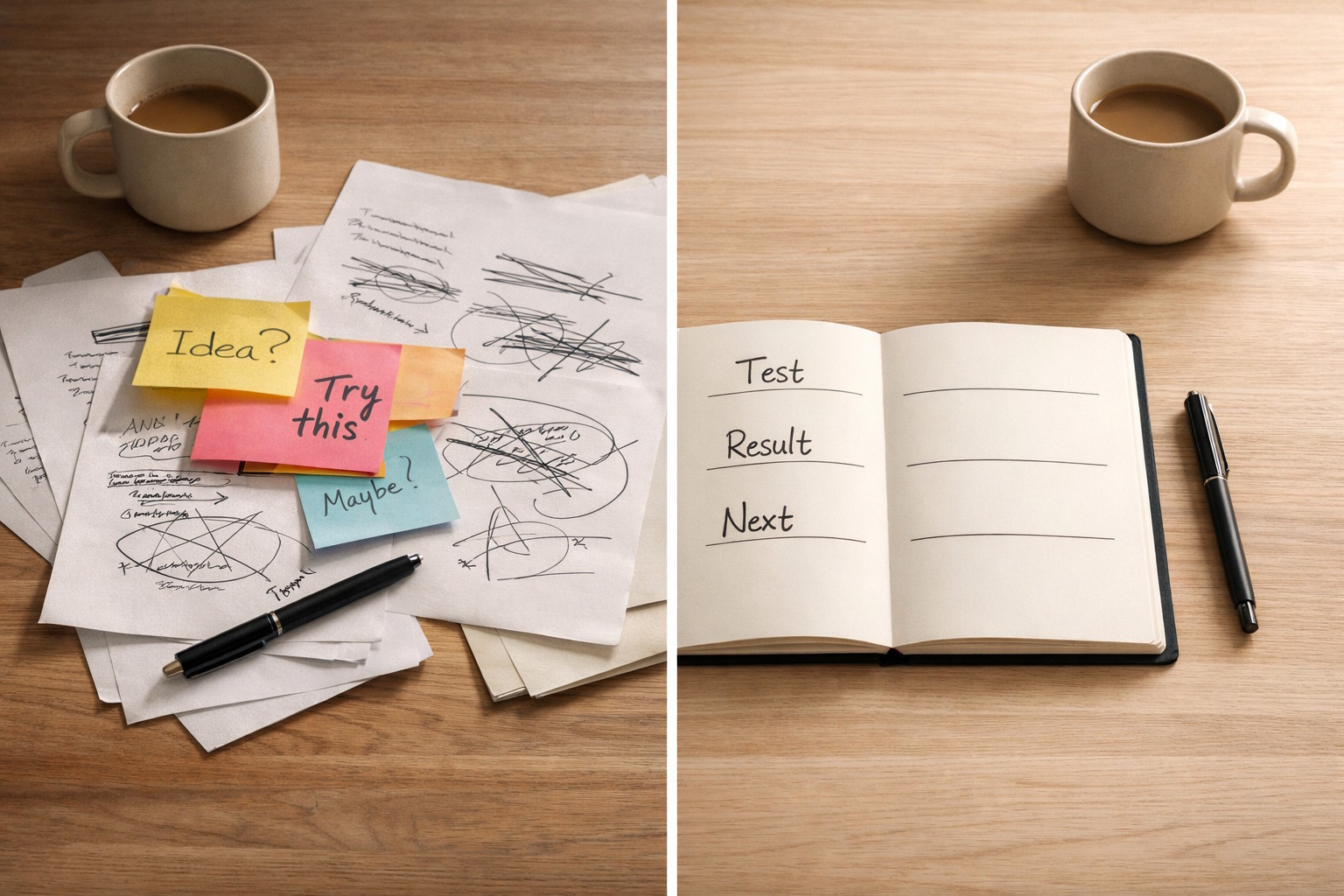
Key Takeaway: A structured marketing experiment is a small, purposeful test that helps you learn what works without guessing. Instead of changing everything at once, you adjust one element—such as a message, offer, or format—and compare results against a steady baseline. Over time, these simple tests make decisions calmer, reduce internal debate, and keep your marketing strategy responsive to real audience behavior rather than assumptions.
A Marketing Strategy That Learns
A marketing strategy should not feel like a fixed script. Think of it as your go-to-market plan, your growth plan, and your brand approach. Plans can go stale after launch, because markets keep moving. Competitors adjust, channels evolve, and audiences refine what they expect.
So where does that leave you on a normal Tuesday? You might be asking this: Do I really need experiments for my marketing? If you have wondered why one message lands and another falls flat, you already do. Structured marketing experiments offer a calm way to learn, without turning your week into a spreadsheet marathon.
Why this topic matters
Marketing now has more moving parts than it did a decade ago. Many teams juggle platforms, formats, and audiences that behave differently each month. A light, structured test helps you keep up and explain choices to colleagues. When you can say, “Here is what we saw,” debates tend to cool down. In many meetings, one person prefers version A and another prefers version B, and a small test settles it.
What Makes an Experiment “Structured”
A marketing experiment is a small, purposeful test that answers one clear question. The “structured” part simply means you set a frame before you start. You decide what you will change, what you will keep steady, and what you will watch. Then you learn from the outcome, even when the result surprises you.
If “experiment” sounds intimidating, picture a taste test. You keep most ingredients the same, then change one element, like the spice level. People react, and you learn what they prefer. In marketing, the ingredients might be a headline, a visual, or an offer. Imagine you send an email with a new subject line. Everything else stays the same that week, and you watch opens, replies, and overall response.
Is this just A/B testing
Not always, and you do not need special tools to start. A/B testing is one common form, but the bigger idea is simpler. You compare a thoughtful alternative to your current approach. That comparison can happen in email, on landing pages, in ads, or in a sales deck.
When “trying things” stops being helpful
Most teams already try new ideas, and that curiosity helps. The trouble starts when no one can explain what changed and why it mattered. Random trial can produce a win, yet it rarely produces clarity. Structured testing focuses on learning, which makes results easier to repeat.
One gentle habit improves almost every test, and it starts by naming the one main change you are making. Small details may shift, but your main change stays clear. That single sentence keeps the work useful later.
How marketing strategy and experiments support each other
A marketing strategy sets direction, and experiments help you steer while you move. Each test works best when it answers a question tied to a broader goal. That goal might be awareness, trust, or sign-ups. When direction and testing travel together, you get focused learning instead of noise. Over time, you build confidence in the choices you decide to scale.
Easy Starting Points That Do Not Overwhelm Your Team
If you feel stuck, you can start where you already have options. Marketing naturally produces variants, so you can test them with modest effort. A good first question sounds ordinary: What would make this clearer to the audience?
Messaging that meets people where they are
Most teams write more than one version of a message. That makes messaging a friendly entry point for structured marketing experiments. Many teams compare a benefit-led headline with a curiosity-led headline. Others compare a short opening line with a longer one.
Proof can also be a friendly variable, such as a customer result or a short testimonial. Then you can see whether the change improves trust. If you wonder what to test first, focus on what your audience must understand next. Then compare two honest ways to say that same idea.
Creative and format choices that change attention
Creative often feels subjective, which can make feedback sessions tense. A small test can shift the conversation from taste to impact. You might compare two visuals that tell the same story in different ways. Or you might compare a static image with a short video that covers the same promise.
It helps to keep one main outcome in view. If you want clicks, watch click behavior; if you want time spent, watch engagement. A single primary signal keeps the discussion clean.
Channels and audiences, without the drama
Channel tests can stay simple, too, when teams place the same message in two channels with a modest budget. They can also compare a narrower segment with a broader one, with clear guardrails. If you work in a regulated space, an early compliance review usually pays for itself.
A Beginner-Friendly Way to Design Your First Test
People often ask how to run an experiment without overthinking it. A short checklist usually helps, and it keeps the process human. It helps to write the question in everyday language. For example, will a shorter form increase sign-ups? Then you add your best guess, even if it feels imperfect. You choose one main measure of success and pick a time window that fits your cycle, like a week.
After the test, you decide what you will do with the learning. Will you adopt the winner, run a follow-up, or keep the original? That last step matters, because it turns activity into progress.
Common questions that come up in early tests
Will experiments slow us down? Often, they speed decisions up by replacing debate with evidence. A small test can prevent months of debate and rework, and it gives you a clear reason to move forward.
What if the result looks messy? That is normal, and you can still learn a useful direction. You may notice which message created better intent. Over time, your process becomes steadier, and your comparisons get cleaner.
Do I need a data scientist? Usually not, if you can compare outcomes in a simple way. You still need a clear question and a way to compare outcomes. Simple measures often provide enough direction at this stage.
How to Read Results Without Turning Them Into Trophies
Experiments can tempt teams into winner culture, which makes people hide “losing” tests. That hurts learning and wastes effort. A healthier approach treats results as information. Ask what you learned about the audience, then ask what you should try next.
It also helps to separate outcome from decision. A winning tactic can still clash with your brand. A losing test can still reveal a better angle.
Staying Ethical and Brand-Safe While You Learn
Even simple tests need judgment. Clear promises, honest claims, and respectful data practices protect trust. If you collect data, explain why you collect it and how you use it. Avoid misleading scarcity and exaggerated results, even when you feel pressure to move faster. When you treat learning as a shared asset and keep standards steady, you build momentum without damaging credibility.
Conclusion: Make Learning Feel Normal
Structured marketing experiments help you learn in public without making your brand feel experimental. They offer a practical way to improve messaging, creative, and channel choices over time. If you start small and stay consistent, you will notice better conversations inside the team.
Most of all, experiments make your marketing strategy feel alive, not frozen. Contact us if you want to learn more about structured marketing experiments and the marketing strategy habits that support them.
