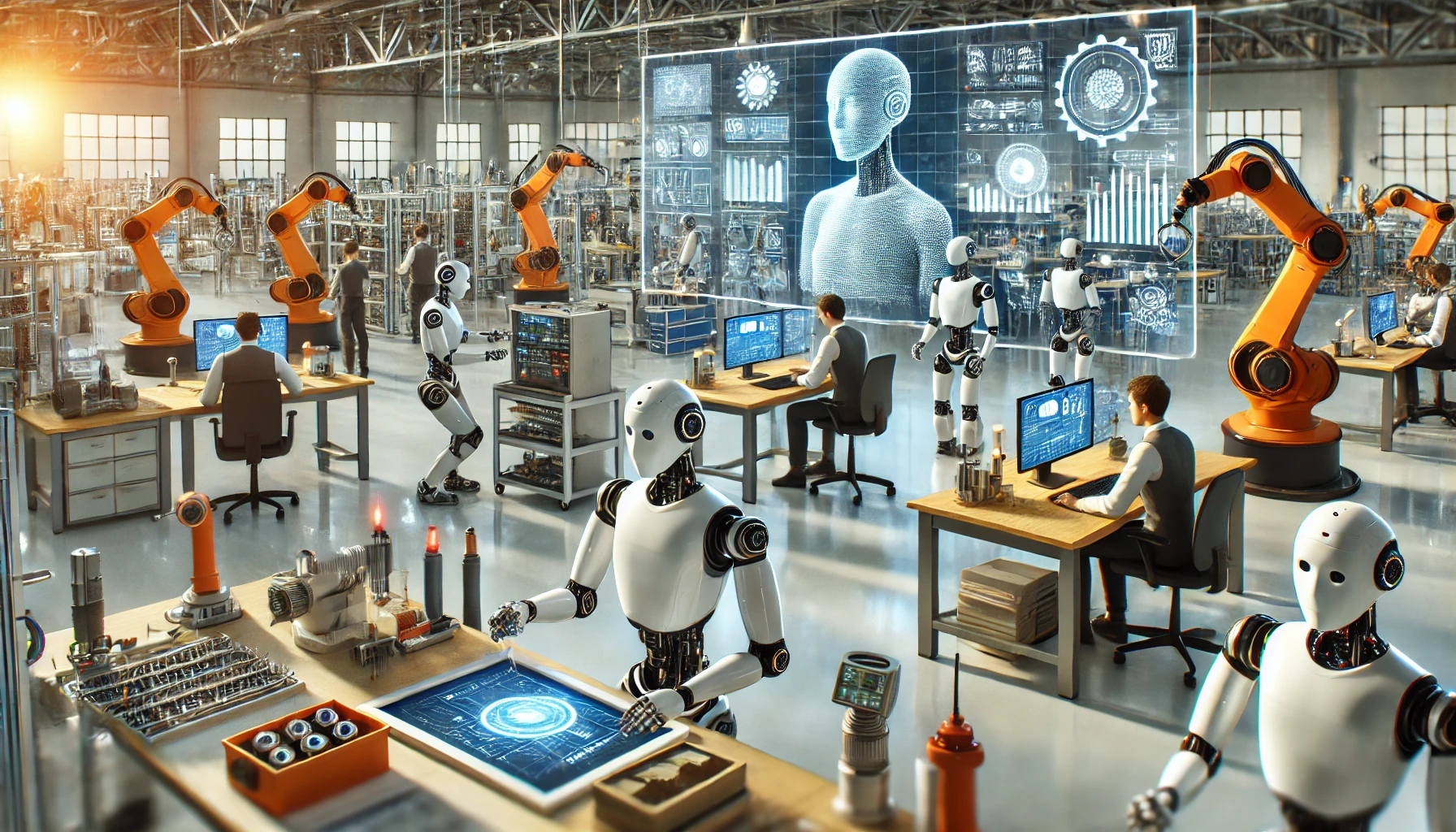
cobot
Automation

The Cobot Market: Revolutionizing Modern Workplaces

In an era defined by rapid technological advancements, collaborative robots, or cobots, have emerged as pivotal players in the transformation of various industries. Unlike traditional industrial robots that operate in isolation, cobots are designed to work alongside humans, enhancing productivity, safety, and efficiency in diverse work environments. The global cobot market, driven by continuous innovation and growing demand for automation, is poised for exponential growth. This article delves into the landscape of the cobot market and the highlights the impact of AI. From small and medium-sized enterprises to large-scale manufacturing giants, the adoption of cobots is heralding a new era of human-robot collaboration, unlocking unprecedented opportunities and redefining the boundaries of what is possible in modern workplaces.


Market Size and Growth

The global collaborative robot (cobot) market is on an impressive growth trajectory. As of 2023, the market was valued at approximately USD 1.77 billion. Projections suggest it could reach around USD 12.71 billion by 2030, reflecting a compound annual growth rate (CAGR) of 32.6% during the forecast period (MarketsandMarkets; NextMSC). Alternative estimates, such as those from Grand View Research, suggest a market size of USD 11.04 billion by 2030 with a slightly lower, yet still significant, CAGR of 32.0%.


Key Drivers

  1. Increasing Demand for Automation: The shift towards more efficient and automated processes in manufacturing and various other sectors is a primary driver of cobot adoption. Cobots are favored for their flexibility and cost-effectiveness in automating repetitive and hazardous tasks (Grand View Research; NextMSC).
  2. Technological Advancements: Ongoing innovations in artificial intelligence, machine learning, and sensor technology are enhancing cobots’ capabilities. These advancements make cobots safer, more intuitive, and better suited for a wide range of tasks (Market Data Forecast; MarketsandMarkets).
  3. Labor Shortages and Rising Costs: Industries grappling with labor shortages and increasing labor costs are turning to cobots as a viable alternative. Cobots can complement human workers, addressing workforce gaps and boosting productivity (Market Data Forecast).
  4. Safety and Collaboration: Designed with advanced safety features, cobots can work closely with humans, reducing the risk of accidents and promoting a safer, more productive work environment (MarketsandMarkets; NextMSC).


Key Players

Here are the top collaborative robot (cobot) companies by market share. For more information, links to Collaborative Robots and AI integration documentation have been added:

  1. Universal Robots A/S
    1. Why Cobots? (UR Cobots)
    2. Guide to Cobots (UR Cobots)
    3. Collaborative Robotic Automation (UR Cobots)
    4. Future of AI and Robotics (UR Cobots)
    5. Four Predictions for 2024 (UR Cobots)
  2. FANUC Corporation
    1. Collaborative Robot CRX series (FANUC)
    2. JIMTOF 2022 (FANUC)
    3. FANUC and NVIDIA AI Collaboration (FANUC)
  3. ABB
    1. Collaborative Robots (Cobots) | ABB Robotics (ABB Group)
    2. Single-arm YuMi Collaborative Robot (ABB Group)
    3. New Frontiers for Robotics and AI in 2024 (ABB Group)
    4. Next Generation Cobots (ABB Group)
  4. Techman Robot Inc.
    1. Collaborative Robots (Techman Robot).
    2. TM Robot Series (Techman Robot).
    3. AI Vision (Techman Robot).
    4. Industry Solutions (Techman Robot).
  5. KUKA AG
    1. Collaborative Robots Overview (KUKA AG)
    2. LBR iisy Cobot (KUKA AG)
    3. KUKA Innovation Award (KUKA AG)
  6. Yaskawa Electric Corporation
    1. Collaborative Robots (Yaskawa).
    2. Integrated Solutions (Yaskawa).
    3. Articulated Robots (Yaskawa).
  7. DENSO Robotics
    1. COBOTTA Collaborative Robots (DENSO Robotics).
    2. COBOTTA Collaborative Robot Product Sheet (DENSO Robotics).
    3. COBOTTA PRO Collaborative Robot Product Sheet (DENSO Robotics).
    4. Global Supplier of Advanced Robotics Technology (DENSO Robotics).
  8. Rethink Robotics
    1. Rethink Robotics Meets German Engineering (Rethink Robotics).
    2. The New Saywer Black Edition (Rethink Robotics).
  9. Comau S.p.A.
    1. Comau Aura Collaborative Robot (Comau).
    2. Racer-5-0.80 COBOT (Comau).
    3. Comau deploys AI-driven collaborative robotics to automate “hands-on” quality control at Fiat (Comau).


Regional Insights

  1. Europe: Europe commands a significant share of the cobot market, driven by applications in electronics, logistics, and inspection. The region benefits from its strong emphasis on manufacturing optimization and human-robot collaboration (Market Data Forecast; Grand View Research).
  2. Asia Pacific: Expected to experience the highest growth rate, Asia Pacific is projected to have a CAGR of over 34.0% from 2023 to 2030. This growth is driven by a focus on quality, precision, and the adoption of advanced automation technologies (MarketsandMarkets; Grand View Research).
  3. North America: The North American market, including the U.S., Canada, and Mexico, is expanding due to its strong technological base and emphasis on automation (MarketsandMarkets; NextMSC).


Future Trends

  1. AI and Machine Learning Integration: The integration of advanced AI capabilities will significantly enhance cobots' intelligence and adaptability, improving their efficiency and effectiveness (Market Data Forecast; MarketsandMarkets).
  2. Expansion into Non-Manufacturing Sectors: The adoption of cobots is expanding beyond manufacturing into sectors such as healthcare, logistics, agriculture, and retail, broadening the market scope (MarketsandMarkets; Grand View Research).
  3. Development of Mobile and Lightweight Cobots: Future developments are expected to produce more mobile and lightweight cobots, enhancing their deployment flexibility and versatility across various environments (Market Data Forecast; NextMSC).


Impact of AI on the Cobot Market

AI is transforming the cobot market by introducing advanced functionalities and improving operational efficiency. The impact of AI on cobots can be examined through several key aspects:

  1. Enhanced Intelligence and Adaptability: AI enables cobots to perform complex tasks with higher precision. Machine learning algorithms allow cobots to learn from their environment and adapt to new tasks without extensive reprogramming. This capability significantly broadens the range of applications for cobots, making them more versatile and valuable across different industries (MarketsandMarkets).
  2. Improved Safety and Interaction: AI-powered sensors and computer vision systems enhance cobots' ability to interact safely with human operators. These technologies enable cobots to better understand and respond to their surroundings, minimizing the risk of accidents and improving collaborative efforts between humans and robots (Market Data Forecast).
  3. Increased Efficiency and Productivity: By integrating AI, cobots can optimize their operations in real-time. They can adjust their actions based on live data and predictive analytics, leading to more efficient processes and increased productivity. This real-time adaptability is crucial in dynamic environments where quick adjustments are often necessary (MarketsandMarkets).
  4. Cost Reduction and Accessibility: As AI technology becomes more integrated and standardized, the cost of implementing advanced cobots is expected to decrease. This reduction in cost will make high-performance cobots more accessible to a broader range of businesses, further accelerating market growth (Grand View Research).


Conclusion

The collaborative robot (cobot) market is undeniably revolutionizing modern workplaces, offering unprecedented opportunities for businesses to enhance productivity, safety, and efficiency. As industries across the globe continue to embrace automation, the demand for cobots is set to soar, driven by the need for more flexible and cost-effective solutions. The integration of advanced artificial intelligence and machine learning technologies further amplifies the capabilities of cobots, enabling them to perform complex tasks with remarkable precision and adaptability.

As we look towards the future, the cobot market is poised for significant growth, with projections indicating a substantial increase in market value by 2030. Key players in the industry are continually innovating, pushing the boundaries of what cobots can achieve. From manufacturing to healthcare, logistics to agriculture, the adoption of cobots is expanding into new sectors, demonstrating their versatility and far-reaching impact.

In summary, cobots are not merely a trend but a fundamental shift in how humans and machines collaborate in the workplace. The ongoing advancements in AI and robotics promise to unlock even greater potential, ensuring that cobots remain at the forefront of industrial innovation. As businesses navigate the complexities of modern work environments, cobots will undoubtedly play a crucial role in shaping a more efficient, safe, and productive future.


Read More
cobots
Automation

Exploring the World of Cobots: AI Integration, Functions, and Industry Impact

Collaborative robots, or cobots, represent a groundbreaking advancement in automation technology. Designed to work alongside human workers in shared workspaces, cobots differ from traditional industrial robots through their advanced safety features and intuitive interfaces. This collaborative approach enhances productivity, safety, and flexibility across various industries. Understanding the key characteristics and functions of cobots highlights their growing significance in today's automated world.


What is a Cobot?

A collaborative robot, commonly known as a cobot, is a type of robot designed to work alongside human workers in a shared workspace. Unlike traditional industrial robots, which are often isolated from humans for safety reasons, cobots are built with advanced safety features and sensors that allow them to operate safely in close proximity to people. Here are some key characteristics and functions of cobots:


Key Characteristics of Cobots

  1. Safety Features: Cobots are equipped with sensors and software that detect human presence and prevent accidents. These features include force-limiting mechanisms that stop the robot if it encounters an obstacle or excess force.
  2. Ease of Use: Cobots are designed to be user-friendly, with intuitive programming interfaces that allow users to set up and operate the robots without needing extensive technical knowledge. Some cobots can be programmed by simply moving them through desired motions.
  3. Flexibility: Cobots are highly adaptable and can be reprogrammed for various tasks. They can be used in different applications, from assembly and packaging to quality inspection and material handling.
  4. Collaboration: Cobots are designed to work alongside human workers, complementing human skills and capabilities. They can perform repetitive, dangerous, or precision tasks, allowing human workers to focus on more complex and creative activities.
  5. Mobility: Many cobots are lightweight and portable, making it easy to redeploy them to different tasks or locations within a facility. Some cobots are also integrated with autonomous mobile robots (AMRs) for enhanced mobility.


Functions and Applications of Cobots

  1. Assembly: Cobots can assist in assembling products, handling small parts, and performing intricate tasks that require precision and consistency.
  2. Material Handling: Cobots can transport materials, load and unload machines, and manage inventory, reducing the risk of injuries and increasing efficiency.
  3. Quality Inspection: Cobots can perform detailed inspections of products, identifying defects and ensuring quality standards are met.
  4. Packaging and Palletizing: Cobots can handle packaging tasks, such as placing items into boxes, labeling, and stacking products on pallets.
  5. Welding and Soldering: Cobots can be used in welding and soldering applications, providing consistent and precise welds while reducing human exposure to hazardous conditions.
  6. Machine Tending: Cobots can tend to machines, such as CNC machines or injection molding machines, by loading and unloading parts, allowing operators to focus on other tasks.


Advantages of Cobots

  1. Increased Productivity: Cobots can operate continuously without breaks, enhancing overall productivity and allowing human workers to focus on higher-value tasks.
  2. Improved Safety: By taking over dangerous or repetitive tasks, cobots help reduce workplace injuries and enhance the overall safety of the work environment.
  3. Cost-Effectiveness: Cobots offer a cost-effective automation solution, particularly for small and medium-sized enterprises (SMEs). Their flexibility and ease of use reduce the need for extensive training and complex infrastructure.
  4. Enhanced Quality: Cobots provide consistent and precise performance, reducing errors and improving the quality of products and processes.
  5. Scalability: Cobots can be easily integrated into existing workflows and scaled up as needed, providing a flexible automation solution that grows with the business.


AI’s impact on Cobots 

Artificial intelligence has a major impact on robotics; cobots are no different. AI significantly enhances the capabilities of collaborative robots (cobots), making them more versatile, efficient, and user-friendly. The integration of AI into cobots drives innovation and transforms their operation alongside humans. Here are several key ways AI benefits cobots:

1. Improved Perception and Sensing

AI enables cobots to process and interpret data from various sensors, such as cameras, lidar, and tactile sensors. This enhanced perception allows cobots to better understand their environment, recognize objects, and detect changes or anomalies. AI-driven image recognition helps cobots identify and manipulate objects with precision. (Market Data Forecast).

2. Advanced Human-Robot Interaction (HRI)

AI algorithms facilitate more natural and intuitive interactions between cobots and human workers. Natural language processing (NLP) allows cobots to understand and respond to verbal commands, while machine learning algorithms enable them to learn from human behavior and adapt accordingly. This fosters a more seamless and collaborative working relationship. (MarketsandMarkets).

3. Enhanced Decision-Making

AI empowers cobots with advanced decision-making capabilities. Machine learning models can analyze large datasets to identify patterns and optimize tasks. This enables cobots to make informed decisions in real-time, improving their efficiency and effectiveness in dynamic environments. (Grand View Research).

4. Predictive Maintenance and Self-Diagnostics

AI-driven predictive maintenance algorithms can analyze sensor data to predict when a cobot requires maintenance or is likely to fail. This helps prevent unexpected downtime and extends the lifespan of the equipment. Additionally, AI-based self-diagnostics allow cobots to identify and troubleshoot issues autonomously, reducing the need for human intervention. (NextMSC).

5. Adaptive Learning and Skill Acquisition

Through reinforcement learning and other machine learning techniques, cobots can acquire new skills and improve their performance over time. AI enables cobots to adapt to new tasks and environments by learning from experience and feedback. This adaptability is particularly valuable in industries where tasks and processes frequently change. (Market Data Forecast).

6. Increased Efficiency and Productivity

AI algorithms optimize the performance of cobots by streamlining workflows and minimizing waste. For instance, AI can optimize path planning and motion control, reducing the time and energy required to complete tasks. This leads to higher productivity and cost savings for businesses. (MarketsandMarkets).

7. Enhanced Safety Features

AI enhances the safety of cobots by enabling them to detect and respond to potential hazards. For example, AI-powered vision systems can identify human presence and adjust the cobot’s movements to avoid collisions. Machine learning models can also predict unsafe conditions and trigger preventive measures to protect human workers. (Grand View Research).

8. Personalized User Experience

AI allows cobots to provide a personalized user experience by learning the preferences and working styles of individual human operators. This customization improves user satisfaction and efficiency, as cobots can tailor their actions and responses to match the needs of each worker. (NextMSC).

9. Integration with Other AI Systems

Cobots can be integrated with other AI-driven systems, such as enterprise resource planning (ERP) and manufacturing execution systems (MES). This integration enables seamless data exchange and coordination across different parts of the production process, leading to more streamlined and efficient operations. (Market Data Forecast).

10. Scalability and Flexibility

AI-powered cobots offer greater scalability and flexibility in automation. Businesses can deploy AI-driven cobots across various tasks and industries, from assembly lines to healthcare settings. AI allows cobots to quickly adapt to different roles and requirements, making them a versatile solution for diverse applications. (MarketsandMarkets).


Conclusion

The integration of AI into cobots is revolutionizing the field of robotics by enhancing their capabilities and expanding their potential applications. AI-driven cobots offer improved perception, decision-making, and adaptability, leading to increased efficiency, productivity, and safety in the workplace. As AI technology continues to advance, the symbiotic relationship between cobots and AI will further drive innovation and transform industries worldwide.

Cobots mark a significant shift in how automation integrates into human-centric environments. With their user-friendly design, advanced safety features, and versatile applications, cobots offer a collaborative solution that enhances productivity, safety, and operational flexibility. As industries continue to evolve and adopt more automated processes, cobots will play an increasingly vital role in optimizing workflows and maintaining competitiveness in an ever-changing market. The future of cobots is promising, with continued advancements and expanding applications ensuring their critical role in modern industrial and service sectors.


Read More
collaborative robots
Automation

How Collaborative Robots Are Building More Efficient Workplaces

The idea of collaborative robots, or cobots, has crossed over from fiction to the real world of production applications. You’ll increasingly find them in manufacturing facilities and warehouses around the world as more and more businesses explore all the possibilities of these smart robots.


How Robots and Cobots Assist Manufacturers

Conventional robots used in manufacturing provide efficiency for assembly line work that’s high risk for humans, such as tasks that require coming in contact with dangerous chemicals or moving machine parts. These robots facilitate high-speed production of high-volume manufacturing and are particularly useful at cutting costs on redundant tasks, giving human workers the ability to work on more in-depth, meaningful work, like data analysis. One limitation of these robust robots, however, is that they are extremely heavy, making them hard to deploy in other applications once they are positioned for an assembly line operation.

The new emerging offspring of these heavy industrial robots is the lightweight, teachable, and mobile cobot, which is designed to work alongside human workers, rather than separately from them as is the case with conventional robots.

Manufacturers utilize cobots to improve production efficiency. They are capable of performing certain human tasks, like tending to computer numerical control machines or performing quality inspections, which allows firms to get more work done with less staffing.

In the larger automotive and aerospace fields, manufacturers are incorporating an increasing number of smart solutions, such as collaborative robots. These machines are capable of performing certain human tasks, which allows a producer to get more work done with less staffing.

Questions for manufacturers to ask when deciding on investing in large robots or smaller, more adaptable cobots will revolve around production speed, volume, and task diversity.


Where Cobots Came From

Cobots originated from a 1995 research project backed by the General Motors Foundation. The concept was to design robotic machines that could safely interact with people and achieve tasks once performed exclusively by humans.


Cobot Safety Standards

Cobots are required to be designed following the safety standards laid out in ISO 10218 and IOS/TS 15066. The safety features embedded in cobots include:

  • Safety Monitored Stop
  • Capacity for Hand-guiding
  • Monitoring for Speed and Separation
  • Limits for Power and Force


Industrial Robots and Cobots

The future of industrial robotics will be toward diverse activity at lower costs. Cobots will be the key to improving profit margins for operations of various sizes. Companies that invest in cobots will have a competitive advantage over those that avoid this technology.

Cobots help manufacturing firms enhance their production efficiency through:

  • Sorting and Installing – Cobots can be designed to accurately pick and place parts in the manufacturing process, especially on a conveyor belt.
  • Machine Monitoring – Overseeing multiple machine processes at once is part of how cobots are revolutionizing manufacturing, as they are able to move supplies to a machine and install or remove parts with high precision based on programming.
  • Packaging – Cobots can now wrap, box, collate or load items in the preparation of shipping.
  • Finishing – Product refinement tasks, such as polishing and grinding, can now be accomplished by cobots, which relieves humans from engaging in dangerous work.
  • Quality Control – The final gatekeeping task of production can now be performed by a cobot, which can completely inspect finished parts to ensure quality compliance and the elimination of human error.

Demand for cobots in the manufacturing community is growing and projected to reach $9 billion by 2025. Major objectives for investment in cobot technology include greater automation, flexibility, cost efficiency, and ease of use. Cobots will likely be embraced by small and medium manufacturers due to their enormous cost-cutting and time-saving appeal. Before investing in cobots, make sure you conduct a comprehensive risk assessment to determine necessary safety features.

Do not underestimate what modern collaborative robots can do for improving manufacturing processes. The global market for robotic systems is expected to rise 45 percent to $36.84 billion by 2026, according to Research and Markets. Over time, cobots will continue to be improved and become less expensive and more valuable to human workforces for getting more work accomplished at a faster pace.


Read More
Collaborative robots
Automation

Powering Through the Crisis: Accelerating Onshore Manufacturing with Cobots and CNC Machining

Before the pandemic, it was well known that several industries in the U.S. have been facing a skilled-labor shortage. According to Deloitte, the manufacturing industry was no exception, with estimates of 2.4 million unfilled positions by 2028.


The Road to Recovery

Around the world, shelter-in-place orders are beginning to lift, and companies will have to restart production without the benefit of a vaccine or treatment being available anytime in the foreseeable future. In response, leaders and medical professionals are recommending a phased approach that uses social distancing to prevent the spread of the coronavirus in offices, retail stores, restaurants, and even on the factory floor.

In the reopening effort, companies are dealing with a lowered production capacity due to COVID-19 testing, staggered shifts, reduced floor staff, and the need to isolate processes to maintain social distancing protocols. How can the manufacturing industry rebuild supply chains to pre-pandemic levels with an even smaller pool of available labor?


Enter Collaborative Robots

Over the past two decades, to combat labor shortages, companies have started to introduce collaborative robots. Also known as cobots, this technology is useful for labor-intensive and repetitive jobs that might otherwise cause worker fatigue, which can contribute to high scrap and rework rates. Unlike the giant industrial robots designed to work autonomously in cages safely isolated from human contact, cobots are designed to work alongside human employees.


Are Cobots Safe to Work With?

Cobots must be designed following safety standards outlined in ISO 10218 and IOS/TS 15066. Cobot safety features include safety monitored stop, hand guiding, speed and separation monitoring, and power and force limiting. They are made safe with tech and software that senses when they have collided with a person or object, monitoring all aspects of the robot’s movements and immediately stops the robot when anything unexpected is detected.


What Cobots Can Accomplish

Typically constructed with lightweight material, cobots are designed for ease of use and mobility, with rounded edges and preset limits on speed and force. Cobots are usually used to tend machines such as CNC, injection molding, press brakes, or stamping presses. Other cobot applications are pick and place, packaging, finishing, and quality inspection. They provide a cost-effective solution to automate thousands of mundane, boring, and dangerous tasks formerly done by workers. With their efficiency and productivity, cobots could well bring manufacturing back onshore, at a lower cost point than the offshore equivalent.


Cobots Can Work “Hand” in Hand with Humans

Manufacturing often requires dozens of people to touch the same product on an assembly line. Collaborative robots can help alleviate those touchpoints and increase human productivity by allowing the operator to focus on quality inspection and other duties. This also allows workers and technicians to focus on more skilled tasks like setting up and running the machines. When operators share workstations with a cobot, it significantly reduces the number of physical (human) touchpoints necessary to move parts through the production process, which helps to follow social distancing protocols.


Keeping Assembly Line Workers Safe and Productive

The protection of workers returning to the factory floor is a priority, and their safety will be handled through the implementation of several recommended health and safety measures. By taking over repetitive tasks, cobots provide a solution that allows employees to work further apart while maintaining the production capacity. Large automated robotic systems require dedicated square footage, but cobots are generally small and mobile. Their flexible form factor allows them to move between tasks and workstations easily. Because of their programmable nature, cobots can fulfill multiple roles in the factory. Peripheral technology such as proximity sensors can also be connected to the cobot, alerting it to pick up parts, change position, or other movements.


Conclusion

Due to the devastating supply chain and labor disruptions of the pandemic, more companies are considering re-shoring or moving production closer to the end consumer. Rather than strictly replacing jobs, human-robot collaboration allows more types of manufacturing to be done at a lower cost with fewer workers. They also help the shift towards industry 4.0 by reducing barriers to entry for automation and robot implementation. The ability to manufacture an expansive catalog of components efficiently and competitively will accelerate onshore manufacturing capabilities and allow more businesses to serve the needs of diverse industries within the global supply chain.


Read More