B2B marketing strategy
Marketing & PR

B2B Marketing Strategy: Budget Planning for Growth

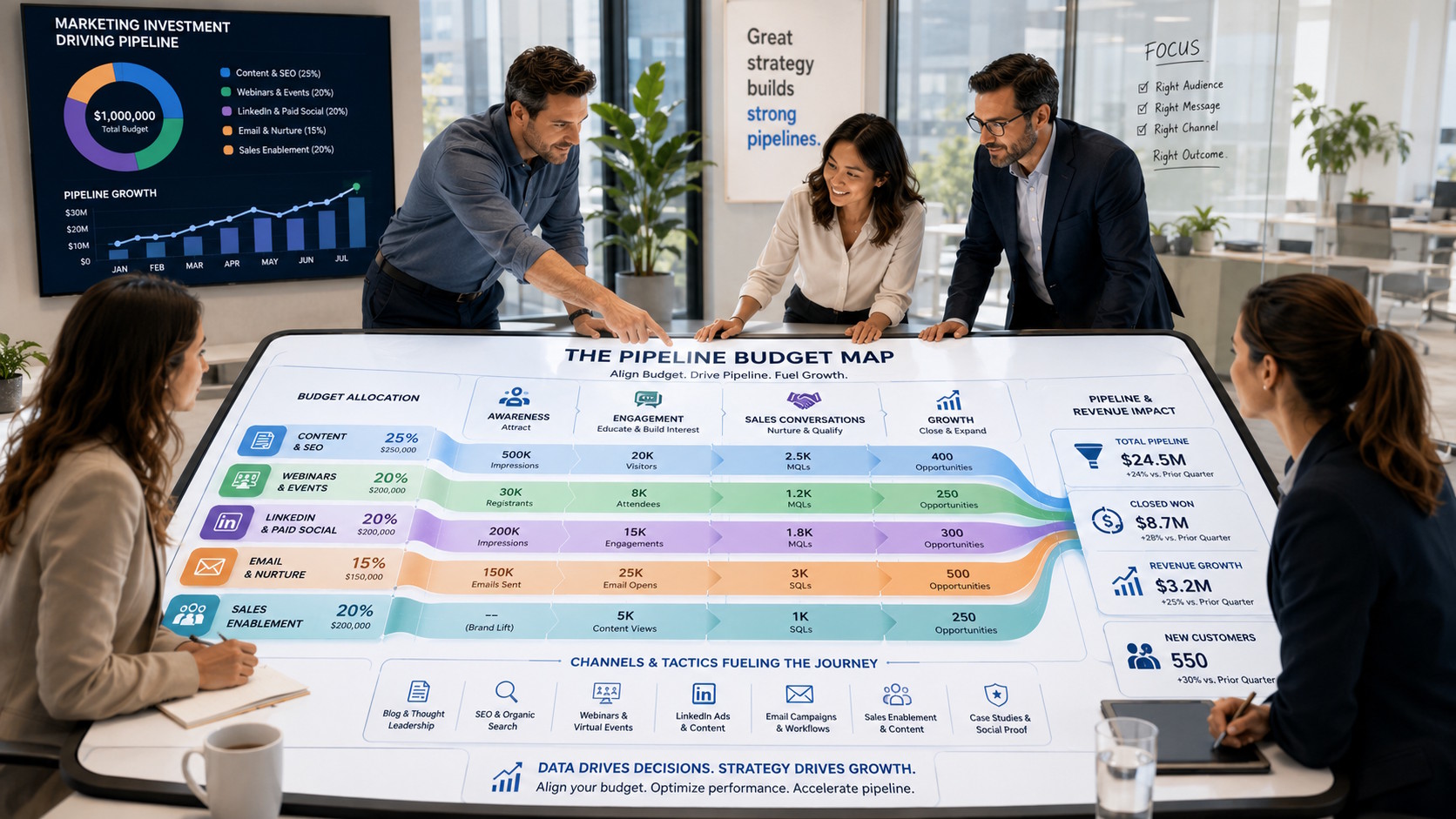
Key Takeaway: A strong B2B marketing strategy needs a budget that supports real growth, not just campaign activity. Budget planning helps you connect spending to pipeline goals, buyer behavior, sales needs, lead quality, and long-term trust. Instead of funding channels by habit, B2B teams should allocate resources based on where buyers are in the journey, how sales conversations develop, and which efforts create meaningful opportunities.

Where B2B Marketing Strategy Meets the Budget

A B2B marketing strategy gets real when the budget behind it supports growth, sales conversations, and the buyer journey. Budget planning connects your business-to-business marketing plan with the go-to-market approach your sales team actually needs.

For many B2B companies, the question is simple: How should we spend limited marketing dollars without chasing noise? The answer starts with strategy, but it quickly moves into priorities, timing, and focus.

A budget can’t fund every trend, channel, and idea at once. It should help you decide what deserves attention now, what can wait, and what needs testing. In B2B, those choices carry extra weight. Buyers often move slowly, compare options carefully, and involve several people before they talk to sales.

Start with the Growth Target, Not the Channel List

Many teams begin budget planning by asking which channels they should fund. They ask whether LinkedIn, search, events, email, webinars, or content deserve the first dollars. Those questions come later.

A better first question is this: What kind of growth should marketing support this year? The answer may involve more qualified leads, stronger account engagement, better sales conversations, or faster movement from interest to opportunity.

This keeps the budget grounded in business outcomes. A company selling a complex platform to enterprise buyers needs a different budget mix. A company selling a simpler service to smaller teams may prioritize faster campaign loops. One may need more education, thought leadership, and sales enablement. The other may need faster lead capture and more frequent campaigns.

When someone asks, “How do I plan a B2B marketing budget?” the most useful starting point is not a percentage. It is the revenue goal, the sales motion, and the type of buyer you need to reach.

Build Around the Real B2B Buyer Journey

B2B buyers rarely act after one ad, one blog post, or one email. A buyer may read an article first, attend a webinar later, then review a case study before requesting a demo. That means your budget should support the full journey. Awareness content helps new buyers understand the problem. Educational webinars and guides help them compare options. Case studies, product explainers, and ROI-focused materials help sales teams move deals forward.

This is where budget planning becomes more than a spreadsheet. It becomes a map of how buyers learn, evaluate, and build confidence. A healthy budget also gives room to nurture prospects who are not ready yet. Many B2B leads need time. They may have budget cycles, internal approvals, or competing priorities. If you only chase immediate form fills, you may miss buyers who need steady contact.

Balance Trust, Demand, and Sales Support

A practical budget should not treat brand and demand as enemies. B2B companies need both. Demand generation can create leads and pipeline, but trust makes buyers more willing to engage.

Thought leadership, SEO content, webinars, newsletters, and LinkedIn activity can help your company stay visible. Paid campaigns, landing pages, and lead capture offers can turn attention into measurable interest. Sales enablement content can help reps answer questions with more confidence.

The mix depends on your market. If buyers already understand your category, your budget may lean more toward conversion and pipeline. If the category feels new, crowded, or complex, you may need more education first.

This is also where teams should avoid copying last year’s budget without asking better questions. What changed in the market? Which campaigns brought real opportunities? Which channels produced leads that sales actually valued? The goal is not to spend more for the sake of it. The goal is to spend with sharper intent.

Make the Budget Fit the Sales Motion

Your sales process should shape your budget. A long enterprise sales cycle needs patient marketing. It may require account-based campaigns, executive content, customer proof, and repeated touchpoints.

A shorter sales cycle may need clearer offers, stronger landing pages, faster follow-up, and simple educational content. Both approaches can work, but they should not receive the same budget design.

This is where many B2B teams get stuck. They invest in lead volume, then wonder why sales ignores the leads. Marketing may celebrate a low cost per lead while sales sees poor fit, weak intent, or no buying authority.

A better budget looks beyond cheap leads. It considers lead quality, account fit, opportunity creation, and sales feedback. In everyday terms, the question is simple. Did this spending help us start better sales conversations?

Leave Room to Learn as You Go

Budget planning should include space for testing. No team knows every answer at the start of the year. Buyer behavior changes. Channels get more expensive. Messages get tired. New opportunities appear.

A modest testing budget can help you try new content formats and improve landing pages. It can also support new webinar topics or paid campaign experiments. The point is not to chase every shiny object. The point is to create room for learning before making bigger bets.

This also makes performance reviews more useful. Instead of judging campaigns only by clicks or downloads, your team can look at what happened next. Did the lead match the ideal customer profile? Did the account engage again? Did sales accept the lead? Did the campaign influence pipeline? Those questions keep the budget connected to real B2B growth.

Make Your B2B Marketing Strategy Measurable

Measurement should feel practical, not overwhelming. You do not need to track everything with equal importance. Start with the numbers that show whether marketing creates useful movement.

For many teams, helpful metrics include qualified leads, MQL-to-SQL conversion, opportunities created, pipeline influenced, cost per opportunity, and closed-won revenue. These measures give a clearer picture than traffic or impressions alone.

Top-of-funnel metrics still have a place. Awareness, reach, engagement, and content views can show whether your market is paying attention. They should connect to deeper signals over time, though. A blog post can introduce the brand, educate the buyer, and support later engagement. It may not close a deal by itself.

The best measurement approach tells a story. It shows how the budget helped attract attention, build trust, support sales, and contribute to growth.

Conclusion: Turn the Plan into Momentum

Budget planning gives marketing strategy a working shape. It helps a team choose priorities, fund the right buyer stages, support sales, and measure progress with more clarity.

For B2B companies, this work should stay connected to pipeline and buyer behavior. A polished budget can still fail if it ignores long sales cycles, buying committees, sales enablement, or lead quality.

A B2B marketing strategy becomes stronger when the budget gives it direction, discipline, and room to learn. Contact us if you want to learn more about planning a B2B marketing budget that supports growth.

Read More
zero click marketing strategy
Marketing & PR

What 68% Zero-Click Searches Mean for Your Marketing Strategy

Key Takeaway: As zero-click searches become more common, businesses may need to rethink their marketing strategy. Buyers increasingly discover and evaluate companies through search results, social platforms, newsletters, webinars, podcasts, and industry communities before visiting a website. Rather than focusing only on website traffic, organizations should invest in building visibility and brand awareness where their audience already spends time. In a zero-click search environment, staying visible throughout the buyer journey can be just as important as earning the click itself.

The Click Is No Longer a Safe Assumption

Your marketing strategy cannot assume every interested buyer will click through to your website anymore. Your broader go-to-market plan, promotional approach, and demand-generation mix now need to account for a simple shift: buyers may learn about you before they ever visit your site.

A recent SparkToro study found that 68.01 percent of U.S. Google searches ended without a click during the first four months of 2026. The research used Similarweb desktop and mobile web panel data, and SparkToro noted that the study did not include searches inside Google’s mobile search app. 

At first, that number sounds like bad news for anyone who depends on search traffic. Fewer clicks can mean fewer website visits, fewer visible signals, and less activity inside analytics dashboards.

But the larger point is not just that clicks are harder to win. The bigger issue is that buyers now gather information in more places. They may see a Google answer, skim a LinkedIn post, watch a short video, read a newsletter, or hear your company mentioned during a webinar. The journey still happens. It just does not always leave a clean trail.

The Marketing Strategy Shift: Meet Buyers Where They Already Are

For years, many companies treated their website as the center of marketing. That made sense when search worked like a gateway. A buyer had a question. Google showed several links. The buyer clicked one and landed on a website. That path still exists, but it no longer tells the whole story.

Zero-click search means people often get enough information from the results page itself. They may not need to click if they only want a definition, a quick comparison, a basic answer, or a local result.

So what does zero-click search mean for marketing? It means your brand needs to show up before the website visit. Your business cannot rely only on the moment when someone reaches your homepage. By that point, the buyer may already have formed an opinion.

This does not mean your website no longer matters. It still matters a lot. But it may serve a different role. Instead of acting as the first introduction, it may become the place buyers go to validate what they already heard elsewhere.

From Website-First to Presence-First

Think about your own habits for a moment. When you research a company, do you always start on its website? Probably not.

You might check LinkedIn to see what the company talks about. You might watch a YouTube interview. You might look for reviews, founder posts, webinars, podcasts, or third-party mentions. You may even ask a quick question in a community you trust. Your buyers behave the same way.

That changes the role of content. A blog post can still attract search traffic. But a LinkedIn post can create familiarity. A webinar can build trust. A podcast appearance can make a company feel more credible. A newsletter mention can keep a brand in someone’s mind until the need becomes urgent.

The old goal was often simple: get the click. The newer goal is broader: get remembered. That is a very different way to think about online visibility.

Why Familiarity Carries More Weight

When people do not click, they still notice things. They notice names, ideas, examples, and points of view.

Imagine a buyer sees two companies mentioned in a search result, a discussion thread, or a market summary. One company feels familiar. The other does not. Which one gets the next search? Which one feels safer? Which one has a better chance of making the shortlist? Familiarity does not close the deal by itself. But it can open the door.

This is where brand awareness becomes more practical than many people assume. It is not just a soft marketing idea. It helps buyers feel like they have seen you before. In crowded markets, that can make a real difference.

A buyer may not remember every detail from your content. But they may remember that your company keeps showing up with useful ideas. That memory can matter later.

Where Should a Modern Marketing Strategy Show Up?

A smart marketing strategy should follow the audience, not just the algorithm. For some companies, that audience spends time on LinkedIn. For others, it may be YouTube, industry newsletters, webinars, podcasts, trade publications, or niche communities. The right mix depends on where your buyers already pay attention.

This is especially important for B2B companies. Buyers often spend months learning before they talk to sales. They follow people. They watch trends. They compare ideas. They build a short list long before they fill out a form. That means your presence should not depend on one channel.

If your audience spends time on LinkedIn, your company should probably have a real voice there. Not just occasional announcements. Not just polished corporate updates. Useful commentary, practical observations, and clear points of view tend to travel better.

If your audience attends webinars, then webinars can do more than generate leads. They can build authority. They can make your company part of the conversation. If your audience reads industry newsletters, then guest articles, sponsorships, or expert quotes may create visibility that search traffic never captures. The goal is not to be everywhere. The goal is to be present where attention already exists.

What Should You Measure When Clicks Tell Less of the Story?

Website traffic still matters. Leads still matter. Conversions still matter. But if more discovery happens outside your website, those numbers become incomplete. They show part of the journey, not the entire journey.

So businesses should also watch signals that point to awareness and trust. Are more people searching for your company by name? Are LinkedIn posts reaching the right audience? Are webinar registrations growing? Are newsletter mentions driving conversations? Are prospects referencing content before sales calls?

These signals may not fit neatly into a last-click report. That does not make them useless. A buyer might see your company five times before visiting your website. Your analytics may only record the final visit. The earlier touchpoints still helped shape the decision.

This is why marketing teams need a wider view. The click is useful. It is just not the only sign of influence.

Conclusion: Visibility Comes Before the Visit

The rise of zero-click search does not mean businesses should panic. It means they should adjust. Search is still important. Websites are still important. SEO is still important. But the buyer journey now includes more invisible moments, more platform-based discovery, and more brand impressions that never turn into immediate traffic.

The companies that adapt will not spend all their energy trying to force every buyer to click. They will build trust in the places their audience already spends time. They will create useful content on their website, but they will also show up on LinkedIn, in webinars, in newsletters, in podcasts, and across the industry conversations buyers already follow.

When 68 percent of searches end without a click, the real question is not only, “How do we get more traffic?” The better question is, “How do we stay visible before the click ever happens?” Contact us if you want to learn more about building a marketing strategy for a zero-click search world.

Sources:

Read More