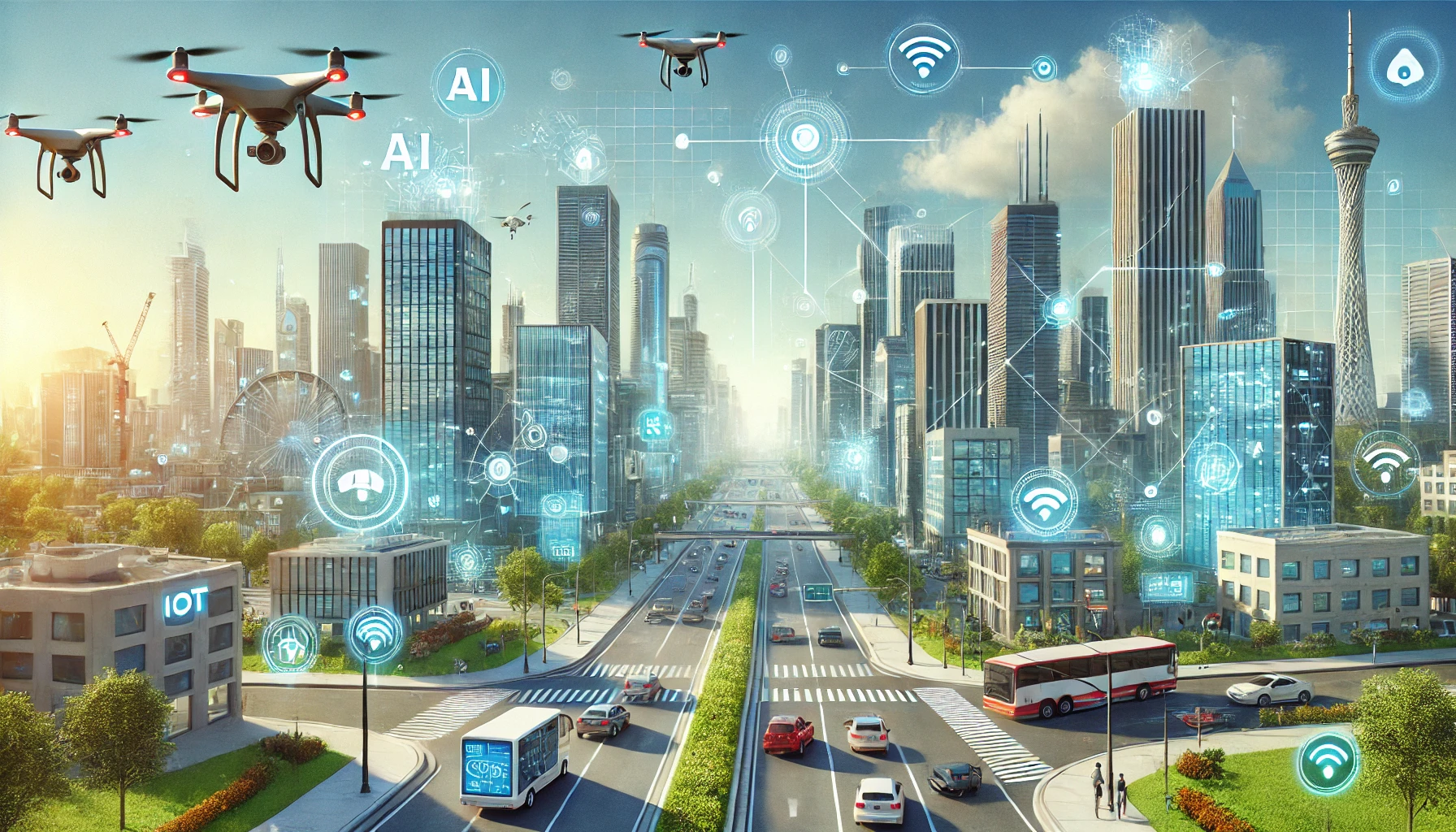
AIoT
Artificial Intelligence

The Emergence of AIoT in 2024: A Transformative Force in Digital Transformation

The year 2024 stands at the cusp of a technological revolution where Artificial Intelligence (AI) and the Internet of Things (IoT) converge to form AIoT, the Artificial Intelligence of Things. This amalgamation promises to be a defining enabler of digital transformation, offering unprecedented operational efficiencies, enhanced customer experiences, and significant productivity gains across various industries. As enterprises navigate this transformative landscape, the integration of AI into IoT solutions becomes not just an enhancement but a necessity.


The Convergence of AI and IoT

In the current era of rapid digital transformation, enterprises must access and process high-quality, real-time data to stay competitive. IoT plays a pivotal role by providing unique data sources through interconnected sensors and devices. However, the true potential of IoT is realized when augmented with AI capabilities, transforming data collection into actionable insights. This convergence, often referred to as AIoT, leverages AI to analyze and derive value from the vast amounts of data generated by IoT devices.


The Strategic Importance of AIoT

AIoT is set to revolutionize various sectors, from automotive and industrial manufacturing to transport, utilities, and smart cities. The global installed base for IoT is projected to exceed 82 billion devices by the end of the decade, emphasizing the critical role of AIoT in driving digital transformation. Enterprises that integrate AI into their IoT deployments can unlock higher operational efficiencies, better customer experiences, and greater productivity gains, positioning themselves as leaders in the digital age.


AIoT Market Size and Key Drivers in 2024

The Artificial Intelligence of Things (AIoT) market is experiencing significant growth and transformation, driven by the convergence of AI technologies and IoT devices. This synergy is creating new opportunities across various industries by enhancing decision-making processes, improving operational efficiencies, and delivering superior customer experiences.


Market Size

The AIoT market size has been expanding rapidly. In 2022, it was valued at approximately USD 9 billion and is projected to grow at a compound annual growth rate (CAGR) of 20% from 2023 to 2032, reaching around USD 25 billion by 2032 (Global Market Insights Inc.). Another report highlights that the market is expected to surge from USD 65.50 billion in 2022 to USD 495.09 billion by 2031, indicating a robust CAGR of 25.2% during the forecast period (SkyQuest Tech Consulting).


Key Drivers

  1. Integration of AI and IoT Technologies: The fusion of AI with IoT allows devices to not only collect data but also analyze and act on it in real-time. This capability is essential for applications that require immediate decision-making and automation, such as autonomous vehicles, smart cities, and industrial automation.
  2. Edge Computing: The rise of edge computing, which involves processing data closer to where it is generated rather than in a centralized data center, is a significant driver for AIoT. Edge computing reduces latency, enhances data security, and improves the efficiency of data processing (SkyQuest Tech Consulting).
  3. 5G Network Expansion: The rollout of 5G networks provides the necessary infrastructure for high-speed, low-latency communication, which is critical for the effective functioning of AIoT devices. This enables real-time data transmission and processing, further enhancing the capabilities of AIoT applications (The Business Research Company).
  4. Increased Adoption Across Industries: Various sectors, including healthcare, manufacturing, retail, and automotive, are increasingly adopting AIoT solutions. For instance, in healthcare, wearable devices and smart sensors are used for remote patient monitoring and predictive analytics, improving patient care and operational efficiency (Transparency Market Research).
  5. Cloud Computing: The use of cloud platforms to manage and process data from IoT devices is driving the AIoT market. Cloud-based AIoT leverages scalable infrastructure and advanced analytics to extract insights from large datasets, supporting more intelligent and efficient operations (The Business Research Company).
  6. Advancements in AI Technologies: Continuous improvements in AI technologies, such as machine learning, natural language processing, and generative AI, are enhancing the capabilities of IoT devices. These advancements allow for more sophisticated data analysis, predictive maintenance, and autonomous decision-making (Fortune Business Insights) (SkyQuest Tech Consulting).


Key Benefits and Use Cases of AIoT


Manufacturing

In the manufacturing sector, AIoT enables real-time monitoring of factory assets, predictive maintenance, and improved robotics. By integrating AI with IoT, manufacturers can identify anomalies, predict equipment failures, and optimize maintenance schedules, reducing downtime and operational costs. The deployment of advanced AI/ML technologies enhances the capabilities of robotics, enabling autonomous factories and warehouses where robots and Automated Guided Vehicles (AGVs) perform complex tasks with minimal human intervention.


Automotive

The automotive industry is another significant beneficiary of AIoT. With over a fifth of all vehicles already connected, the integration of AI within these vehicles enhances safety, performance, and customer experience. AIoT enables advanced driver-assistance systems (ADAS), voice assistance, and predictive maintenance, contributing to safer and more efficient driving experiences. As the industry moves towards fully autonomous vehicles, AIoT will play a central role in processing the continuous streams of data required for real-time decision-making.


Smart Cities

AIoT is also a key enabler for the development of smart cities. By leveraging IoT sensors and AI analytics, city planners can monitor and optimize various aspects of urban living, such as energy efficiency, traffic management, and waste management. AIoT solutions can predict and alleviate traffic congestion, identify potential downtimes in city services, and enhance overall urban sustainability, aligning with the United Nations' Sustainable Development Goals (SDGs).


The Role of Connectivity in AIoT

The success of AIoT deployments hinges on reliable and ubiquitous connectivity. Cellular connectivity, with its proven scalability and security, is particularly crucial for AIoT applications. Low-power wireless networks such as LTE-M and NB-IoT are essential for IoT devices deployed in remote locations with limited power sources, while high-speed, low-latency 5G networks support applications requiring real-time data processing.


The Urgency to Act in 2024

Several factors align in 2024 to signal a pivotal year for AIoT adoption. Rapid developments in Generative AI technologies, hardware advancements, and impending AI regulations create a sense of urgency for enterprises to integrate AI into their IoT applications. Enterprises that prioritize AI/ML in their IoT deployments will gain a competitive edge, while those that delay risk falling behind.


Challenges and Considerations

Despite the growth potential, the AIoT market faces challenges such as data privacy and security concerns, the complexity of integrating AI and IoT technologies, and the shortage of skilled professionals. Addressing these challenges is crucial for the sustained growth and adoption of AIoT solutions (Global Market Insights Inc.). Enterprises must set clear digital transformation goals, foster an experimental culture, and take a practical approach to managing AI risks. Partnering with AI technology experts can help enterprises navigate these challenges, ensuring successful AIoT deployments that deliver tangible returns on investment.


Conclusion

AIoT represents a transformative force in digital transformation, offering enterprises a powerful tool to enhance operational efficiencies, improve customer experiences, and drive productivity gains. In 2024, the integration of AI into IoT solutions is an operational imperative for enterprises aiming to stay competitive in the digital age. By leveraging the capabilities of AIoT, enterprises can turn data into actionable insights, creating value across various sectors and driving the next wave of digital transformation.

The time to act is now. Enterprises that embrace AIoT will position themselves as leaders in the digital age, while those that delay risk falling behind. With the right strategy and partnerships, the potential of AIoT is limitless, promising a future where technology seamlessly integrates with everyday life to create smarter, more efficient, and sustainable solutions.

The AIoT market is poised for substantial growth in the coming years, driven by technological advancements, increased adoption across various industries, and the expansion of 5G and edge computing. As businesses continue to explore the potential of AIoT, they must navigate challenges related to security, integration, and talent to fully realize the benefits of this transformative technology.

For businesses looking to stay competitive, investing in AIoT technologies and developing a robust strategy for integration and data management will be essential. The rapid pace of innovation in this field promises to bring about significant changes in how industries operate, enhancing efficiency, productivity, and customer satisfaction.

For more technology articles like this, visit our Content Hub at Tech Scope Connect.

Read More
blank
Technology

2024 Emerging Tech Trends Redefining the Future – Pt. 1

This is a 6-part series on the emerging tech trends of 2024. The series continues in Part 2.

As we stand on the threshold of 2024, the high-tech landscape is being reshaped by a confluence of emerging trends that promise to redefine our interaction with technology. From the seamless integration of artificial intelligence (AI) with the Internet of Things (IoT) to the relentless push towards sustainability, these developments are not merely evolutionary—they are revolutionary. Let us embark on an analytical journey to explore six pivotal trends that stand at the forefront of this transformation: AIoT and Generative AI, IoT, Scalability, Sustainability, Miniaturization, and IoT Supply Chains.

AIoT and Generative AI: The fusion of AI with IoT, termed AIoT, and the advent of Generative AI are at the vanguard, driving unprecedented levels of efficiency, innovation, and automation. AIoT leverages the vast networks of interconnected devices to generate actionable insights, enhancing decision-making and operational efficiency across various sectors, from smart cities to healthcare. Concurrently, Generative AI is set to revolutionize content creation, product design, and data analysis, offering capabilities that extend from creating realistic simulations to automating complex tasks.

IoT: The Internet of Things continues to be a cornerstone of technological advancement, with its influence permeating every aspect of our lives. Key trends like Edge Intelligence and 5G Integration underscore the move towards more autonomous, efficient, and interconnected systems. As we delve deeper into the IoT ecosystem, issues of Security and Privacy, along with the drive towards Sustainable IoT practices, highlight the industry's commitment to responsible innovation.

Scalability: The explosive growth of connected devices demands robust solutions for network scalability. As IoT devices become increasingly prevalent, the ability to support this vast and varied network infrastructure becomes crucial. From addressing the challenges of diverse IoT applications to leveraging Hybrid Connectivity, scalability is central to the sustainable expansion of our digital world.

Sustainability: Amidst rapid technological progress, the imperative for sustainability has never been more pronounced. As the tech industry grapples with its environmental impact, trends such as Adaptation and Resilience Planning, Material Sustainability, and Decarbonization reflect a holistic approach to integrating sustainable practices. This shift is not just about mitigating harm but about reimagining how technology can contribute to a more sustainable future.

Miniaturization: The trend towards miniaturization is supercharging the IoT by enabling the creation of smaller, more efficient devices. This evolution is driven by advancements in semiconductor technology, Microelectromechanical Systems (MEMS), and the integration of components into compact form factors. As devices shrink in size but grow in capability, they open up new possibilities for integration into our daily lives, from wearable technology to smart home solutions.

IoT Supply Chains: Finally, the transformation of IoT supply chains is set to enhance efficiency, transparency, and sustainability within the high-tech industry. Through End-to-End Visibility, Predictive Maintenance, Smart Warehousing, and the embrace of Collaborative Networks, the IoT is revolutionizing how goods are produced, tracked, and delivered, ensuring more resilient and responsive supply chains.

As we navigate these trends, it becomes clear that they are not isolated phenomena but interconnected forces driving towards a more integrated, efficient, and sustainable future. For businesses, staying ahead of these trends is not just about competitive advantage—it's about shaping the future of technology and its role in society.


AIoT and Generative AI: Pioneering Efficiency and Innovation

Shaping the Future: The relentless march of artificial intelligence (AI) shows no signs of slowing down, and as high-tech businesses navigate the dynamic landscape, two crucial trends are poised to redefine the future: AIoT (the fusion of AI and the Internet of Things) and Generative AI. Let's embark on a journey to explore these exciting frontiers:

  1. The AIoT (Artificial Intelligence of Things) Revolution: Pioneering Efficiency and Innovation
    • Enhanced Connectivity: The convergence of AI and IoT is unlocking new possibilities. 5G and other advanced connectivity solutions are bolstering IoT capabilities, enabling seamless communication between devices and systems. Real-time data exchange, low latency, and high bandwidth empower applications like smart cities, industrial automation, and healthcare.
    • Edge Computing: As data volumes surge, edge computing gains prominence. By processing data closer to the source—whether it’s a factory floor, a vehicle, or a sensor—organizations achieve faster insights and reduce network congestion. Edge AI algorithms optimize decision-making at the device level, enhancing efficiency and responsiveness.
    • Blockchain Security: IoT devices face security challenges. Blockchain technology provides a decentralized, tamper-resistant ledger for secure data exchange. Integrating blockchain with IoT ensures data integrity, authentication, and transparency, especially in critical sectors like supply chain management and healthcare.
  1. Generative AI: Unleashing creativity and Automating Complexity
    • Expanding Datasets: Generative AI models, such as large language models (LLMs), thrive on massive datasets. Training them with hundreds of billions of parameters improves accuracy and sophistication. Expect continued growth in dataset size, leading to smarter AI systems.
    • Actionable AI: Generative AI isn’t just about creativity; it’s practical. Organizations will deploy AI as personal assistants within various systems. These “actionable AIs” perform specific tasks, saving time and resources. Imagine an AI that automates repetitive processes, schedules meetings, or analyzes market trends.
    • Multi-Modality: The next wave of generative AI involves multi-modal models. These models interpret various forms of input—images, voice commands, and text. Imagine AI that designs physical products, understands natural language, and generates video content. Multi-modality will revolutionize product development and content creation.
    • Cost-Effective Data Analysis: As cloud computing costs rise, generative AI steps in. It offsets expenses by streamlining enterprise data analysis. By automating insights, organizations can manage complexity, reduce risk, and extract value from their data.

These trends hold immense potential for high-tech businesses, driving innovation, efficiency, and strategic decision-making. As leaders, staying abreast of these developments is crucial for sustainable growth and competitive advantage.


IoT: Driving Connectivity and Intelligence Across Sectors

The high-tech scene is a whirlwind of constant evolution, and the Internet of Things (IoT) continues to be a driving force. It's more than just a buzzword now – it's a landscape teeming with innovation. Buckle up as we explore the key trends shaping the future of IoT in 2024:

  1. Edge Intelligence: Organizations are increasingly harnessing the power of edge computing. By processing data closer to the source—whether it’s a factory floor, a vehicle, or a sensor—companies achieve faster insights and reduce network congestion. Edge AI algorithms optimize decision-making at the device level, enhancing efficiency and responsiveness.
  2. 5G and IoT: The rollout of 5G networks is revolutionizing IoT connectivity. With its ultra-low latency and high bandwidth, 5G enables real-time communication between devices. This paves the way for applications like autonomous vehicles, smart cities, and remote healthcare.
  3. Security and Privacy in IoT: As the IoT ecosystem expands, ensuring robust security becomes paramount. Organizations are investing in secure device authentication, encryption, and vulnerability management. Privacy concerns are also driving the adoption of privacy-preserving technologies.
  4. AIoT (AI + IoT): The convergence of AI and IoT is unlocking new possibilities. AI algorithms analyze massive data streams from IoT devices, providing actionable insights. AIoT applications span predictive maintenance, anomaly detection, and personalized experiences.
  5. Sustainable IoT: With environmental consciousness on the rise, sustainable IoT practices are gaining traction. Energy-efficient devices, circular economy principles, and responsible e-waste management are essential considerations.

These trends hold immense potential for high-tech businesses, driving efficiency, innovation, and strategic decision-making. Staying informed about these developments is crucial for staying competitive in the dynamic IoT landscape.


Scalability: Meeting the Demands of an Interconnected Future

Change is the new normal in high-tech, and two trends are rapidly converging to define the future: the ever-expanding Internet of Things (IoT) and the critical need for network scalability. As we stand on the precipice of 2024, several key developments demand our attention:

  1. Explosive Growth in Connected Devices: According to Cisco’s Annual Internet Report, the number of network-connected devices is projected to soar to nearly 30 billion by 2023, up from 18.4 billion in 2018. Among these, IoT devices will constitute 50% (14.7 billion) of all networked devices, compared to 33% (6.1 billion) in 2018. This surge underscores the critical role of scalability in accommodating this vast ecosystem.
  2. The Scalability Imperative: Supporting an expanding IoT Ecosystem. IoT devices span a wide spectrum, from simple temperature sensors with constrained resources to bandwidth-hungry 4K/8K video cameras equipped with edge intelligence. RFC 7228 classifies these devices into different categories, each with distinct network requirements. For instance, workplace robots demand high bandwidth and low latency, necessitating reliable, scalable, and high data rate networks. Both Wi-Fi 6 and 5G are poised to play pivotal roles in enabling various IoT use cases.
  3. Hybrid Connectivity: Network administrators face the challenge of maintaining connectivity across diverse environments—the “Extended Enterprise.” This encompasses not only carpeted office spaces but also warehouses, distribution centers, outdoor areas, and extreme environments like cold storage. The combination of Wi-Fi 6 and 5G offers flexibility for new deployments without compromising on traffic throughput. These technologies empower seamless indoor and outdoor coverage, supporting the growing use cases for remote workers and diverse IoT applications.

In summary, the convergence of IoT and network scalability demands strategic planning, robust infrastructure, and forward-thinking solutions to navigate the complexities of our interconnected world.


Sustainability: Embedding Eco-Consciousness in Tech Innovations

The high-tech world, long associated with rapid innovation, is facing a new challenge: sustainability. As environmental concerns mount, responsible practices are no longer a fringe consideration, but a driving force shaping the landscape in 2024. Let's explore some key trends taking root:

  1. Climate Resilience and Tech: Strategies for a Sustainable Future. As the physical risks from climate change intensify, organizations are placing a heightened focus on adaptation and resilience planning. They recognize the need to prepare for climate hazards and build robust strategies to withstand their impacts. This includes understanding the effects of climate change on human health and taking proactive steps to mitigate risks.
  2. Material Sustainability Issues: Companies are increasingly measuring and managing material sustainability issues throughout their value chains. Some countries now mandate disclosure standards, prompting organizations to assess their impact on critical areas like plastic usage. However, this complex task requires high-quality data and transparent methodologies.
  3. Governance for AI and Technology: With the growing reliance on technologies like artificial intelligence (AI), there’s mounting pressure to ensure robust governance. Organizations must manage the risks and opportunities presented by AI ethically and effectively. Striking the right balance between innovation and responsible use is crucial.
  4. Decarbonization and Sustainable Finance: Urgency around decarbonizing the economy continues to rise. The global market for green, social, sustainability, and sustainability-linked bonds (GSSSB) is inching closer to the $1 trillion mark. These financial instruments play a pivotal role in funding sustainable initiatives and projects.
  5. Tension Between Urgency and Inaction: Stakeholders are caught in a delicate balance between the urgency to address climate change and biodiversity loss and the inertia caused by geopolitical uncertainties and fear of litigation. Sustainability discussions will grapple with this tension throughout 2024, emphasizing the need for just and equitable solutions.

These trends will impact a wide range of stakeholders, from companies and investors to communities and policymakers. As high-tech leaders, staying attuned to these developments is crucial for driving meaningful change and sustainable practices in the industry.


Miniaturization: The Tiny Titans of Technology

Miniaturization trends in IoT devices have been a driving force in the evolution of connected technologies. As the Internet of Things (IoT) continues to expand, there is a growing demand for smaller, more efficient devices that can seamlessly integrate into our daily lives. Here are some key trends:

  1. Semiconductor Shrinking: The heart of modern technology lies in semiconductors. Over the years, we’ve witnessed a relentless drive to shrink transistors and other components. Moore’s Law, which predicts the doubling of transistor density every 18-24 months, has fueled this trend. Smaller transistors lead to faster processors, more memory, and energy-efficient devices.
  2. Microelectromechanical Systems (MEMS): MEMS devices combine mechanical and electronic components on a tiny scale. These include accelerometers, gyroscopes, and pressure sensors found in smartphones, wearables, and automotive systems. MEMS technology enables precise measurements and efficient energy usage.
  3. Smaller Form Factors: IoT devices are becoming increasingly compact. Engineers and designers are pushing the boundaries of miniaturization, allowing sensors, processors, and communication modules to fit within tiny spaces. This trend enables wearable devices, smart home sensors, and even implantable medical devices.
  4. Energy Efficiency: With limited power sources (such as batteries), energy efficiency is critical. Miniaturized IoT devices are designed to consume minimal power during operation. Low-power microcontrollers, energy harvesting techniques, and optimized communication protocols contribute to longer battery life.
  5. Integration of Components: Miniaturization involves integrating multiple components onto a single chip or module. System-on-Chip (SoC) designs combine processing, memory, and connectivity functions. This integration streamlines manufacturing, reduces costs, and enhances reliability.
  6. Advanced Materials: Researchers are exploring novel materials for miniaturized IoT devices. Flexible substrates, organic semiconductors, and 2D materials (like graphene) enable bendable, lightweight devices. These materials also enhance thermal management and durability.
  7. Edge Computing: Miniaturized IoT devices are shifting processing power closer to the data source (the “edge”). Edge computing reduces latency, improves real-time decision-making, and minimizes the need for centralized cloud processing.
  8. Wireless Connectivity: Compact IoT devices rely on wireless communication protocols such as Bluetooth Low Energy (BLE), Zigbee, and LoRaWAN. These protocols allow seamless connectivity without bulky cables or connectors.

In summary, miniaturization in IoT devices enables a world where smart sensors, wearables, and interconnected gadgets seamlessly blend into our surroundings, enhancing convenience and efficiency.


IoT Supply Chains: Revolutionizing Production and Delivery

The high-tech world is a constant buzz of innovation, and the IoT supply chain is no exception. In 2024, we're witnessing a metamorphosis that promises greater efficiency, transparency, and sustainability. Buckle up as we explore the key trends shaping this transformation:

  1. End-to-End Visibility: Organizations are prioritizing end-to-end visibility across their IoT supply chains. Real-time tracking of goods, components, and raw materials is essential. Leveraging technologies like RFID, GPS, and blockchain, companies gain insights into inventory levels, production status, and delivery timelines.
  2. Predictive Maintenance: IoT-enabled sensors embedded in machinery and vehicles provide data on performance, wear, and potential failures. By analyzing this data, companies can predict maintenance needs, reduce downtime, and optimize operations. Predictive maintenance ensures efficient supply chain continuity.
  3. Smart Warehousing: IoT-driven smart warehouses enhance efficiency. Automated inventory management, optimized storage, and real-time monitoring of goods streamline logistics. Smart sensors track temperature, humidity, and other environmental factors, ensuring product quality and compliance.
  4. Sustainability and Circular Economy: High-tech businesses are embracing sustainable practices. IoT enables tracking of a product’s entire lifecycle, from sourcing to disposal. Companies focus on reducing waste, recycling materials, and minimizing environmental impact.
  5. Collaborative Networks: IoT facilitates collaboration among supply chain partners. Real-time data sharing, demand forecasting, and agile responses to disruptions enhance resilience. Collaborative networks foster transparency, trust, and efficient decision-making.

These trends empower high-tech businesses to create agile, resilient, and sustainable supply chains, driving competitive advantage and customer satisfaction.


Conclusion: Integrating Trends for a Sustainable, Efficient Future: The Role of Tech in Shaping Tomorrow

In the grand tapestry of technological evolution that defines our age, the threads of AIoT & Generative AI, IoT advancements, Scalability challenges, Sustainability efforts, Miniaturization trends, and IoT Supply Chain innovations intertwine to weave a future that is not only technologically advanced but also sustainable, efficient, and deeply integrated into the fabric of daily life. As we edge closer to 2024, these emerging trends underscore a pivotal shift in how we conceptualize, interact with, and leverage technology, marking a transition from isolated advancements to a cohesive, interconnected ecosystem. This transformation is not merely about the sophistication of individual technologies but about how these technologies collectively enable a smarter, more responsive, and sustainable world. For businesses, staying at the forefront of these trends is imperative, not just for maintaining a competitive edge but for fostering a future where technology serves as a cornerstone for societal progress, environmental stewardship, and economic resilience. Thus, as we navigate this intricate landscape, our collective journey towards integrating these trends will define the legacy of our era, shaping the future of technology and its role in society for generations to come.


Watch the full replay of our event 2024 Emerging Trends for more about the latest on tech in 2024 and beyond!
Read More
Hyperscalers and Tech Industries
Cloud Computing

How Hyperscalers Are Changing The Tech Industry

The economy moves through up and down cycles, which affects businesses of all sizes, but usually in different ways. During upcycles, many new companies enter the market while downturns often weed out the most financially troubled firms. The most resilient technology companies tend to be hyperscalers, which are giants like Apple, Microsoft, Google, Amazon, and Meta.


What is a Hyperscaler?

Hyperscalers are large cloud services providers that provide computing and storage services and can support apps and microservices at enterprise scale, The name is derived from the term "hyperscale computing" which is a methodology that allows software architecture to scale and grow with increasing demand. Enterprise applications require flexible computing environments that adapt to the fluctuating workload.

By giving their clients access to readily available scalable infrastructure - using the infrastructure-as-a-service (IaaS) model -, hyperscalers allow their clients to build and run, any type of innovative application, while also allowing them to scale and shrink resources on an as-needed and pay-as-you-go basis. IaaS became popular in the early 2010s, and it has become the standard computing model for many types of workloads. IAAS is the foundation layer of cloud computing and enables teams to reserve and provision computational resources. Cloud services like Software as a service (SaaS), Functions as a service (FaaS) or serverless, Containers as a service (CaaS), and microservices are built on the IaaS layer.


The History of Hyperscalers

Many of the new internet technologies this century were introduced and popularized by hyperscalers. Near the start of the new millennium, Google helped usher in cloud computing while proving that the reliability of expensive servers is not a factor with scalability. The search giant proved it by using slower computers running the Linux operating system instead of UNIX or Windows.

Microsoft, Amazon, and IBM became pioneers in cloud computing, blazing trails for many tech companies to sell products online with the help of cloud services. The rise of cloud platforms developed by hyperscalers that attract a large user base has helped many businesses go global and offer 24/7 service.

The current wave of hyperscalers is focused on improving cybersecurity, due to the steady rise in cybercrime. As powerful as large tech companies are, they must protect the privacy of their customers, since they've scaled up into millions of users. A cyber breach can hurt a hyperscaler's credibility, so such large organizations must make cybersecurity a top priority.


The Rise of Hyperscalers

In this race toward big data, there are businesses of all sizes. Large companies tend to build private networks, while small companies often use public clouds to save money. Mid-sized companies tend to adopt hybrid cloud solutions. The need for businesses to hyperscale, or make scaling adjustments quickly, grows larger each day.

The name hyperscalers is usually applied to companies with large data centers that provide numerous IT services. Some other well-known hyperscalers include semiconductor companies AMD and Intel, as well as major tech developers such as Ericsson, IBM, and Oracle.

The rise of hyperscalers has paralleled mass cloud migration. The concept of the cloud alone attracts businesses to it because it delivers software services at a fraction of the cost businesses used to pay for software licensing. One of the biggest challenges for hyperscalers in the future will be the management of big data, which includes cybersecurity. It also embodies the solution of edge computing, which helps reduce latency.

While hyperscalers have made it possible for ordinary businesses to adopt IoT technology, there is still a need to prioritize critical data over less important data. Critical data should be stored on more than one additional server. Using a virtual private network (VPN) is one of the safest solutions for protecting confidential data.


Hyperscaler Market Forecast

The big three hyperscalers today are Amazon Web Services (AWS), Microsoft Azure, and Google Cloud. The combination of just these three players accounts for 76 percent of the cloud market, according to Synergy Research Group. AWS leads the pack with a 34 percent market share, followed by Microsoft with 21 percent and Google with 11 percent.

One of the biggest financial challenges the hyperscaler market faces now is overcoming inflation, which has caused many businesses to tighten their budgets. Although slimmer budgets will lead to fewer cloud deployments, this dynamic opens the door to competition for the pay-as-you-go model.

The market for global data center colocation is expected to grow to $109 billion by 2027, according to Structure Search. Now countless companies are aiming to grab a piece of the cloud market share.


The Impact of IoT on Hyperscalers

Driven by the growing importance of IoT, Hyperscalers are extending their infrastructure to the edge and are developing IoT platforms. Because IoT applications, just like enterprise applications, need a scalable infrastructure. The second trend that we are currently witnessing, is the rise of the intelligent edge. More and more sensors are deployed at the edge, computing is pushed from the cloud to the edge to crunch the data, and the availability of edge computing and the need for real-time response has led to the development of edge AI.

Both trends are drivers behind the growth of the hyperscale edge computing market. The Hyperscale Edge Computing Market size was valued at USD 2 billion in 2021 and is expected to grow at over 30% CAGR through the end of this decade, according to Global Market Insight.


The Artificial Intelligence of Things (AIoT) Revolution

Edge Computing is a key enabler for many future technologies, and it is the primary driver of AIoT; it moves data processing from the Cloud to the edge. But the vision of the AIoT is the vision of the intelligent edge namely, to create an intelligent network of devices capable of gathering and analyzing data remotely and translating that data into insights and real-time actions. It also enables a wide variety of use cases that simply weren’t realistic before.

One element of this vision is the inversion of the cloud model. The rapid increase of IoT devices – according to some forecasts there will be more than 75 billion IoT devices by 2025 — results in an explosion of the amount of data generated. The cloud infrastructure, storage, and connectivity solutions cannot scale to keep up with this data explosion, and more intelligence and data crunching will need to be deployed at the edge. This also has an impact on the hyperscalers because it means that the hyperscalers will have to follow the inversion of the cloud model.


IoT Infrastructure Using the Cloud or Edge

When developing an IoT infrastructure a key decision is whether cloud or edge computing works best, it typically boils down to latency and cost. If a company aims for minimal latency in its data transmission from IoT devices, the more reliable solution is edge computing. The AIoT revolution doesn't make this discussion mute, it puts it in a sharper context. Because computing power at the edge will be limited, companies will have to decide which data will have to be processed on the edge for real-time response, which data will have to be stored in the cloud, and which data can be deleted.


Leveraging the Power of Hyperscalers

It's common for hyperscalers to provide IoT-based hyperscale tools for their users. And then there are companies like Triotos that assist in lowering development costs and simplifying setup of IoT devices on a hyper scale platform to create any size IoT solutions that scale. Triotos has developed an IoT implementation platform based on the AWS IoT platform and associated AWS-based services and applications.

The Triotos platform offers a complete set of customizable web and mobile applications and supports rapid integration of new IoT devices, tools supporting application development and integration with external data sources, and mobile connectivity solutions.

Click the link for more information about the Triotos IoT solution in the “Creating Anysize IoT Solutions that Scale” whitepaper.


Conclusion

IoT is constantly evolving as a data delivery medium, as it can impact the scalability of a business. Although economic pressures may slow down IoT deployment, it's clear that IoT is here to stay. It's also clear that IoT makes a business more competitive due to faster communication and decision-making. Look for hyperscalers to continue building a digital ecosystem that makes an enterprise more scalable and sustainable.

Read More
Electric Vehicle
Electric Vehicles

Driving Into the Future: Electric Vehicle Monitoring

EV Monitoring and Its Importance

Electric vehicle (EV) monitoring refers to the process of tracking and analyzing data from electric vehicles and their charging infrastructure. It is a critical component in ensuring the efficient operation and maintenance of EVs and their associated charging infrastructure. EV monitoring enables fleet operators, charging station owners, and utilities to monitor vehicle and infrastructure performance, diagnose issues, and make informed decisions about maintenance, repairs, and upgrades.

With the rapid growth of the EV market, the importance of effective EV monitoring is increasing. In this article, we will explore the current state of EV monitoring, emerging technologies and trends, the implications of advancements, and future developments in EV monitoring.


Brief History of EV Monitoring Technology

The history of EV monitoring technology can be traced back to the early days of electric vehicles. The first electric vehicles were developed in the mid-19th century, and by the early 20th century, electric vehicles were in widespread use. However, at that time, there was no monitoring technology available to track the performance of electric vehicles.

The development of modern EV monitoring technology began in the late 20th century with the advent of electronic vehicle management systems (EVMS) that monitored the performance of electric vehicle components such as the battery, motor, and charger. As the popularity of electric vehicles grew, new monitoring technologies were developed, including cloud-based monitoring systems, vehicle-to-grid (V2G) monitoring, and predictive maintenance systems.

Today, EV monitoring technology is rapidly evolving, with advances in artificial intelligence, machine learning, and the integration of renewable energy sources paving the way for more sophisticated and effective monitoring systems.


The Components of EV Monitoring

1. Telematics Devices

These are sensors and communication modules that are installed in electric vehicles to collect data on battery usage, location, driving behavior, and other vehicle parameters.

2. Charging Station Monitoring Systems

These systems collect data on charging sessions, including start and stop times, energy consumption, and charging rate.

3. Data Analytics Platforms

These platforms process and analyze data collected from telematics devices and charging station monitoring systems to provide insights into EV and charging infrastructure performance.

4. Cloud-Based Storage

Cloud-based storage systems are used to store and manage the large amounts of data generated by EV monitoring systems.

5. User Interfaces

These interfaces allow users to view and interact with the data collected by EV monitoring systems, providing real-time monitoring and analysis of EV and charging infrastructure performance.

6. Predictive Maintenance and Anomaly Detection Systems

These systems use machine learning algorithms to identify and diagnose issues with electric vehicles and charging infrastructure before they become major problems.

7. Energy Management Systems

These systems integrate EV monitoring data with renewable energy sources to optimize energy usage and reduce costs.


Current State of EV Monitoring

Currently, EV monitoring is widely used by fleet operators, charging station owners, and utilities to track the performance of electric vehicles and their charging infrastructure. The most common types of EV monitoring systems include telematics-based systems, which use sensors installed in vehicles to collect data on battery usage, location, and driving behavior, and charging station monitoring systems, which track the status of charging stations and collect data on charging sessions.

The current state of EV monitoring, however, is not without its limitations and challenges. One of the biggest challenges is the lack of standardization in communication protocols between different EV models and charging stations, which can make it difficult to collect and analyze data from multiple sources. Additionally, some EV monitoring systems are not able to provide real-time data, which can hinder the ability to quickly diagnose and address issues.

Nonetheless, there have been successful implementations of EV monitoring, such as the use of telematics-based systems to optimize fleet management and the use of charging station monitoring to identify and address equipment malfunctions.


Looking at Some EV Monitoring Market Segments

The electric vehicle (EV) charging station market is expected to grow by USD 15.81 billion from 2021 to 2026, according to a new report by Technavio. The report provides a descriptive analysis of the customer landscape, vendor assessment, and market dynamics in the EV charging station market. The growth of the market is attributed to the increasing adoption of electric vehicles, government initiatives to promote EVs, and the growing demand for fast and convenient charging solutions.

The report also identifies key market trends, such as the emergence of wireless charging technology and the integration of renewable energy sources into EV charging infrastructure. It highlights challenges facing the market, including the lack of standardization in charging protocols and the high cost of installing and maintaining EV charging infrastructure.


Emerging Technologies and Trends in EV Monitoring

The rapid growth of electric vehicle (EV) adoption has led to the emergence of innovative technologies and trends in EV monitoring. One key trend is the development of sophisticated software systems that allow for real-time monitoring of EV charging infrastructure, battery health, and overall vehicle performance. These systems use advanced sensors and data analytics to gather and analyze data, providing insights into everything from energy consumption to driving patterns.

There is also a growing focus on the integration of renewable energy sources such as solar panels with EV charging stations, creating a more sustainable and efficient ecosystem. Other emerging technologies in EV monitoring include wireless charging, vehicle-to-grid (V2G) systems, and the use of blockchain technology for secure data sharing and tracking of renewable energy credits. These advancements promise to enhance the overall performance and reliability of EVs, while also improving the user experience and contributing to a more sustainable future.


The Role of IoT & AI in Electric Vehicles’ Battery Management

Battery Management Systems (BMS) are critical in ensuring the optimal performance and longevity of the battery, which is one of the most expensive components of an EV. The IoT enables the BMS to collect real-time data from various sensors installed in the EV and send it to the cloud for analysis. This data can be used to monitor the battery's health, performance, and usage patterns, allowing for predictive maintenance and optimized charging.

AI algorithms can analyze the data collected by the IoT and make predictions based on patterns, helping to optimize the charging process and ensure the battery's longevity. For example, AI can predict the best time to charge the battery based on usage patterns, weather conditions, and other factors.

It is also noteworthy to highlight the importance of cybersecurity in BMS as it deals with sensitive data such as vehicle location and usage patterns. The integration of blockchain technology in BMS can help enhance cybersecurity by providing a secure and transparent platform for data exchange.

The IoT and AI play an important role in battery management systems for EVs, allowing for predictive maintenance, optimized charging, and enhanced cybersecurity. These technologies can help ensure the optimal performance and longevity of the battery, making EVs a more reliable and cost-effective mode of transportation.


How Machine Learning Technology Can Boost EV Charging

Machine learning (ML) technology could benefit electric vehicle (EV) charging by improving charging efficiency, reducing costs, and optimizing the use of renewable energy sources. ML algorithms can analyze data from EV charging stations, such as usage patterns, charging times, and electricity demand, to optimize charging processes and reduce energy waste. For example, ML algorithms can predict the best time to charge EVs based on usage patterns and electricity prices, allowing for more efficient and cost-effective charging.

There is also a great potential for ML to optimize the use of renewable energy sources, such as solar and wind power, for EV charging. ML algorithms can analyze data from renewable energy sources, such as weather patterns and energy production, to predict when there will be excess energy available for EV charging. This can help reduce reliance on fossil fuels and make EV charging more sustainable.

Moreover, ML can assist in developing demand response strategies, enabling EV charging stations to dynamically adjust their electricity usage according to grid conditions. This would help utilities better manage energy demand and supply, reducing the need for new power plants and transmission infrastructure.

Undeniably, ML technology helps EV charging, reducing costs, increasing efficiency, and promoting the use of renewable energy sources. As more EVs are expected to hit the roads, these ML solutions will become increasingly important to ensure a sustainable and efficient charging infrastructure.


Benefits of EV Monitoring

Effective monitoring of electric vehicles (EVs) can offer several benefits, both to the owners and the wider community. For EV owners, monitoring can help to optimize their vehicle's performance, increase its efficiency, and extend its lifespan. This is achieved by tracking metrics such as battery health, charging behavior, energy consumption, and vehicle usage patterns.

EV monitoring can also help owners to identify potential issues early on, allowing for prompt maintenance and repairs. On a larger scale, EV monitoring can provide valuable data that can be used to improve charging infrastructure, grid management, and overall energy efficiency. This can help to reduce greenhouse gas emissions and contribute to a cleaner and more sustainable future.


Challenges of EV Monitoring

With the increasing adoption of electric vehicles (EVs) worldwide, there is a growing need for effective monitoring of these vehicles' performance and usage, which poses several challenges.

1. Data availability

One of the main challenges of EV monitoring is the availability of data. Electric vehicles generate large amounts of data, including battery performance, charging habits, and driving patterns. However, this data is not always readily available, making it difficult to monitor EVs effectively.

2. Standardization

With the increasing number of EV models and charging stations, there is a need for standardization in data collection and sharing. Without a common data format and protocol, it becomes challenging to collect, analyze, and share data across different systems.

3. Connectivity

Another significant challenge is connectivity. EVs generate data in real-time, and it is crucial to have reliable and fast internet connectivity to transmit and receive data. Poor connectivity can lead to data loss, delay, and inaccurate monitoring.

4. Security

EV monitoring involves collecting sensitive data, such as location, driving behavior, and personal information. Therefore, ensuring the security and privacy of EV data is critical to prevent data breaches and misuse.

5. Scalability

As the number of EVs on the road increases, the demand for EV monitoring systems will also grow. Therefore, the monitoring system needs to be scalable to handle the increasing data volume and complexity.


The Future of Electric Vehicle (EV) Monitoring

The future developments in Electric Vehicle (EV) monitoring are promising and exciting. One major area of development is the integration of real-time data analytics, machine learning, and artificial intelligence (AI) to optimize the performance and efficiency of EVs. With the increasing popularity of connected cars, EVs can transmit data on their location, battery levels, and usage patterns to centralized servers for analysis. This information can be used to improve battery life, reduce charging times, and enhance overall vehicle performance.

Additionally, there is a growing focus on enhancing the user experience of EV owners by providing them with more detailed and accurate information about their vehicles. This includes features such as remote monitoring, charging recommendations, and personalized driving insights. As the EV market continues to grow, it is likely that we will see even more advanced monitoring technologies being developed to improve the functionality and efficiency of these vehicles.


A Movement for a Greener Future!

Join the movement for a sustainable future! Discover the latest IoT and green technologies empowering the transition to clean energy. Watch our Green Things Summit videos, and session tracks and access our downloads library! Buy your tickets at https://iotmktg.com/green-things-summit and learn how your business can lead the way in promoting sustainability! #GreenThingsSummit #GreenTech #Sustainability

Read More
artificial intelligence of things
Artificial Intelligence

Artificial Intelligence of Things: Edging Closer to Artificial Consciousness

The Artificial Intelligence of Things is the unification of the Internet of Things (IoT) and Artificial Intelligence (AI) technologies. AIoT promises fluid human and machine interactions, connected smart objects, and cutting-edge precision in all data analytics operations.


Enhanced AI and IoT

Data from connected objects can be transformed into valuable information that can be used to make better decisions using artificial intelligence. This, in turn, results in creating a new set of consumer technologies based on object data generated by connected objects.

When AI and IoT combine, both technologies are enhanced: AI is applied to objects, and IoT can communicate and exchange data via connectivity, signaling, and locating.

IoT networks continue to grow in major economic sectors, resulting in enormous amounts of unstructured data to serve public needs. The matrimony of AI and IoT will provide data analytics solutions that amplify the value of data collected from connected objects.

With AIoT, the AI is integrated with IoT-centric components, such as applications, games, and edge computing. Devices, software, and platforms will be able to interact with each other by utilizing APIs. Data valuation will be a key function of these devices.

Despite their newness, IoT and AI have already opened up many new opportunities for businesses, governments, and the general public to improve vertical markets. Trends such as these are likely to continue.


AIoT Applications

Many consumer-oriented applications are currently targeting cognitive computing, aiming to integrate it into consumer devices. Smart devices, such as home automation, can learn from human interactions and responses, contributing to the AI of connected objects.

Through machine learning and IoT networks and systems, fully self-learning machines will be created for data analytics. Large companies and industrialists will apply this where IoT data will be used to automate tasks in a connected workplace.

An example of AIoT in action is autonomous delivery robots, which work in the same way as autonomous vehicles. Onboard artificial intelligence platforms allow robots to make sense of their surroundings and decide how to react by gathering information from sensors.


AIoT’s Main Segments

AIoT will have an increasingly significant impact in four major areas:

Portable devices – Today, many people use smartwatches that monitor and track the user’s preferences, habits, and location. In addition to healthcare technology applications, this has been beneficial to sports, workers’ safety, and more. Gartner expects the wearables market to generate $87 billion by 2023.

Smart buildings – It’s no longer science fiction to live in a house that meets all your needs. By learning homeowner habits, smart homes can use appliances, electronics, and lighting to automate a personalized, safe, comfortable, and efficient home.

The same applies to office towers, government buildings, and industrial buildings. Between 2020 and 2025, smart building revenue could reach $246 billion, increasing 25% per year.

Smart city – In response to the increasing number of people moving into urban areas, cities need better ways to become safer and more convenient. As a result, the smart city movement continues to gain traction, investing in transportation, energy, and security.

Traffic control is already demonstrating the practical applications of artificial intelligence and the internet of things. It enables traffic management decisions to be made in real-time.

Smart industry – Additionally, manufacturers, assembly lines, and mining companies utilize AIoT to increase efficiency and reduce human errors. For example, using smart devices to analyze real-time data and monitor supply chains helps prevent costly errors in the industry. Gartner estimates that by 2022, artificial intelligence will comprise more than 80% of enterprise IoT projects.

The fusion of AI and IoT holds enormous potential in transforming lives and businesses. AIoT opens the doors for a super connected and self-driven world, resulting in increased value and innovation.

Read More