
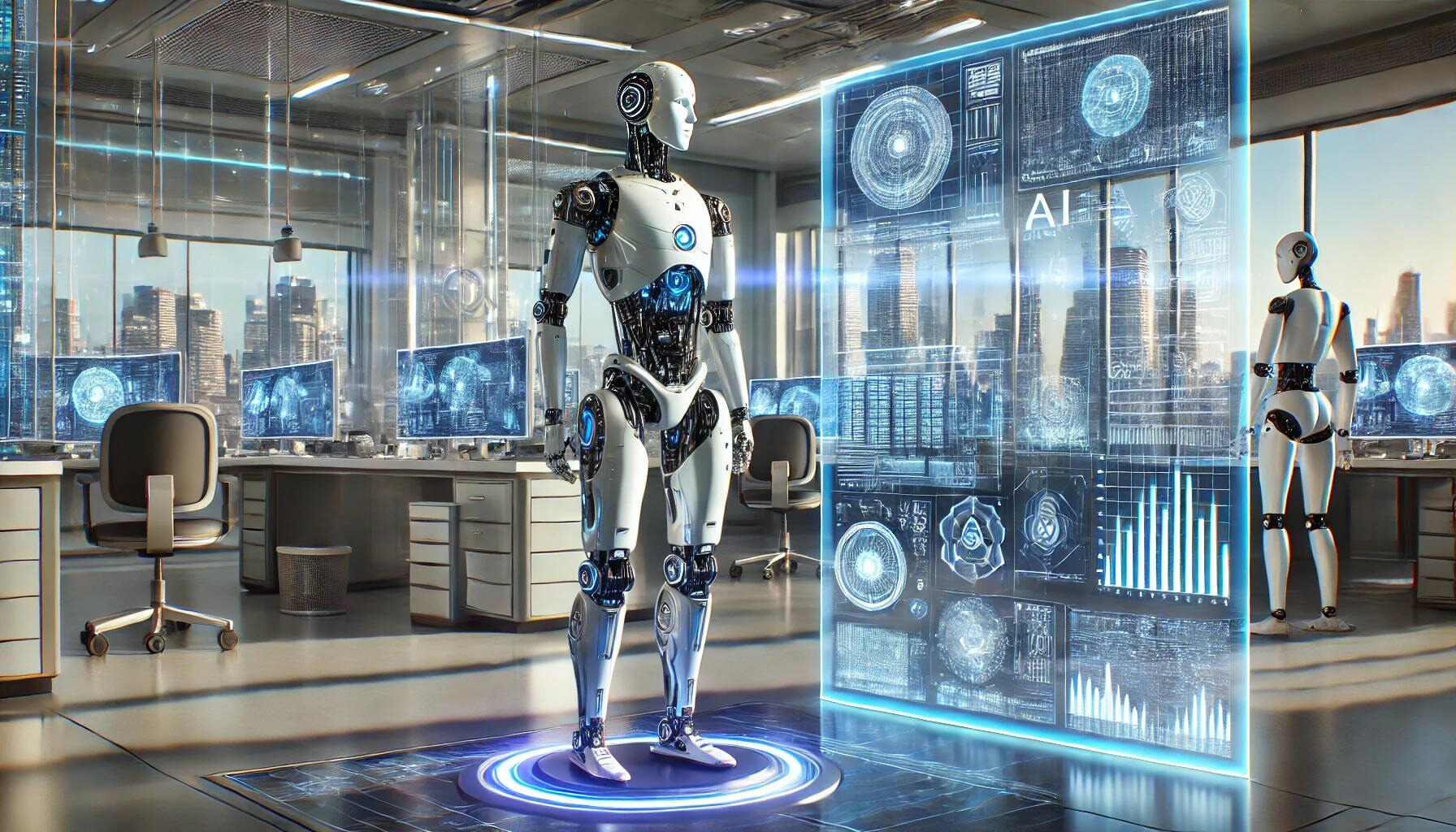
What is AI Robotics?
AI robotics combines artificial intelligence (AI) and robotics, enabling robots to perform tasks with a high degree of autonomy and intelligence. This interdisciplinary field integrates the following:
Robotics:
- Mechanical Design: The physical construction of robots, including actuators, sensors, and control systems.
- Control Systems: Algorithms and software that govern the robot's movements and interactions with its environment.
Artificial Intelligence:
- Machine Learning: Techniques that allow robots to learn from data, improving their performance over time.
- Computer Vision: Enabling robots to interpret and understand visual information from the world.
- Natural Language Processing (NLP): Allowing robots to understand and generate human language.
Applications:
- Manufacturing: Automated assembly lines and quality control.
- Healthcare: Surgical robots, rehabilitation, and assistance robots.
- Service Industry: Delivery robots, customer service bots, and domestic helpers.
- Exploration: Space exploration rovers and underwater robots.
Challenges:
- Safety: Ensuring robots can operate safely around humans.
- Ethics: Addressing the implications of autonomous decision-making.
- Complexity: Developing sophisticated algorithms that can handle diverse tasks.
By leveraging AI, robotics can perform complex tasks with precision and adaptability, transforming various industries and enhancing human capabilities.
Market Size and Growth
The global AI robotics market is experiencing robust growth, driven by advancements in AI and robotics technologies, increased demand for automation, and the proliferation of Industry 4.0 initiatives. As of 2024, the market size is estimated to be around USD 20 billion, with a projected compound annual growth rate (CAGR) of approximately 30% through 2030, reaching an estimated value of USD 100 billion (Mordor Intelligence) (Grand View Research).
Key Drivers
- Technological Advancements: Continuous improvements in machine learning, computer vision, and sensor technologies are significantly enhancing the capabilities of AI-powered robots (Grand View Research).
- Industrial Demand: The manufacturing sector's push towards smart factories and automation is a major driver. AI robots are pivotal in tasks such as assembly, welding, and quality control (Technavio).
- Labor Shortages: The need to address labor shortages in various industries is accelerating the adoption of robotic solutions that offer efficiency and reliability (Technavio).
- Healthcare Applications: The healthcare sector is increasingly utilizing AI robots for surgical procedures, patient care, and diagnostics, contributing to market growth (Market Research Future).
- Demand for Automation: The need for efficient, accurate, and consistent operations in industries such as healthcare, logistics, and retail is driving the adoption of AI robotics.
Market Segmentation
- By Type:
- Service Robots: These robots, which include customer service and healthcare assistants, held the largest market share in 2023 due to the rising demand for automation in service industries (Grand View Research).
- Industrial Robots: Expected to grow at the fastest rate, these robots are integral to smart manufacturing and Industry 4.0 initiatives (Grand View Research).
- By Application:
- Healthcare: AI robots in healthcare are used for surgery, patient care, and remote diagnostics, enhancing service delivery and operational efficiency (Market Research Future).
- Manufacturing: AI-powered robots are crucial for automating production lines, improving quality control, and reducing downtime (Mordor Intelligence) (Grand View Research).
- Logistics: Robots optimize warehouse operations, inventory management, and last-mile delivery, thereby improving supply chain efficiency (Market Research Future).
- Retail: In the retail sector, AI robots assist with customer service, inventory management, and automated checkout systems (Grand View Research).
- Agriculture: Precision farming, harvesting robots, and livestock monitoring.
Regional Insights
- North America: This region is expected to witness the fastest growth due to a strong industrial base and significant investments in AI and robotics technologies (Grand View Research).
- Europe: Strong market presence with a focus on industrial and service robots.
- Asia-Pacific: Dominates the global market with extensive use of industrial robots, particularly in China, Japan, and South Korea. The region accounted for 74% of new robot installations in 2021 (Market Research Future).
- Rest of the World: Emerging markets with increasing adoption of AI robotics in various sectors
Key Players
Leading companies in the AI robotics market include ABB Ltd., Fanuc Corporation, KUKA AG, iRobot Corporation, NVIDIA Corporation, and IBM Corporation. These companies are at the forefront of developing innovative AI and robotic solutions and expanding their global market presence through strategic initiatives (Maximize Market Research).
Challenges
- High Initial Costs: The significant investment required for AI robotics development and deployment can be a barrier for some companies (Technavio).
- Technical Complexity: Integrating AI with robotics involves sophisticated programming and complex algorithms, posing challenges for seamless implementation (Grand View Research).
- Regulatory Issues: Compliance with regulations and standards can be challenging, especially in healthcare and autonomous vehicles.
- Ethical Concerns: The potential impact on employment and the ethical implications of autonomous decision-making.
Opportunities
- Innovation in AI: Ongoing advancements in AI and machine learning will continue to open new avenues for robotic applications across various industries (Technavio).
- Collaborative Robots (Cobots): Increasing use of robots that work alongside humans, particularly in manufacturing and healthcare, presents significant growth opportunities (Mordor Intelligence).
- Healthcare: Growing demand for robotic surgery and rehabilitation solutions.
- Autonomous Vehicles: Development of self-driving cars and drones.
Conclusion
The AI robotics market is poised for substantial growth, driven by technological advancements, increasing automation demands, and the integration of AI across various sectors. While there are challenges such as high costs and technical complexities, the opportunities for innovation and expansion in this field are vast, making it a crucial area for investment and development in the coming years.
Looking for more articles on AI, IoT, and emerging technologies? Explore the Tech Scope Connect Content Hub.