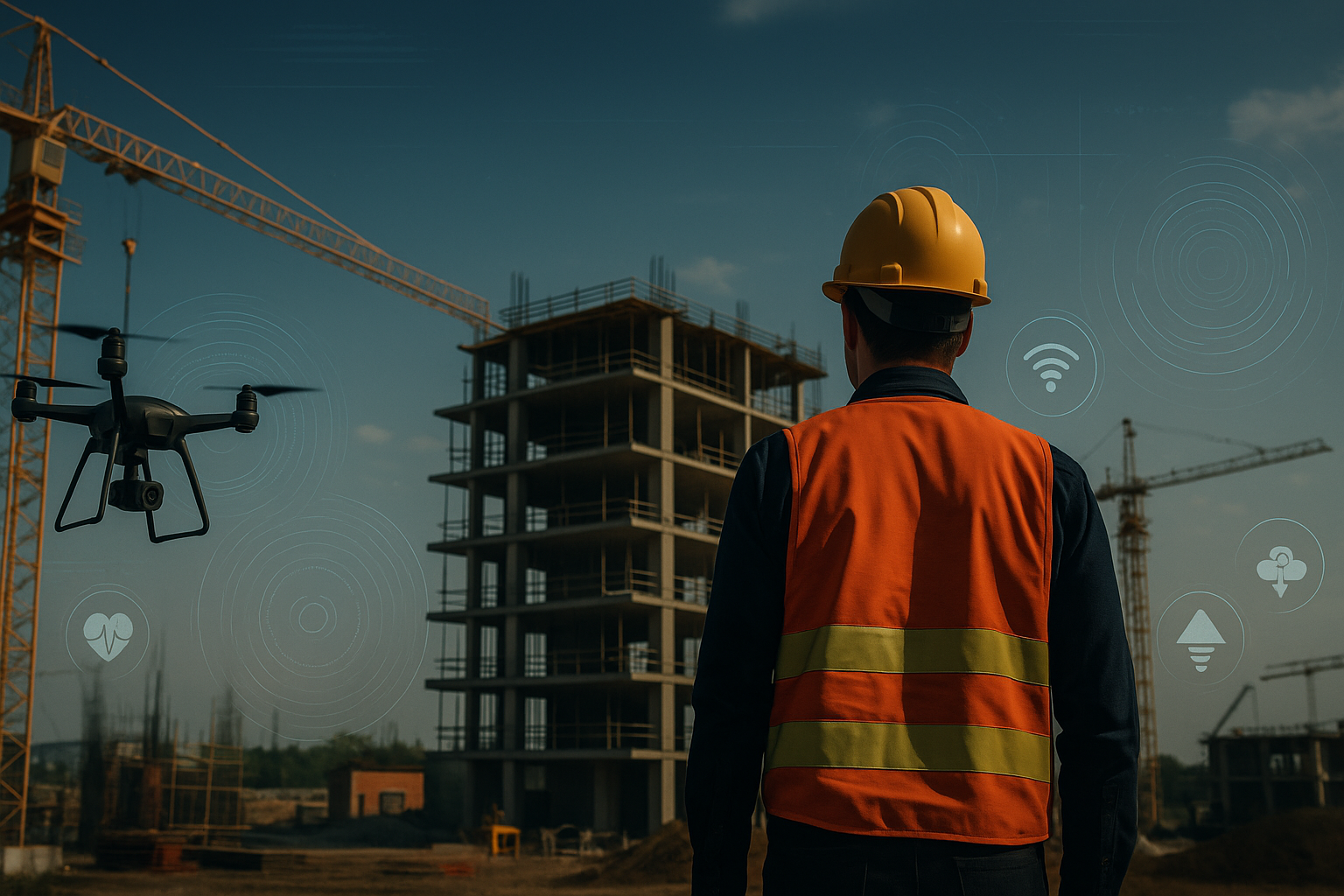
construction technology adoption
Construction Technology

Accelerating Technology Adoption in the U.S. Construction Industry: Key Drivers, Emerging Solutions, and Implementation Strategies for 2025

According to the 2025 AGC survey, 59 percent of contractors cite the speed of technology adoption as a top concern, while 44 percent plan to increase investment in artificial intelligence and 26 percent will boost spending on Building Information Modeling this year. These figures underscore a growing imperative: keep pace or fall behind. Consider a recent Propeller case study, in which a residential earth-moving crew replaced traditional rover surveys with drone flights—transforming what once took days into site maps generated in mere minutes. As material prices climb and labor tightens, such leaps in efficiency are no longer “nice to have” but essential for any firm seeking to stay competitive in 2025.

Having established why rapid tech uptake is no longer optional, let’s examine the key pressures—ranging from labor gaps to cost spikes—that are compelling construction firms to act.


What Drives Technology Adoption in U.S. Construction?

Labor shortages, cost pressures, safety regulations, and client transparency demands are the four primary forces compelling U.S. contractors to embrace digital tools. In early 2025, 94 percent of construction firms report difficulty filling open positions, and the industry will need to attract an estimated 439,000 net new workers just to keep pace with demand. For example, when Franklin Builders (a mid-sized contractor in the Midwest) lost two veteran project managers in quick succession, they turned to schedule-tracking software and drone-based site surveys—completing what had been three weeks of manual measurements in under 48 hours—just to stay on deadline.

These real-world pressures coalesce into four primary drivers that are compelling firms to embrace digital solutions:


Labor Shortages and the Skills Gap

Acute workforce deficits have left many firms scrambling for qualified tradespeople. By automating routine tasks and leveraging digital tools, companies can optimize limited human resources and empower existing crews to work more efficiently.


Escalating Material and Labor Costs

Supply-chain bottlenecks and wage inflation are squeezing margins across the board. Predictive analytics and remote monitoring enable managers to anticipate price fluctuations, reduce waste, and allocate resources with greater precision.


Safety and Compliance Pressures

Heightened safety concerns and stringent regulations demand real-time oversight. Wearable sensors and IoT devices facilitate proactive hazard detection, while cloud-based compliance platforms streamline documentation and reporting to satisfy OSHA and local authorities.


Client Expectations for Transparency

Today’s clients require unprecedented transparency and efficiency. Interactive 3D models visualize progress, and mobile dashboards track budget and schedule variances—fostering trust and expediting decision-making in a competitive marketplace.

With those industry forces in mind, we can now explore the specific digital tools and platforms developers are deploying to meet these challenges head-on.


Which Technologies Are Revolutionizing Construction Job Sites?

A recent study in Discover Materials found that BIM implementation cuts design errors by 30 percent and project timelines by 20 percent on average, while Skanska’s Bank BJB Padalarang Phase 1 project used 6D BIM simulations to reduce material waste by 15 percent and improve sustainability metrics. These early wins underscore why leading contractors are rapidly expanding their digital toolkits. The following key technologies are gaining traction across the industry:


Building Information Modeling (BIM)

BIM has become foundational for project planning and coordination, enabling 3D digital representations that integrate architectural, structural, and MEP data into a single model. U.S. usage rates now exceed 70 percent among contractors, engineers, and architects, driving more accurate clash detection and tighter cost controls.


IoT Sensors and Wearable Devices

Deploying IoT devices—ranging from environmental sensors to wearable safety monitors—allows real-time tracking of equipment usage, material conditions, and worker health metrics. Early adopters report up to a 30 percent reduction in on-site incidents and improved resource allocation through continuous data streams.


Drone-Powered Site Survey

Drone surveys now deliver centimeter-level accuracy in topographic mapping and stockpile measurements, cutting surveying time from days to hours. This technology accelerates site assessments, enhances progress reporting, and feeds updated terrain models directly into BIM systems.


Robotics and Automated Machinery

From bricklaying robots to automated rebar-tying machines, robotic solutions target repetitive tasks and reduce reliance on scarce skilled labor. Although only about 55 percent of firms currently use robotics, adoption is rapidly increasing as pilot programs demonstrate up to 50 percent gains in productivity and significant safety improvements.


AI-Driven Predictive Analytics

AI-driven platforms analyze historical project data to forecast costs, schedule risks, and staffing needs. Predictive models can flag potential overruns weeks in advance and optimize bidding strategies, with users reporting up to a 20 percent reduction in budget variances.

Understanding which innovations are available is just the start—next, let’s quantify the tangible returns these solutions deliver on real-world projects.


What Are the Measurable Benefits of Construction Technology?

According to a McKinsey Global Institute report, digital transformation in construction can yield productivity gains of 14–15 percent and cost reductions of 4–6 percent. These measurable improvements demonstrate that investing in technology delivers concrete returns—not just hype.

The following four benefits illustrate how digital tools are reshaping project outcomes:


Productivity Gains and Throughput Boosts

Technology-driven workflows—from RFID-enabled materials tracking to connected-site platforms—can boost labor productivity by 30–45 percent in field operations, while integrated project-management tools reduce rework and delays for faster project delivery.


Enhanced Safety and Risk Mitigation

Real-time IoT sensor networks and wearable devices enable continuous monitoring of environmental conditions and worker vitals, leading to a reported 30 percent reduction in on-site incidents and more efficient hazard response protocols. Automated alerts and data analytics also streamline incident investigations, ensuring compliance and fostering a stronger safety culture.


Waste Reduction and Predictive Maintenance Savings

Predictive-maintenance systems analyze equipment performance data to forecast failures, cutting maintenance costs by 18–30 percent and reducing downtime by up to 45 percent. Simultaneously, digital material-optimization tools minimize inventory waste and overordering, delivering substantial savings on high-value components like steel and concrete.


Cloud-Based Collaboration Improvements

Cloud solutions centralize project data—drawings, schedules, RFIs—in a single, accessible repository. Gartner predicts over 70 percent of construction firms will adopt industry-specific cloud platforms by 2027, enabling real-time coordination across offices and job sites, reducing miscommunication, and accelerating decision-making.

Despite clear gains, many organizations still hesitate. Let’s unpack the top obstacles that can stall even the most promising technology initiatives.


Common Barriers to Technology Investment

In 2024, a striking 70 percent of contractors reported having no formal technology roadmap, and nearly two-thirds cited uncertain payback periods—often exceeding 24 months—as the chief deterrent to new digital investments. This gap in strategic planning leaves many firms hesitant to commit resources despite clear long-term gains. The following four pain points encapsulate the most persistent barriers to broader tech adoption:


High Up-Front Costs and Uncertain ROI

Implementing advanced construction technologies often requires significant up-front outlays—studies show initial costs for sustainable and digital solutions can run 2–7 percent above traditional methods—and many firms allocate only 1–5 percent of annual revenue to tech investments. These budgetary pressures, coupled with unclear ROI horizons, make securing executive buy-in challenging.


Workforce Resistance and Training Needs

Cultural resistance remains a major obstacle: many veterans are wary of replacing familiar workflows, and a lack of digital literacy impedes adoption. Surveys note widespread reluctance rooted in concerns over job security and insufficient training, while experts recommend ongoing skills programs to bridge competency gaps.


Integration with Legacy Systems

Legacy ERP and field-management platforms frequently lack the APIs and open architectures modern tools require, leading to data silos and downtime during migration. Compatibility issues—such as outdated communication protocols and complex codebases—further complicate efforts to unify old and new systems without disrupting operations.


Data Security and Privacy Concerns

As project information, BIM models, and IoT data move to the cloud, firms face heightened cybersecurity risks. Reports indicate that over 70 percent of construction organizations lack robust incident-response plans, leaving them vulnerable to ransomware, IP theft, and compliance violations under regulations like GDPR and CCPA.

Having identified these pain points, we turn to proven approaches—pilots, partnerships, and training—that help teams overcome resistance and secure lasting buy-in.


Best-Practice Strategies for Successful Roll-Out

By 2017, McKinsey found that fewer than 30 percent of companies with IoT pilot projects ever moved beyond the pilot phase—and more than 80 percent languished for over a year before scaling. To break free from “pilot purgatory” and achieve real business value, construction firms are adopting five key implementation strategies:


Phased Pilots for Quick Wins

Begin with small-scale pilots to validate technology choices and demonstrate quick wins. Phased deployment reduces disruption by allowing teams to adapt incrementally, while pilot data provides concrete ROI evidence to secure broader funding.


Partnerships with Vendors and Startups

Collaborate with specialized vendors and agile startups to access tailored solutions and expert support. Strategic partnerships can fast-track deployments, leverage vendor training, and ensure continuous upgrades without overburdening in-house teams.


Training Programs and Change Management

Allocate dedicated budgets for workforce upskilling and structured change-management programs. “Bite-sized” learning modules and hands-on workshops—like those used by leading firms to improve employee engagement—help bridge digital-literacy gaps and mitigate resistance.


Defining Clear KPIs and ROI Metrics

Define quantifiable metrics—such as schedule adherence, cost-performance index, and safety incident rates—up front. Regular KPI tracking against baseline data enables timely course corrections and provides transparency to stakeholders about technology value.


Cultivating a Culture of Continuous Innovation

Cultivate leadership commitment to experimentation and knowledge sharing. Encourage cross-functional innovation forums and peer-learning networks to surface breakthrough ideas, normalize failure as part of learning, and sustain momentum for ongoing digital improvements.

Armed with both insights and action plans, you’re ready for the next step: crafting your own roadmap to digitize operations and future-proof your business.


Conclusion & Next Steps

As the U.S. construction landscape grows ever more complex—marked by labor shortages, cost pressures, and heightened safety and compliance demands—technology adoption has shifted from a competitive advantage to an operational necessity. Begin with manageable pilot projects or targeted tool implementations, learn from early successes, and progressively scale your digital footprint. Embrace this “start small, think big” mindset to build organizational confidence and demonstrate clear value. To guide your journey, download our comprehensive 77-page “Challenges and Opportunities in the U.S. Construction Industry 2024–2025” report, featuring real-world case studies and implementation templates, and take the first step toward a more resilient, efficient future.

For additional articles on AI, IoT, and emerging technology, visit the Tech Scope Connect Content Hub.


Sources:

FAQ

How does BIM reduce design errors?

Building Information Modeling (BIM) creates a centralized 3D model that integrates architectural, structural, and MEP (mechanical, electrical, plumbing) data, allowing teams to detect clashes before construction begins. By resolving conflicts virtually, BIM minimizes costly on-site rework and ensures higher accuracy in design execution.

What IoT devices improve on-site safety?

Wearable sensors (e.g., smart helmets and vests) monitor vital signs and detect hazardous gases, while fixed RFID and BLE beacons track personnel movements to prevent equipment collisions. Together, these IoT tools enable real-time alerts for falls, exposure to toxic substances, and unauthorized zone entry.

Why pilot projects speed digital roll-out?

Pilot initiatives allow teams to validate technology performance under real-world conditions, gather user feedback, and demonstrate quick wins with minimal disruption. These early successes build stakeholder confidence and inform scalable rollout plans that reduce risk and improve adoption rates.

How do drones accelerate site mapping compared to traditional methods?

Drones equipped with LiDAR or photogrammetry capture high-resolution aerial imagery in a fraction of the time and cost of manual surveying. The resulting georeferenced maps and point clouds enable precise volume calculations and progress tracking with centimeter-level accuracy.

What role does predictive maintenance play in equipment uptime?

By analyzing IoT sensor data (vibration, temperature, oil quality), predictive maintenance algorithms forecast equipment failures before they occur. This proactive approach reduces unplanned downtime, extends machinery life, and optimizes maintenance scheduling to cut costs.

How can augmented reality streamline on-site training?

AR headsets overlay digital instructions and 3D models directly onto the worker’s field of view, enabling hands-free guidance for complex tasks. This immersive training reduces learning curves, lowers error rates, and ensures consistent execution of safety protocols.

What are the primary barriers to tech adoption in construction?

Contractor resistance often stems from budget constraints, legacy processes, and a lack of digital-skills training. Addressing these barriers requires clear ROI demonstrations, phased implementation plans, and targeted upskilling programs to foster cultural buy-in.

Read More
AR and VR in Construction
Construction Technology

AR and VR in Construction: How It’s Ruling the Industry for 2021 and Beyond

Augmented reality (AR) and virtual reality (VR) have been used in the entertainment industry for many decades. However, these technologies aren’t only used in those situations. In fact, AR and VR are becoming popular for many construction operations.

There are many uses for these technologies, such as advanced simulators to mimic physics and real-world conditions or displays to show supervisors the virtual site.

The pandemic restrictions have made AR and VR in construction even more popular since there were fears of having too many people in one area. However, the adoption isn’t likely to decline now that it’s here. In fact, new hardware and software appear each day. Plus, those new tools help companies improve upon safety, accuracy, and more.

Ultimately, AR and VR can help with these applications in construction:


Remote Maintenance

AR can help employees share information with off-site experts. In a sense, these industry professionals can be in two places at once. They can wear augmented reality goggles or a headset to see what’s happening, allowing employees at the site to get guidance from the experts.

This can ultimately save companies time and reduce errors. Workers can fix the issue themselves without bringing in an expert, staying within budget, and completing the task on time.


Training

Most construction jobs use heavy machinery, and this is dangerous without training. However, it’s often impractical for them to go to the site and actually use the equipment. With that, it might be unsafe, and there might not be enough time because the machine is used daily.

With the use of AR and VR, training simulators are born. People can wear virtual reality goggles and get an idea of how to use the machines safely in a controlled environment.

New York crane operators now can simulate how to use them. CM Labs created the simulator, allowing everyone the opportunity to learn about these machines before climbing into one.


Social Distancing

While social distancing from COVID-19 is the norm now, it’s likely to ebb in the following years as vaccines become readily available. Still, no one is sure how long social distancing is here.

This limits on-site personnel because most cities still aren’t allowing full capacity. Construction work must still continue, so utilizing AR and VR in construction is a logical step.

With 3D cameras and VR technology, inspectors and supervisors can walk through the site, regardless of where they are. As long as they have a smart device, they’ve got the flexibility to cover more job sites in less time.


Design

Designers and architects have the perfect jobs for AR and VR in construction. With virtual reality, they can see the project in the environment before erecting the building. In a sense, they’re standing inside the completed building before work even starts!

This also helps with bidding on projects. You can show stakeholders what you intend to do in an immersive virtual environment.


Virtual Collaboration

Collaboration efforts have been challenging since all employees can’t be available for meetings. Virtual collaboration tools use VR and AR extensively to show faces and more. However, if you extend that just a bit, engineering teams can collaborate on projects no matter where they are.

It’s easier to see project designs and plans with a VR headset. That way, everyone’s on the same page, even if they’re not in the same location.


Conclusion

While AR and VR are still in their infancy in the construction sector, there’s significant potential here. In a short period of time, both have proven to be crucial for construction. With that, technology continues to expand and grow, so their use is sure to continue as things start getting back to normal.


Read More
smart construction
Construction Technology

How Smart Construction Might Transform the Way We Build Post-COVID

The pandemic has taken a toll on many things, but COVID-19 has also reshaped the way people live. Apartment living has become undesirable due to increased risk of catching the disease. Along with that, rental properties aren’t allowing people to move in because they’re afraid of the moratorium on evictions.

If you now live in an apartment, you might not be able to find a new one or pay your bills. With the uncertainty surrounding apartment living, more people are turning to building their own homes. They’ve saved up their economic stimulus money, have continued working or collecting unemployment, and are focused on smart construction options.


What is Smart Construction?

Smart construction is becoming the normal way to do things throughout the industry and focuses on a data-enhanced operational model. Companies now use data and predictive analytics to help them improve their project outcomes, streamline operations, and create safer worksites.


Why Companies Want Smart Construction

Artificial intelligence and IoT networking are driving efficiency in a way that was never noticed before. Since so many people were worried about contracting COVID, they had to find safer ways to work. This often meant people working from home, including engineers and project managers. Therefore, special tools had to be used to ensure that they got the full picture of the project.


A Digital Future

Everyone recognized the benefits of going digital, and companies were at the heart of it. They allowed employees to work at home, and the process trickled down to construction workers. While they must be onsite to build the new structure, they could stage it in ways that did not require people to work closely together.

This happened because of strong organizational software, and a focus on scheduling. Along with that, smart construction makes things safer. When you have fewer workplace accidents, it boosts ROI. That means owners of construction companies can hire more people, pay less, and stick to budgets more easily.


The Specific Challenges Builders Face

Right now, the world still isn’t operating at full capacity. Therefore, productivity is lower, so projects take longer to finish. With that, there’s a labor shortage. No one wants to work because they’re fearful of the virus and enjoy government benefits, such as unemployment and stimulus money. There are also tighter controls on immigration, which cuts into the available labor force.

With that, high-quality housing is still in demand, especially in large cities. It’s crucial to offer spacious and better accommodations to prevent overcrowding and reduce the risk of new infection waves.

The question is how to achieve the goal of building without having enough people for the job. Prefabricated housing is one option. You have the components already produced and ready, and then one or two people can assemble them. They’re fast and cheap to build.

Smart construction plays a part here because digital technology is at the forefront. You need robotics and artificial intelligence to streamline the production and design processes.

With smarter design and planning processes, standard components can be mass-produced in factories, which boosts efficiency and productivity while lowering costs.

Fewer employees are needed in these facilities, which means there’s less risk of infection. Plus, when a project is run with less people, more money is being saved.


The Future

While smart construction has been around for a while, it’s never been used to such an extent. There are a few bugs to work out, and there’s still a question of sustainability and continuance when the world goes back to normal.

Traditional techniques are sure to play a role here because you always need people to do the heavy lifting. Still, prefab construction and other smart construction methods can help with affordability and other issues. Technology has helped to continue living and doing business through the COVID crisis. Now, it’s crucial to continue to realize the potential of smart construction and how it can be used to tackle design problems, inefficiency, and environmental challenges to improve everyone’s life in the future.

Read More
BIM technology
Construction Technology

BIM Technology: Advancing Digital Adoption in Building and Construction

Things used to move slowly in the construction industry. But not anymore. There has been increased demand for new advancements, leading to innovation and cutting-edge trends. More than anything else, modern construction is impacted by the Building Information Modeling (BIM) revolution.

Construction projects today are much more efficient, thanks to BIM technology, which reduces waste, elevates quality, and improves efficiency.


What is BIM?

Building Information Modeling (BIM) is the DNA cord that links technology, processes, and people for better holistic outcomes in the construction and building industry.

BIM modeling involves the comprehensive creation and management of information about a built asset. It is a method of integrating structured, multi-disciplinary data into an asset’s lifecycle, from design to construction to operations, built on an intelligent model and powered by the cloud.


What is the Significance of BIM?

BIM technology aids in coordinating, planning, designing, and constructing precise and accurate data. Budgets, schedules, and feasibility are all helped by it. Additionally, it plays a role in standardizing data exchanged between project participants–whether at a desk or out in the field.

It assists with identifying the required amounts, parts, and types of materials. Besides facility management, it is also helpful for asset management and predictive maintenance.

Speculation on different scenarios is made easier by the rapid exchange of design information, allowing for more iterations of the structure, engineering system, and architecture.

Construction projects tend to cost less overall if they are completed quicker. The quicker you can use a space, the faster you can see a return on your investment.

A client may also notice an improvement in build quality through BIM. The use of BIM results in more detailed and accurate calculations and models, improving the quality of the structure.

In addition to imagining how a building will look and behave in its finished state, architects also get to drill down to details such as how artificial and natural elements will interact in the structure.

After the building is completed, the model can run preemptive maintenance and repair decisions to assist the facilities management team.


What Are the Benefits of BIM?

Improves the bidding process – Building owners can scrutinize bids accurately and fairly with BIM models that include project 3D models of all structural and MEP systems. Thus, the actual cost of the building materials is used in determining the final bid price.

Saves building costs and resources – Construction cost estimates are one of the critical benefits of BIM. This can be provided well before construction starts. BIM software can help architects estimate costs related to:

  • Materials
  • Shipping
  • Labor

A better way to communicate – A project can benefit from better communication between the architect, contractors, and other stakeholders. With BIM, all relevant information, including estimates, models, and design notes, is stored in a central location accessible to every person involved.

Reduces carbon emissions – Sustainability is a priority for building owners today. By replacing 2D drawings with live 3D projections, construction is far more accurate. A pre-bid plan that is accurate will have a higher likelihood of matching the final budget, and material waste can be drastically reduced.

By reducing energy and resources, the travel time involved in obtaining building materials will be reduced significantly, thereby lowering carbon emissions.

Ensures occupants of the building have a positive experience – BIM-enabled virtual walk-throughs and informative previews of buildings make obtaining critical stakeholder feedback easier. When designing buildings, it plays a crucial role to consider the perspective of the occupant community.

Detects and prevents problems early – BIM helps building owners plan maintenance cycles appropriately and prevent unplanned outages. In this way, facility management budgeting can be more precise. An owner can determine the maintenance cycle of major and minor building systems by analyzing BIM data across a portfolio of buildings assets. They can compare buildings and spaces based on their BIM data.

Reduces the lifetime cost of a building – Building owners recognize that using the BIM model can reduce project costs over time, which is why it is becoming more popular. BIM lowers maintenance costs by reallocating excessive maintenance expenses to design, based on the iceberg hypothesis.

Supports the smart management of buildings and facilities – Buildings are becoming increasingly intelligent as sensors are used extensively. Buildings with intelligent systems will detect when something is wrong and how equipment is being used. For instance, by remotely monitoring the HVAC system, an owner can determine when the system was installed, how it was done, and what maintenance is due.


BIM Marks a New Era of Digital in Construction

Construction has resisted innovation for decades, but BIM technology has managed to overcome that resistance. As a result, the emergence of digitization in the construction sector can be seen as a significant step forward on the road to widespread technological disruption for the industry.

Read More
construction technology
Construction Technology

How Modern Technologies Pave the Way for Digital Construction

The construction industry is helping pioneer what’s called “digital transformation” in which businesses become more cloud-based, digital, and interactive. Here’s a look at how construction technology is improving the construction industry and beyond with greater accuracy, speed, and analytical capabilities.


Virtual and Augmented Reality

Most people already have a clear idea of what virtual reality (VR) is, as it’s some type of immersive digital presentation that simulates reality. Usually, it requires wearing a headset that displays a virtual environment. Augmented reality (AR) is a similar concept except it allows users to interact with digital elements in the physical world.

One of the main ways that construction technology involving VR is used at project sites today is with 3D modeling. VR allows you to design a 3D model of your project on a screen. The technology can be used to provide virtual “walkthroughs” for clients and help resolve scalability issues.


Building Information Modelling (BIM)

BIM is computer-aided design (CAD) software that enables construction teams to collaborate cohesively for the design and management stages of building. It’s used by engineers, architects, and builders to address production issues. The software helps keep a team connected throughout the project.


Robots in the Workforce

Machines with robotic capabilities have appeared in factories for decades to perform tasks that are often too dangerous for humans. Lifting heavy objects is one of their specialties. They are also useful for highly repetitious tasks that a human typically finds boring. Modern construction firms can use robots for laying bricks and transporting materials.


3D Printers and Prefabrication

The advent of 3D printers allows construction teams to print building components on-site, which speeds up overall assembly time. The prefabrication of structures off-site also saves time and money, allowing teams to build a complete home in just a few days.


AI and Automation

Artificial Intelligence (AI) is now used at construction sites in the form of machine learning software. The program can take a high volume of data and analyze it in seconds to come up with solutions to foresee problems that arise in real time. Automation is helpful in numerous ways, as it can be used to trigger scheduled events or speed up tasks.


Faster, Smarter Internet

Moving to the cloud is one of the first steps towards digital transformation. The cloud is where data is stored and analyzed from a wide variety of sources driven by IoT sensors. These interactive sensors provide a wealth of data about your operation in real time. Thanks to 5G technology, high volumes of data can now be transferred at lightning speed across the internet.


Surveillance and Delivery Drones

Drones can assist construction teams with aerial photography of the project site. They can also be used to deliver materials from one area of a site to another. Even though you may not see many drones in the sky at the moment, Goldman Sachs has reported that by 2025 commercial investment in drone technology will reach $10.9 billion.


Self-Healing Concrete

Since concrete is the most used material in construction, it’s helpful that a new type of self-healing concrete has emerged. This concrete contains fibers or capsules that, when cracked, release an adhesive liquid that repairs damage. This concept is just in its research stage, though, and is probably years away from widespread application in the concrete industry.


Conclusion

One of the key themes that ties all these modern construction technologies together is sustainability. Not only do these solutions point you toward more efficient processes while cutting waste, they generally involve less damage to the ecology than conventional solutions. Look out for the next generation of construction technology and prepare your business for a digital future.

Read More
connected jobsites
Construction Technology

Connected Jobsites: How IoT Is Streamlining Construction

IoT is now facilitating what are known as connected jobsites. With IoT, all personnel can have access to relevant data wherever they happen to be across the site.


Benefits of Connected Jobsites

Thanks to IoT, connected jobsites become possible, and the cool thing is, most of the involved tech is already in use. Granted, you can consolidate on-site tech equipment of the IoT variety, but a lot of the issue has to do with associated software.

It will depend on the contracting business, some will have more work to do than others if they want a connected site. At any rate, regardless of whether you work with tech professionals or set up your own IoT application internally, when it’s functioning properly, you should expect the following:


Monitoring of Staff in Real Time

When everyone on staff is working on the same network, it’s easy to keep tabs on them. When you know where they are at all times, you can more efficiently manage personnel to ensure directives or goals are being met.

Additionally, you’ve got a plethora of new data collection opportunities. You can determine who is performing well, and who isn’t. There’s a lot of potential here in terms of security and optimization toward expanded productivity overall.


Expanded Integration and Communication

Communication is a lot easier through connected jobsites. When everybody’s got some sort of device either on their person, or monitoring their equipment, it’s a lot easier to get in touch with necessary staff from a remote location. Essentially, IoT enables integration and integration is communication.

Timesheet filing and analysis is facilitated via IoT. More up-to-date information is available in one location that is easy to reference. Basically, IoT puts everybody on the same page instantaneously, and any updates or changes necessary during production can be disseminated across productive “ranks” immediately.


Continuous and Instantaneous Documentation

Connected jobsites are going to simplify documentation. Technologically speaking, everything done over IT hardware is recorded in IT software. So even if you haven’t put together a solid infrastructure for documenting operations, the information is available should it become necessary.

If you’re setting up a connected jobsite, it can be worthwhile to have tech professionals help you determine what means of documentation are most appropriate for your team. Ideally, you have a simple interface that allows you to review the day’s events organized by varying applicable categories. You should have the ability regardless of interface initiation, but it can be helpful to have someone set things up for ease of operation.

With digital documentation, it becomes easier to determine where mistakes have been made or where improvements are possible. You can explore one means of putting together part of the project, as opposed to a different method. You can measure involved time, energy, and resources, both physical and personnel-based. Accordingly, you can optimize productivity with statistically vetted best practices. But this is just the tip of the iceberg; the future of connected construction still holds an abundance of as yet unrealized potential.


Exploring IoT Solutions and Getting Your Jobsite Connected

With connected jobsites, documentation becomes instantaneous, communication is better, integration is improved, real-time monitoring becomes possible, and the list goes on. In a nutshell, IoT tech on the jobsite significantly improves the utilization of resources and productivity to ensure projects are completed on time and under budget.

Read More
robots in construction
Construction Technology

Robots in Construction: A Changing Workforce

Even though you frequently hear about robots taking jobs from humans, this dystopian warning has been more speculated than practiced. By 2018, slightly under 10 percent of manufacturers were using industrial robots. But prototypes for construction robots have come a long way since they were introduced in 1979. Here’s a look at where robots in construction are today.


Automating Construction Work

Even though the real world has a lot of catching up to do with the science fiction world when it comes to robots in construction, amazing developments have been achieved. A 2017 McKinsey report has assessed that 47% of work involved with construction can be automated. At the same time, many of the areas where robots would be the most effective are uncontrolled outdoor environments, where robots can experience operating difficulties.

Industrial robots can be used in construction to do much more than physically assist with building structures. They can also be used to provide visibility, identify and help solve construction issues, as well as track performance. The McKinsey report suggested it will take decades before industrial robots reach their full capacity at construction sites. Some of the ways in which robots are currently useful include the following:

Overcoming shortage of skilled workers – When the labor market experiences gaps for certain skills, robots are the perfect solution to maintain business continuity and efficiency.
Reducing workplace injuries – Humans can avoid dangerous assignments or physically repetitive tasks that can be performed by robots. Not only can robots lift heavy objects, but they can also operate remotely in areas where dangerous chemicals are present.
Cutting operational costs and waste – Robots can do assignments faster and with more precision than humans. They also don’t get sick or fatigued from monotonous work.


Uses for Robots in Construction

Robots are capable of helping construction projects in numerous ways from bricklaying to climbing tall structures. They are particularly useful for moving heavy equipment in disaster relief scenarios. Here are some other ways robots are solidifying their positions in workforce:

Factory-built Prefabrication – Various construction elements can be built as modules off-site by robots in factories before being transported and assembled on-site.
On-site 3D Printing – Several structures including bridges are now being built with 3D printers which themselves can be considered robots. They can handle various tasks from installing components to applying finishes.
Scanning Duties – Robots are effective at scanning processes that track construction performance, especially when integrated with AI technology. Scanning helps pinpoint project details to ensure proper installation.


Preparing for Robot Infiltration

Before rushing into purchasing a team of robots, it’s important to plan your application of robotics strategically. First, you need to assess your operation to identify areas where an automated robot can be useful – which usually means tasks that are too dangerous or boring for humans. You must further assess the consequences of deploying robots over humans to ensure you’re not weakening another part of your organization.

Your planning should examine how well robotics improves efficiency for your specific operation. Don’t forget robots can be useful for automated scheduling and verifying tasks have been completed.

An emerging dimension of robotics is called Building Information Modeling (BIM), in which robots are able to capture data through scanning. The robot can then send data to the cloud and draw information from multiple sources to arrive at recommendations driven by machine learning software. This ability contributes to project planning and making structural modifications.

Another algorithmic technology contributing to robotics is Simultaneous Localization and Mapping (SLAM), which allows mobile robots to map their positioning in a complex environment.


Conclusion

The rise of robots in construction will continue in the coming years to make construction projects more safe and efficient. Advancements in automation and AI for indoor and outdoor robots will be crucial to this evolution for accelerating projects. Ultimately, with the help of robots, construction companies will maximize production efficiency and improve product quality.

Read More
IoT in construction
Construction Technology

How IoT is Changing the Construction Industry

The construction industry has not stopped evolving for the past thirty years. Innovations are shaking up the building sector, which is increasingly open to the development of technological concepts such as connected objects and IoT (Internet of Things). These tools help improve the speed of construction, the efficiency of workers, and even safety on construction sites.


What is a connected object?

To put it simply, IoT is a network of interconnected physical objects that can share information, hence the name Internet of Things. So how can IoT transform the construction industry?


Energy-saving on construction sites

Sensors on water, gas, and electricity meters can provide real-time energy readings that operators can evaluate to bring optimization to the site’s energy consumption patterns.


Management of material stocks

Do you have enough wood or cement? Using a fleet of tracking sensors coupled with a control console in the form of an application or software simplifies inventory management.


Employee safety

Thanks to the new generation of connected headsets, you can improve the safety of your employees on construction sites. Indeed, these helmets are notably equipped with high-voltage line sensors to prevent the risk of electrocution. They can also signal the presence of workers on the tracks or announce the arrival of trains on construction sites taking place near railways.


Real-time monitoring

Sensor data assists construction companies in staying on schedule as well as driving rapid improvement of processes. Construction firms often incur large losses from downtime caused by a periodic supplier of stock or a worker’s failure to execute. IoT can help to stay on track.


Remote monitoring

Thanks to geolocation sensors installed on your machines and linked to an application on your smartphone, you can monitor your site in real-time and evaluate the activities of the various workstations even when you are far away.


Constructing with precision

Through the collection of large data sets, IoT empowers workers with actionable insights. Material and vehicle tracking are made possible, thanks to IoT. By using this innovation, the costs associated with property damage or losses or are reduced.


Hourly labor tracking

Construction sites often employ subcontractors for nearly every aspect of their work, from HVAC to glasswork to plumbing. But even if they receive a bill for 7,000 person-hours of plumbing work, the contractor is unlikely to cross-check that work. Tracking labor hours becomes easier with IoT at construction sites.


Access management

Access management can also benefit from advances in the connected building. Traditional badges and physical keys, which are complex to manage, can be replaced by mobile applications. This system can facilitate occasional and regular visitors, such as delivery people.

In addition, companies can deploy connected locks. Unlike physical locks, these can be reconfigured as needed to allocate or refuse access to a user identified using different devices (smartphone, biometrics, IoT chips, etc.)


Machine control

On construction sites, human operators control heavy equipment used for heavy machine work. IoT-enabled machine controls can simplify this process. Intelligent machines can improve efficiency and autonomy in the construction industry. These machines can function more precisely with IoT sensors, requiring less human intervention.

Also, a system like this can keep operators apprised of equipment status constantly, so a breakdown or failure won’t occur unexpectedly. Keeping construction equipment in good shape reduces the risk of downtime from unplanned maintenance.


Wearable devices

Construction has several good use cases for wearable technology and devices. In the field of Wearable technology is any device that provides information to the user through its connectivity. These sensors can monitor activity data and detect when a worker falls, which helps speed up response times to accidents.


Equipment maintenance and repair

Machines have sensors that allow them to communicate information about their condition and whether they need repair or service. Machines that can fail will likely fail at just the wrong time, so fixing them before they break makes more sense than waiting for failures to occur. IoT sensors for maintenance and monitoring can help to identify issues and schedule maintenance and repair. A digital revolution is underway in the infrastructure sector due to the democratization of intelligent objects. As such, construction industry will continue it steady path towards digitization. In the future, we are more likely to see new capabilities and tools become available that improve site safety, worker health, and productivity.

Read More