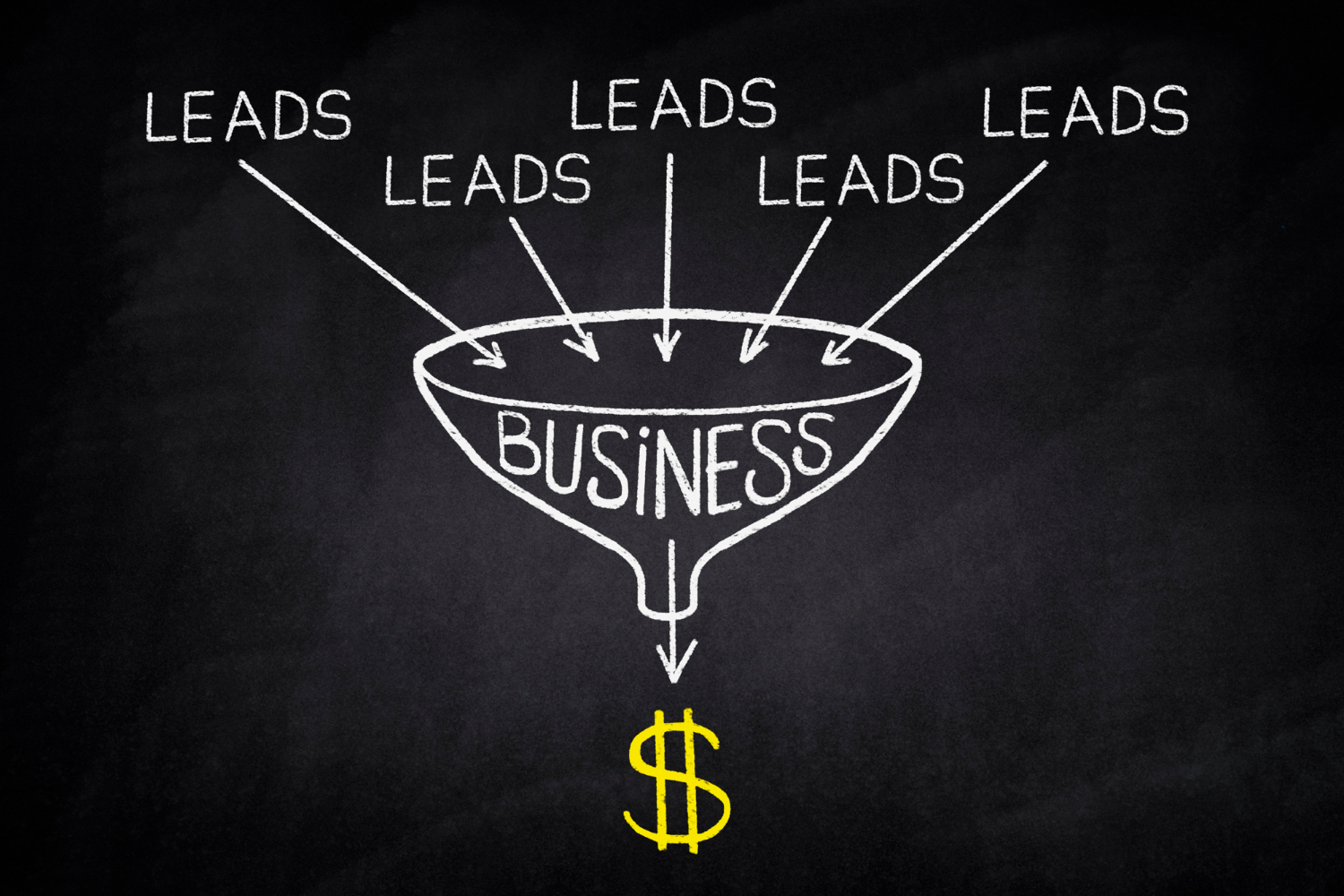
IoT Business Leads
Internet Of Things

Qualifying IoT Business Leads

When it comes to IoT business, there are a lot of advantages that help sell the innovation. Many businesses have yet to make the transition, meaning there is a substantial sales "harvest" to be had. Projections have IoT devices outnumbering human beings on the planet 3 to 1 by 2024. Potential clients need the numbers on their side and you need to be able to make a presentation which demonstrates value to those prospective clients. But if said clients aren't really qualified for your company, then your sales team will be "spinning their wheels.” They'll be expending energy to no good cause. So, what you want to do is teach your salespeople to qualify clients.

Here is a downloadable list of 42 questions that you can give salespeople. This will help them inquire in a general sense to help narrow down whether a prospective lead is one you should seek to convert to your services or not. To abbreviate the proper approach:

  • Create customer profiles
  • Properly assess customer needs
  • Determine how clients make their decisions
  • Outpace any potential competition
  • Customer Profiles

The IoT business is going to have a window of effectiveness. Certainly, even the smallest business can benefit from, say, a security system which is accessible from a smartphone. But you've got to know whether your IoT solutions are advantageous both ways for clients or not. At a certain level, providing services to clients even if they close will be too expensive for your company to profit. You need to find a way of disqualifying service based on this initially. From there, you narrow down profiles based on the kind of business involved, and whether you can actually provide them value with your IoT solution or not. You can make a sell where value isn't provided, but that's a real long shot. You're more likely to sell clients if you can directly demonstrate the savings and advantages of IoT. With a good customer profile, you can do this factually, which can be very convincing. Teach your team to create proper customer profiles and you'll likely see an increase in closures.


Assessing Customer Needs

Once you've managed to acquire some qualified customer profiles, you need to be able to accurately assess their needs. With the Internet of Things, infrastructure, production, distribution, and expansion costs can all be curtailed even as profitability takes a jump. But if you can't show the customer how this is specifically true in their case, then your sales presentation won't mean anything.


Determining How Clients Make Decisions

Your client profile should follow a transaction history for your prospective clients--- especially the larger ones. Sometimes, the acquisition agent meets IoT providers like your business for information, then heads back to the home office to run the data by his higher-ups. Sometimes, acquisition agents buy on the spot if they like what they see. You need to know what regularly characterizes their decision-making process. With that information, you're likely to make more closures more successfully.


Outpacing Competition

If you've got competition, your salespeople need to be enabled to "scoop" them, as they say in journalism. A "scoop" is when a journalist gets a hot story before a bigger or different outlet and blasts it to the public preemptively. This gives that journalistic outlet an increase in readership, etc. Well, you need to know what your competition is offering, and you need to do it better. Include some flexibility in your IoT packages. Anticipate competition meeting prospective clientele prior you and be willing to offer a diminished price or a more competitive package.


Expanding Sales

The IoT business is sensible and competitive today. In 10 years, there will be three times as many IoT devices on the planet as people. In your home, this is already true. If you've got a laptop, a cellphone, and a smartwatch, there are already three IoT devices you’re using. When you consider networks, manufacturing, distribution, Big Data, and all the other potentialities realized via IoT, it's easy to see why streamlining client qualification processes is important. The harvest is ripe, and you want to reap as many plump clients as you can. So, qualify them for the picking!


Read More
blank
Marketing & PR

How to Craft the Right Messaging for Your Brand

In an age where personalization and authentic connection is highly sought, developing clearly defined brand messaging that truly resonates with your audience is key. When you can articulate your brand in powerful language, you can effectively reach and connect with the people you’re trying to ultimately convert.

But telling your story effectively can be a challenge.

How do you speak about your product or service in a compelling way? How can you succinctly communicate what you do or what your company is about? And how do you maintain a cohesive story across all platforms, from your website to social media?

Here are a few tips to help you craft brand messaging that helps you effectively engage your audience and turn leads into sales.


Remember that Sales Speak and Messaging are Different

Simply listing out a few broad selling points doesn’t cut it when developing compelling brand messaging. Remember that your goal is to pique the interest of potential customers and connect with them on a more personal level. It’s unlikely that anyone will stay on your website, read your case studies, or follow you on social media if you’re producing bland content full of sales speak.


Lay Out Your Core Principles

Who you are and what you believe in are two major elements of what gets people interested in working with you. Without them, it can be difficult to communicate or act consistently. Make sure to identify your purpose, vision, mission, and values before you begin developing your brand messaging.


Know Who You’re Speaking To

To communicate effectively, it is imperative to understand who you’re speaking to and what they care about. What are their wants and needs? What do they need help with? How can you make their jobs or lives easier? You can gather these insights by creating brand personas — demographic and psychographic profiles of the different types of people you’re trying to reach. When you have a deep understanding of brand personas, you can better tailor your messaging.

Slack is a great example of a company that does a fantastic job of tailoring brand messaging to different types of teams. If you take a look at the image below, you’ll notice how well they speak to two types of departments: IT (top) and marketing (bottom).


Understand Your Positioning

What makes you different from your competitors? How do you stand out in your market? What niche do you fill? This type of information will influence every level of your messaging. To determine this, you need to conduct a thorough competitive analysis. Once you’ve done so, create descriptions that explain what you do better than everyone else. Articulating this clearly and succinctly can help to ensure that your brand messaging is an extension of your positioning.


Perform A/B Testing

Once you have your brand messaging laid out, A/B testing can help you find out what is and/or isn’t working for you.

However, although A/B is an incredibly helpful tool, it can also be frustrating. It takes a lot of work to set up an A/B test. And if your variations are too minor or sample size is too low, you could end up with rather uncompelling results.

A simpler option would be to set up ads on social media, and the specifics of which one you should use will depend on where your industry is most active. For instance, at IoT Marketing, we’ve noticed that LinkedIn is ideal when it comes to connecting with IoT and high technology industry-focused audiences. Social media ads are easy to implement, a lot less costly, and tailored to the people you’re attempting to reach.

One way you can A/B test using social media ads is by:

  • Creating separate landing pages that use identical design but have different copy
  • Writing varying copy for the social media posts that will include the link to your landing page
  • Tracking your analytics to see which ones received more conversions

Whether you’re testing a new tagline, CTA or value prop, social media ads can help you easily see what is and isn’t resonating with your audience.

The process of developing effective brand messaging is a lot more complex than what many organizations truly understand. However, following these brief guidelines will help you get on the right track.

And if you need any further help with your messaging, the team at IoT Marketing is here to help! Contact us to find out how we can help your brand build compelling messaging that converts and enables your business to reach new heights.

Read More