
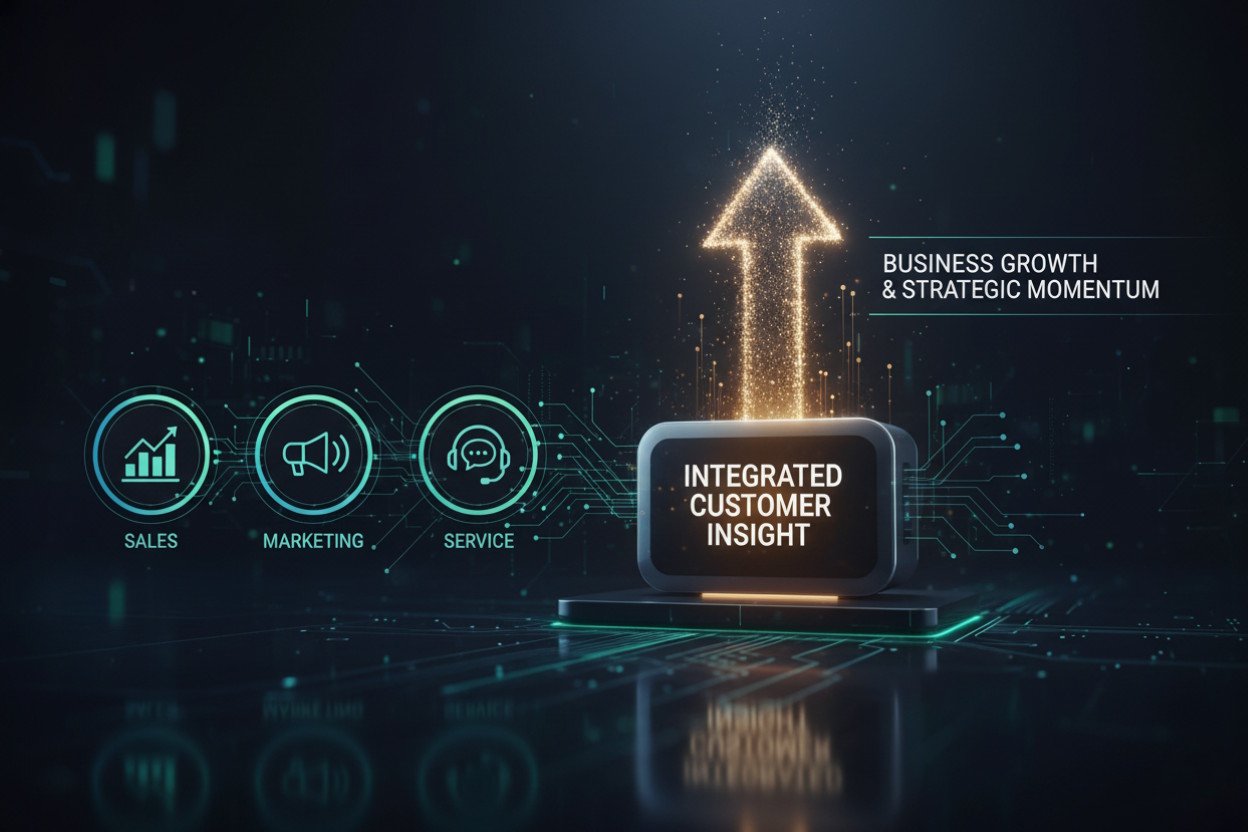
Key Takeaway: CRM integration evolves from simple data connections into a unified growth engine when customer information flows seamlessly across teams, supports shared insight, and guides strategic decisions. The shift happens when integrated systems reveal the full customer journey, allowing organizations to move beyond basic syncing and use connected data to strengthen relationships, improve alignment, and create more intentional paths to growth.
From Plugged-In Tools to a Unified Growth Engine
CRM integration sits at the center of so many conversations about growth, yet it still feels vague for many teams. You hear phrases like “connected systems,” “unified customer data,” or “integrated CRM platform,” but what does that actually look like in day-to-day work?
If you have ever wondered, “Our tools talk to each other, so why does everything still feel disconnected?” you are not alone. Many organizations link their customer relationship management system to email, marketing software, or other applications. On the surface, everything appears integrated. Underneath, though, important details still live in separate places, and teams still scramble for context.
This gap between “plugged in” and truly “unified” is the real story. The difference is not only about technology. It is about how your organization uses connected customer information to guide strategy, strengthen relationships, and support smarter growth decisions.
In other words, the journey is not just about connecting tools. It is about turning those connections into a genuine growth engine for your business.
Why CRM Integration Matters to Everyday Business Teams
When people ask, “Why does CRM integration matter if my team already has access to customer records?” they are really asking a deeper question. They want to know how better connections change their daily experience at work.
Think about a typical week. A salesperson prepares for a call and checks recent activity. Marketing wants to know which campaigns actually led to qualified conversations. A service agent tries to understand a customer’s history before answering a support request. Each person touches the same relationship from a different angle.
With only basic connections, each team member pieces together the story alone. They open several systems, copy details into notes, and try to guess what happened last. Information exists, but it does not feel like a single, living picture of the relationship.
When CRM integration matures, the experience shifts. Context appears in one place, in a way each role can understand. Teams spend less time hunting for details and more time asking better questions. Which customers look ready for an upgrade? Who needs education rather than another sales pitch? How do recent interactions affect the next step in the journey?
The real value sits in that shift. Integrated information supports more thoughtful conversations, more relevant outreach, and more confident decisions. The technology fades into the background, and the relationship comes forward.
Three Stages on the Path to a Unified Growth Engine
Every organization starts from a different point, yet many follow a similar path. If you wonder, “Are we behind, or is this just normal?” it helps to think in stages rather than a single finish line.
Stage One: Simple Connections and Spreadsheet Patches
In the first stage, systems connect in basic ways. Data may move between tools through simple syncs or imports. Someone on the team probably maintains a spreadsheet to fill in gaps or track special cases.
At this level, information often arrives late or incomplete. A campaign might generate leads, but sales only sees part of the story. Service teams log issues, yet those notes rarely flow back to marketing or leadership in a structured way.
Leaders in this stage rely on manual reports and individual memory. They can answer questions about specific deals or customers but struggle to see patterns across the full pipeline.
Stage Two: Shared Insight across Sales, Marketing, and Service
In the second stage, organizations begin to treat connected data as a shared resource, not just a technical feature. Dashboards show more than numbers. They show context.
Teams start asking questions like, “What happened just before this customer reached out?” or “Which touchpoints tend to lead to a second purchase?” They can see the impact of campaigns, content, and conversations in a single place.
Workflows may support smoother handoffs. When someone books a meeting, the account owner already sees recent engagement. When a service issue arises, the agent understands the account’s overall health.
The experience still has rough edges, yet the organization no longer feels blind. People trust the information enough to use it in planning, not only in reporting.
Stage Three: CRM Integration as a Strategic Growth Engine
In the third stage, CRM integration becomes part of the growth strategy itself. Leaders design campaigns, offerings, and experiences around what they learn from connected customer insight.
Instead of asking, “Can we connect this tool?” they ask, “What kind of relationship do we want, and what data supports that vision?” New initiatives start with the customer journey in mind, then align systems to that journey.
Teams experiment more confidently. They can test new messages, partnership models, or onboarding paths, then actually see the impact across the lifecycle. The organization moves from reacting to customer behavior to guiding it with intention.
This stage does not require every advanced feature on the market. It requires alignment around a shared picture of the customer and a willingness to build on that picture over time.
How to Tell Where You Are Today
You may wonder, “So which stage are we in right now?” A few simple reflections can give a useful clue.
Think about your last major decision related to growth. Maybe you entered a new market, launched a webinar series, or shifted focus to a different segment. Did your teams lean on integrated customer insight, or did they rely more on intuition and scattered reports?
Consider also the last time a customer surprised you. Perhaps they churned unexpectedly, or they closed a large deal faster than expected. Did your systems explain the story behind that surprise, or did you piece it together from separate notes and conversations?
If most of your decisions still feel disconnected from what your systems know, you are likely in the earlier stages. If you can trace clear lines between customer behavior, team activity, and results, you are moving closer to a true growth engine.
The goal is not to label your organization as advanced or behind. The goal is to see your current stage clearly, so each next step feels realistic and useful.
Getting Started without Overhauling Everything at Once
A common worry sounds like this: “Do we have to rebuild our entire tech stack to improve CRM integration?” In many cases, the answer is no.
Early progress often comes from small, thoughtful moves. For example, you might bring a single team together to agree on core customer fields that matter to everyone. Aligning on what you track can make existing connections more meaningful, even before you add anything new.
Another starting point involves everyday workflows. Where do people copy and paste information between tools? Where do they export data just to reformat it for another system? These friction points reveal places where better integration would immediately relieve pressure.
Communication also plays a role. When teams understand how integrated data supports their own goals, they are more likely to log information consistently and use shared views. Culture and process shape the value of your integrations as much as the technology behind them.
You do not need a perfect plan on day one. You only need a clear sense of direction and a willingness to improve the way your customer story flows through the organization.
Conclusion: Turning Connected Data into Connected Growth
As customer expectations rise, the gap between basic connections and a unified growth engine becomes more visible. CRM integration gives organizations a way to close that gap, not just by linking tools, but by creating a shared understanding of each relationship.
When teams can see the same story, they make better decisions, hold richer conversations, and move in the same direction. That shared view turns data from a background resource into an active driver of growth.
If you want to explore where you are on this journey and what a more unified approach could look like for your organization, contact us if you want to learn more about CRM integration.
