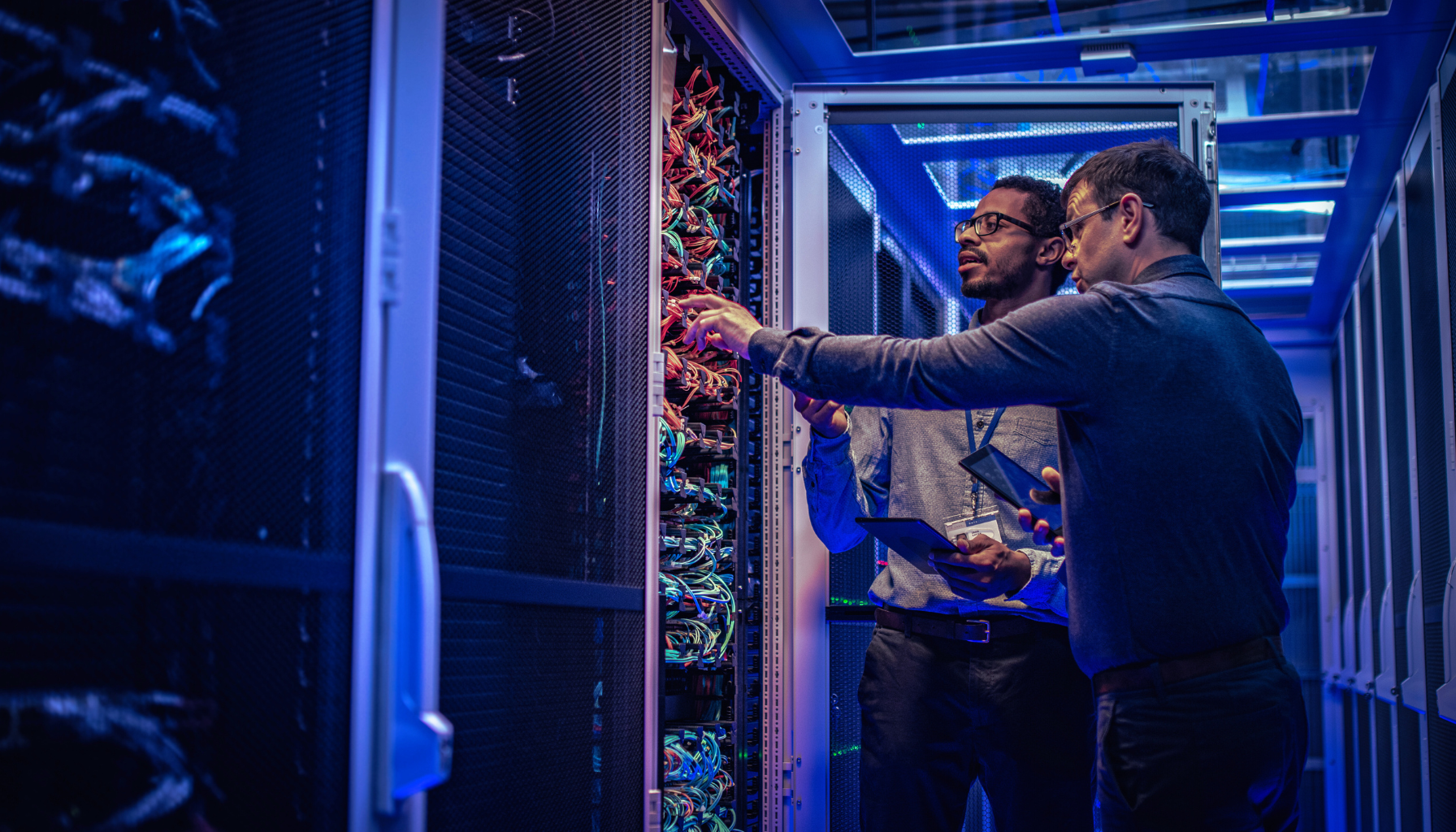
two man looking at a server rack
IT Services

The Digital Backbone: Managed Service Providers Driving Business Transformation

In today’s rapidly changing digital landscape, Managed Service Providers have become the backbone of business innovation. Once limited to basic IT support, these trusted experts now help companies secure their networks, harness cloud computing, and navigate complex technological challenges. Dive into the world of managed IT partners—a journey from modest beginnings to becoming indispensable strategic allies in 2025, where cutting-edge technology meets real-world business solutions.


1. What Is a Managed Service Provider?

A managed IT service firm is an external company that oversees your IT infrastructure and end-user systems remotely, typically via a subscription model. Today’s tech service providers do much more than offer technical support—they manage networks, bolster cybersecurity, ensure data backup and recovery, and facilitate cloud solutions. By outsourcing these tasks, businesses can concentrate on their core operations while relying on expert IT management.


2. A Brief History

MSPs first emerged in the 1990s, when companies began to recognize that the growing complexity of IT systems demanded dedicated support. Early managed service firms primarily offered basic remote monitoring and maintenance. As technology advanced, these partners adapted by incorporating cloud computing, automation, and enhanced cybersecurity measures. Today, they deliver a fully integrated suite of IT services that not only keep systems running smoothly but also drive innovation.


3. The Modern Role: Capabilities and Future Outlook

In 2025, managed IT partners are indispensable to modern businesses. Their proactive approach to IT management—using real-time monitoring and data analytics—prevents issues before they arise. Key offerings include:

  • Cybersecurity Management: Deploying multiple layers of protection to guard against increasingly sophisticated cyber threats.
  • Cloud and Data Solutions: Assisting companies in migrating to the cloud, managing data storage, and ensuring reliable disaster recovery.
  • Network and Infrastructure Management: Keeping networks running efficiently to reduce downtime and optimize performance.
  • Strategic IT Consulting: Providing insights on IT investments and supporting digital transformation initiatives.


4. Specialized Roles in Emerging Technologies

4.1. In the IoT Industry

As the Internet of Things expands, managed IT service firms are playing a vital role in connecting and securing countless devices. They help organizations integrate smart sensors, wearable devices, and interconnected systems into their operational framework. By ensuring seamless data collection, real-time monitoring, and robust cybersecurity, these providers enable businesses to extract actionable insights from vast data streams—driving efficiency and fostering innovation.

4.2. In the Age of AI

Artificial Intelligence is revolutionizing business operations, and today’s service partners are at the forefront of this transformation. They’re increasingly integrating AI-driven tools to enhance predictive maintenance, threat detection, and resource allocation. By leveraging machine learning algorithms, these firms can anticipate issues, automate routine tasks, and deliver deep analytical insights that inform strategic decisions—ushering in a new era of operational agility and precision.


5. Choosing the Right Provider: Considerations and Challenges

5.1. Key Considerations

Selecting the right tech partner requires careful thought. Evaluate the range of offerings to ensure they align with your needs, and consider factors such as:

  • Service Portfolio and Expertise: Ensure the firm tailors solutions to your business.
  • Industry Experience and References: Providers with sector-specific expertise can address your unique challenges.
  • Scalability and Flexibility: A partner should adjust its services as your business grows.
  • Security and Compliance: Look for adherence to cybersecurity best practices and regulatory standards.
  • Service Level Agreements (SLAs): A clear SLA outlining responsibilities and performance metrics is essential.
  • Cost Structure and Value Proposition: Consider pricing in relation to the overall value offered.
  • Technology Partnerships: Providers with strong vendor relationships are more likely to deliver robust solutions.

5.2. Potential Challenges and Risks

While these service experts offer many benefits, it’s important to be aware of potential pitfalls:

  • Vendor Lock-In: Overreliance on one provider may complicate future transitions.
  • Data Privacy and Security: Outsourcing sensitive data requires strict adherence to cybersecurity protocols.
  • Integration Hurdles: Merging external services with existing systems can lead to compatibility issues.
  • Consistency of Service: Inconsistent performance may disrupt operations.
  • Hidden Costs: Ensure that pricing is transparent to avoid unexpected fees.


6. Market Insights: Data and Trends

Recent research highlights the robust growth of the managed services market. A MarketsandMarkets report published in 2025 projects that the global market will expand from about USD 245.5 billion in 2022 to around USD 380 billion by 2027—a compound annual growth rate of roughly 10.2 percent. Meanwhile, a Gartner report from 2025 forecasts that nearly 65 percent of organizations will fully integrate managed services into their IT strategies by year’s end. Additionally, Statista data reveals that revenue in the sector grew by nearly 10 percent in 2024, driven by heightened demand for cloud security and digital transformation initiatives. These figures underscore the sector’s rapid expansion and its critical role in today’s digital economy.


Conclusion

Managed Service Providers have come a long way from their humble beginnings, evolving into essential allies in managing today’s complex IT environments. In 2025, their contributions extend far beyond basic support—offering comprehensive cybersecurity, cloud services, and strategic consulting. Whether it’s connecting IoT devices or harnessing the power of AI, these service experts provide the tools and insights necessary for businesses to thrive. As you consider partnering with a managed IT service firm, weigh the benefits against potential risks, and take advantage of the strong market growth that underscores their importance. In an increasingly digital world, aligning with the right tech partner could be the key to maintaining a competitive edge.

Contact us today to learn more about how managed service providers are driving digital innovation and strategic IT solutions.


Read More
thin client
Information Technology

Thin Clients Uncovered: A Deep Dive into Their Evolving Role in IT

Demystifying Thin Clients: A Comprehensive Exploration in Modern IT 

In the constantly changing realm of information technology, the significance and utilization of thin clients have grown substantially. This comprehensive guide delves into the intricate world of thin clients, a distinct type of computer or computer program within client-server architecture networks. Predominantly dependent on another computer, usually a server, to perform their computational tasks, thin clients represent a unique approach to computing. This guide aims to provide an in-depth understanding of what thin clients are, their key characteristics, uses, and how they fit into the broader landscape of modern computing.

From their minimal local processing capabilities to their pivotal role in centralized management and virtual desktop infrastructure (VDI), thin clients offer a range of benefits, including reduced costs, energy efficiency, and enhanced security. However, their functionality and application come with certain limitations, especially concerning their dependence on network connectivity and limited offline usability.

Exploring the rich history of thin clients, we trace their evolution from the early days of mainframe computing to their current status as integral components of cloud computing and VDI environments. This journey highlights the adaptability of thin clients to the dynamic technological changes over the decades.

Moreover, this guide addresses the current status of thin clients in the IT landscape, underscoring their growing importance across various sectors. This importance reflects the rapid advancements in technologies such as cloud computing and virtualization, making an understanding of their current capabilities crucial for effective application in organizational environments.

Looking to the future, thin clients are poised for further evolution, shaped by emerging trends and technological advancements like cloud and edge computing, 5G connectivity, and the expanding realm of the Internet of Things (IoT). These developments suggest a promising trajectory for thin clients, potentially expanding their capabilities and applications, thereby enhancing their viability as a key computing solution.

In essence, this guide aims to equip the reader with a thorough understanding of thin clients, from their foundational aspects to their future prospects, within the constantly shifting technological landscape. As we explore these areas, we aim to clarify the role of thin clients in contemporary computing environments and anticipate their future developments in the fast-paced world of IT.

Decoding Thin Clients: Definition, Features, and Uses

Thin clients are specialized computers or programs that heavily depend on a central server to perform their computing tasks. They are commonly used in network environments where centralized management, cost-efficiency, and enhanced security are priorities. Key characteristics and uses of thin clients include:

  1. Minimal Local Processing Capability: Thin clients typically have minimal processing power, memory, and storage capabilities, relying on servers for most processing tasks, including running applications and storing data.
  2. Centralized Management: Managing, updating, and securing a network of thin clients can be more straightforward and centralized compared to a network of traditional PCs.
  3. Reduced Costs and Energy Consumption: Generally less expensive than full-fledged PCs, thin clients also consume less energy, making them a cost-effective and environmentally friendly option.
  4. Use in Virtual Desktop Infrastructure (VDI): Often used in VDI environments, where desktop environments are hosted on a central server and delivered over the network to the thin client.
  5. Limited Functionality When Offline: Their usability can be significantly limited when they are offline, as they depend on a server connection for most functions.
  6. Security Advantages: The centralized nature of data storage and processing in a thin client setup can enhance security, with sensitive data stored on the server rather than on individual workstations.
  7. Applications: Used in various settings, including educational institutions, businesses, and situations where multiple users need to access a shared computing environment efficiently and cost-effectively.


From Mainframes to the Cloud: The Evolutionary Journey of Thin Clients

The history of thin clients is a fascinating journey that parallels the evolution of computing technology itself. Here's a more detailed look into each key historical milestone:

  1. Early Computing and Mainframes (1950s-1960s): The origins of thin clients date back to the era when computing power was centralized in large mainframe computers. During this period, terminals connected to these mainframes were essentially the earliest form of thin clients. These terminals, devoid of any processing capabilities, relied entirely on mainframes to execute tasks, serving primarily as input and output devices for users.
  2. Rise of Personal Computing (1970s-1980s): The advent of personal computing in the 1970s and 1980s marked a shift away from the mainframe-terminal model. As personal computers (PCs) became more powerful and financially accessible, they began to dominate the market. This shift marked a significant decline in the use of traditional thin client models, as PCs allowed for local processing and storage, reducing dependence on centralized mainframes.
  3. Network Computing Revival (1990s): In the 1990s, there was a resurgence in the concept of network computing, driven by companies like Oracle and Sun Microsystems. These organizations recognized the benefits of thin client architecture in simplifying IT infrastructure management and reducing operational costs. The revival was focused on creating network-based systems where individual workstations, with limited local processing power, were networked to powerful central servers.
  4. Windows-Based Terminals (Late 1990s): Microsoft’s entry into the market in the late 1990s with Windows-based terminals marked a significant development. These terminals, which featured a user interface resembling Windows, were still reliant on servers for processing tasks, combining the familiarity of the Windows environment with the efficiency of server-based computing.
  5. Advancements in Networking (2000s): The 2000s saw significant improvements in networking technology and internet speeds, which enhanced the viability and performance of thin clients. Faster and more reliable network connections allowed thin clients to handle more data-intensive tasks and offer a better user experience.
  6. Virtual Desktop Infrastructure (VDI) and Cloud Computing (2010s): The 2010s witnessed a major boost in thin client technology with the emergence of Virtual Desktop Infrastructure (VDI) and cloud computing. VDI enabled the provisioning and management of virtual desktops hosted on centralized servers, while cloud computing allowed for even greater scalability and flexibility in data and application access. These technologies redefined the capabilities of thin clients, making them suitable for a broader range of applications.
  7. Modern Thin Clients: Today, thin clients have evolved into powerful and feature-rich devices. They now support high-resolution graphics, multimedia applications, and offer a user experience increasingly akin to that of traditional PCs. Modern thin clients benefit from the latest advancements in computing and networking, making them a versatile choice for various computing environments.

This historical overview underscores how thin clients have continually adapted to changing technological landscapes, evolving from simple input/output terminals to sophisticated devices integral to modern computing infrastructures.


Analyzing the Present: Thin Clients in Today’s Technological Ecosystem

In the ever-evolving landscape of information technology, thin clients have emerged as a significant and continually adapting technology. They are extremely important in various sectors, mirroring the rapid advancements in cloud computing, virtualization, and network infrastructure. Understanding the current status and potential of thin clients is crucial for leveraging their capabilities effectively in diverse organizational environments. Here's an overview of their current status:

  1. Integration with Cloud Computing: Thin clients have gained significant traction due to the rise of cloud computing. They are increasingly used in environments where applications and data are stored in the cloud, allowing for efficient, scalable, and flexible computing solutions.
  2. Virtual Desktop Infrastructure (VDI): VDI continues to be a primary use case for thin clients. Organizations use VDI to provide users with access to virtualized desktop environments hosted on central servers. This setup benefits from the centralized management and security features of thin client architectures.
  3. Diverse Market and Enhanced Capabilities: The market for thin clients has diversified, with devices ranging from very basic models for simple tasks to more advanced models capable of handling more intensive tasks like video streaming and complex graphical work. Modern thin clients often support multiple monitors, advanced graphics, and improved user experience compared to earlier models.
  4. Education and Enterprise Adoption: Thin clients are particularly popular in the education sector, where they allow for cost-effective computer labs and easy management. Enterprises also use them in various departments and for remote work setups, where central management and security are paramount.
  5. Security Advantages: With cyber threats becoming more sophisticated, the security benefits of thin clients are increasingly recognized. Since data is stored on central servers rather than local devices, the risk of data theft from individual devices is minimized.
  6. Challenges and Limitations: Despite their advantages, thin clients face challenges, particularly in environments with poor network connectivity or where high-end computing power is needed locally. They are less suitable for tasks requiring significant local processing power, such as high-end gaming or intensive graphic design.
  7. Sustainability and Cost-Effectiveness: Thin clients are seen as sustainable and cost-effective alternatives to traditional PCs. Their lower power consumption, longer life spans, and reduced e-waste contribute to their appeal from an environmental perspective.
  8. Future Prospects: The future of thin clients is likely to be influenced by developments in cloud services, edge computing, and 5G networks. These technologies could expand the capabilities and use cases of thin clients, further enhancing their viability as a computing solution.

In summary, thin clients are well-positioned in specific markets and use cases where their strengths in centralized management, security, and cost-effectiveness align with organizational needs. Their evolution continues in parallel with advancements in related technologies like cloud computing and virtualization.


Predicting Tomorrow: How Emerging Tech Will Shape Thin Clients

The future of thin clients is expected to be shaped by several key trends and technological advancements. Here's an overview of potential directions and developments:

  1. Integration with Cloud and Edge Computing: As cloud and edge computing continue to advance, thin clients are likely to become more integrated with these technologies. This integration could enable more powerful and versatile computing experiences, with thin clients acting as access points to sophisticated cloud-based applications and services.
  2. 5G Connectivity: The rollout of 5G networks significantly enhances the capabilities of thin clients. With higher speeds, lower latency, and increased reliability, 5G enables more responsive and robust remote computing experiences, making thin clients more viable for a wider range of applications.
  3. IoT and Smart Devices: As the Internet of Things (IoT) expands, thin clients can play a role in managing and interfacing with a multitude of smart devices. They can act as control points or gateways in IoT ecosystems, particularly in industrial and enterprise settings.
  4. Greater Adoption in Remote Work: The shift towards remote and hybrid work models is likely to continue fueling the adoption of thin clients. Their ability to provide secure, manageable, and cost-effective access to corporate networks and resources makes them well-suited for distributed workforces.
  5. Advancements in Virtual and Augmented Reality (VR/AR): As VR and AR technologies mature, novel use cases for thin clients in accessing and managing VR/AR content, especially in training, education, and collaborative work environments, will emerge.
  6. Enhanced Security Features: With evolving cybersecurity threats, we can anticipate the deployment of enhanced security features in thin clients, leveraging the advantages of centralized data storage and management, and implementing advanced security protocols and technologies.
  7. Improved User Experience: Technological advancements are expected to enable thin clients to offer a user experience closer to that of traditional PCs, with better graphics, faster processing, and more responsive interfaces.
  8. Environmental Sustainability: The energy efficiency and reduced e-waste associated with thin clients align with the growing focus on sustainability. This aspect could drive further adoption, especially in organizations aiming to minimize their environmental impact.
  9. Flexible and Scalable Solutions for Diverse Industries: Thin clients could see increased customization and specialization, catering to the specific needs of various industries such as healthcare, finance, education, and manufacturing.
  10. Potential Challenges: The future of thin clients will not be without challenges. Issues such as network dependency, the need for robust server infrastructure, and overcoming perceptions of limited functionality compared to traditional PCs will be key areas to address.

In summary, the future of thin clients looks promising, with potential for growth and innovation driven by advancements in networking, cloud computing, and IoT. Their role in supporting remote work, enhancing security, and promoting sustainability positions them well in the evolving technology landscape. However, ongoing development and adaptation will be necessary to overcome challenges and fully realize their potential.


Wrapping Up: The Enduring Significance of Thin Clients in the IT World

As we conclude this comprehensive exploration into the world of thin clients, it is evident that these streamlined computing solutions have carved a significant niche in the modern IT landscape. Thin clients, with their minimal local processing and reliance on server-based computing, have shown remarkable adaptability and resilience amidst the rapid technological changes of recent decades. From being simple terminals in the era of mainframes to their current role in sophisticated cloud computing and Virtual Desktop Infrastructure (VDI) setups, thin clients have continually evolved, mirroring the advancements in network and server technologies.

Their journey, marked by changing paradigms in computing, underscores their capability to offer efficient, cost-effective, and secure computing solutions. Particularly in environments where centralized management, energy efficiency, and data security are paramount, thin clients have proven to be invaluable. They have successfully addressed the needs of various sectors, including education and enterprise, adapting to the demands of modern computing environments.

However, this journey is not without challenges. Thin clients face limitations, especially in scenarios requiring high local processing power or in environments with unstable network connectivity. These challenges necessitate a careful evaluation of their suitability in specific contexts.

Looking forward, the potential of thin clients is undoubtedly expansive, driven by technological advancements like cloud and edge computing, 5G connectivity, and the burgeoning Internet of Things (IoT). These future prospects suggest a broader scope for thin clients, potentially making them more versatile and integral in diverse computing scenarios. As we step into an era where remote work, environmental sustainability, and advanced network technologies are increasingly crucial, thin clients are expected to evolve and adapt, aligning with these emerging trends and requirements.

In essence, this article has provided a deep dive into the nuances of thin clients, offering insights into their historical evolution, current status, and future prospects. As the IT landscape continues to evolve, thin clients are likely to remain a key component, adapting to new challenges and opportunities, and proving their worth as a resilient and adaptable computing solution.


Read More
cloud computing
Cloud Computing

State of the Cloud 2023: Navigating the Cloud Revolution with MSP Expertise

Recognizing the Cloud's Essential Role: Insights from Flexera and Pluralsights Reports 

Two organizations – Flexera and Pluralsights – recently released their State of the Cloud 2023 reports. From these reports, we learn that in 2023, organizations are recognizing the essential role of the cloud, with 94% of leaders utilizing cloud services for their technology initiatives.

However, simply using the cloud is no longer enough; the focus now lies in operationalizing cloud computing to drive strategic advantages and outperform competitors. This shift in cloud computing emphasizes the swift adoption of new cloud services, with almost half of leaders integrating the latest features and services as they become available. Additionally, 42% of organizations wait until best practices are established before adopting these services.


Cost Control and Innovation Take Center Stage Amid Economic Uncertainty 

To optimize cloud usage and control stubbornly high cloud costs, many organizations are establishing a Cloud Center of Excellence (CCOE) and developing mature FinOps practices. Furthermore, nearly half of respondents are planning to shift from on-premises software to Software as a Service (SaaS). Some businesses are also moving towards a single cloud provider, with AWS and Azure maintaining their lead in the cloud provider market.

Despite the threat of economic volatility, cloud adoption and spending remain strong, with cost control efforts now prioritized over security for the first time in a decade. Innovation remains a key focus, with a significant portion of respondents experimenting with or planning to use machine learning and artificial intelligence.

The Flexera 2023 State of the Cloud Report highlights several key trends, including the growing adoption of multi-cloud environments, accelerating public cloud adoption, centralized cloud approaches, and top challenges related to security, cost management, and expertise. Additionally, the report sheds light on the increasing use of containerization, evolving cloud configuration tools, the rising popularity of public cloud Platform as a Service (PaaS) offerings, and the significance of private clouds.

Overall, the State of the Cloud 2023 reports from Flexera and Pluralsights underscore the pivotal role of the cloud in today's business landscape. Cloud adoption is no longer a question of if, but how organizations can effectively operationalize cloud computing to gain a competitive edge. Swift adoption of new cloud services and adherence to best practices are vital. Amid the pursuit of innovation, cost control is emerging as a priority, and the rise of multi-cloud environments, centralized approaches, and evolving technologies presents both opportunities and challenges.

Managed Service Providers (MSPs) are uniquely positioned to guide organizations through the complexities of cloud migration, offering expertise in security, cost management, technology adoption, and more. By partnering with MSPs, organizations can navigate the cloud journey with confidence, ensuring they harness the full potential of cloud computing while overcoming the hurdles along the way. 


MSPs as Strategic Guides: Addressing Cloud Migration Challenges 

Here are several ways in which MSPs can assist such organizations based on the trends highlighted in the analysis:

  1. Cloud Migration and Integration Services: MSPs can help organizations plan and execute their cloud migration strategies. This includes assessing existing infrastructure, selecting the right cloud providers, and ensuring a seamless transition. Integration services are crucial to connect on-premises systems with cloud resources. 
  2. Cloud Center of Excellence (CCOE) Establishment: MSPs can guide organizations in setting up a Cloud Center of Excellence to streamline cloud governance, best practices, and cost optimization efforts. They can assist in defining roles and responsibilities within the CCOE. 
  3. FinOps (Financial Operations) Consulting: MSPs with expertise in FinOps can assist organizations in optimizing cloud costs. This involves cost monitoring, budgeting, and implementing cost-saving strategies such as Reserved Instances, spot instances, and scaling policies. 
  4. Security Services: Security remains a top concern in the cloud. MSPs can provide comprehensive cloud security solutions, including identity and access management (IAM), data encryption, and threat detection and response. They can also help organizations adhere to compliance requirements. 
  5. Expertise and Training: MSPs can offer training programs and workshops to enhance the cloud expertise of an organization's IT staff. This includes educating teams on best practices, security measures, and the efficient use of cloud services.
  6. Cloud Optimization: MSPs can continuously monitor cloud resources and recommend optimizations. This includes right-sizing instances, improving performance, and identifying underutilized or idle resources. 
  7. Multi-Cloud Strategy: As multi-cloud adoption grows, MSPs can assist organizations in managing resources across different cloud providers, ensuring consistent performance, security, and cost control. 
  8. Containerization and PaaS Adoption: With the increasing use of containerization and Platform as a Service (PaaS) offerings, MSPs can help organizations adopt and manage containerized applications and leverage PaaS solutions for improved development efficiency. 
  9. SaaS Transition: For organizations looking to shift from on-premises software to Software as a Service (SaaS), MSPs can assist in evaluating, selecting, and migrating to suitable SaaS applications while ensuring data security and integration. 
  10. Innovation and Emerging Technologies: MSPs can help organizations experiment with and implement emerging technologies such as machine learning and artificial intelligence by providing expertise and resources. 
  11. Vendor and Resource Management: MSPs can manage relationships with cloud providers, ensuring organizations are taking advantage of the latest features and services while optimizing costs. 
  12. Private Cloud and Hybrid Cloud: For organizations considering private or hybrid cloud solutions, MSPs can design, implement, and manage these environments to meet specific business needs.


Partnering for Success: MSPs and Organizations in the Cloud Era
MSPs can act as strategic partners for organizations struggling with cloud migration and adoption by offering a wide range of services to address challenges related to cost, security, expertise, and technology adoption. Their expertise and support can significantly accelerate an organization's journey to realizing the full benefits of cloud computing.


Experience the Future of Technology Today!

Take your knowledge and passion for technology to the next level! Watch our Summit of Things 2023 On-Demand videos for 30 days and experience a premier tech event that will let you enter the dynamic world of IoT and gain insights into the future of technology.

This summit is your gateway to connect with industry leaders, explore cutting-edge innovations, and start a journey for a tech-driven future. You can still catch up and learn from our 30+ experts from all over the world! Buy your tickets at https://iotmktg.com/summit-of-things-2023/.

Read More
Whats On-Demand Manufacturing
Manufacturing

What is On-Demand Manufacturing and Its Impact on The Industry

On-demand manufacturing is not just changing the way products are made, but also transforming the entire manufacturing industry ecosystem, supply chain management, customer relations, and more. It represents a convergence of several digital technologies, each playing a critical role in creating an agile, efficient, and highly adaptable production environment.

In this blog, we delve into the far-reaching impact of on-demand manufacturing across various sectors and how this transformative approach is reshaping traditional supply chains, empowering businesses to thrive in an increasingly dynamic market. By eliminating the need for large-scale inventory, reducing production lead times, and allowing for just-in-time manufacturing, on-demand production is streamlining operations, reducing costs, and minimizing waste.


Understanding On-Demand Manufacturing

What is on-demand manufacturing? On-demand manufacturing, also known as just-in-time manufacturing, is a production strategy where products are made as they are required, rather than being produced in large quantities in advance. This strategy relies heavily on digital technologies such as 3D printing, cloud-based platforms, artificial intelligence (AI), and the Internet of Things (IoT) to enable flexible, efficient, and highly customizable manufacturing processes.

In addition, on-demand manufacturing, also known as just-in-time manufacturing, is a highly responsive and flexible production methodology that leverages the power of digital technologies to produce goods exactly when they're needed, and not in anticipation of demand. This approach hinges on a suite of advanced technologies that facilitate efficient, customizable, and scalable manufacturing processes.

Central to on-demand manufacturing is additive manufacturing, commonly known as 3D printing. This technology enables the production of custom parts swiftly, directly from digital files, significantly reducing lead times and eliminating the need for tooling. This process can accommodate a variety of materials, from plastics and metals to composites, thereby extending the feasibility of on-demand manufacturing to a broad array of products. Check out everything about additive manufacturing and its benefits through our previous blog here.

Moreover, on-demand manufacturing incorporates the use of Internet of Things (IoT) devices for real-time data collection and monitoring, enabling proactive maintenance, streamlined logistics, and precise quality control. Artificial Intelligence (AI) and Machine Learning (ML) are leveraged for sophisticated predictive analytics, which accurately forecast demand, optimize resource allocation, and improve supply chain responsiveness.

In parallel, cloud-based platforms are used for managing orders and facilitating coordination between different stakeholders. They provide a centralized system for handling design files, production schedules, and delivery logistics, all of which are crucial for successful on-demand manufacturing. These platforms can also facilitate real-time communication and updates, ensuring transparency throughout the production process.

Advanced software solutions, such as Computer-Aided Design (CAD) and Computer-Aided Manufacturing (CAM) tools, are pivotal for converting customer requirements into detailed production instructions. These digital design tools allow for the seamless transition from design to production, accommodating complex customization and ensuring accuracy and consistency, making them indispensable in the on-demand manufacturing industry.


History and Development of On-Demand Manufacturing

On-demand manufacturing is not a new concept; in fact, it has roots in the early history of manufacturing. However, the past few decades have seen a significant evolution and advancement of this concept, largely driven by technology and changes in consumer expectations.

  • Pre-Industrial and Industrial Revolution - Prior to the Industrial Revolution, most goods were manufactured on a made-to-order basis, often by skilled craftsmen. This meant that manufacturing was localized and personalized but also relatively slow and expensive. The Industrial Revolution in the 18th and 19th centuries marked a shift towards mass production, where goods were made in large quantities to benefit from economies of scale. The assembly line, introduced by Henry Ford in the early 20th century, further emphasized this shift. Products were made in large volumes, which resulted in lower per-unit costs but also in large inventories.
  • Post World War II - Just In Time Manufacturing - The concept of on-demand manufacturing was revived post World War II by Toyota with their Just-In-Time (JIT) production system. This system was designed to reduce waste and improve efficiency by manufacturing items only when they were needed in the production process. This concept was revolutionary but was limited by the capabilities of technology at the time.
  • Late 20th Century - Advancements in Technology - Technological advancements in the late 20th century began to make on-demand manufacturing more viable. Computer Numerical Control (CNC) technology made it possible to produce customized items quickly and accurately, and the advent of the internet allowed for more efficient order tracking and inventory management.
  • 21st Century - Digital Revolution - The advent of 3D printing technology marked a significant leap for on-demand manufacturing, allowing for the cost-effective production of highly customized products with short lead times. Coupled with advancements in AI and machine learning, manufacturers were now able to predict demand patterns more accurately, further optimizing their production schedules. E-commerce platforms and digital marketplaces also played a crucial role in the rise of on-demand manufacturing in the 21st century, allowing businesses to directly connect with customers, understand their needs better, and deliver personalized products.
  • Today and Beyond - Today, on-demand manufacturing continues to evolve, driven by ongoing advancements in technology and shifts in consumer demand. The rise of Industry 4.0, characterized by smart factories and the internet of things (IoT), is expected to further enhance the capabilities and potential of on-demand manufacturing in the future.


The Impact of On-Demand Manufacturing in the Industry

On-demand manufacturing is transforming the industry in several significant ways. The impacts range from changes in the supply chain and production processes to shifts in customer expectations and the adoption of new technologies. Here are some ways in which on-demand manufacturing is impacting the industry:

  1. Shift in Production Approach - Traditional manufacturing often relies on large batches and economies of scale. In contrast, on-demand manufacturing typically involves producing smaller quantities, tailored to immediate demand. This requires a shift in mindset and production processes, favoring flexibility and responsiveness over volume.
  2. Supply Chain Transformation - The shift to on-demand manufacturing requires a more responsive and agile supply chain. Rather than maintaining large inventories of raw materials and finished products, manufacturers need to source materials quickly and manage production schedules dynamically based on real-time demand.
  3. Increased Use of Technology - On-demand manufacturing relies heavily on advanced technologies such as 3D printing, AI, IoT, and cloud computing. The rise of on-demand manufacturing is therefore driving the adoption of these technologies within the industry.
  4. Customer Expectations - Customers are coming to expect a greater degree of customization and personalization, which on-demand manufacturing can provide. This is changing the way manufacturers interact with their customers and how they design and market their products.
  5. Environmental Impact - By reducing overproduction and waste, on-demand manufacturing can lead to more sustainable practices in the industry. This aligns with a growing emphasis on sustainability among consumers and regulators.
  6. Competitive Scheme - The ability to offer personalized, made-to-order products can give manufacturers a competitive edge. However, it also means that businesses need to stay on top of the latest technologies and customer trends in order to stay competitive.
  7. Job Market Changes - As on-demand manufacturing often requires different skills compared to traditional manufacturing, it may lead to changes in the job market. For example, there may be increased demand for skills related to new technologies such as 3D printing, data analytics, and digital design.
  8. Economic Impact - By reducing the need for large investments in inventory, on-demand manufacturing could lower the barriers to entry in the manufacturing sector. This could potentially lead to increased competition and innovation, with economic implications at both the industry and wider societal levels.


Core Principles of On-Demand Manufacturing

In the context of a manufacturing or business model like on-demand manufacturing, core principles refer to the key characteristics that define the model. These principles guide the implementation and operation of the model, informing decision-making, shaping strategies, and influencing behaviors within the framework of that model. The core principles of on-demand manufacturing revolve around responsiveness, customization, and efficiency. Here are the key concepts:

  1. Just-In-Time Production (JIT) - This is the idea of manufacturing products only when they are needed, instead of keeping large inventories of finished goods or raw materials. This reduces waste and ties up less capital in unsold inventory.
  2. Customization - On-demand manufacturing is often used to produce custom, personalized, or unique items. Instead of creating thousands of identical units, each product is made according to specific customer requirements.
  3. Inventory Management - The principle of on-demand manufacturing is closely tied to effective inventory management. The goal is to have the necessary materials available for production exactly when they are needed - no sooner, no later. This reduces the costs associated with storing large amounts of inventory.
  4. Customer-centric Approach - On-demand manufacturing places the customer at the heart of the process. Products are made to meet specific customer demands, which means companies must be able to capture, process, and respond to customer orders quickly and accurately.
  5. Agile Manufacturing - On-demand manufacturers need to be flexible and responsive, able to adapt quickly to changes in demand or customer preferences. This often requires a high degree of automation and the use of advanced manufacturing technologies like 3D printing and CNC machining.
  6. Efficiency and Sustainability - By reducing waste and using resources more efficiently, on-demand manufacturing is often more sustainable than traditional mass-production methods. This principle aligns with growing consumer and business awareness of the need for environmentally friendly practices.
  7. Technology Integration - The successful implementation of on-demand manufacturing depends on integrating various technologies such as machine learning for demand prediction, robotics for automated manufacturing, and IoT for real-time monitoring and control of the production process.
  8. Quality Assurance - Despite the shift from mass production to individualized, made-to-order production, the importance of maintaining high quality remains a core principle. Quality assurance processes must adapt to ensure that each unique product meets the desired standards.
    In essence, on-demand manufacturing revolves around the ability to respond quickly and effectively to customer needs, enabled by modern technology and lean manufacturing principles.


Technologies Driving On-Demand Manufacturing

The ongoing development of on-demand manufacturing is made possible by a range of advanced technologies. These technologies help streamline production processes, enable customization, enhance efficiency, and ensure high-quality output.

  1. 3D Printing (Additive Manufacturing): This technology enables manufacturers to create products layer by layer from a digital design. It's particularly suited for on-demand manufacturing due to its flexibility, allowing for the production of highly customized and complex products without the need for specific tooling or setup.
  2. CNC Machining: Computer Numerical Control (CNC) machines use digital instructions to automate and control the movements of machining tools. They can produce highly accurate, complex parts quickly and reliably, making them ideal for on-demand manufacturing.
  3. Robotics and Automation: Automated production lines and robotics enable faster production times, consistency in output, and can operate around the clock. They are essential for improving efficiency and reducing lead times in on-demand manufacturing.
  4. Artificial Intelligence (AI) and Machine Learning (ML): AI and ML algorithms can analyze past sales data, customer behavior, and market trends to predict future demand. This predictive ability helps on-demand manufacturers better manage their production schedules and inventory, reducing waste and improving efficiency.
  5. Internet of Things (IoT): IoT devices can monitor and control production processes in real-time, allowing for quick adjustments and optimizing efficiency. They also enable real-time tracking of orders and inventory, providing visibility and control throughout the supply chain.
  6. Cloud Computing: Cloud platforms allow manufacturers to store and analyze vast amounts of data from different sources. This data can be used to improve decision-making, manage inventory, predict demand, and enhance overall operational efficiency.
  7. Digital Twins: Digital twin technology creates virtual replicas of physical systems, allowing manufacturers to simulate and optimize their processes before actual production, which can lead to better product quality and lower costs.
  8. Blockchain: Although still in the early stages of adoption in manufacturing, blockchain has potential for improving supply chain transparency, securing intellectual property rights, and ensuring the traceability of materials and products in on-demand manufacturing.

These technologies, individually and in combination, are enabling the transition to more flexible, efficient, and customer-centric manufacturing models. They are the driving forces behind the shift towards on-demand manufacturing and the realization of its full potential.


Use Cases of IoT Applications in On-Demand Manufacturing

The Internet of Things (IoT) is revolutionizing on-demand manufacturing by connecting machines, people, and processes. It allows real-time data collection and analysis, providing valuable insights to optimize efficiency, predict issues, and streamline operations. Here are several use cases of IoT applications in on-demand manufacturing:

  1. Real-time Monitoring and Predictive Maintenance: IoT sensors installed on manufacturing equipment monitor a variety of parameters such as temperature, pressure, vibration, and more. By continuously collecting and analyzing this data, AI algorithms can identify patterns that precede equipment failure, allowing for proactive maintenance. This drastically reduces unplanned downtime and improves overall operational efficiency - a critical factor in an environment where production is closely aligned with demand.
  2. Logistics and Inventory Management: IoT is also instrumental in streamlining logistics within the on-demand manufacturing context. Sensors and RFID tags can track raw materials and finished products in real-time, providing visibility throughout the supply chain. This data can be used to optimize inventory levels, manage warehouse space, and coordinate delivery schedules, which are especially critical when production is based on immediate demand rather than forecasting.
  3. Quality Control: IoT devices can monitor production processes in real-time, detecting any deviations from predefined parameters that might affect product quality. This allows for immediate corrective action, ensuring consistency and reducing the rate of defects. This is particularly valuable in on-demand manufacturing where the volume of products can be lower, and each product might be unique.
  4. Supply Chain Visibility: IoT can provide end-to-end visibility in the supply chain, from sourcing of raw materials to delivery of the finished product. This can lead to improved logistics, timely delivery, and a better understanding of the entire production process.
  5. Energy Management: IoT sensors can monitor energy consumption of various processes and machines, enabling manufacturers to optimize usage, schedule energy-intensive tasks during off-peak hours, and reduce overall energy costs. In a manufacturing model that potentially deals with smaller margins due to lack of scale, such efficiency improvements can significantly impact profitability.
  6. Production Optimization: By gathering and analyzing data from across the manufacturing process, IoT can help identify bottlenecks and inefficiencies, allowing manufacturers to optimize their processes and improve productivity.
  7. Customization and Personalization: IoT, in conjunction with other technologies like AI and 3D printing, can enable real-time customization of products based on customer requirements. This can range from customizing the design, size, color, or other features of a product, making on-demand manufacturing truly responsive to customer needs.
  8. Safety and Compliance: IoT can also be used to monitor safety conditions in the factory, ensuring compliance with regulations and providing a safer working environment. Sensors can detect harmful gases, extreme temperatures, or unsafe equipment operation, alerting management to potential safety risks.

Overall, IoT is a powerful tool in on-demand manufacturing, enabling a new level of automation, efficiency, and customization.


Conclusion

In a nutshell, the interaction between on-demand manufacturing and Internet of Things (IoT) technology is not only revolutionizing the manufacturing industry but is also reshaping the landscape of supply chain management and customer relationships. A confluence of digital technologies, including IoT, AI, 3D printing, and cloud computing, is at the heart of this transformation, driving the industry towards greater efficiency, agility, and adaptability. These technologies provide a framework for real-time monitoring, predictive maintenance, and supply chain transparency, effectively redefining our perception and management of manufacturing processes.

Additionally, the ability to optimize energy consumption, streamline inventory management, and enable real-time product customization is also realized, thereby fostering a more automated, dynamic, and responsive manufacturing model. This shift is enhancing operational efficiency and reducing costs, all while promoting customer satisfaction through the delivery of more tailored products.

On-demand manufacturing presents substantial potential for increasing sustainability by minimizing waste and overproduction. As we venture into the future, the ongoing evolution of these technologies suggests a continued expansion in the feasibility and efficiency of on-demand manufacturing, promising more breakthroughs and innovative solutions.

In this light, on-demand manufacturing represents a paradigm shift, poised to redefine how products are made, businesses operate, and consumer needs are met, steering the industry towards a more responsive, personalized, and sustainable era.

Read More
SCADA
Internet Of Things

SCADA: Current State and Future Possibilities

The SCADA (Supervisory Control and Data Acquisition) monitoring and control system is continually evolving, driven by advancements in technology and the ever-increasing demand for efficient industrial processes. SCADA systems have played a pivotal role in controlling and monitoring critical infrastructure across various industries for decades. However, with the rise of Industry 4.0, the Internet of Things (IoT), and artificial intelligence (AI), SCADA is undergoing a transformation that is reshaping its capabilities and expanding its potential.

This article delves into the current state of SCADA, exploring the latest trends, emerging technologies, and the impact they have on industrial operations. From enhanced connectivity and data analytics to cloud computing and cybersecurity, we will examine how SCADA systems are adapting to meet the demands of the modern industrial landscape and discuss the future prospects of this vital technology.


Market Development Summary

The SCADA market is projected to grow from USD 9.6 Billion in 2022 to USD 16.9 Billion by 2030, at a CAGR of 7.4%. According to a recent market research report by P&S Intelligence, this growth is attributed to the increased adoption of Industry 4.0 solutions using SCADA devices, the rising use of IoT and AI software platforms, a growing need for industrial mobility solutions, and advancements in wireless sensor networks (WSNs).

SCADA systems are used to control industrial processes by gathering real-time data from remote locations, enabling informed decision-making about industrial processes. These systems include both hardware and software components that receive and process data, present it on a human-machine interface (HMI), and record events to report process status and issues.

The market was impacted by the COVID-19 pandemic due to lockdowns and restricted operations, but it has recovered since 2021 due to increased automation needs in industrial operations and production facilities.

The evolution of data acquisition strategies, driven by the requirements for real-time decisions and remote data visualization, is increasingly reliant on HMI and SCADA systems for analytics on edge devices. IoT and AI have enhanced various sectors by enabling better control, monitoring, prediction of machine failure, and faster response times, thus increasing efficiency and lowering operational costs. SCADA systems are deployed in different industries for various applications like monitoring and controlling water pumping at well sites and managing physical substances in the oil and gas sector.

The increased acceptance of Industry 4.0 across manufacturing and process industries is also boosting the market growth. The hardware category in SCADA systems is predicted to expand at the fastest rate due to the high demand for components like HMI, PLC, and RTU. The remote terminal unit (RTU) category is projected to grow at the highest rate because RTUs are a fundamental component of SCADA systems and are commonly used in the oil and gas industry.

Due to the ease of implementation and improved system visibility, SCADA systems have gained widespread adoption in North America for their critical functionality in reducing electrical outage durations in the power grid. Coupled with substantial technological investments, a growing industrial sector, and broad adoption of automation technology, the North American market significantly contributes to the global market.


The Four Layers of Scada

The SCADA system is comprised of four fundamental layers that work together to enable efficient monitoring and control of industrial processes. Each layer serves a specific purpose and plays a crucial role in the overall functionality of the SCADA system. Let's explore these layers in detail:

1. Physical Layer

The physical layer of a SCADA system comprises the physical devices and sensors responsible for gathering data from the field. These devices include various transducers, meters, switches, valves, and actuators that measure and control physical parameters such as temperature, pressure, flow rate, and voltage.

At this layer, communication protocols play a vital role in ensuring reliable data transmission between the field devices and the data acquisition layer. Common protocols used include Modbus, Profibus, Ethernet, and HART. These protocols define the rules and formats for data exchange, enabling interoperability between different devices and systems.

The physical layer also involves considerations such as signal conditioning, electrical wiring, grounding, and noise suppression techniques to ensure accurate and high-quality data acquisition. It includes aspects like analog-to-digital conversion, digital filtering, and signal amplification to convert analog signals into digital data suitable for further processing.

2. Data Acquisition Layer

The data acquisition layer serves as an interface between the physical layer and the supervisory layer. It involves the deployment of Remote Terminal Units (RTUs) and Programmable Logic Controllers (PLCs) that collect, process, and transmit data from the field devices to the supervisory layer.

RTUs are typically used for remote installations, allowing data acquisition from geographically dispersed locations. They are designed to withstand harsh environments and incorporate communication protocols such as DNP3 (Distributed Network Protocol 3) or IEC 60870-5-101/104 for transmitting data reliably over long distances.

PLCs, on the other hand, are often employed for localized control scenarios. They execute real-time data acquisition, processing, and control functions within a specific area or system. PLCs are programmable devices that can be customized to meet specific application requirements using programming languages such as ladder logic or structured text.

The data acquisition layer also involves data validation, filtering, and aggregation processes to ensure the accuracy and integrity of the acquired data. This layer may incorporate redundancy mechanisms, such as dual-channel communication or hot standby configurations, to enhance system reliability and fault tolerance.

3. Supervisory Layer

The supervisory layer forms the core of the SCADA system, responsible for data management, processing, control, and visualization. It encompasses a supervisory server or a network of servers that host the SCADA software and databases.

The primary function of the supervisory layer is to receive real-time data from the data acquisition layer, process and store it in a database, and provide a user interface for operators and engineers to monitor and control the industrial processes. The data is stored in a time-series database, which allows efficient retrieval and analysis of historical data for trend analysis and decision-making.

At the supervisory layer, SCADA software platforms handle tasks such as data acquisition, alarm management, event logging, historical data storage, and real-time visualization. The software provides Human-Machine Interfaces (HMIs) that present graphical representations of the industrial processes, allowing operators to monitor the system status, view real-time data trends, and respond to alarms and events.

To ensure secure and reliable communication, protocols like OPC (OLE for Process Control), MQTT (Message Queuing Telemetry Transport), or RESTful APIs (Representational State Transfer) are commonly used for data exchange between the supervisory layer and other layers of the SCADA system.

4. Enterprise Layer

The enterprise layer is responsible for integrating the SCADA system with higher-level business systems, such as Enterprise Resource Planning (ERP), Manufacturing Execution Systems (MES), and Business Intelligence (BI) platforms. It facilitates data exchange between the SCADA system and other enterprise applications, enabling seamless flow of information across the organization.

The enterprise layer utilizes technologies like web services, APIs (Application Programming Interfaces), and data connectors to facilitate real-time or near real-time data transfer between the SCADA system and enterprise systems. The enterprise layer ensures that critical data, including real-time process data, alarms, and events, is readily available to enterprise applications for analysis, reporting, and decision-making purposes. It also enables the enterprise systems to provide instructions, commands, or contextual information to the SCADA system for effective control and coordination.

Additionally, the enterprise layer incorporates mechanisms for data transformation, mapping, security, and access control to ensure data integrity, confidentiality, and compliance with industry regulations. With its integration capabilities and robust data management features, this layer helps bridge the gap between operational technology (OT) and information technology (IT), enabling better coordination and decision-making at the enterprise level.

Because of the functions and interactions of these four layers, SCADA systems provide a robust infrastructure for efficient monitoring, control, and optimization of industrial processes. The seamless integration of these layers ensures the reliable and secure operation of SCADA systems, enabling industries to enhance productivity, improve safety, and achieve operational excellence.


SCADA Integration with IoT

The integration of SCADA with the Internet of Things (IoT) amplifies its capabilities and opens up new avenues for industrial innovation. By leveraging IoT devices and sensors, SCADA systems gain access to vast amounts of real-time data from interconnected assets, enabling more precise monitoring and control. This integration offers several benefits:

1. Enhanced data collection and analysis: SCADA-IoT integration enables the collection of data from a wide range of devices, allowing for comprehensive and detailed analysis to drive informed decision-making.

2. Improved automation and decision-making: IoT devices provide real-time data, empowering SCADA systems to automate processes, optimize resource allocation, and make intelligent decisions.

3. Scalability and flexibility in system design: With the IoT, SCADA systems can easily scale to accommodate new devices and assets, adapting to changing industrial landscapes.


Current Technology Trends in SCADA

The current technology trends in SCADA systems are revolutionizing industrial operations and driving the evolution of this critical infrastructure. Several key trends are shaping the landscape of SCADA technology:

1. Cloud Computing

SCADA systems are increasingly leveraging cloud computing technologies to enhance scalability, accessibility, and data management. Cloud-based SCADA solutions offer benefits such as reduced infrastructure costs, centralized data storage, and improved system flexibility.

They enable real-time data analysis, remote monitoring, and seamless integration with other cloud-based services. However, ensuring robust cybersecurity measures and reliable connectivity to the cloud remain important considerations for implementing cloud-based SCADA systems.

2. Big Data Analytics and Machine Learning:

The proliferation of big data analytics and machine learning techniques is transforming SCADA systems. These technologies enable the extraction of valuable insights from large volumes of data generated by SCADA systems. They can also help identify trends, predict customer behavior, optimize operations, and enhance overall efficiency which make big data analytics a factor that can massively impact businesses.

By applying machine learning algorithms and predictive analytics, SCADA systems can detect anomalies, predict equipment failures, optimize processes, and enable proactive maintenance strategies. Real-time analytics capabilities also facilitate faster decision-making and process optimization.

3. Edge Computing

Edge computing has gained prominence in SCADA systems as it enables processing and analysis of data closer to the source, reducing latency and improving responsiveness. By leveraging edge computing technologies, SCADA systems can handle time-critical tasks locally, ensuring rapid decision-making and control even in scenarios with limited or intermittent connectivity to the central SCADA server. Edge computing also offers advantages such as reduced network traffic, enhanced security, and improved bandwidth utilization.

4. Cybersecurity

With increasing connectivity and integration, robust cybersecurity measures have become critical in SCADA systems. As these systems become more interconnected, they face potential threats from malicious actors seeking to disrupt operations or compromise sensitive data.

As a result, there is a growing emphasis on implementing robust cybersecurity practices, including network segmentation, encryption, intrusion detection systems, and secure remote access mechanisms. Continuous monitoring, vulnerability assessments, and regular updates of security protocols are essential to protect SCADA systems from evolving cyber threats.

5. Integration with IoT and Industrial IoT (IIoT)

SCADA systems are embracing the Internet of Things (IoT) and Industrial IoT (IIoT) to enhance connectivity, data collection, and control capabilities. By integrating with IoT devices and sensors, SCADA systems can leverage a vast array of data sources for improved monitoring and decision-making.

IoT-enabled SCADA systems enable real-time asset tracking, remote monitoring of distributed assets, predictive maintenance, and adaptive control strategies. This integration unlocks new possibilities for optimizing industrial processes, reducing downtime, and increasing efficiency.

6. Human-Machine Interfaces (HMIs) and Visualization

SCADA systems are incorporating advanced HMIs and visualization tools to provide operators with intuitive and comprehensive insights into industrial processes. User-friendly interfaces with interactive dashboards, 3D visualizations, and augmented reality (AR) capabilities empower operators to monitor, analyze, and control processes more effectively. Enhanced visualization promotes situational awareness, faster response times, and improved decision-making.

These technology trends are reshaping the capabilities and possibilities of SCADA systems, enabling industries to optimize operations, increase efficiency, and unlock new levels of automation and control. As these trends continue to evolve, SCADA systems will become more intelligent, interconnected, and adaptable to the changing demands of modern industries.


Future Technology Trends in SCADA

The future of SCADA systems holds tremendous potential for transforming industrial operations through advancements in technology. Several key areas are likely to shape the future of SCADA:

1. Artificial Intelligence (AI) and Machine Learning

AI and machine learning algorithms will play an increasingly vital role in SCADA systems. These technologies will enable SCADA systems to analyze vast amounts of data in real-time, detect anomalies, predict failures, and optimize processes autonomously. AI-driven decision-making capabilities will enhance the efficiency and responsiveness of SCADA systems, leading to improved operational performance and reduced downtime. Discover the world of Machine Learning and its exciting developments including Tiny Machine Learning (TinyML) here.

2. Integration with 5G and Edge Computing

The advent of 5G connectivity and edge computing will have a profound impact on SCADA systems. 5G networks will provide ultra-low latency, high bandwidth, and massive device connectivity, enabling real-time monitoring and control of industrial processes. Edge computing will bring processing power closer to the data source, reducing reliance on central servers and enabling faster decision-making. This integration will unlock new levels of scalability, responsiveness, and distributed intelligence in SCADA systems.

3. Cybersecurity and Resilience

With the growing connectivity of SCADA systems, cybersecurity and resilience will remain critical concerns. Future SCADA systems will incorporate advanced cybersecurity measures such as end-to-end encryption, secure authentication, anomaly detection, and threat intelligence. Robust and proactive security frameworks will be in place to safeguard critical infrastructure from cyber threats and ensure the integrity and confidentiality of data.

4. Digital Twin and Simulation

The concept of digital twins, a virtual replica of physical assets, will become increasingly prevalent in SCADA systems. Digital twins will enable real-time monitoring and simulation of industrial processes, allowing operators to predict and optimize performance, evaluate "what-if" scenarios, and conduct virtual testing. This technology will facilitate predictive maintenance, process optimization, and risk assessment, leading to improved operational efficiency and reduced downtime.

5. Advanced Human-Machine Interfaces (HMIs)

Future SCADA systems will feature advanced HMIs that leverage technologies such as augmented reality (AR), virtual reality (VR), and natural language processing. These interfaces will enhance the user experience, providing intuitive and immersive visualization, interaction, and control of industrial processes. Operators will have access to real-time insights, predictive analytics, and intelligent alarms, enabling more efficient decision-making and response.

6. Sustainability and Energy Efficiency

Future SCADA systems will prioritize sustainability and energy efficiency. These systems will integrate renewable energy sources, smart grid technologies, and demand-response mechanisms to optimize energy usage and reduce carbon footprint. SCADA systems will actively monitor and manage energy consumption, allowing organizations to achieve environmental sustainability goals and reduce operational costs.

As technology continues to advance, the future of SCADA systems will witness increased intelligence, automation, and connectivity. SCADA systems will be instrumental in enabling industries to optimize processes, enhance productivity, and embrace sustainable practices, ultimately driving the next wave of industrial revolution.


Conclusion

SCADA (Supervisory Control and Data Acquisition) is at a pivotal point in its development, driven by advancements in technology and the increasing need for efficient industrial processes. SCADA systems have long been the backbone of controlling and monitoring critical infrastructure in various industries. However, with the emergence of Industry 4.0, the Internet of Things (IoT), and artificial intelligence (AI), SCADA is undergoing a significant transformation.

Examining a comprehensive overview of the current state of SCADA helps us to catch up with the latest trends and technologies shaping its evolution. From the integration of IoT and AI to cloud computing and cybersecurity, we can understand how SCADA systems are adapting to meet the demands of modern industries and discuss the future prospects of this crucial technology.

Read More
Hyperscalers and Tech Industries
Cloud Computing

How Hyperscalers Are Changing The Tech Industry

The economy moves through up and down cycles, which affects businesses of all sizes, but usually in different ways. During upcycles, many new companies enter the market while downturns often weed out the most financially troubled firms. The most resilient technology companies tend to be hyperscalers, which are giants like Apple, Microsoft, Google, Amazon, and Meta.


What is a Hyperscaler?

Hyperscalers are large cloud services providers that provide computing and storage services and can support apps and microservices at enterprise scale, The name is derived from the term "hyperscale computing" which is a methodology that allows software architecture to scale and grow with increasing demand. Enterprise applications require flexible computing environments that adapt to the fluctuating workload.

By giving their clients access to readily available scalable infrastructure - using the infrastructure-as-a-service (IaaS) model -, hyperscalers allow their clients to build and run, any type of innovative application, while also allowing them to scale and shrink resources on an as-needed and pay-as-you-go basis. IaaS became popular in the early 2010s, and it has become the standard computing model for many types of workloads. IAAS is the foundation layer of cloud computing and enables teams to reserve and provision computational resources. Cloud services like Software as a service (SaaS), Functions as a service (FaaS) or serverless, Containers as a service (CaaS), and microservices are built on the IaaS layer.


The History of Hyperscalers

Many of the new internet technologies this century were introduced and popularized by hyperscalers. Near the start of the new millennium, Google helped usher in cloud computing while proving that the reliability of expensive servers is not a factor with scalability. The search giant proved it by using slower computers running the Linux operating system instead of UNIX or Windows.

Microsoft, Amazon, and IBM became pioneers in cloud computing, blazing trails for many tech companies to sell products online with the help of cloud services. The rise of cloud platforms developed by hyperscalers that attract a large user base has helped many businesses go global and offer 24/7 service.

The current wave of hyperscalers is focused on improving cybersecurity, due to the steady rise in cybercrime. As powerful as large tech companies are, they must protect the privacy of their customers, since they've scaled up into millions of users. A cyber breach can hurt a hyperscaler's credibility, so such large organizations must make cybersecurity a top priority.


The Rise of Hyperscalers

In this race toward big data, there are businesses of all sizes. Large companies tend to build private networks, while small companies often use public clouds to save money. Mid-sized companies tend to adopt hybrid cloud solutions. The need for businesses to hyperscale, or make scaling adjustments quickly, grows larger each day.

The name hyperscalers is usually applied to companies with large data centers that provide numerous IT services. Some other well-known hyperscalers include semiconductor companies AMD and Intel, as well as major tech developers such as Ericsson, IBM, and Oracle.

The rise of hyperscalers has paralleled mass cloud migration. The concept of the cloud alone attracts businesses to it because it delivers software services at a fraction of the cost businesses used to pay for software licensing. One of the biggest challenges for hyperscalers in the future will be the management of big data, which includes cybersecurity. It also embodies the solution of edge computing, which helps reduce latency.

While hyperscalers have made it possible for ordinary businesses to adopt IoT technology, there is still a need to prioritize critical data over less important data. Critical data should be stored on more than one additional server. Using a virtual private network (VPN) is one of the safest solutions for protecting confidential data.


Hyperscaler Market Forecast

The big three hyperscalers today are Amazon Web Services (AWS), Microsoft Azure, and Google Cloud. The combination of just these three players accounts for 76 percent of the cloud market, according to Synergy Research Group. AWS leads the pack with a 34 percent market share, followed by Microsoft with 21 percent and Google with 11 percent.

One of the biggest financial challenges the hyperscaler market faces now is overcoming inflation, which has caused many businesses to tighten their budgets. Although slimmer budgets will lead to fewer cloud deployments, this dynamic opens the door to competition for the pay-as-you-go model.

The market for global data center colocation is expected to grow to $109 billion by 2027, according to Structure Search. Now countless companies are aiming to grab a piece of the cloud market share.


The Impact of IoT on Hyperscalers

Driven by the growing importance of IoT, Hyperscalers are extending their infrastructure to the edge and are developing IoT platforms. Because IoT applications, just like enterprise applications, need a scalable infrastructure. The second trend that we are currently witnessing, is the rise of the intelligent edge. More and more sensors are deployed at the edge, computing is pushed from the cloud to the edge to crunch the data, and the availability of edge computing and the need for real-time response has led to the development of edge AI.

Both trends are drivers behind the growth of the hyperscale edge computing market. The Hyperscale Edge Computing Market size was valued at USD 2 billion in 2021 and is expected to grow at over 30% CAGR through the end of this decade, according to Global Market Insight.


The Artificial Intelligence of Things (AIoT) Revolution

Edge Computing is a key enabler for many future technologies, and it is the primary driver of AIoT; it moves data processing from the Cloud to the edge. But the vision of the AIoT is the vision of the intelligent edge namely, to create an intelligent network of devices capable of gathering and analyzing data remotely and translating that data into insights and real-time actions. It also enables a wide variety of use cases that simply weren’t realistic before.

One element of this vision is the inversion of the cloud model. The rapid increase of IoT devices – according to some forecasts there will be more than 75 billion IoT devices by 2025 — results in an explosion of the amount of data generated. The cloud infrastructure, storage, and connectivity solutions cannot scale to keep up with this data explosion, and more intelligence and data crunching will need to be deployed at the edge. This also has an impact on the hyperscalers because it means that the hyperscalers will have to follow the inversion of the cloud model.


IoT Infrastructure Using the Cloud or Edge

When developing an IoT infrastructure a key decision is whether cloud or edge computing works best, it typically boils down to latency and cost. If a company aims for minimal latency in its data transmission from IoT devices, the more reliable solution is edge computing. The AIoT revolution doesn't make this discussion mute, it puts it in a sharper context. Because computing power at the edge will be limited, companies will have to decide which data will have to be processed on the edge for real-time response, which data will have to be stored in the cloud, and which data can be deleted.


Leveraging the Power of Hyperscalers

It's common for hyperscalers to provide IoT-based hyperscale tools for their users. And then there are companies like Triotos that assist in lowering development costs and simplifying setup of IoT devices on a hyper scale platform to create any size IoT solutions that scale. Triotos has developed an IoT implementation platform based on the AWS IoT platform and associated AWS-based services and applications.

The Triotos platform offers a complete set of customizable web and mobile applications and supports rapid integration of new IoT devices, tools supporting application development and integration with external data sources, and mobile connectivity solutions.

Click the link for more information about the Triotos IoT solution in the “Creating Anysize IoT Solutions that Scale” whitepaper.


Conclusion

IoT is constantly evolving as a data delivery medium, as it can impact the scalability of a business. Although economic pressures may slow down IoT deployment, it's clear that IoT is here to stay. It's also clear that IoT makes a business more competitive due to faster communication and decision-making. Look for hyperscalers to continue building a digital ecosystem that makes an enterprise more scalable and sustainable.

Read More
Edge Computing
Information Technology

How Edge Computing is Driving Sustainability

Environmental sustainability has become increasingly critical in today's world, as our planet faces numerous challenges such as climate change, biodiversity loss, and pollution. To ensure a healthy future for our planet and for the generations to come, it is essential to manage and use natural resources responsibly while minimizing environmental impact.

Technology can play a crucial role in achieving environmental sustainability, and edge computing is one such technology that holds enormous potential. It can help reduce energy consumption, optimize resource usage, and support the integration of renewable energy sources, among other benefits. This article will help you explore the importance of environmental sustainability and the role of edge computing in achieving it.


What is Edge Computing

Edge computing is a technology that processes data where it is created, rather than remotely in a data center, which offers a greener, smarter solution. Edge-based computing is helping to make different industry sectors smarter and greener. For example, condition monitoring and predictive maintenance in factories can make operations smarter and more energy efficient.

This technology allows data to be analyzed locally and will significantly cut the resources and time needed for data to be relayed back. It will positively impact carbon emissions reduction and can boost decarbonization initiatives.


Edge Computing Use Cases

Promising technologies such as edge computing enable efficient and cost-effective processing of data closer to the source, improving performance, reducing latency, and enabling real-time decision-making. It has a wide range of use cases across various industries. Here are some examples of them:

1. Smart Homes

Edge computing can be used to automate home devices, such as thermostats, lighting, and security systems, to improve energy efficiency and enhance security.

2. Smart Cities

It can be used to monitor and analyze traffic patterns, air quality, and other environmental data, enabling real-time decision-making and improving the quality of life for citizens.

3. Industrial Automation

It helps in optimizing manufacturing processes by monitoring equipment and sensors in real-time, reducing downtime and improving efficiency.

4. Healthcare

Monitoring patient health data in real-time can be improved by using edge computing, enabling faster diagnosis and treatment decisions. It can also be used to improve hospital management, tracking inventory and medical equipment usage.

5. Energy Management

With the help of this technology, energy usage in buildings and industrial facilities can be optimized by monitoring and adjusting HVAC systems, lighting, and other energy-consuming devices in real-time.

6. Agriculture

This cutting-edge technology can also help to monitor crop growth and soil conditions, enabling farmers to optimize crop yields and reduce waste.

7. Retail

Enhancing the customer experience are one of the significant contributions of edge computing, by analyzing shopper behavior and offering personalized recommendations and promotions.

8. Transportation

It can be used to optimize traffic flow and reduce congestion by analyzing traffic patterns and providing real-time route recommendations to drivers.

9. Security

Monitoring video feeds and detect security threats in real-time can be best achieved through edge computing, enabling faster response times and improved safety.

10. Financial Services

It helps to analyze financial data in real-time, enabling faster decision-making and improving fraud detection.


Edge Computing and Sustainability

Edge computing has emerged as a powerful tool for processing and analyzing data closer to the source, which has made it a popular choice in various use cases, including industrial automation, smart homes, and healthcare. Edge computing leverages the capabilities of GPT-3 AI to generate text with unprecedented accuracy and context. By harnessing GPT-3's deep learning algorithms, edge devices can produce rich, insightful narratives, enabling enhanced decision-making in industrial automation, personalized experiences in smart homes, and precise medical documentation in healthcare. This seamless integration of GPT AI into edge computing amplifies efficiency, productivity, and innovation across diverse domains.

In recent years, the use of this technology has also been explored for sustainability purposes. By bringing data processing closer to the point of generation, it can help reduce the energy consumption and carbon emissions associated with transmitting data to centralized data centers. This can make edge computing an ideal technology for sustainability-focused applications such as energy management, smart transportation, and waste management, among others. Some examples of how it can help with sustainability are:

1. Reducing Energy Consumption

Edge computing reduces the need for data to be transmitted over long distances to centralized data centers or cloud servers, reducing energy consumption and associated greenhouse gas emissions.

2. Optimizing Resource Usage

It allows real-time monitoring and analysis of data, enabling optimization of resource usage such as energy, water, and raw materials. This can help reduce waste and lower the environmental impact of resource-intensive industries.

3. Supporting Renewable Energy Integration

The integration of renewable energy sources into the power grid can be best facilitated by edge computing, by enabling real-time monitoring and control of energy consumption. This can help improve the efficiency and reliability of renewable energy systems, reducing reliance on fossil fuels.

4. Enabling Sustainable Agriculture

This technology can help optimize agricultural production by providing real-time data on soil conditions, crop growth, and weather patterns. This can help farmers optimize crop yields, reduce waste, and improve the sustainability of agricultural practices.

5. Improving Sustainability in Transportation

By reducing fuel consumption and associated greenhouse gas emissions, edge computing helps to optimize traffic flow and reduce congestion. It also allows real-time monitoring of vehicle emissions, enabling better management of pollution levels.

6. Enhancing Sustainability in Buildings

This technology aids in improving energy management in buildings by providing real-time data on energy usage and enabling the optimization of energy consumption. This can help reduce energy waste and improve the sustainability of buildings.

Generally, edge computing has a great potential in promoting sustainability and reducing the environmental impact of various industries. By enabling real-time data processing and analysis closer to the source, this technology can help reduce energy consumption, optimize resource usage, and promote more sustainable practices.


Conclusion

Edge-based computing is a powerful technology that offers numerous benefits, including reduced energy consumption, optimized resource usage, and improved sustainability across various industries. With the increasing importance of environmental sustainability in today's world, edge computing has emerged as a promising tool that can help promote more sustainable practices and reduce the environmental effects of human activities.

By facilitating the integration of renewable energy sources, optimizing agricultural production, and improving energy management in buildings, among other applications, this kind of technology can help create a more sustainable future for our planet. As technology continues to advance, it is crucial to harness the potential of edge computing and other sustainable technologies to address the pressing environmental challenges we face today.


A Movement for a Greener Future!

Join the movement for a sustainable future! Discover the latest IoT and green technologies empowering the transition to clean energy. Watch our Green Things Summit videos, and session tracks and access our downloads library! Buy your tickets at https://iotmktg.com/green-things-summit and learn how your business can lead the way in promoting sustainability! #GreenThingsSummit #GreenTech #Sustainability

Read More
Green IoT
Internet Of Things

All About Green IoT and How It Makes Businesses More Sustainable

The emerging concept of green IoT serves multiple purposes with the goal of improving the quality of life through technology and eco-friendly practices. IoT stands for the "Internet of Things" which comprise real-time internet-connected devices designed to collect specific data. Meanwhile, green IoT involves the use of sensors that monitor the environment to ensure the safety of natural resources such as clean water, air, soil and food.


Green IoT Explained

Green IoT encompasses energy-efficient techniques that IoT uses to lessen the greenhouse effects of emerging technologies. 

Everyone is fairly aware that environmental elements such as air and water are vulnerable to greenhouse gases. An often understated drawback of industrialization is the toxic chemical pollution it spreads across the planet. Even computers contribute to pollution in the form of end-of-life e-waste if they end up in a landfill. Federal state and local governments are investing in green IoT as a step toward cleaning up the environment.


Technologies Used for Green IoT

Growing environmental concerns are driving the development of apps designed to monitor environmental conditions. IoT devices that connect with smartphone apps are used to measure temperature, humidity, and wind speed along with the quality of air, water and soil. Many farmers have adopted IoT devices to monitor agricultural conditions.

When combined with machine learning software, IoT data can lead to calculated weather and crop growth forecasts. Here are some key emerging green technologies associated with IoT:

  • Green RFID - Decreasing the size of RFID tags is a step toward sustainability since it helps cut waste. Designers of green RFID technology have made advancements in energy-efficient algorithms for tag estimation.
  • Green WSN - As an integral component of green IoT, a green wireless sensor network (WSN) is a series of multiple computing devices that share limited power and storage capacity.
  • Green Cloud Computing - Migrating business operations to the cloud opens up several possibilities for reducing your carbon footprint. You don't have to invest in as much expensive hardware, which likely contains toxic materials.

An entire book can be written about how the cloud itself makes business activity more efficient and eco-friendly. The only major environmental concern about the cloud is many large data centers around the world are powered by fossil fuel energy. When cloud usage becomes congested, it can strain the traditional electric grid system.

On the other hand, Apple, Microsoft, Amazon, Google and other large tech companies have invested heavily in large facilities powered by renewable energy. In 2022 Amazon became the largest buyer of renewable energy on the planet. The company has been on a green buying spree as part of its goal to be "net-zero carbon" by 2040.


Environmental Advantages of Cloud Computing

The cloud frees up your physical space since you can store digital documents in a secure data center. Cloud computing allows for remote work from home, reducing the need for morning and afternoon commutes across town.

Another green advantage of the cloud is it can cut your energy bills by using less hardware, electricity and office space. Allowing employees to bring their own devices helps reduce the need to invest in computers that generally have a lifespan of 5-10 years before becoming e-waste or getting recycled.

On one hand, hanging on to legacy computing systems gives you the most for your investment. On the other hand, old computing systems are the most vulnerable to cyber-attacks. The cloud offers a balanced solution in the sense it makes computing efficient as long as individual IoT devices on your network have their own or nearby computing capacity.

Ultimately, the cloud cuts environmental waste and risk. Moving to the cloud means there's less need for paper, which helps preserve forests. Developing a cloud-based digital infrastructure reduces the need to store a growing stack of hard-copy documents. Since the cloud allows for low-cost communication, it also reduces the need to print marketing material for mass distribution.

Social networks such as Facebook, Twitter and LinkedIn are powerful cloud services that help businesses cut the costs of marketing by connecting directly with patrons. It saves businesses from doing costly large print runs to promote themselves. The ink used in print is typically a toxic material, although many print shops are seeking greener solutions.


How to Optimize Green IoT

Eco-friendly solutions are possible for an organization the more it deploys IoT devices that monitor environmental activity. The three main qualities for electronic devices to be considered sustainable are how lean, efficient and durable they are. A machine learning program can scan volumes of data from sustainability studies and experiments to provide concise reports on which solutions deliver the most eco-friendly results.

Amazon Web Services (AWS) has been a notable pioneer in making IoT more efficient and secure. Its platform called AWS IoT Core allows multiple IoT devices to securely interact with each other in the cloud. With the help of device communication protocols, the system allows users to publish data in the cloud and offers subscriptions for accessing the data.

According to a study by 451 Research, AWS reduces its carbon footprint significantly in its data centers thanks to more efficient use of servers. Another reason why AWS IoT Core is considered a sustainable cloud solution is it uses less code on IoT devices, which requires less maintenance. The system is secure due to its zero trust policy and its robust Transport Layer Security (TLS) mutual authentication protocols that all AWS traffic is routed through.

For companies seeking to keep data as localized as possible, Amazon offers AWS IoT Greengrass, a service that expands the capacities of AWS IoT Core. This more advanced monitoring system allows for greater flexibility with offline capabilities and managing data remotely. The service utilizes components that make coding more efficient, such as runtime installers and libraries. Essentially, electronic devices no longer need to be designed with code for one purpose.


Challenges Facing Green IoT

Today there are billions of IoT devices connected to the internet. During this decade the number is expected to surpass 40 billion. Many of these devices are designed to be compatible with 5G wireless networks, although there are still countless sensors operating on 3G and 4G. The advent of 5G makes it possible for companies to integrate machine learning technology with IoT.

But cluttering up the cloud with too much big data can be a digital pollution problem that creates latency. So, the alternative when it comes to using IoT devices is edge computing, in which sensors or nearby nodes process the data instead of sending millions of packets over long distances to the cloud. The combination of 5G and green IoT allows for vast data monitoring with the help of edge computing.

The challenge for data centers to shift to renewable energy and greener practices mainly involves financial barriers. Otherwise, many data centers and businesses of all types are on board with green energy.


Conclusion

The rise of green IoT is changing the way companies of all sizes are running their businesses. A growing wave of organizations is expressing their concern about protecting the environment, making IoT significant for going green. Not only can tech developers contribute to a greener world, but so can organizations that embrace smart technology.


Read More
Edge Computing
Information Technology

How Edge Computing Adds to Business Efficiency

Edge computing is a modern IT architecture to bring data analytics closer to the source of data. It's useful for IoT technology, remote work and transmitting data as efficiently and rapidly as possible. This type of networking is provided by Amazon Web Services, Dell, Cloudflare and other tech giants. Here are important points to know about edge computing for improving your business network.


Data Collection at the Edge Layer

Part of venturing into big data involves managing a high volume of data transmission to prevent or reduce network latency. The more congested a network becomes with data exchanges, the less reliable transmission performance and speed will be. The amount of bandwidth you use plays a major role in how much data you're able to transmit or receive on a network.

A solution to this big data congestion problem is edge computing. The term "edge" may refer to a network hub that collects IoT data from various sensors. It may also refer to gateways and bridges between local infrastructure and the public internet. Edge computing is the second of six layers of IoT architecture. The other layers involve IoT platforms and devices, connectivity, data management and applications.

Components of an app that collect real-time data from IoT sensors can be embedded in edge servers. That was the way edge computing began to evolve commercially earlier this century to make video and web content closer to users. Today, edge computing solutions include online shopping carts and web widgets that present data in real time.

If your goal is to manage big data more efficiently, edge computing might be the solution for you. Not only does it provide cost efficiency, it delivers faster response times.

living on the edge

Watch the replay of our Living on the Edge webinar where our speakers break down the complexities of edge computing and provide strategies for successfully deploying edge solutions.


Who Typically Uses Edge Computing?

Edge computing has been embraced by organizations that regularly transmit a high volume of data. Industrial firms use edge computing for their robust control systems. This architecture has also become common with the telecommunications and media industries. Other industries that use this method to streamline operations include retail, manufacturing, healthcare, construction, transportation and agriculture.

A factory or warehouse is likely to use edge computing as a way to manage daily high volumes of data without sending it to the cloud. Farms are starting to embed sensors in fields to monitor crop development and environmental conditions. Autonomous vehicles that are being developed for industrial use are full of IoT sensors, in which keeping data localized is more practical than cloud computing.

The more a business collects big data without sending it to the cloud, the faster it can learn how to streamline its operations without slowing down the network. Any business using applications that require immediate insights or control based on real-time analytics can be enhanced with edge computing. Collecting high-volume data in multiple remote locations is another scenario in which edge computing is the more effective selection.


How Edge Computing Works

Edge computing has been around for about as long as the web, as it developed throughout the nineties. It started with remote computing, such as branch offices connecting with a central location. Traditionally, data was processed at the user or client-side, then was transmitted over the internet to a LAN, where it was stored. The data could then be processed using an enterprise app. Ultimately, the data was sent back online to a client device.

In a more updated paradigm, IT architects have reimagined how edge computing can be even more efficient. Instead of relying on the centralized data center model, a more modern solution is to design an edge infrastructure. While an edge infrastructure may include cloud solutions, it typically comprises many small data centers.

The focus has sharpened more on building an infrastructure full of business intelligence. Here are some of the most valuable forms of business intelligence associated with IoT sensors:

  • Video surveillance systems
  • Real-time sales data
  • Predictive analytics to trigger automated repair
  • Power generation data
  • Data for evaluating product quality


Key Applications for Adopting Edge Solutions

The more concern you have for managing quantity of data, the more you should consider edge solutions in your networking. Here are some of the main reasons for adopting the edge that cross all types of business:

  • Improve your network performance - Since IoT devices will handle data processing, your network won't be strained with big data. You can cut costs and preserve bandwidth for other business activity. An edge solution gives you greater control for clearing out network congestion. Additionally, edge computing selects a path with the lowest latency and least resistance for data transmission.
  • Add IoT devices to your infrastructure - It's important to view IoT and edge as separate, but overlapping concepts, rather than synonyms. IoT devices such as smartphones, smartwatches and smart thermostats connect with the internet using edge computing.
  • Use wearable technology - The healthcare industry has helped pioneer wearables as a form of remote monitoring. Now millions of seniors wearing items with embedded sensors can be remotely tracked by their doctors. Wearables allow for continuous connection with patients to monitor heart rate, blood pressure and various other biological activity.
  • Track retail sales - Retail stores use edge solutions for sales analysis, inventory, security and surveillance tracking. Sensors can be embedded at point-of-sale stations to track sales as they occur in real time. You can easily access this data on your smartphone. Since you'll be able to track a vast amount of sales data, you'll build a knowledge base for machine learning software to scan historical financial information.
  • Improve products based on tracking data - Manufacturers use IoT and edge computing for continuously monitoring system processes. Due to the efficient use of vast data, an edge solution allows manufacturers to quickly detect system flaws, such as in production equipment. Machine learning software can quickly provide problem-solving recommendations.
  • Promote sustainable practices - Using edge computing is a step toward sustainability in the sense that it cuts costs, reduces waste and conserves resources.


Main Benefits of Edge Computing

Four top benefits when deploying an edge computing solution are latency reduction, bandwidth conservation, cybersecurity solutions and increased reliability. Big data can eat up limited bandwidth, so the solution is to transmit data more efficiently.

Edge computing is all about reducing the distance data has to travel from point A to point B. It's ideal for organizations that prioritize data speed, as an edge solution reduces network latency. Any business that profits from streaming live data can benefit from edge strategies.


Concerns About Edge Computing

In the process of data transmission, data can get intercepted by third parties without a strong cybersecurity solution. The more IoT devices and data occupy a network, the more you increase risks of a cybersecurity breach. Even the best cybersecurity technology can be compromised if a hacker is persistent. Processing data at network edges is safer than across multiple internet hubs.

Reliability of data transmission is another key concern when using edge computing. If connectivity is lost, do you have a backup plan? Keep in mind, it's possible for data to be corrupted or lost without hackers involved. When network connectivity becomes unreliable, it can be at the expense of profits, such as with trading stocks online. Edge computing improves reliability, as long as you have a backup plan if your main network goes down.


Why Many Businesses Prefer the Cloud

Some of the main reservations business managers have about edge adoption is that its purpose typically is limited, compared with the multi-purpose nature of the cloud. The issue of connectivity is a big factor that drives certain businesses to cloud services that are "always on." A 24-7 online ecommerce site cannot afford much downtime. In that sense, the cloud is usually more reliable.

Even though edge computing provides strong security, the more devices you put on a network, the more vulnerable it becomes. Many businesses don't want the trouble of handling cybersecurity issues with in-house personnel, so they outsource to reputable data centers. IT specialists at the data centers take care of network monitoring, making the cloud a turn-key solution for many companies.


Edge vs. Cloud Comparison

There's no reason to view the edge as competing with the cloud, since both computing solutions have advantages for certain scenarios. You may decide to adopt a hybrid "cloud edge" strategy. FedEx, for example, uses a cloud edge strategy that supports IoT, robotics and automated processing.

While edge computing has storage limitations, cloud computing offers unlimited storage possibilities for websites. At the same time, edge computing provides faster data transmission and greater data protection. Overall, the edge is more efficient for remote tracking, whereas it takes more time to send data to the cloud.

If your goal is to manage big data more efficiently, edge computing might be the solution for you. Not only does it provide cost efficiency, it delivers faster response times.


Read More
Cloud and Edge Computing Differences
Information Technology

Cloud and Edge Computing: What Are Their Differences and Similarities?

The concept of data transmission efficiency is growing in importance now that big data has become a big issue, thanks to the spread of IoT devices. Many companies are deciding between cloud computing and edge computing as a path to future sustainability. Here's a look at the differences between these two popular types of data management.


Cloud vs. Edge

IT industry analysts project that 75 percent of enterprise data will involve edge computing by 2025. Cloud computing, in which data is computed at a private or third-party data center, is the older method, while edge computing is newer and involves computing at network edges. The key difference is physical distance between the data source and its endpoint device.


Cluttered Bandwidth Issues

Bandwidth challenges are at the forefront of the emerging business technology landscape. In many ways, 5G will be the solution for larger organizations to transmit vast endless data from point A to point B. But a large percentage of businesses will try to delay 5G adoption to cut costs while monitoring its development.

Even with 5G, there's still a need to make data transmission as efficient as possible. Edge computing contributes to greater bandwidth efficiency by reducing the distance data must travel to be processed. In this sense, the ideal location for computing is within the device itself, but that requires more processing power. By narrowing the gap in which data must travel from storage to devices, there will likely be fewer latency problems.


Anytime, Anywhere Data Access

The strength of cloud computing is that it allows users to access data from any location in the world on any device. The computing is conducted at a centralized place either on a local or remote machine rather than the source that feeds the data to the server. As data began to blossom wildly in the cloud, the concept of edge computing emerged as an alternative.


Weighing Cloud vs. Edge Computing Differences

Both cloud and edge computing serve valuable purposes. Online payment processing was made possible by the cloud's centralized data storage. Cloud services also redefined the roles of tech giants such as Microsoft, Amazon, and Google. Additionally, many cloud software companies began offering their applications through cloud subscriptions to replace hardcopy media such as CDs and DVDs. With so many different applications, cloud services are now at the heart of many online businesses.


Cloud Advantages

Deciding between cloud and edge computing comes down to your business operations and goals. If your office space is limited to the point of restricting the number of nodes for doing business, the cloud can offer an efficient solution. Cloud platforms such as Amazon Web Services and Microsoft Azure, for instance, have made it easier for companies to allow remote work opportunities for their employees without requiring a software license for every computer.

Because the cloud has also led to cost-savings on multi-user software licensing, it was designed to serve many users at once at an affordable cost. A business can now exist completely in the cloud, meaning you don't have to store data on your own computers. Through various cloud services, you can cut upfront hardware and software costs, which is the massive appeal of cloud computing.

Moreover, through the cloud, you can access endless Software-as-a-Service (SaaS) platforms, which would otherwise take up massive space on hard drives. This solution makes robust industry software scalable and affordable. The cloud also reduces the need for an in-house IT team since security and network management are handled by offsite data centers, with exception for local private clouds.


Edge Advantages

Manufacturers, warehouses, and utilities benefit from edge computing due to the vast amount of space these facilities occupy. Imagine stepping into a giant warehouse and being asked to locate a specific product within a large inventory catalog. With edge computing, you can easily do so by using a scanning device that connects with the RFID chip in the product or with a video camera. Edge computing allows you to locate any item in seconds.

Edge computing relies on neither the cloud nor data centers. This model of using connected devices that comprise data processing also saves time and money. The strength of edge computing is that it's more agile than the cloud, allowing for quicker access to data. The cloud can have latency issues if the servers are busy or if the network gets too congested. Problems associated with edge computing, by contrast, are easier to troubleshoot.

Another advantage to edge computing is privacy. While there typically aren't privacy issues with third-party data centers, you still don't know if someone who works there might ever get tired of their job and wants to secretly sell information to cybercriminals. When your company is generating a wealth of valuable data, you don't want the information to get into the wrong hands. In that sense, edge computing reduces privacy risks.


Local Storage Limitations

When edge computing is combined with IoT technology, it allows you to conserve bandwidth on your network. It gives you better control of resource allocation. On the other hand, if your office space has physical limitations, you are better off storing data in the cloud. Certain hardcopy documents may need to be retained but aiming toward paperless solutions via the cloud reduces the need for physical space. Ultimately, the cloud has helped to reduce paper waste via online faxing and several other traditional office functions that have been digitized.


Access to Real-time Data

If you need to store a high volume of data on local servers, consider edge computing. This solution is viable if you expect to deploy hundreds of IoT devices on your network to monitor processes in real time. You'll have much more network visibility and transparency when you are in control of all your own hardware and software.


Collaboration Capabilities

The cloud is a viable solution for seamless online collaboration between multiple team members in different remote locations. The cloud is the answer if you want to build a global company with team members from various parts of the world.


What About Fog Computing?

Fog computing is a hybrid model of edge and cloud computing blended together. It allows for IoT data to be accessed easier in real time as the cloud is stretched to the network edge. This hybrid model, which is ideal for smart cities, allows for connecting with different digital environments without concerns surrounding local storage.


Why It Matters

The future of computing is already active to anyone who runs a network. There are already over 50 billion devices connected to wireless networks. So, imagine how exponentially more the internet will be populated with IoT devices a decade from now. Self-driving cars and robots, for example, will generate a tremendous amount of data just in one hour. Video monitoring systems that collect enormous amounts of data are also expected to proliferate.

The more businesses go digital, the more managers must decide between cloud and edge computing. Each has its pros and cons and can streamline an operation. Your decision will be based on who needs to access data, how fast they need it and the amount of physical space your organization occupies. The future is clear: sensors will be everywhere, and businesses need to plan how to use them efficiently.

Read More