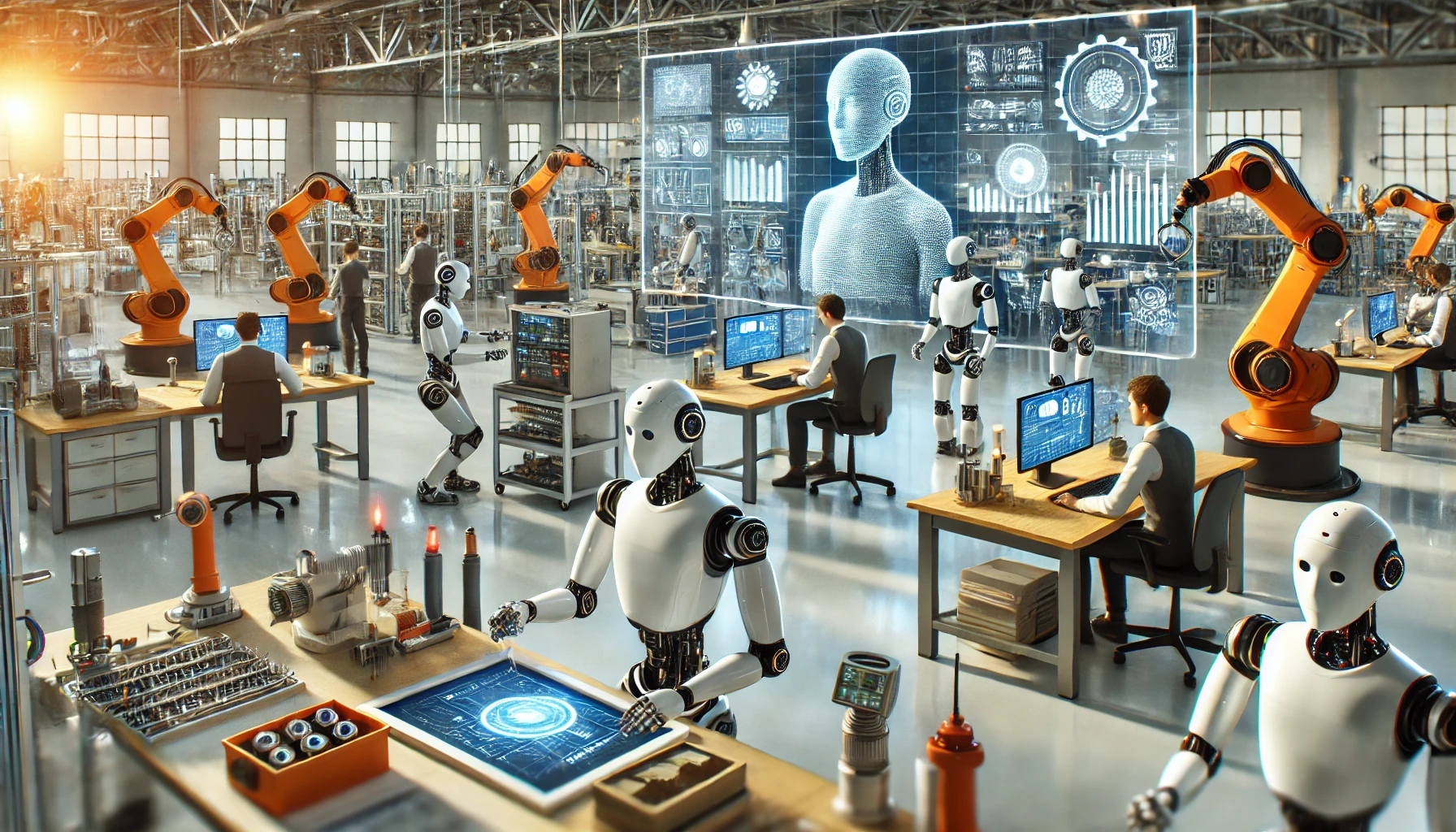
cobot
Automation

The Cobot Market: Revolutionizing Modern Workplaces

In an era defined by rapid technological advancements, collaborative robots, or cobots, have emerged as pivotal players in the transformation of various industries. Unlike traditional industrial robots that operate in isolation, cobots are designed to work alongside humans, enhancing productivity, safety, and efficiency in diverse work environments. The global cobot market, driven by continuous innovation and growing demand for automation, is poised for exponential growth. This article delves into the landscape of the cobot market and the highlights the impact of AI. From small and medium-sized enterprises to large-scale manufacturing giants, the adoption of cobots is heralding a new era of human-robot collaboration, unlocking unprecedented opportunities and redefining the boundaries of what is possible in modern workplaces.


Market Size and Growth

The global collaborative robot (cobot) market is on an impressive growth trajectory. As of 2023, the market was valued at approximately USD 1.77 billion. Projections suggest it could reach around USD 12.71 billion by 2030, reflecting a compound annual growth rate (CAGR) of 32.6% during the forecast period (MarketsandMarkets; NextMSC). Alternative estimates, such as those from Grand View Research, suggest a market size of USD 11.04 billion by 2030 with a slightly lower, yet still significant, CAGR of 32.0%.


Key Drivers

  1. Increasing Demand for Automation: The shift towards more efficient and automated processes in manufacturing and various other sectors is a primary driver of cobot adoption. Cobots are favored for their flexibility and cost-effectiveness in automating repetitive and hazardous tasks (Grand View Research; NextMSC).
  2. Technological Advancements: Ongoing innovations in artificial intelligence, machine learning, and sensor technology are enhancing cobots’ capabilities. These advancements make cobots safer, more intuitive, and better suited for a wide range of tasks (Market Data Forecast; MarketsandMarkets).
  3. Labor Shortages and Rising Costs: Industries grappling with labor shortages and increasing labor costs are turning to cobots as a viable alternative. Cobots can complement human workers, addressing workforce gaps and boosting productivity (Market Data Forecast).
  4. Safety and Collaboration: Designed with advanced safety features, cobots can work closely with humans, reducing the risk of accidents and promoting a safer, more productive work environment (MarketsandMarkets; NextMSC).


Key Players

Here are the top collaborative robot (cobot) companies by market share. For more information, links to Collaborative Robots and AI integration documentation have been added:

  1. Universal Robots A/S
    1. Why Cobots? (UR Cobots)
    2. Guide to Cobots (UR Cobots)
    3. Collaborative Robotic Automation (UR Cobots)
    4. Future of AI and Robotics (UR Cobots)
    5. Four Predictions for 2024 (UR Cobots)
  2. FANUC Corporation
    1. Collaborative Robot CRX series (FANUC)
    2. JIMTOF 2022 (FANUC)
    3. FANUC and NVIDIA AI Collaboration (FANUC)
  3. ABB
    1. Collaborative Robots (Cobots) | ABB Robotics (ABB Group)
    2. Single-arm YuMi Collaborative Robot (ABB Group)
    3. New Frontiers for Robotics and AI in 2024 (ABB Group)
    4. Next Generation Cobots (ABB Group)
  4. Techman Robot Inc.
    1. Collaborative Robots (Techman Robot).
    2. TM Robot Series (Techman Robot).
    3. AI Vision (Techman Robot).
    4. Industry Solutions (Techman Robot).
  5. KUKA AG
    1. Collaborative Robots Overview (KUKA AG)
    2. LBR iisy Cobot (KUKA AG)
    3. KUKA Innovation Award (KUKA AG)
  6. Yaskawa Electric Corporation
    1. Collaborative Robots (Yaskawa).
    2. Integrated Solutions (Yaskawa).
    3. Articulated Robots (Yaskawa).
  7. DENSO Robotics
    1. COBOTTA Collaborative Robots (DENSO Robotics).
    2. COBOTTA Collaborative Robot Product Sheet (DENSO Robotics).
    3. COBOTTA PRO Collaborative Robot Product Sheet (DENSO Robotics).
    4. Global Supplier of Advanced Robotics Technology (DENSO Robotics).
  8. Rethink Robotics
    1. Rethink Robotics Meets German Engineering (Rethink Robotics).
    2. The New Saywer Black Edition (Rethink Robotics).
  9. Comau S.p.A.
    1. Comau Aura Collaborative Robot (Comau).
    2. Racer-5-0.80 COBOT (Comau).
    3. Comau deploys AI-driven collaborative robotics to automate “hands-on” quality control at Fiat (Comau).


Regional Insights

  1. Europe: Europe commands a significant share of the cobot market, driven by applications in electronics, logistics, and inspection. The region benefits from its strong emphasis on manufacturing optimization and human-robot collaboration (Market Data Forecast; Grand View Research).
  2. Asia Pacific: Expected to experience the highest growth rate, Asia Pacific is projected to have a CAGR of over 34.0% from 2023 to 2030. This growth is driven by a focus on quality, precision, and the adoption of advanced automation technologies (MarketsandMarkets; Grand View Research).
  3. North America: The North American market, including the U.S., Canada, and Mexico, is expanding due to its strong technological base and emphasis on automation (MarketsandMarkets; NextMSC).


Future Trends

  1. AI and Machine Learning Integration: The integration of advanced AI capabilities will significantly enhance cobots' intelligence and adaptability, improving their efficiency and effectiveness (Market Data Forecast; MarketsandMarkets).
  2. Expansion into Non-Manufacturing Sectors: The adoption of cobots is expanding beyond manufacturing into sectors such as healthcare, logistics, agriculture, and retail, broadening the market scope (MarketsandMarkets; Grand View Research).
  3. Development of Mobile and Lightweight Cobots: Future developments are expected to produce more mobile and lightweight cobots, enhancing their deployment flexibility and versatility across various environments (Market Data Forecast; NextMSC).


Impact of AI on the Cobot Market

AI is transforming the cobot market by introducing advanced functionalities and improving operational efficiency. The impact of AI on cobots can be examined through several key aspects:

  1. Enhanced Intelligence and Adaptability: AI enables cobots to perform complex tasks with higher precision. Machine learning algorithms allow cobots to learn from their environment and adapt to new tasks without extensive reprogramming. This capability significantly broadens the range of applications for cobots, making them more versatile and valuable across different industries (MarketsandMarkets).
  2. Improved Safety and Interaction: AI-powered sensors and computer vision systems enhance cobots' ability to interact safely with human operators. These technologies enable cobots to better understand and respond to their surroundings, minimizing the risk of accidents and improving collaborative efforts between humans and robots (Market Data Forecast).
  3. Increased Efficiency and Productivity: By integrating AI, cobots can optimize their operations in real-time. They can adjust their actions based on live data and predictive analytics, leading to more efficient processes and increased productivity. This real-time adaptability is crucial in dynamic environments where quick adjustments are often necessary (MarketsandMarkets).
  4. Cost Reduction and Accessibility: As AI technology becomes more integrated and standardized, the cost of implementing advanced cobots is expected to decrease. This reduction in cost will make high-performance cobots more accessible to a broader range of businesses, further accelerating market growth (Grand View Research).


Conclusion

The collaborative robot (cobot) market is undeniably revolutionizing modern workplaces, offering unprecedented opportunities for businesses to enhance productivity, safety, and efficiency. As industries across the globe continue to embrace automation, the demand for cobots is set to soar, driven by the need for more flexible and cost-effective solutions. The integration of advanced artificial intelligence and machine learning technologies further amplifies the capabilities of cobots, enabling them to perform complex tasks with remarkable precision and adaptability.

As we look towards the future, the cobot market is poised for significant growth, with projections indicating a substantial increase in market value by 2030. Key players in the industry are continually innovating, pushing the boundaries of what cobots can achieve. From manufacturing to healthcare, logistics to agriculture, the adoption of cobots is expanding into new sectors, demonstrating their versatility and far-reaching impact.

In summary, cobots are not merely a trend but a fundamental shift in how humans and machines collaborate in the workplace. The ongoing advancements in AI and robotics promise to unlock even greater potential, ensuring that cobots remain at the forefront of industrial innovation. As businesses navigate the complexities of modern work environments, cobots will undoubtedly play a crucial role in shaping a more efficient, safe, and productive future.


Read More
AI robotics
Artificial Intelligence

AI Robotics Market Analysis

What is AI Robotics?

AI robotics combines artificial intelligence (AI) and robotics, enabling robots to perform tasks with a high degree of autonomy and intelligence. This interdisciplinary field integrates the following:

Robotics:

  • Mechanical Design: The physical construction of robots, including actuators, sensors, and control systems.
  • Control Systems: Algorithms and software that govern the robot's movements and interactions with its environment.

Artificial Intelligence:

  • Machine Learning: Techniques that allow robots to learn from data, improving their performance over time.
  • Computer Vision: Enabling robots to interpret and understand visual information from the world.
  • Natural Language Processing (NLP): Allowing robots to understand and generate human language.

Applications:

  • Manufacturing: Automated assembly lines and quality control.
  • Healthcare: Surgical robots, rehabilitation, and assistance robots.
  • Service Industry: Delivery robots, customer service bots, and domestic helpers.
  • Exploration: Space exploration rovers and underwater robots.

Challenges:

  • Safety: Ensuring robots can operate safely around humans.
  • Ethics: Addressing the implications of autonomous decision-making.
  • Complexity: Developing sophisticated algorithms that can handle diverse tasks.

By leveraging AI, robotics can perform complex tasks with precision and adaptability, transforming various industries and enhancing human capabilities.


Market Size and Growth

The global AI robotics market is experiencing robust growth, driven by advancements in AI and robotics technologies, increased demand for automation, and the proliferation of Industry 4.0 initiatives. As of 2024, the market size is estimated to be around USD 20 billion, with a projected compound annual growth rate (CAGR) of approximately 30% through 2030, reaching an estimated value of USD 100 billion (Mordor Intelligence) (Grand View Research).


Key Drivers

  1. Technological Advancements: Continuous improvements in machine learning, computer vision, and sensor technologies are significantly enhancing the capabilities of AI-powered robots (Grand View Research).
  2. Industrial Demand: The manufacturing sector's push towards smart factories and automation is a major driver. AI robots are pivotal in tasks such as assembly, welding, and quality control (Technavio).
  3. Labor Shortages: The need to address labor shortages in various industries is accelerating the adoption of robotic solutions that offer efficiency and reliability (Technavio).
  4. Healthcare Applications: The healthcare sector is increasingly utilizing AI robots for surgical procedures, patient care, and diagnostics, contributing to market growth (Market Research Future).
  5. Demand for Automation: The need for efficient, accurate, and consistent operations in industries such as healthcare, logistics, and retail is driving the adoption of AI robotics.


Market Segmentation

  • By Type:
    • Service Robots: These robots, which include customer service and healthcare assistants, held the largest market share in 2023 due to the rising demand for automation in service industries (Grand View Research).
    • Industrial Robots: Expected to grow at the fastest rate, these robots are integral to smart manufacturing and Industry 4.0 initiatives (Grand View Research).
  • By Application:
    • Healthcare: AI robots in healthcare are used for surgery, patient care, and remote diagnostics, enhancing service delivery and operational efficiency (Market Research Future).
    • Manufacturing: AI-powered robots are crucial for automating production lines, improving quality control, and reducing downtime (Mordor Intelligence) (Grand View Research).
    • Logistics: Robots optimize warehouse operations, inventory management, and last-mile delivery, thereby improving supply chain efficiency (Market Research Future).
    • Retail: In the retail sector, AI robots assist with customer service, inventory management, and automated checkout systems (Grand View Research).
    • Agriculture: Precision farming, harvesting robots, and livestock monitoring.


Regional Insights

  • North America: This region is expected to witness the fastest growth due to a strong industrial base and significant investments in AI and robotics technologies (Grand View Research).
  • Europe: Strong market presence with a focus on industrial and service robots.
  • Asia-Pacific: Dominates the global market with extensive use of industrial robots, particularly in China, Japan, and South Korea. The region accounted for 74% of new robot installations in 2021 (Market Research Future).
  • Rest of the World: Emerging markets with increasing adoption of AI robotics in various sectors


Key Players

Leading companies in the AI robotics market include ABB Ltd., Fanuc Corporation, KUKA AG, iRobot Corporation, NVIDIA Corporation, and IBM Corporation. These companies are at the forefront of developing innovative AI and robotic solutions and expanding their global market presence through strategic initiatives (Maximize Market Research).


Challenges

  • High Initial Costs: The significant investment required for AI robotics development and deployment can be a barrier for some companies (Technavio).
  • Technical Complexity: Integrating AI with robotics involves sophisticated programming and complex algorithms, posing challenges for seamless implementation (Grand View Research).
  • Regulatory Issues: Compliance with regulations and standards can be challenging, especially in healthcare and autonomous vehicles.
  • Ethical Concerns: The potential impact on employment and the ethical implications of autonomous decision-making.


Opportunities

  • Innovation in AI: Ongoing advancements in AI and machine learning will continue to open new avenues for robotic applications across various industries (Technavio).
  • Collaborative Robots (Cobots): Increasing use of robots that work alongside humans, particularly in manufacturing and healthcare, presents significant growth opportunities (Mordor Intelligence).
  • Healthcare: Growing demand for robotic surgery and rehabilitation solutions.
  • Autonomous Vehicles: Development of self-driving cars and drones.


Conclusion

The AI robotics market is poised for substantial growth, driven by technological advancements, increasing automation demands, and the integration of AI across various sectors. While there are challenges such as high costs and technical complexities, the opportunities for innovation and expansion in this field are vast, making it a crucial area for investment and development in the coming years.

Looking for more articles on AI, IoT, and emerging technologies? Explore the Tech Scope Connect Content Hub.

Read More
EDR
Cybersecurity

The Power of Endpoint Detection and Response (EDR) for Cybersecurity Resilience

In our interconnected world, cybersecurity threats are expanding rapidly. Malicious actors are continually devising new methods to breach organizations' defenses and exploit vulnerabilities. This has made it imperative for businesses, regardless of their size, to establish robust cybersecurity measures to protect their valuable assets and sensitive data.

One crucial element of a comprehensive cybersecurity strategy is the adoption of an effective Endpoint Detection and Response solution. In this article, we will explore the growing importance of EDR and how partnering with Managed IT services providers can assist organizations in implementing this software while upholding their cybersecurity practices.


The Core of Cybersecurity: Understanding EDR 

At its core, EDR serves as a proactive cybersecurity solution designed to detect and respond to suspicious activities on endpoints, including workstations, servers, and mobile devices. Unlike traditional antivirus software relying on signature-based detection, EDR focuses on identifying unusual behavior that may signal potential threats. By continuously monitoring endpoints and collecting extensive data, EDR solutions provide real-time network visibility, enabling security teams to promptly detect and mitigate potential security incidents. 


Challenges of Yesterday: Outdated Security Solutions 

The evolution of cyber threats has rendered conventional antivirus solutions inadequate for safeguarding organizations against sophisticated attacks. Threat actors employ various evasion techniques, such as fileless attacks, living off the land, and targeted phishing campaigns. Legacy antivirus solutions often struggle to keep pace with these advanced tactics, frequently generating false positives and leaving organizations vulnerable to costly breaches. 

In today's threat landscape, hackers often take a patient approach, infiltrating systems discreetly and observing user behavior for extended periods. They then leverage this information to execute well-coordinated attacks, going undetected by organizations. This is where EDR plays a crucial role, bridging the gap by providing advanced threat detection and response capabilities. EDR leverages behavioral analysis, machine learning algorithms, and threat intelligence to identify suspicious behavior, offering actionable insights to security teams. 


Why EDR? 13 Compelling Reasons for Adoption 

Endpoint Detection and Response solutions are indispensable in today's cybersecurity landscape for several compelling reasons: 

  1. Advanced Threat Detection: EDR solutions employ behavioral analysis and machine learning to detect advanced and evolving threats that traditional antivirus software may overlook, offering a higher level of security.
  2. Real-Time Threat Response: EDR solutions offer real-time threat detection and response capabilities, allowing organizations to take immediate action upon detecting a security incident, thereby minimizing breach impact and reducing detection time.
  3. Incident Investigation and Forensics: EDR solutions provide detailed visibility into endpoint activities, facilitating thorough incident investigations and maintaining data for forensic analysis and compliance obligations. 
  4. Proactive Threat Hunting: EDR solutions support proactive threat hunting, enabling organizations to actively search for concealed threats within their network, preventing potential damage before it occurs. 
  5. Automation and Orchestration: EDR solutions frequently include automated incident response capabilities, ensuring swift containment and remediation of threats while reducing the workload on security teams. 
  6. Endpoint Isolation and Quarantine: EDR solutions can isolate or quarantine compromised endpoints, preventing lateral threat spread, and limiting the impact of breaches.
  7. Integration with Other Security Tools: EDR solutions integrate with SIEM systems, firewalls, and threat intelligence feeds, centralizing threat intelligence and enhancing overall security operations.
  8. User and Entity Behavior Analytics (UEBA): EDR solutions often incorporate UEBA features to detect unusual user and entity behavior patterns, helping identify insider threats, compromised accounts, and unauthorized activities. 
  9. Comprehensive Visibility: EDR solutions provide granular visibility into endpoint activities, including processes, network connections, and file changes, critical for monitoring and auditing. 
  10. Customization and Policies: EDR solutions allow organizations to define custom security policies and rules tailored to their unique needs, ensuring security measures align with organizational requirements. 
  11. Scalability: EDR solutions can scale to accommodate an organization's endpoint count, making them suitable for businesses of all sizes.
  12.  Cloud Integration: Many EDR solutions offer cloud-based management and threat intelligence, providing real-time updates and improved scalability. 
  13. Compliance Requirements: EDR solutions aid organizations in meeting regulatory compliance requirements by providing the necessary tools for monitoring, reporting, and auditing security events.


In summary, EDR solutions address the evolving threat landscape and the need for advanced endpoint protection, detection, and response capabilities, making them an essential component of modern cybersecurity strategies. They empower organizations to proactively detect and respond to security incidents, mitigating the risk of data breaches and cyberattacks. 


The Ever-Growing Need for EDR: Safeguarding Digital Assets 

The importance of EDR cannot be overstated in today's digital era. As we witness an exponential increase in the volume and sophistication of cyber threats, the need for robust endpoint security solutions like EDR becomes even more critical. Cybercriminals are no longer limited to a specific geographical region or a particular type of organization; they target anyone with valuable data or resources. 

This underscores the universal need for organizations, regardless of their size or industry, to adopt EDR as a foundational pillar of their cybersecurity strategy. EDR's ability to adapt to evolving threats and its proactive stance in threat detection and response make it a cornerstone for safeguarding digital assets. 


The Collaborative Approach: EDR Implementation with Managed IT Services 

Another significant aspect worth highlighting is the collaborative nature of EDR implementation. Many organizations choose to partner with Managed IT Services Providers to effectively integrate EDR into their existing cybersecurity practices. These partnerships not only ease the deployment of EDR but also provide ongoing support and expertise. 

Managed IT services providers bring a wealth of experience and a deep understanding of the evolving threat landscape, further enhancing an organization's ability to respond to emerging threats. This collaborative approach ensures that EDR is not just a standalone solution but an integral part of a comprehensive cybersecurity ecosystem, strengthening an organization's overall resilience against cyberattacks.


EDR as a Strategic Investment: Securing the Future 

Beyond its immediate security benefits, EDR should also be viewed as a strategic investment in an organization's future. The cost of cybersecurity incidents, including data breaches and downtime, can be exorbitant, not to mention the long-term damage to reputation and trust. By embracing EDR, organizations are making a proactive investment in risk mitigation. 

They are demonstrating their commitment to safeguarding customer data and business operations, which can have a positive impact on customer trust and brand reputation. In this sense, EDR becomes not just an expense but an integral part of a forward-thinking business strategy, ensuring long-term sustainability and growth in an increasingly digital world. 


Empowering Cybersecurity in an Evolving World 

In conclusion, EDR plays a pivotal role in today's cybersecurity landscape, where threats continually evolve, becoming more dangerous with each iteration. It stands as a vital component in an organization's cybersecurity strategy, enabling the effective detection, investigation, and response to security incidents. 

EDR's comprehensive capabilities, including real-time monitoring, behavioral analysis, threat detection, incident investigation, and integration with other security tools, make it an indispensable asset in the battle against cyber threats. Its proactive approach empowers organizations to fortify their defenses, minimizing the risk of data breaches and cyberattacks in an increasingly perilous digital world. 


Experience the Future of Technology Today!

Take your knowledge and passion for technology to the next level! Watch our Summit of Things 2023 On-Demand videos for 30 days and experience a premier tech event that will let you enter the dynamic world of IoT and gain insights into the future of technology.

This summit is your gateway to connect with industry leaders, explore cutting-edge innovations, and start a journey for a tech-driven future. You can still catch up and learn from our 30+ experts from all over the world! Buy your tickets at https://iotmktg.com/summit-of-things-2023/.


Read More
Backup as a Service
Blockchain

How MSPs Can Leverage Backup as a Service (BaaS) in Today’s Data-Driven World

In the era of digital transformation, data plays a pivotal role for organizations. Data not only aids in decision-making but is also central to customer relationships, product improvement, and operational efficiency. As Managed Service Providers (MSPs), providing Backup as a Service (BaaS) becomes not just an added service but a strategic necessity.

This comprehensive guide aims to discuss why BaaS is critical, its benefits for MSPs and their clients, and how it can be leveraged effectively.


The Growing Importance of Data and the Need for Protection

Today, every organization relies heavily on data for a range of activities, from business analytics to customer engagement. Data has become indispensable, which is why the need for robust data backup and protection has intensified. Threats like ransomware, natural disasters, and insider sabotage pose serious risks.

Moreover, the cost of downtime due to data loss can have catastrophic implications for businesses, both financially and reputationally.


Why Backup is Crucial

Data can be vulnerable to various threats, including hackers, accidental deletion, and malicious insiders. A BaaS solution complements Software as a Service (SaaS) applications to create a robust data recovery system, offering benefits such as:

  • Business Continuity and Disaster Recovery: Redundant backups ensure that data can be quickly restored, making BaaS an integral part of any business continuity plan.
  • Compliance Regulations: Regulatory compliance can be better managed with a BaaS provider that adheres to industry-specific requirements, simplifying audits.
  • Cybersecurity Best Practices: With advanced encryption and identity management, BaaS solutions offer an unprecedented level of data security.


Benefits of BaaS for MSPs and Their Clients

1. Cost Savings and Profitability

BaaS eliminates the need for MSPs and their clients to invest in on-premises backup solutions, thereby saving on CapEx and shifting to a more predictable OpEx model.

2. Scalability and Flexibility

BaaS solutions can be scaled up or down according to the needs of the client, offering extraordinary convenience and operational efficiency.

3. Enhanced Security

Advanced features like encryption and multi-factor authentication offer robust data protection against cyber threats.

4. Remote Management

The cloud-based nature of BaaS allows MSPs to manage backups remotely, providing an additional layer of convenience.


Strategies for Revenue Growth and Customer Retention

1. Up-Sell and Cross-Sell Opportunities

BaaS can serve as an entry point to offer additional services like disaster recovery, cloud migration, and cybersecurity solutions, enabling MSPs to increase their Average Revenue Per User (ARPU).

2. Subscription-Based Revenue

The recurring revenue model of BaaS provides financial stability and predictable income streams, which is crucial for the long-term success of MSPs.

3. Enhanced Customer Loyalty

Offering BaaS as a value-added service increases customer stickiness and satisfaction, thereby improving retention rates.


Strategic Partnerships and Marketing

1. Vendor Alliances

Collaboration with established BaaS vendors can enable MSPs to deliver best-in-class services without heavy investment in in-house development.

2. Local Business Partnerships

MSPs can collaborate with local businesses and consultants to create bundled IT solutions, offering a more comprehensive service package to clients.

3. Sales and Marketing Tactics

  • Case Studies and Testimonials: Demonstrate the efficacy of your BaaS offerings with real-world examples.
  • Educational Content: Utilize blogs, webinars, and whitepapers to inform potential clients about the critical nature of backups.


Technological Edge and Support

Automation

The incorporation of automation in BaaS solutions can significantly reduce manual overhead, making the backup process more efficient.

Continuous Monitoring and Quick Recovery

24/7 monitoring ensures that any issues can be promptly addressed, while quick data recovery capabilities further solidify the MSP’s reputation as a reliable service provider.


Conclusion

In today’s data-centric world, BaaS is not just an optional offering but a necessity for MSPs. With multiple benefits ranging from cost savings to enhanced security and customer retention, BaaS can be a game-changer for MSPs.

Therefore, there's never been a better time for MSPs to integrate BaaS into their service portfolio and seize the emerging opportunities in this fast-evolving landscape.


Experience the Future of Technology Today!

Take your knowledge and passion for technology to the next level! Watch our Summit of Things 2023 On-Demand videos for 30 days and experience a premier tech event that will let you enter the dynamic world of IoT and gain insights into the future of technology.

This summit is your gateway to connect with industry leaders, explore cutting-edge innovations, and start a journey for a tech-driven future. You can still catch up and learn from our 30+ experts from all over the world! Buy your tickets at https://iotmktg.com/summit-of-things-2023/.


Read More
Past Not Prologue
Technology

What if the Past Is Not Prologue Anymore

For centuries, the belief that the past serves as a guide for the future has been widely accepted. What's past is prologue" is a quotation by William Shakespeare from his play The Tempest. It suggests that by studying historical patterns and events, one can predict what is likely to happen in the future. However, we are living in unstable times and are dealing with the COVID-19 pandemic aftereffects, shifting supply chains, geopolitical uncertainty, the effects of the Ukraine war, and the changing climate. Each one of these events has the potential to disrupt the correlation implied in “if past is prologue”. So, what worked in the past may not necessarily work in the future.

If the past is not prologue anymore, it means that the traditional methods of predicting future events may no longer be effective. This can have significant implications in various fields, including finance, politics, weather, and technology. For example, in the world of finance, investors use historical trends and data to make informed decisions about their investments. If the past is no longer a reliable predictor of the future, and the volatility in the stock market remains persistently high, black swan events will occur on a regular basis and investors will need to develop new strategies to navigate an ever-changing turbulent market. Similarly, if once-in-50-year weather events are becoming the new normal we will need to redesign infrastructure to cope with the additional stress and demand.

And talking about the past, what past? We have just lived through three years of supply chain disruptions. Are we back to where we were three years ago? Not really. The automobile industry provides a great example. At the beginning of the pandemic automobile plants around the world were shut down because of COVID-19. Because of the shutdowns, semiconductor shortages, and other supply chain disruptions, the industry has seen a production loss of millions of cars. Fewer cars, higher car prices; economy 101. And, I should add that the car industry adjusted. Since they couldn’t produce the number of cars they would like to make, the car manufacturers focused on their most profitable models.

The demand for entry-level cars is still strong, so we can expect that car manufacturers will produce more of their entry-level cars as soon as the supply chain permits it. So far, there are no signs of an increase in the production of entry-level cars. So, even though supply chain indexes like the Global Supply Chain Pressure Index indicate that the supply chains are back to normal, the effects of the supply chain issues of the past three years are still reverberating and are still having a broad impact.

Similarly, in politics, leaders often use historical events and trends to inform their policies and decision-making. However, if the past is no longer a reliable guide, leaders may need to be more flexible and adaptable in their approaches to governance. They may need to rely more heavily on real-time data and analysis to make informed decisions.

In the field of technology, the rapid pace of innovation means that what worked in the past may not be effective in the future. We saw during the COVID-19 pandemic that a lot of industries that were dealing with labor shortages or increased demand turned to artificial intelligence and automation to get the work done. A lot of progress has been made in the past few years and many traditional jobs are on the verge of being rendered obsolete, while the individuals that originally occupied those jobs have up skilled themselves or have moved to a different industry. And thanks to AI and automation, jobs and tasks can be done faster with a smaller crew and with less overhead. This means that a company can do more with the same headcount with the right combination of artificial intelligence, automation, and a flexible work cell design.

While the idea of the past not being prologue may be unsettling, it also presents opportunities for innovation and business growth. It forces us to accept that continuous change and turbulence are the new normal, to think outside the box, to develop solutions based on the current trends in the data set, develop multiple scenarios with increasing volatility. And it forces us to consider “past is prologue” as one of the scenarios. It also highlights the importance of being adaptable and willing to change in response to new challenges and opportunities.

In conclusion, if the past is not prologue anymore, it means that traditional methods of predicting future events may no longer be effective. This presents challenges but also opportunities for innovation and growth. It underscores the importance of being adaptable and flexible in our approaches to problem-solving and decision-making. And it emphasizes how absolutely vital it is to accept what the real-time data is trying to tell us.


Moving Forward to a More Sustainable Future

As we navigate a world where the past may not be prologue, it's crucial to stay informed and adaptable. Join the movement for a sustainable future! Discover the latest IoT and green technologies empowering the transition to clean energy. Watch our Green Things Summit videos, and session tracks and access our downloads library! Buy your tickets at https://iotmktg.com/green-things-summit and learn how your business can lead the way in promoting sustainability! #GreenThingsSummit #GreenTech #Sustainability

Read More
Edge Networking Trends
Information Technology

Edge Computing Trends in 2022 and Beyond

You probably know already, but just so we're all on the same page, edge computing refers to IT architecture of a distributed nature. Data processing of a given client's network is processed at said network's edge, right near where the data came from. So, a sensor array that collects information can simultaneously help process that data on an edge network.

The "edge" utilizes IoT to make this possible. Think of it as a sort of miniature cloud on your business campus. As a cloud networks servers together to compound data processing capability, edge networks use multiple devices locally for the same purpose. Another way of looking at it is: edge computing filters useless data from useful data.

There's a flood of information out there, and information is a currency in the modern world; you can do a lot with it. So, what does this mean for your business? Well, that depends on how prevalent edge computing gets. In 2022, it's expected to advance across several key industries, and in several specific ways. We'll explore these edge computing trends here specifically:

Data Filtration via Edge Tech Will Optimize Operations Ahead of Competitors

So, the edge makes data at the source of its composition more accessible, and filters out the "noise", as it were, from data you can use. Now you can operate more optimally and get more done with greater cost-effectiveness.

You can identify redundancies you didn't know were there, maximize equipment utility, put processes in place that will increase the ROI of your operational spending, and the list goes on. Businesses that leverage edge computing toward more optimal functionality now will have an "edge" (pun intended) on competitors.

Eventually, this will be standard practice; right now, people are finding their "rhythm", as it were, in this new tech. Ultimately, there's a competitive window for edge computing trends in 2022, and savvy businesses are definitely going to take it.

As 5G Expands, IoT, AI, ML, and Automation on Edge Networks Does Too

IoT tech facilitates edge computing, and 5G optimizes IoT. Collaterally, Artificial Intelligence and Machine Learning are also developing at break-neck speed. Many AI and ML breakthroughs crossover with IoT. Ultimately, 5G tech is going to act like a rising tide lifting all ships.

In this analogy, the "ships" are AI, ML, and similar software innovations. Edge computing utilizing IoT, AI, and ML on a 5G network will reveal more data, and more quickly. You'll get real-time insights impossible before. Multiple industries have the capability of optimizing with such information toward increasingly efficient automation.

Automation can even initiate failover protections as regards operational redundancies in the event of emergency. All devices can be monitored, and algorithms can be put in place to identify features of tech functionality that could indicate an issue.

Now, as of 2022, few industrial campuses have production floors so automated only one or two people are necessary to manage them, but the technology is already here. The trick is applying such tech infrastructurally. Businesses that get ahead of the pack will, as pointed out earlier, have a definite competitive edge.

Operational Capability Locally Regardless of External Internet Availability

This is something that's already been around for a while, edge computing is just a new innovation. Big campuses with lots of techs have on-site server arrays that already form their own "intranet", which is a sort of on-site internet separate from the "real" internet.

Much of localized "intranet" networks are actually accessible via the dark web, but if all contact with external web options were ceased, said localized intranet would remain. Well, with edge computing the same potentiality exists. If a connection to the cloud or an external internet provider is lost, an edge network keeps functioning.

It's Going to Be Everywhere; Even in Agricultural Communities

Owing to the associated advantages of edge computing, it's to be expected such innovations will transition beyond the tech sector. IoT tech used on agricultural equipment can save time and money for farmers, helping them be more productive and increase their profit.

Agriculture tends to produce marginal annual returns, the wealth being in the land or the livestock (or both). As an example: a $1,000,000 profit for the year might have $960,000 in expenses, leaving the family that farms only $40k in profit.

With edge computing utilizing IoT to help initiate automation, that margin may jump from $40k to $100k or more, allowing farmers to branch out and optimize even further.

The Edge Is Getting Foggy and Will Continue to in 2022

Here's how fog computing works: there's a "compute layer" between the edge and the cloud. Basically, "foggy" edge computing is the "edge" of the "edge" network. Basically, managed fog computing solutions receive information from an edge network before it gets to the cloud--it's a sort of middleman, if you will, that gains access to useful data your business can leverage toward optimization.

The right fog network can parse between data sets to separate out that which is useful from that which isn't. What's relevant will stay on the cloud, what isn't will disappear--unless, of course, there's a reason for a business to keep that non-relevant data.

So, what does this look like in practice? Say there's a temperature sensor in your network that continuously collects temperature data. That data is sent to the cloud, and it's monitored for spikes. Well, fog computing would determine if there were any data relevant enough to send to the cloud, saving time and complication in operations when nothing remarkable is recorded.

Foggy edge IT pros would determine what constituted relevant data, and voila: things like bandwidth and latency evaporate. The bigger the business, the more speed a properly managed foggy edge network brings. It's going to be negligible for smaller operations, but the bandwidth saved is ultimately going to reduce operational costs collaterally over time.

An Expansion of Edge Tech in Retail

Think of local department stores, the security cameras they use, the devices at entrances and exits, self-checkout equipment, lighting, HVAC, shipping, receiving, and all the other little departments such stores must manage.

There's a high potential for edge computing. Now imagine that spread out across hundreds of stores nationwide. That's a big "edge". Expect to see retail stores advance accordingly.

Edge Tech in the Energy Industry

Agriculture and retail aren't the only places where edge computing is useful. Pipelines often stretch thousands of miles. Fitting the whole line with IoT requisite to facilitate edge computing is good for oil companies and the environment collaterally--spills can be anticipated and intervention can be applied prior to an incident. Furthermore, with massive pipelines, manpower just isn't available regardless of edge options.

This kind of tech will actually take the oil industry into new territory. Instead of flying planes down the pipe, data can be gathered and transmitted using edge and foggy edge tech, being managed remotely with greater cost-effectiveness and convenience. Pressure anomalies can be quickly identified, diagnosed, and either rectified or left, depending on the situation. If valves need to be shut down, this can be done remotely.

An Expansion in Edge Workloads

Naturally, advantages of more data collection and filtration toward optimal use will increase the workloads demanded of edge networks, which subsequently will yield breakthroughs in the IT sector for that area. So, the edge itself will become sharper--foggy edge applications are a good indicator of that.

AI Computing on the Edge With IoT-Enabled Vehicles

Computers have been central to automobile functionality for decades now. It was a natural step to extend that computational capability to IoT applications and, ultimately, edge computing. Your vehicle's computer saves mechanics and manufacturers time in diagnosing operational issues with the engine or other functional components of the car.

With IoT applied to vehicular functionality, as the car passes into and out of coverage zones, it can send automatic updates to the manufacturers. Essentially, now each vehicle that is IoT-enabled functions as a sort of case study in the longevity of certain vehicular components. How long will the factory water pump last? What about the transmission? At what point do the majority of vehicles experience issues in component functionality, and what does that look like?

Already, careful data has been kept on things like this related to automotive functionality. For example, there's an older RV made by Volkswagen and Winnebago called the Winnebago Rialta; it's really just a glorified camper van. At any rate, the run of these vehicles went from the mid-nineties to the early aughts.

Computational data and driver reports helped manufacturers realize there was an issue with this particular vehicle's transmission. At about the 100,000-mile mark, most of these vehicles had serious transmission problems. If the vehicle made it past the 100k mark, however, the transmission tended to last to 200k miles. So, there was a manufacturer issue which was noted in the literature well before cloud computing, IoT, or edge computing even existed.

Now that manufacturers and mechanics have access to such data, it becomes possible to anticipate issues and correct them before a driver is left without an option, with a broken-down car by the side of the road.

In a big city with thousands of drivers making moves which produce data via IoT, an edge network develops that can act as a sort of digital "cradle" for drivers, allowing for computational navigation anticipation, expanding safety and security for drivers even in congested areas. So, the advantage to vehicles through IoT and edge computing is twofold: vehicular functionality can be enhanced, as can driver safety. Collaterally, things like road design will ultimately shift over time as data reveals better ways of handling cars.

How Edge Computing and AI Will Impact Autonomous Vehicles

For autonomous vehicles, edge computing may be the saving grace of the innovation. Many autonomous vehicle designs have been put into action as of 2022. By 2016, Uber had a few "driverless" cars in San Francisco, but there have been accidents which have limited the trend; still, as of February, 2022 the "Cruise" line of driverless cars has become a big player in the city; and that trend will only increase over time.

With millions of vehicles providing continuous IoT data to the edge network, now driverless cars can operate much more safely. Not only can trends be used to design safety features into such vehicles, but real-time data concerning traffic on a given route for such a vehicle can also be processed to help the software controlling the vehicle react properly when unexpected dangers on the road show up.

Modern cars contain hundreds of sensors even if they're not "autonomous", meaning the data they produce is available for exploration and can be leveraged toward greater safety by vehicles with savvy edge computing software designed for the processing and application of relevant data. As edge computing trends become more streamlined, the sort of data that is used for this purpose, its transmission to the cloud, and how it is used will necessarily become more streamlined. Through this method of qualifying information, data that isn't sensitive to individual drivers, or that contains other things which are private, can be automatically restricted from cloud data repositories. Doing so effectively will reduce the expense of transmitting data, as only that which is needed will be sent to cloud arrays designed to help manage autonomous vehicles.

As Tesla's market share increases, and more competitors develop, IoT information will form edge networks that are used to manage the battery life of varying electric options. Such networks can help inform drivers where charging centers are and when precisely they'll need to find one based on predictions from patterns in the data.

Furthermore, edge data can contribute to better traffic management. Autonomous vehicles can all "report in", helping computers automatically route traffic around congested areas. The same data can be sent as updates to non-autonomous vehicles, and in fact we are already seeing this a little bit with Google. If you're in Google Maps, and the little voice comes over your speakers advising you to take an alternate route with less traffic, cloud-based IoT and burgeoning edge networks are the foundation from which that informed suggestion came. As computational vehicular design, IoT, edge computing, and autonomous options become more integral, expect such edge-based data applications to increase substantially.

Where Edge Computing and Business Meet

Energy, agriculture, and retail are expected to increase edge utility in 2022, and edge computing generally is poised to expand. Edge computing trends will continue through the year and beyond, edge operations need not rely on the web solely, 5G is going to initiate increased edge automation, and businesses on the edge early will be more competitive than peers. Finally, in terms of vehicular development, expect advances for both driven and driverless vehicles that are specifically rooted in the edge, and which will likely become increasingly prevalent over time. You may well work with tech professionals to see where true benefits could help your business operate more efficiently via edge tech.

Read More
Supply Chain Enablers
Supply Chain

Smart Technology: Optimizing Supply Chain Management Processes

The supply chain crisis during the pandemic may take a while to resolve. Now suppliers and logistics firms are focusing increasingly on sustainability plans to make it through the crisis. Sustainability is important to protecting the environment, but it also involves finance and supply chain management, such as investing in resources and cutting waste. Here are ways the pandemic has forced supply chains to become enablers of sustainability and resilience.


Worst Supply Chain Crisis in Decades

Prior to the pandemic, product managers used 6-month lead times while projecting consumer demand. But as supply chains became cluttered, lead times grew to 12 months. The combination of port and shipping delays, along with labor and supply shortages, has pushed consumer prices significantly higher than pre-pandemic levels. Not only are consumers having trouble finding what they want in stores, but they are also being stung by inflation.

Shipping container costs have surged in recent years partly due to port bottlenecks associated with large shippers taking up enormous space. It’s causing delays, so companies transporting shipping containers must pay significantly higher storage fees than prior to the pandemic. Consequently, the ripple effect has sent shockwaves throughout the market, which are noticeably felt by consumers.


New Supply Chain Priorities

Supply chain priorities are shifting toward protecting the environment, preserving resources, and striving for more efficient production, ordering and delivery methods. A recent survey of 1,000 supply chain executives by Oxford Economics/SAP found that 66 percent have implemented sustainable practices on a wide scale.

Three major shifts in supply chain focus during the pandemic involve sustainability, relationships, and shortages.

  • Sustainability – The concept of investing in sustainable solutions was initially met with resistance in the early part of the pandemic. But now an increasing number of supply chain managers are identifying sustainability as a vital part of supply chain management.
  • Relationships – Supply chains are being held together more by relationships than transactions. Small to mid-size firms have an edge over larger manufacturers at making supply chain adjustments. Large producers potentially have more suppliers to manage and suffer deeper setbacks from shortages.
  • Shortages – Supply chain models are shifting from “just-in-time delivery” to “just-in-case inventory.” Suppliers and retailers must plan ahead more to manage supplies while forecasting demand. That’s why a growing emphasis is placed on technology that generates accurate demand predictions.
emerging trends

Watch the recording of our webinar "2022 Emerging Trends Edition", where an international panel of speakers covers some of the most important developments, innovations and trends in technology in 2022. 

Enabling with Smart Technology

Supply chains are steadily embracing smart technology to become more efficient networks that can easily interact with members and external organizations. Here are five major forms of emerging technology that are enabling supply chains and logistics firms to develop smart ecosystems for streamlining their operations.


1. IoT Sensors Communicating Through Networks

The IoT revolution consists of RFID chips connected with Local Area Networks (LANs), Wide Area Networks (WANs) and the more sophisticated Software-Defined Wide Area Networks (SD-WANs). The sensors collect data and send it to analysts in real time to provide operational insights.


2. Blockchain for Digital Convenience

This underlying technology called blockchain offers traceable and transparent qualities to an individual or organization. Not only can blockchain facilitate decentralized digital transactions with cryptocurrencies, but it can also store digital items securely.


3. Cloud and Edge Computing

The cloud has become the center of business activity because of its efficiency in facilitating remote work and online collaboration with global teams. Businesses are also utilizing edge computing as a way to shorten the data transmission path to their main data center. When a business develops its own satellite cloud data center, it takes the strain off the main data center and allows for faster data processing.


4. Turning to a Predictive Analytics Engine

The use of a predictive analytics engine helps managers forecast unexpected supply chain disruptions. Businesses no longer need to rely on their own data processing centers, as they can outsource to cloud services that provide real-time virtual experiences and analytics. A predictive analytics engine can provide valuable time-saving insights on inventory practices, cost/waste reduction and managing customer satisfaction.


5. AI, ML and Automation Software

Other profound enablers for suppliers are artificial intelligence (AI), machine learning (ML) and automation software. Each of these innovative technologies has the potential to offset labor shortages in some way. AI and ML open the door to accelerating solutions by scanning large amounts of data then recommending answers to problems in a matter of seconds. Automation software helps reduce manual labor, such as redundant tasks that a computer can do faster and more accurately than a human.


Toward More Intelligent Warehousing

When you combine the five areas of modern warehousing and logistics technology together, you get synergism that optimizes supply chains. They each contribute to simplifying an extremely complex process. As smart technology becomes more integrated with supply chain management, it will reduce inventory errors and speed up deliveries. So look for smart technology to become the norm for warehouses and transportation firms.

Read More
autonomous systems
Automation

Autonomous Systems Heading for Outer Space

Today’s aerospace industry is working on autonomous systems to launch in space. Current satellite constellations in Low-Earth Orbit (LEO) are paving the way for future robotic experimentation in space. Here’s a look at how autonomous systems are evolving for aerospace applications


Ushering in the Space Age of AI

When the International Space Station (ISS) was launched in 1998, it marked a new partnership among the United States, Russia, Japan, Europe, and Canada. It signaled a beginning of international collaboration in space. The station features autonomous systems and functions as a research lab for the global science community. The ISS completes its orbit around Earth every 93 minutes, which amounts to 15 orbits per day.

This century, several thousand satellites have joined the ISS in space, occupying various altitude levels in low-earth orbit. The ISS houses long-term space travelers who work with autonomous machines that gather and transmit data. It also utilizes forms of AI such as machine learning (ML) software, which can provide analysis of data captured in space. Robotic equipment manages the spacecraft and its inhabitants, providing tools to measure and enhance diagnostic and prognostic performance.


Autonomous vs. Automation

Within the context of space, it is important to note the difference between autonomy and automation. An automated system does not make choices for itself. It simply follows a highly advanced script where all possible courses of action have already been made. When an automated system is met with an unplanned situation that does not have a previously identified solution, it stops and waits for human intervention

When it comes to an autonomous system, it can respond to and rectify issues without human intervention. This problem-solving functionality is crucial because the communications latency between spacecraft and earth-based mission control centers can be as long as 40 minutes. Fundamentally, the ability to run thousands of solution scenarios in a short time frame can mean the difference between mission success or failure


Machine Learning in Space

One of the most important forms of AI used in space is fault management. ML software is constantly scanning systems looking to predict and detect vulnerabilities that trigger automated response. Fault management is a process that involves verification and validation. ML is a subset of AI and is distinguished in the sense that ML teaches itself through scanning a constantly growing database.

As big data is fed into an algorithm, ML programs process information similar to how humans do. People typically make decisions based on choosing the best solution from a set of options. ML-based robots are able to make decisions based on historical data and probability factors. The machine will make decisions based on how the options are prioritized by the programmer. ML can also be used to send alerts to analysts when new risks arise.

Advanced ML encompasses specialities such as deep learning (DL), in which the machine teaches itself to perform complex tasks such as image recognition. By feeding the system various photos of an object from different perspectives, the machine builds an image “in its mind” capable of memorizing and recognizing visuals. These capabilities have yet to be fully utilized for space applications


Groundwork for Future Space Applications

NASA scientists are currently exploring AI for space applications particularly to improve satellite operations. The fact that satellites only have a lifespan of about 15 years means they need to be monitored to determine when end-of-life conditions appear. Robots are more capable than astronauts of gathering and analyzing thousands of data points in mere seconds.

ML can further play a deep and powerful role in gathering Earth observation data from a spacecraft perspective. More knowledge is likely to be learned from robots than humans that travel in space. Mars rovers, for example, are already smart enough to teach themselves how to navigate on another planet, whereas that achievement might be difficult for a human without the help of robots. The concepts of space travel and space communications have been around a while, but the technology has finally come of age to generate actionable data about space that’s useful to humans. AI still has limitations, though, as it will still take decades for robots to take over the aerospace industry. In the meantime, researchers will continue to work on technology solutions that address gaps in the availability of human input during spacecraft operations. Altogether, the rise of autonomous systems in outer space will help increase equipment longevity for deep space exploration out into the farthest corners of the universe.


Read More
hotel chatbots
Smart Travel

Here’s Why You Need Chatbots for Your Hotel Business

In the past, people had to use a travel agency to find a hotel, but the Internet has changed the way people search for things. Now, it’s easy to book directly from the hotel, but what happens when someone has questions or wants the feeling of talking to a person?

Hotel chatbots are one of the increasingly popular ways for hotel staff to talk to customers without having to pick up a phone. They use machine learning and AI, which improve the guest experience tremendously.

Whether it’s to book a room or automate inquiries and requests that guests often have, these chatbots can be advantageous. In fact, every hotel should have a chatbot, but what are the benefits, how do they boost your business, and what are some examples?


Benefits of Using Hotel Chatbots

In a sense, hotel chatbots are designed to simulate a regular conversation but with artificial intelligence, and with that comes many advantages, such as:

Saving Time and Automating Processes

Most people have common questions or concerns that a chatbot can easily answer. When hotel staff can delegate those things to the bot, they can do other tasks or answer more complex questions.

Typically, hotels are using chatbots to keep inbound calls to a minimum, which leads to more productivity or the ability to hire fewer people.

24/7 Support

Though hotels often have staff available 24/7 for emergencies, it might be hard to call and book a room during odd times of the day or from a different time zone. With hotel chatbots, there’s no issue because the bot can answer most questions, helping customers feel that you care about their needs.

Digital Payments

Many messaging platforms, including Facebook Messenger, let people make in-app payments, which saves guests from going to the website to complete their transaction. Plus, they have the option of saving their payment information and storing it in the app to make it easier to purchase rooms in the future.

No App Development Necessary

Most people don’t like to have tons of apps clogging their smartphones. If you don’t want to develop an app strictly for your hotel, you can still use chatbots. Customers can visit your website or social media page and use the chatbot from there.


Examples

Though hotel chatbots aren’t new, many places haven’t implemented them yet. Still, the top chains often have them, such as Hyatt Hotels. It started using chatbots in 2015 to answer questions, check room availability, and make reservations. The brand knew that connecting and engaging with customers on platforms they use is crucial.

Another great example is GRT Hotels and Resorts. It’s a 4-star hotel chain in South India and has many customers. This brand wanted to boost engagement and entertain guests with a self-serving solution. It used the GReaTa chatbot through Trilyo, adding it to every website page. In only a few months (2.5 to be exact,) the chatbot exchanged more than 175,000 messages.


What to Look for in Hotel Chatbots

Many companies are offering chatbots in the hotel industry, and they all seem the same on paper. However, some chatbots are basic, while others are capable of more complex interactions. There are a few things to consider when creating yours:

  • Use a specialist
  • Focus on security
  • Don’t rely solely on AI
  • Offer different languages
  • Understand what customers want

Customers want to feel like you are trustworthy, so security is always a concern. Though it’s possible to create hotel chatbots yourself, it’s best to work with a specialist. They know what the competition is doing and can help you ensure a smooth user experience.


Conclusion

Even though hotel chatbots aren’t new, they are starting to become more popular. This is a change that many hotels aren’t ready for, but AI adoption can transform the way everyone communicates and streamlines many processes.

Many people prefer to communicate through messages instead of phone calls, so this is a great way to give users what they want. With that, hotel chatbots are becoming even more personable and allowing customers to enjoy the experience of booking that brand for their stay.

Read More
Digital Twin Technology
Internet Of Things

Business Applications of IoT and Digital Twin Technology

Think of digital twin technology sort of like team practice prior to a game. A “digital twin” is essentially the “scrimmage” before a game with a competing team. Like practice, the digital twin can be used to run a variety of scenarios which tell those who program, design, and launch IoT apps what they need to know to get the balance right.


So How Exactly Does It Work?

Essentially, a digital twin is a virtual representation of hardware or other configurations of systems and objects that can be modeled. Owing to technological advances, digital twins can be designed virtually on an increasing scale of complexity.

Physical devices, a network array, the IoT configurations of an entire building or factory; all can be modeled digitally. Even cities can be modeled and explored. Beyond networks and objects, processes can be modeled, and the list goes on. An integrated metropolis with buildings, objects, networks, and operational processes can be digitally modeled as a reference point for city planners, engineers, and more.

Keep reading: Exploring the Importance of Digital Twin Technology

On a more intimate scale, you can model what it will look like to implement new tech at a branch location in another town. Perhaps you run simulations for network processes throughout your tech company. There are many notable applications worth exploring. According to some technologists, there will be billions of potential applications for this tech in the near future.


Why Does It Work?

It’s unlikely the best mathematical models would operate in any effective way if there weren’t some sort of actual “device” providing information to “feed” its digital sibling. Essentially, digital twin technology aggregates and interprets that data so you can put the virtual version of the device through its paces without worrying about physical damages.

As you do this, software facilitating such digital doubles provides information that can help you determine if there will be potential issues, what sort of performance you might expect, and other relevant data.

More info: Using IoT Solutions to Streamline Business

Something a lot of engineers do is use digital twin technology to push through the prototyping phase. Instead of spending time, energy, and resources destroying physical components, the virtual doppelgänger can take the abuse, and refinements can be added to the physical version of the product after the fact. With that in mind, we’ll explore a few ways this tech has been put to use in recent years:

The Automobile Industry

One of the biggest things on the horizon for the automobile industry is automation. Already, digital twin technology has been used for the purpose of helping designers determine stresses, operational thresholds, and design best practices for vehicles.

As IoT begins to take over vehicular operation, this will become another area where having some sort of virtual double to play with becomes paramount for safe, efficient, cost-effective designs.

Cargo Vessels

Digital twin technology for cargo vessels can reveal what level of weight vessels can bear in diverse nautical environments, such as calm or choppy seas. Additionally, new methods of propulsion can be explored, as can new vessel designs.

NASA Exploration

NASA is credited with the first practical definition of digital twin application, and it’s easy to see why: in space, the costs of mistakes are a lot greater than they are on earth. Accordingly, spaceship design and operation became integral in assuring the greatest amount of safety and affordability in extra-planetary vessel design.

Related: How Digital Twins Impact Smart City Design


Working with Tech Professionals to Determine Digital Twin Applications for Your Business

Digital twin technology has helped NASA design spacecraft and model how components will act in the real world. Applications range from vehicular design to optimizing cargo vessel loads, including storage configurations and their associated stresses.

Healthcare applications, security process optimization, network configuration, and more–all on a massive scale–are additionally possible through this increasingly efficient tech innovation. If you haven’t explored digital twin technology, it may be worth doing. There are likely more than a few places where it just might help optimize processes within your business.

Read More