
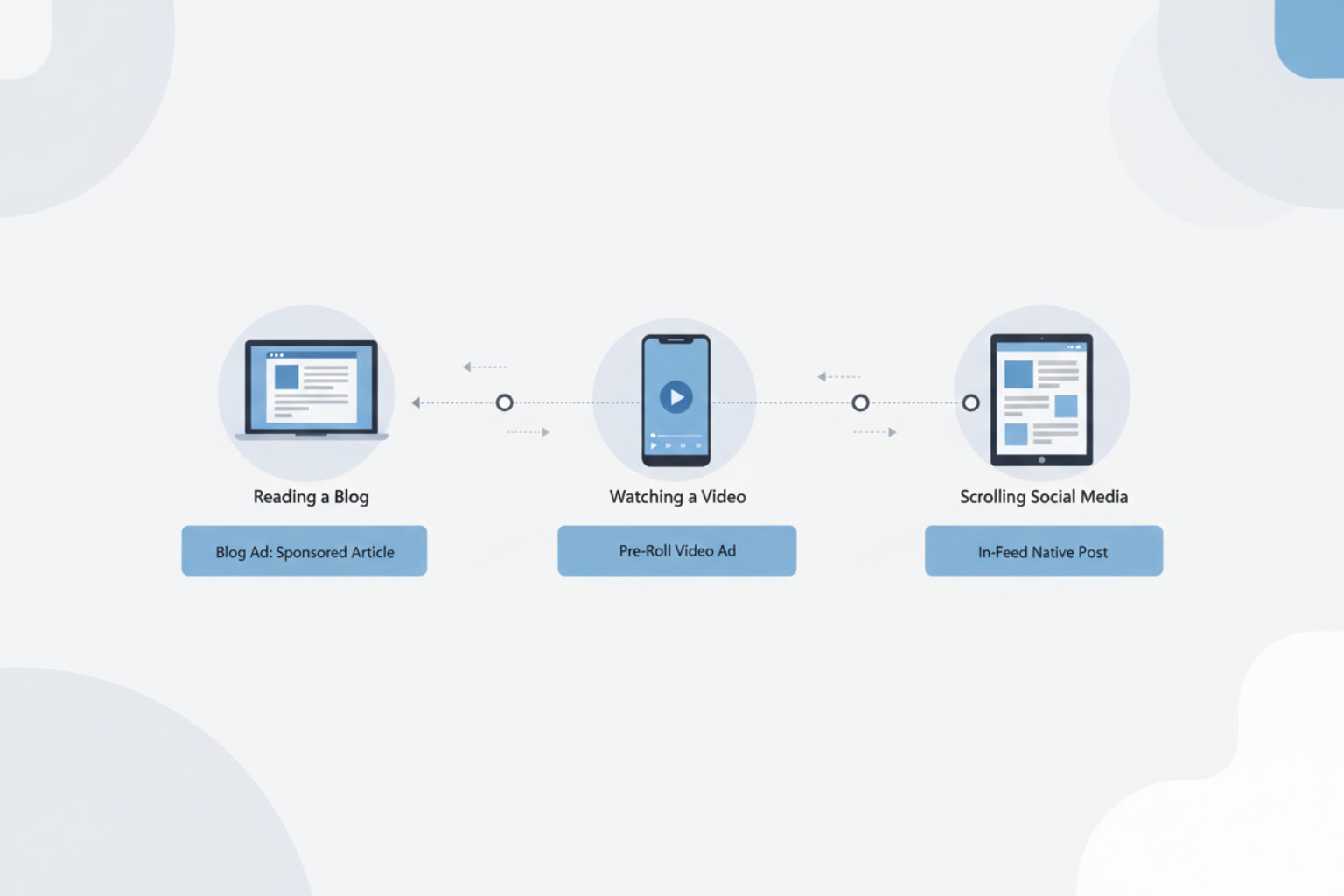
Contextual marketing is changing how brands connect with their audience—and for good reason. Unlike tracking users across the web, this approach tailors messages based on the environment someone is already in. It's a form of targeted advertising that feels more relevant and less invasive.
If you've been hearing more about contextual ads, native content, or marketing that's based on real-time context, you're not alone. Businesses everywhere are rethinking how they engage people—especially now that data privacy rules are tightening. The good news? Contextual marketing isn't just effective; it’s surprisingly accessible.
So, if you’re wondering how to get started, this guide will walk you through a simple strategy to help you build trust, drive interest, and stand out.
Summary: A winning contextual marketing strategy starts by understanding where your audience is and what they’re doing in that moment. Instead of relying on personal data, it focuses on delivering relevant messages that match the surrounding content or environment. By aligning your content with context—like platform, mindset, and tone—you can create more engaging, privacy-friendly experiences that feel natural to your audience.
Know the "Where" Before the "Who"
You’ve probably heard it a hundred times: “Know your audience.” But in contextual marketing, knowing where your audience is can be just as important.
Think about it—what someone’s doing when they see your content shapes how they’ll react to it. Are they scrolling through a tech blog? Watching a YouTube video on DIY home repairs? Reading product reviews?
The context in which your message appears tells you a lot about what your audience is likely thinking in that moment. That’s your opening.
Tip: Start small. List the websites, apps, or content categories your ideal customers frequent. These will help you decide where your brand should show up—and what kind of message fits.
Match the Message to the Moment
Even the best ad won’t work if it feels out of place.
Let’s say someone is reading a blog about eco-friendly living. An ad for compostable packaging makes sense there. But a flashy ad for a luxury car? Not so much. That’s the core idea behind contextual marketing: your message needs to feel native to the environment.
It’s not about pushing your product—it’s about showing up with value that fits.
Here’s a simple formula to help you start:
- Platform: Where is your audience?
- Mindset: What are they doing or thinking?
- Match: What content naturally fits that mindset?
Use this to create content that blends in seamlessly while standing out with value.
Choose Channels That Support Contextual Targeting
Not all platforms make contextual targeting easy, so it’s worth doing a bit of research.
Some ad networks allow you to place ads based on topics, keywords, or page categories. Others let you advertise within specific videos, apps, or streaming content. These are great places to experiment with contextual marketing without relying on user data or third-party cookies.
And don’t forget about your own content hubs—like your blog or podcast. Publishing context-aware content on your owned channels can help reinforce your message while boosting organic traffic.
Tip: Look for platforms that allow keyword-based ad placement. This lets you tie your message to content your audience is already engaging with.
Create Content with Context in Mind
This part is where creativity kicks in.
Contextual marketing isn’t just about ad placement—it’s also about tone, format, and timing. If someone’s on a mobile device, keep things short and visual. If they’re reading a long-form article, a more thoughtful message might land better.
Ask yourself:
- Should this be a short video or a blog snippet?
- Does humor make sense here, or should it be more informative?
- Will this interrupt or enhance the user experience?
The more you align your content with your audience’s current activity, the more likely they’ll respond. And that’s the magic of context.
Measure What Matters (But Keep It Simple)
You don’t need a wall of dashboards to see if contextual marketing is working. A few simple indicators can go a long way:
- Click-through rates: Are people engaging?
- Time on page: Are they sticking around?
- Bounce rate: Are they clicking away too soon?
These metrics offer clues about whether your message fits the environment.
And remember, contextual marketing is more than just ads. It’s also about building brand trust by showing up with relevance and respect. That kind of alignment is hard to ignore—and even harder to forget.
Conclusion: Relevance Is the Real Superpower
You don’t need a massive budget or complex data tools to start using contextual marketing. You just need to be thoughtful about where your audience is and what they care about in that moment.
By focusing on relevance over retargeting, you create experiences that feel helpful—not disruptive. That’s how you build trust, spark interest, and pave the way for deeper engagement later on.
Contact us if you want to learn more about how contextual marketing can drive awareness and engagement for your business.
