
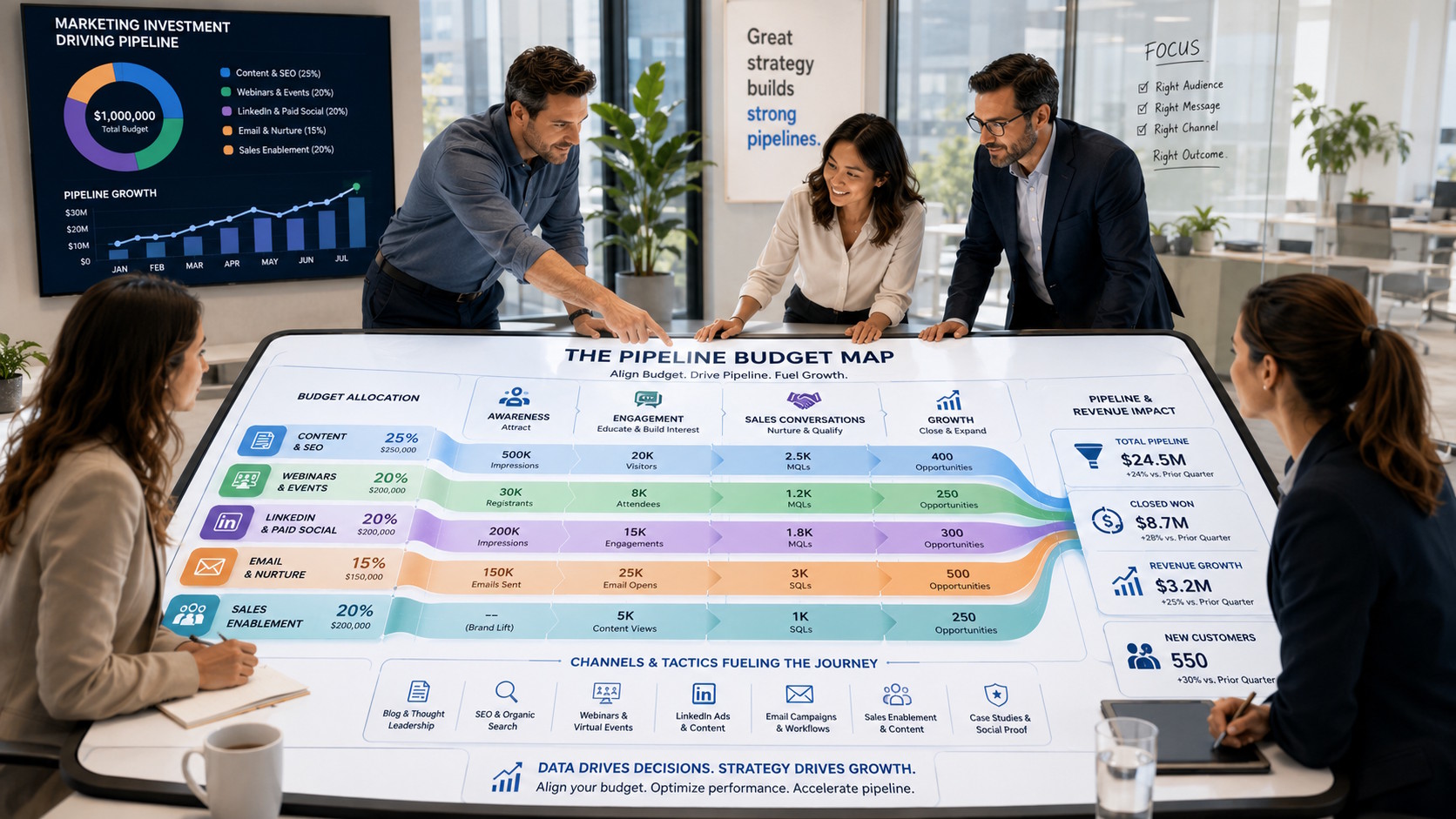
Key Takeaway: A strong B2B marketing strategy needs a budget that supports real growth, not just campaign activity. Budget planning helps you connect spending to pipeline goals, buyer behavior, sales needs, lead quality, and long-term trust. Instead of funding channels by habit, B2B teams should allocate resources based on where buyers are in the journey, how sales conversations develop, and which efforts create meaningful opportunities.
Where B2B Marketing Strategy Meets the Budget
A B2B marketing strategy gets real when the budget behind it supports growth, sales conversations, and the buyer journey. Budget planning connects your business-to-business marketing plan with the go-to-market approach your sales team actually needs.
For many B2B companies, the question is simple: How should we spend limited marketing dollars without chasing noise? The answer starts with strategy, but it quickly moves into priorities, timing, and focus.
A budget can’t fund every trend, channel, and idea at once. It should help you decide what deserves attention now, what can wait, and what needs testing. In B2B, those choices carry extra weight. Buyers often move slowly, compare options carefully, and involve several people before they talk to sales.
Start with the Growth Target, Not the Channel List
Many teams begin budget planning by asking which channels they should fund. They ask whether LinkedIn, search, events, email, webinars, or content deserve the first dollars. Those questions come later.
A better first question is this: What kind of growth should marketing support this year? The answer may involve more qualified leads, stronger account engagement, better sales conversations, or faster movement from interest to opportunity.
This keeps the budget grounded in business outcomes. A company selling a complex platform to enterprise buyers needs a different budget mix. A company selling a simpler service to smaller teams may prioritize faster campaign loops. One may need more education, thought leadership, and sales enablement. The other may need faster lead capture and more frequent campaigns.
When someone asks, “How do I plan a B2B marketing budget?” the most useful starting point is not a percentage. It is the revenue goal, the sales motion, and the type of buyer you need to reach.
Build Around the Real B2B Buyer Journey
B2B buyers rarely act after one ad, one blog post, or one email. A buyer may read an article first, attend a webinar later, then review a case study before requesting a demo. That means your budget should support the full journey. Awareness content helps new buyers understand the problem. Educational webinars and guides help them compare options. Case studies, product explainers, and ROI-focused materials help sales teams move deals forward.
This is where budget planning becomes more than a spreadsheet. It becomes a map of how buyers learn, evaluate, and build confidence. A healthy budget also gives room to nurture prospects who are not ready yet. Many B2B leads need time. They may have budget cycles, internal approvals, or competing priorities. If you only chase immediate form fills, you may miss buyers who need steady contact.
Balance Trust, Demand, and Sales Support
A practical budget should not treat brand and demand as enemies. B2B companies need both. Demand generation can create leads and pipeline, but trust makes buyers more willing to engage.
Thought leadership, SEO content, webinars, newsletters, and LinkedIn activity can help your company stay visible. Paid campaigns, landing pages, and lead capture offers can turn attention into measurable interest. Sales enablement content can help reps answer questions with more confidence.
The mix depends on your market. If buyers already understand your category, your budget may lean more toward conversion and pipeline. If the category feels new, crowded, or complex, you may need more education first.
This is also where teams should avoid copying last year’s budget without asking better questions. What changed in the market? Which campaigns brought real opportunities? Which channels produced leads that sales actually valued? The goal is not to spend more for the sake of it. The goal is to spend with sharper intent.
Make the Budget Fit the Sales Motion
Your sales process should shape your budget. A long enterprise sales cycle needs patient marketing. It may require account-based campaigns, executive content, customer proof, and repeated touchpoints.
A shorter sales cycle may need clearer offers, stronger landing pages, faster follow-up, and simple educational content. Both approaches can work, but they should not receive the same budget design.
This is where many B2B teams get stuck. They invest in lead volume, then wonder why sales ignores the leads. Marketing may celebrate a low cost per lead while sales sees poor fit, weak intent, or no buying authority.
A better budget looks beyond cheap leads. It considers lead quality, account fit, opportunity creation, and sales feedback. In everyday terms, the question is simple. Did this spending help us start better sales conversations?
Leave Room to Learn as You Go
Budget planning should include space for testing. No team knows every answer at the start of the year. Buyer behavior changes. Channels get more expensive. Messages get tired. New opportunities appear.
A modest testing budget can help you try new content formats and improve landing pages. It can also support new webinar topics or paid campaign experiments. The point is not to chase every shiny object. The point is to create room for learning before making bigger bets.
This also makes performance reviews more useful. Instead of judging campaigns only by clicks or downloads, your team can look at what happened next. Did the lead match the ideal customer profile? Did the account engage again? Did sales accept the lead? Did the campaign influence pipeline? Those questions keep the budget connected to real B2B growth.
Make Your B2B Marketing Strategy Measurable
Measurement should feel practical, not overwhelming. You do not need to track everything with equal importance. Start with the numbers that show whether marketing creates useful movement.
For many teams, helpful metrics include qualified leads, MQL-to-SQL conversion, opportunities created, pipeline influenced, cost per opportunity, and closed-won revenue. These measures give a clearer picture than traffic or impressions alone.
Top-of-funnel metrics still have a place. Awareness, reach, engagement, and content views can show whether your market is paying attention. They should connect to deeper signals over time, though. A blog post can introduce the brand, educate the buyer, and support later engagement. It may not close a deal by itself.
The best measurement approach tells a story. It shows how the budget helped attract attention, build trust, support sales, and contribute to growth.
Conclusion: Turn the Plan into Momentum
Budget planning gives marketing strategy a working shape. It helps a team choose priorities, fund the right buyer stages, support sales, and measure progress with more clarity.
For B2B companies, this work should stay connected to pipeline and buyer behavior. A polished budget can still fail if it ignores long sales cycles, buying committees, sales enablement, or lead quality.
A B2B marketing strategy becomes stronger when the budget gives it direction, discipline, and room to learn. Contact us if you want to learn more about planning a B2B marketing budget that supports growth.
0 comments