
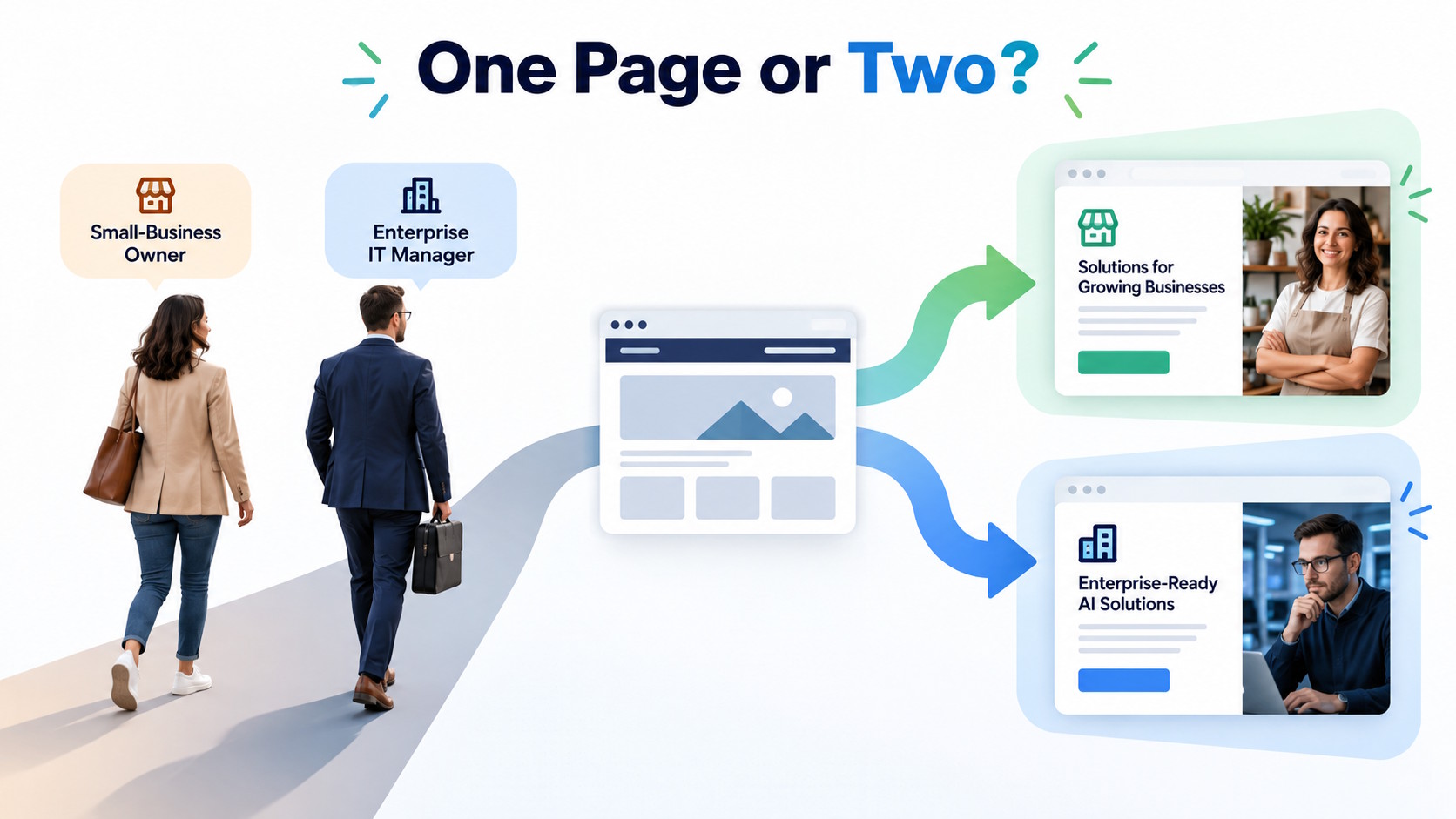
Key Takeaway: Different audiences need separate landing pages when they have meaningfully different needs, questions, or offers. If visitors want the same solution and need similar information before taking the same next step, one shared page may work better. The goal is not to create more pages, but to give each landing page a clear purpose.
One Service, One Page?
Landing page creation starts with a practical question: should every audience arrive at the same page? When building campaign pages, you’re deciding whom each destination should serve, not just how it should look.
Suppose you sell one service to both small businesses and large organizations. One shared page feels efficient, but would it answer both groups’ questions? Separate pages can make sense when buyers need substantially different explanations or offers. Different labels alone don’t establish that need.
Google advises advertisers to match landing pages with the promises and actions in their ads. That provides a useful starting point: what did each visitor come here for?
Landing Page Creation Starts with the Buyer
“Do I need a landing page for every audience?” You don’t necessarily need one for every group you can name. Company size, industry, and job title offer starting points, not automatic reasons to build more pages.
Mailchimp describes segmentation through buying behavior and purchase readiness, not just demographic categories. Its guidance emphasizes choosing distinctions that suit your product or service. A practical way to apply that advice is to compare the problem, the reassurance, and the offer.
What does each visitor want to accomplish, and what would help them feel comfortable choosing your business? The useful distinction is what visitors need from the page, rather than the category you assign them.
The offer can also change within the same audience. Someone requesting a beginner’s guide has accepted a different invitation from someone requesting a quote. Google’s guidance calls for the landing page’s action to reflect the advertisement’s invitation.
Same Service, Different Questions
Imagine a hypothetical cloud-backup provider talking to two potential customers. A small-business owner has relied on manual backups and wants someone else to manage the process. “How difficult is getting started, and what will we pay?” the owner asks. They want a dependable service without another daily task.
Meanwhile, an IT manager at a larger company already has backup systems. Their organization is opening several offices, and they need help extending coverage. “Will this work with our existing setup, and who handles what?” the manager asks. Their concern centers on bringing the service into an established operation.
Here, separate pages could give each visitor a relevant explanation. A page emphasizing simple setup might leave the manager unsure about support across multiple locations. A page concentrating on complex deployments could make the owner wonder whether the service suits a smaller business.
The provider could invite both visitors to book a consultation. Their next step matches, but the questions leading up to it differ. These fictional circumstances justify considering two pages; they don’t define all small businesses or large organizations.
When One Shared Page Makes More Sense
Now suppose both customers want the same standard backup package. They have similar questions, receive the same support, and follow the same setup process. Under those conditions, one shared page looks like a reasonable choice.
A limited difference may need only a brief explanation within that page. For example, different team sizes might not affect the package or the decision to request a consultation. Splitting the audience would add another destination without a clear new purpose.
The same logic applies to traffic sources. Suppose an email and a social post invite people to the same webinar, with identical expectations. Those visitors could share one registration page; the channel alone doesn’t establish a different need. For this planning decision, the offer and expectations provide stronger reasons than the place someone clicked.
What Job Will the Extra Page Do?
Unbounce identifies audience targeting, campaign objectives, and product differences as considerations when deciding how many landing pages to create.
A useful starting point for landing page creation is a simple purpose statement. “This page helps owners understand our managed package before they book a consultation” describes a job, not merely an audience.
The intended visitors also need a route to that page. In our example, the provider could link an owner-focused email to the page explaining managed support. Having a separate page would accomplish little if the campaign still sent everyone to the original one.
When Landing Page Creation Adds More Work Than Value
Mailchimp cautions that overly narrow segments can leave marketers writing messages for too many audiences.
Consider what happens when the backup provider changes its package. Someone must review every relevant page for outdated prices, service details, or expectations. Even with shared content, additional audience-specific explanations need attention.
This doesn’t mean avoiding separate pages. It means weighing that responsibility against the buyer need each page addresses.
Conclusion: Count Needs, Not Labels
One service may deserve several pages, while several audience categories may need only one. The useful question is whether another page provides something the shared page cannot adequately offer.
Before publishing, there’s one more question worth asking: what would this visitor lose if the extra page disappeared? If you cannot name a meaningful difference, you may not need another page yet.
Contact us to learn more about landing page creation and whether your audiences would benefit from separate pages.
Sources: