
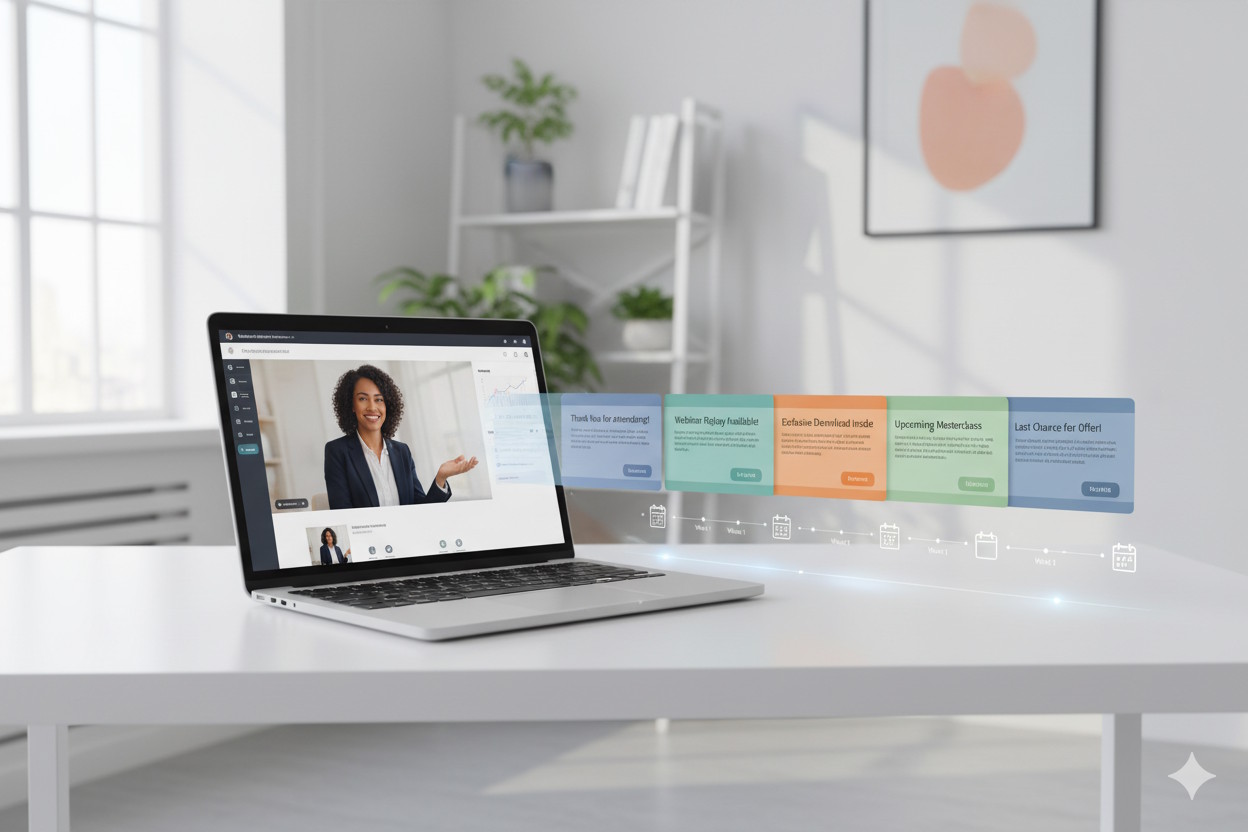
Key Takeaway: Email marketing after a webinar works best when you treat one event as the start of a longer conversation, not a one-time campaign. Instead of relying on a single replay email, you can turn the webinar into several follow-up messages built around key insights, audience questions, and next steps. This approach helps you stay visible, keep readers engaged, and get more value from content you already created.
One Webinar Can Start a Longer Conversation
Email marketing does not have to end when your webinar goes live. A smart email campaign, follow-up email series, and email outreach plan can keep the topic moving long after the event ends. That matters because webinars take time to plan, promote, and host. It makes sense to get more life from that effort. If you have ever asked, “What should I send after a webinar?” you are already looking in the right direction.
Many teams treat webinars like one-day projects. They promote the event, run it, send a replay, and move on. That approach leaves useful content behind. A single webinar can spark several weeks of outreach when you pull out the right ideas and share them in fresh ways. Instead of pushing the full recording again, you keep the conversation alive with smaller and more relevant follow-ups.
Email Marketing Should Not Stop at the Replay Link
A replay email still has value. People miss live events, and some attendees want to revisit a point they liked. Still, the replay should open the follow-up, not carry all of it. Most readers will not carve out an hour to watch a full session later. They will, however, open a short email that gives them one useful takeaway right away.
That is the real shift. You are not simply resending the same asset and hoping for a click. You are making the webinar easier to consume. One sharp insight can become a strong email. One audience question can become a thoughtful follow-up. One practical example can turn into a short story with a clear lesson. Suddenly, the webinar feels less like a past event and more like an ongoing source of ideas.
One strong moment can carry the whole follow-up
Think about the parts people actually remember. Maybe your speaker named a common mistake. Maybe a guest shared a story that made the topic feel real. Maybe the audience asked a question that others quietly had in mind. Those moments work well in email because they feel specific, useful, and easy to absorb.
This is also where the process becomes less intimidating. You do not need to squeeze ten new essays from one webinar. You only need to notice what already stands out. A recap email, a commentary email, and a Q&A follow-up can all come from the same session. Each message gives readers a different way in, and each one respects the limited attention people bring to their inbox.
Different Readers Need Different Angles
Not everyone leaves a webinar in the same place. Some people attended the full session and want more detail. Others registered but never showed up. A few liked the topic but were not ready to act. When you think about those differences, your outreach starts to feel more natural and less generic.
You do not need a complicated system to respond well. At a surface level, you only need to match the message to the reader’s likely interest. Someone who missed the event may respond to a quick summary. Someone who stayed engaged may enjoy a deeper point from the discussion. Someone closer to a decision may care most about a real example. When readers feel understood, follow-up emails start to sound helpful rather than routine.
Email marketing feels stronger when each message has a new job
The easiest way to avoid repetition is to give each email a clear role. One message can recap the main takeaway. Another can spotlight a smart question from the audience. A later email can connect the webinar topic to a challenge readers already face. A final note can invite them to continue the conversation in a natural way.
This approach works because it mirrors how people learn. They rarely absorb everything at once. They need reminders, new angles, and a little context. They also need variety. If every email says, “Here is the replay,” the outreach loses energy fast. If one message says, “Here is the key idea,” and another says, “Here is why this matters now,” the topic starts to feel alive.
A Webinar Can Feed Your Calendar for Weeks
One webinar can support far more content than many teams expect. The opening argument can become a short thought piece. A strong slide can turn into a simple email with commentary. The Q&A can inspire a follow-up on common concerns. Even the event title can lead to a new question that deserves its own email. You are not stretching weak material. You are uncovering the value that was already there.
This is one reason the format fits so well with email marketing. Social posts move fast, but inbox messages can slow the conversation down. One week, you can share the big picture. The next, you can highlight a real example. After that, you can connect the theme to a challenge your audience already feels. The result feels steady instead of rushed.
You may even wonder, “Do people really want more webinar emails?” Usually, they do not want more noise. They want useful follow-up. That is an important difference. When each message offers a fresh angle, the webinar keeps working without feeling repetitive. When each email adds context, the event starts to feel bigger than one date on the calendar.
The Goal Is Not More Email, but Better Timing
A good follow-up sequence does not flood inboxes. It gives people space to stay with the idea. That is why this approach works so well at the top of the funnel. You are not pushing readers toward a heavy decision. You are helping them remember the topic, understand the value, and stay curious about what comes next.
Some readers ask, “How many emails should follow a webinar?” There is no magic number. The better test is whether each message adds something new. One email can teach. Another can reassure. A third can connect the subject to a problem readers already know. Over time, that steady rhythm builds familiarity in a way that feels natural.
That lighter touch matters. Many people discover a brand through one useful idea, not one big pitch. A webinar often gives you several ideas to work with. When you treat those ideas with care, the outreach feels thoughtful instead of forced. That is often what makes people stay interested.
Conclusion: Let One Event Open More Doors
A webinar should not disappear after the live session ends. It can become the starting point for several thoughtful touchpoints that educate readers and keep your brand present. When you treat one event as a source of ideas rather than a finished task, your outreach gains more life, more range, and more staying power.
That is the bigger opportunity behind email marketing after a webinar. You are not just filling the calendar. You are giving good ideas more room to travel. Contact us if you want to learn more about building email marketing that keeps the conversation going after the event is over.