
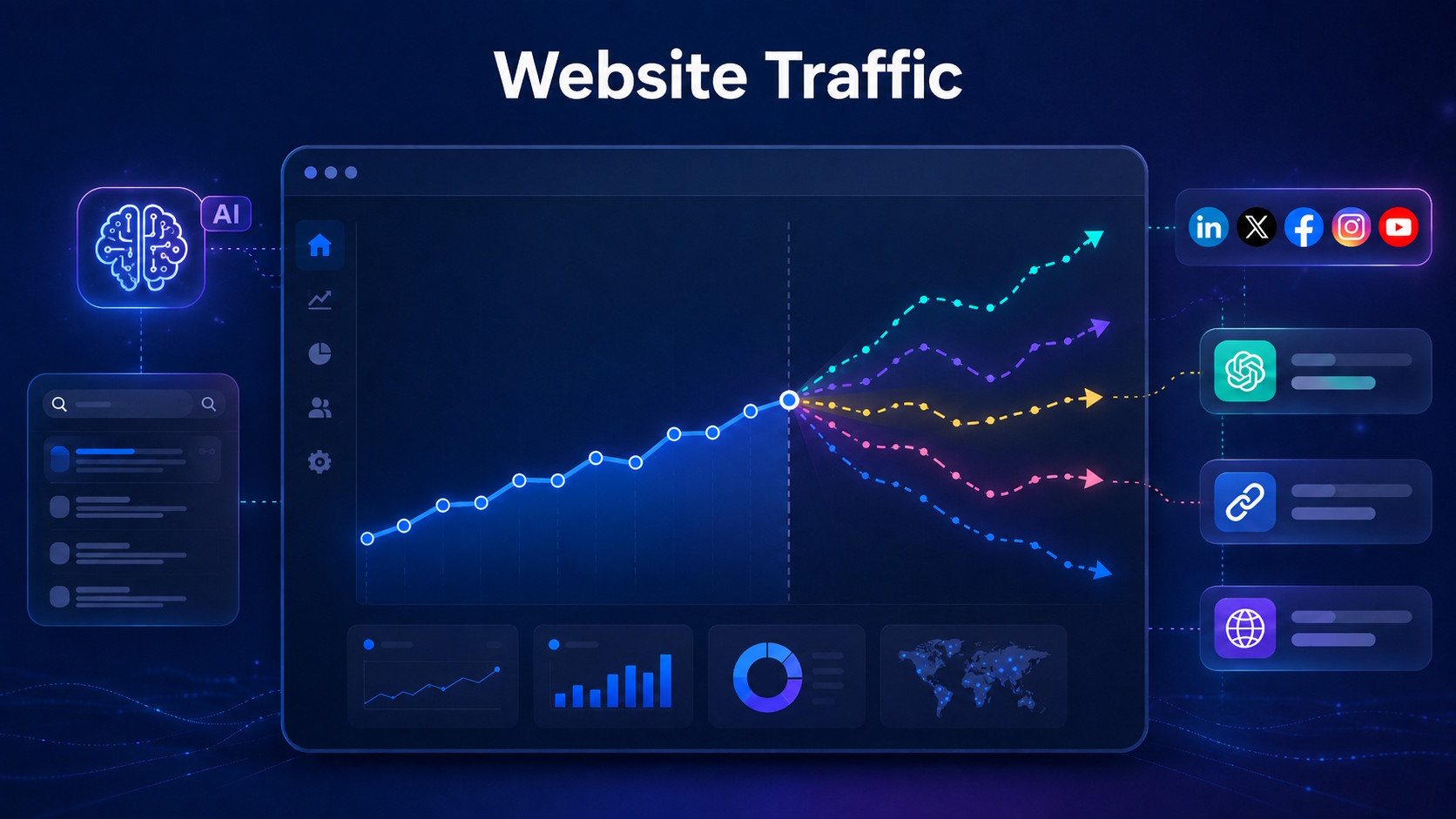
Key Takeaway: Predicting website traffic remains possible, but older forecasting methods are becoming less reliable as AI changes how people discover information. A stronger marketing strategy uses historical data as a starting point, then builds realistic ranges for different traffic sources and visitor intentions. It also measures lead quality, conversions, and engagement alongside total visits. Regular updates help the forecast reflect changing search behavior instead of relying on one fixed prediction.
The Forecast Has More Moving Parts
Your marketing strategy may still rely on familiar traffic forecasts, but the ground beneath those numbers is shifting. A marketing plan once could lean heavily on search rankings, historical growth, seasonality, and expected campaign results. That broader promotional approach worked when visibility and website visits moved together more predictably.
AI-generated answers now give people another way to find information, compare ideas, and discover brands. Some users may get what they need without clicking, while others may return through a different channel later. As a result, online visibility can grow without producing an equal rise in website sessions.
Traffic forecasting still has value. It simply needs to reflect a messier, less direct customer journey.
Can You Still Predict Website Traffic?
Yes, you can still predict website traffic, although no forecast can promise an exact result. Historical data remains useful for spotting seasonal patterns, campaign effects, and long-term changes.
The challenge comes from treating those patterns as guarantees. Search experiences evolve, audiences adopt new tools, and content reaches people beyond your website. Yesterday’s relationship between rankings, clicks, and visits may not continue at the same rate.
A practical forecast now offers a reasonable range. It also explains which assumptions could push results toward the lower or upper end.
Why Yesterday’s Numbers Need More Context
Traditional traffic forecasts often begin with last year’s performance. A business reviews monthly visits, adds an expected growth rate, and adjusts for planned campaigns. That remains a sensible starting point, but it no longer tells the entire story.
Imagine that an educational article has attracted steady search traffic for two years. The page may remain visible, yet receive fewer visits because summaries answer simple questions earlier. Meanwhile, a service page may continue drawing clicks from people who need pricing, proof, or direct help.
The reverse can also happen. Someone may encounter a company in an AI response, remember its name, and visit the website several days later. Analytics may record a direct visit without showing the earlier discovery.
Historical numbers tell you what happened. Current context helps you judge whether the same pattern is likely to repeat.
Visibility Can Grow Without More Clicks
Website traffic once served as a convenient stand-in for online attention. Now, a brand can appear across search results, social posts, newsletters, videos, and AI responses without receiving an immediate visit.
So, does website traffic still matter? Absolutely. Your website remains the place where visitors can explore your expertise, evaluate services, subscribe, or contact your team.
Traffic alone, however, reveals only part of that journey. Search impressions, branded searches, referrals, engagement, qualified inquiries, and conversions provide additional clues. Together, these signals show whether visibility is creating useful interest rather than temporary attention.
This wider view also prevents unnecessary alarm. A small traffic decline may be less concerning when lead quality and conversions remain healthy.
How Can Your Marketing Strategy Adapt?
A useful forecast should acknowledge uncertainty instead of hiding it behind one confident number. This approach gives leaders a clearer picture of both opportunity and risk.
Consider three possible outcomes: conservative, expected, and optimistic. The conservative view may reflect weaker click-through rates or slower campaign performance. The expected view represents the most likely conditions based on recent evidence. The optimistic view allows for stronger demand, successful content, or growing brand recognition.
Each outcome needs simple, visible assumptions. Organic traffic might remain flat while direct traffic rises. A product launch could lift paid and email visits for several weeks. Informational pages might lose some clicks while high-intent pages stay stable.
These scenarios make a marketing strategy more adaptable without turning the forecast into a complex technical exercise. Teams can prepare for several plausible futures rather than rebuilding plans after every surprise.
What Should Your Marketing Strategy Measure?
Traffic volume and traffic value are not the same thing. Ten thousand visits may look impressive, yet those visits can produce very few relevant inquiries.
Is more website traffic always better? Not necessarily. A smaller audience may create stronger results when visitors arrive with clearer needs and greater intent.
A useful forecast therefore connects expected visits with engagement, lead quality, conversion rates, sales opportunities, or another meaningful outcome. This comparison helps businesses distinguish healthy growth from traffic that only makes a dashboard look busy.
The same reasoning applies when visits fall. If inquiries remain steady, the website may be losing casual readers while retaining valuable prospects. That pattern deserves analysis, but it does not automatically signal failure.
One Forecast, Three Possible Futures
A single target often looks precise, yet precision can create false confidence. A range gives decision-makers more useful room to plan.
Suppose a website currently receives 20,000 monthly visits. Rather than predicting exactly 24,000, a business might forecast a band based on different conditions. The lower end could reflect declining informational clicks. The upper end could reflect stronger campaigns, referrals, or branded demand.
This format encourages better conversations. Which channels face the greatest pressure? Which upcoming campaigns could create a lift? Could stronger brand recognition offset softer search traffic?
The answers will change over time, and that is normal. The forecast serves as a decision-making guide, not a promise carved into stone.
Separate the Channels—and the Intent Behind Them
Total traffic can hide more than it reveals. Organic search, paid search, email, social media, referrals, and direct visits respond to different pressures.
AI-related discovery adds another wrinkle. Some platforms may send identifiable referral traffic, while other journeys remain hidden. A person might discover your brand through an AI tool, then return later through search or direct navigation.
Visitor intent also deserves attention. Informational pages serve people who want quick explanations. Commercial pages help visitors compare options, assess credibility, or take the next step.
AI may affect basic informational queries differently from high-intent searches. Separating these groups keeps one changing segment from distorting the whole forecast. It also shows where traffic losses may affect awareness, leads, or revenue.
Keep the Forecast Moving
Website traffic forecasts work best as living plans. An annual projection should not remain untouched while search behavior, campaigns, and referral patterns change around it.
Monthly reviews may suit fast-moving campaigns, while quarterly reviews may fit steadier businesses. Each review can compare actual traffic with the forecast range and examine changes by channel.
Large differences deserve investigation rather than panic. A new content pattern, campaign delay, seasonal shift, or measurement issue may explain the gap. Updating assumptions means the forecast has learned from new evidence.
Conclusion: Forecast with Humility, Plan with Confidence
Predicting website traffic remains feasible, but older methods need more flexibility. Historical performance still provides a foundation, while scenarios reveal how changing behavior could shape future visits.
The strongest forecasts separate traffic sources, consider visitor intent, and connect visits with business outcomes. They also recognize that online visibility may influence a buyer before analytics record a website session.
No forecast can remove every surprise from AI-driven discovery. It can still support clearer expectations, earlier decisions, and more productive conversations about growth.
Contact us to learn more about predicting website traffic and adapting your marketing strategy for an AI-driven landscape.