
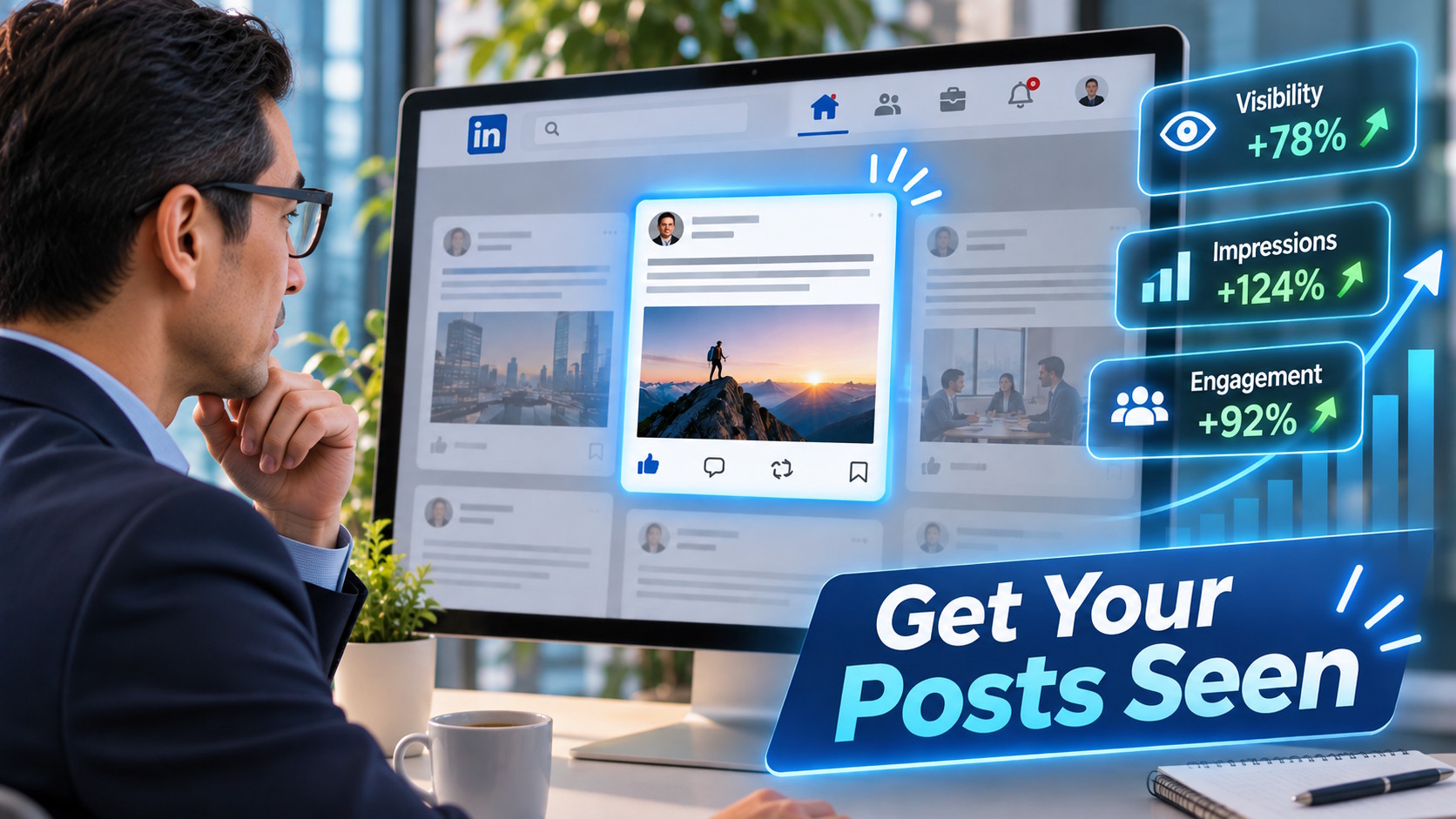
Key Takeaway: Increasing LinkedIn post visibility starts with understanding your audience and sharing content that addresses their interests and challenges. Clear messaging, relevant formats, consistent posting, and meaningful conversations can help your business reach more of the right people. Tracking post performance also reveals what resonates with your audience, allowing you to refine your social media marketing strategy over time.
Give Your LinkedIn Posts a Better Chance
Social media marketing can help your business reach relevant people on LinkedIn, yet regular posting does not guarantee attention. You might share an industry observation and watch it collect only a handful of reactions. Your social outreach should give readers a reason to pause, especially when the subject involves unfamiliar technology. Effective LinkedIn marketing connects your expertise to a problem someone already recognizes.
So, how can you increase LinkedIn post visibility? The starting point is understanding your audience, presenting an idea clearly, and giving people something worth discussing. You can then refine your approach as you learn what interests them.
Social Media Marketing Starts with a Relevant Audience
Before choosing an image or polishing your opening, consider who would find the post valuable. A maintenance manager and a technology purchasing team may care about different parts of the same announcement. Writing for a specific reader helps you decide which details deserve space.
LinkedIn says its feed considers professional interests and engagement history when recommending content. It also aims to reduce repetitive posts and engagement bait.
For example, a sensor company might explain how maintenance teams investigate unexpected equipment vibration. Readers can recognize the operational challenge while learning how the company approaches it. The product gains context through a situation they understand.
Give Readers a Reason to Stop Scrolling
Your opening sentence should help someone understand what they will gain from reading further. A familiar frustration or an observation from a recent project can provide that invitation.
Imagine a company preparing a post about a monitoring dashboard. “We’re excited to announce our latest release” gives readers little context. An opening about spotting recurring temperature changes introduces a problem that relevant readers can picture.
The rest of the post needs to deliver on that opening. A short explanation, followed by a concrete lesson, gives someone a reason to continue reading or contribute an experience.
If you’re asking, “What should I post on LinkedIn?” your customers’ recurring questions offer a productive place to begin. A webinar discussion or project review may already contain an idea worth sharing.
Let the Message Choose the Format
For social media marketing on LinkedIn, the format should help readers understand your point. A short text post can explain an observation, while a video can demonstrate equipment in action. A simple chart might clarify a trend that would otherwise take several sentences to describe.
Technical subjects deserve particular care. Someone may understand the business problem while knowing little about your product names or internal terminology. Familiar language and readable paragraphs help them follow the explanation.
An image earns its place when it adds information. A labeled photo of an installation, for instance, can make the discussion easier to follow. The goal is a post that makes sense to someone encountering your company for the first time.
Treat Publishing as the Start of a Conversation
Visibility also involves what happens after you publish. LinkedIn encourages organizations to start conversations, participate in relevant discussions, and respond to people who engage.
A thoughtful reply can develop an idea that your original post only touched upon. If someone describes a similar challenge, you can explore what their experience adds to the discussion. Those exchanges may reveal questions for future posts.
A manageable publishing schedule leaves room for this participation. Your social media marketing routine should fit the time your team can devote to both writing and responding.
What about the best time to post on LinkedIn? LinkedIn recommends testing different times with your own audience. Over several weeks, you can look for patterns and adjust your schedule accordingly.
Find Out Who You’re Actually Reaching
“How do I know whether more people are seeing my posts?” LinkedIn’s analytics provide a starting point. Impressions count how many times your post appears, including repeat exposure. The members reached metric estimates the distinct audience that saw it.
These measures answer different questions. A higher impression count indicates more exposure, while audience information helps you assess who you are reaching. Available details vary between personal profiles and company Pages.
Let Social Media Marketing Results Shape Your Next Post
Patterns across several posts offer more perspective than one unusually strong or disappointing result. Perhaps practical explanations attract relevant professionals, while product updates mainly draw responses from existing colleagues. That pattern gives you a reason to develop more explanations and reconsider how you present announcements.
Changing one element at a time can make comparisons easier to interpret. You might try a clearer opening while keeping the subject and format similar.
Conclusion: Make Your Next Post Worth Someone’s Time
Improving LinkedIn visibility begins with the choices behind each post. A recognizable problem and a clear explanation give readers something to consider. Conversation adds depth, while your results suggest where to focus next.
You do not need to change everything at once. Your next post can start with one question your customers regularly ask and an answer they can understand.
If you want to strengthen your social media marketing and improve your LinkedIn presence, contact us at IoT Marketing. We can help you explore how useful content and a clearer message fit your business goals.
Sources:
0 comments