Telemedicine
Smart Health

How Telemedicine is Paving the Way Toward More Efficient Healthcare

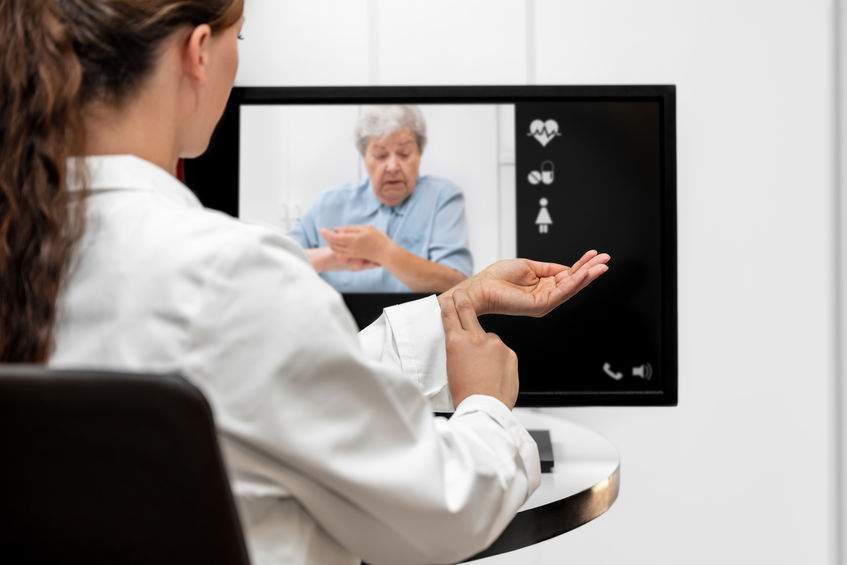
Telemedicine has been a successful solution to ease the pressure on doctors and other medical professionals during the pandemic. Digital healthcare solutions can reduce in-person appointments, waiting room time and even costs for patients. The rapid growth of telemedicine now has positioned the healthcare industry toward a more digital and efficient future.


Trends and Future Development

Recent tracking of telemedicine reveals that it's growing at a steady rate due to the urgent need to practice social distancing. It's expected to become a $66 billion market by 2021, according to Mordor Intelligence.

And so far, 3,000 percent of growth in telehealth specifically has occurred in 2020, beginning with the mass shutdowns in mid-March. The transformation to more digital solutions during the pandemic has accelerated telehealth use by two years, according to Ido Schoenberg, CEO of telehealth company Amwell.

The growth of the telemedicine industry is closely associated with these current trends:

  • Constantly Improving Mobile Devices and Healthcare Apps - As smartphone technology continues to make electronic communication more powerful, healthcare apps are contributing to continuous remote access to professional healthcare expertise. The apps can connect patients with a trained medical specialist to answer questions.
  • Increasing Decentralization of Healthcare - Experienced healthcare professionals are steadily moving away from large hospitals in favor of running their own small businesses. This shift toward decentralized medical support allows healthcare entrepreneurs to focus on serving their communities.
  • Growing Awareness of Cybersecurity - Since the healthcare industry deals with confidential patient data, it must pay close attention to meeting HIPAA regulations. Protecting the privacy of patients has become a top concern in the industry, with a focus on using the most robust cybersecurity solutions available.
  • Merging of Small Players - Many small businesses have been wiped out by the pandemic shutdown, clouding the future for even healthcare clinics. The solution to keeping the doors open has been small firms merging together to form bigger companies. In some cases, small firms develop alliances with other small players to deliver telehealth solutions. The merger trend will likely continue in the near future to strengthen balance sheets.
  • Reduction in Proprietary Solutions - As telehealth becomes more widely embraced, there will be more user-friendly technologies designed specifically for the healthcare industry. Therefore, less emphasis will be placed on proprietary hardware and software. Tech giants currently working on solutions include Apple, Microsoft, Google, and Amazon.
  • Less Crowded Emergency Rooms - With the growing popularity of telehealth, less people are showing up in emergency rooms. Certain injuries or conditions require immediate care, but many times non-emergencies can be a strain on medical practitioners. The more patients can resolve minor health issues with information or advice over the internet, the more doctors can focus on the most serious cases.


Conclusion

Going more virtual is changing patients’ relationships with their doctors, and electronic communication is at the heart of this shift toward more digitally driven technology for hospitals to interact with patients. In-person visits can now be planned virtually, while the doctor's office sends email reminders to patients near the appointment date. Patients can check their smartphones in their cars to know the exact time the doctor is ready to see them. These are just a few of the many benefits that telemedicine offers.

After the coronavirus eventually goes away, telemedicine will still be here. It's simply a more efficient way to serve patients. Essentially, telemedicine is more than a trend, a remedy, or an experiment. It's here to stay.

Read More
Telehealth Services
Smart Health

Telehealth Services Are Gaining Attention During the COVID-19 Outbreak

The coronavirus pandemic of 2020 has led to several nations issuing lockdowns to prevent the spread of the virus. And in the wake of the COVID-19 outbreak, telemedicine has become a solution to limit hospital visits in order to contain its spread and keep both patients and healthcare staff safe.

Telemedicine is the use of digital tools to deliver medical information to patients. One of the most important advantages of telemedicine is that it strengthens the connection between doctor and patient. It allows both parties to communicate to each other through electronic media.

This use and importance of telehealth services amid the current COVID-19 pandemic has also led to this modern form of care gaining greater public visibility and wider acceptance, establishing new norms for the healthcare sector, both now and in the future.

Here are some of the ways telemedicine is positively impacting the healthcare industry during the coronavirus crisis.


Telehealth Use Cases

First, before we go into detail about the benefits of telehealth services during the COVID-19 health crisis, let’s discuss why these services were still so vital before the pandemic.

Here are some essential telehealth uses that have helped hospitals and patients, even before the COVID-19 outbreak:

  • Engagement Through Remote Monitoring – Value-based reimbursement drives healthcare professionals to work with new channels for engagement with patients seeking self-care.
  • Reliable Healthcare Access – A major strength to telehealth is that, despite a physician shortage, it expands healthcare access to individuals in remote locations, who may not have access to reliable healthcare services.
  • Improved Clinical Efficiency – By helping to gather data and set priorities, telehealth is reinventing the medical world for greater clinical efficiency.
  • More Affordable Healthcare – Patients can potentially save plenty of money by using telehealth services, which can diagnose health problems faster. Clinics and hospitals can also save money on operational costs.
  • Enhanced Operations – By directing patients toward self-care online, telehealth is helping the healthcare industry make the transition to more digital solutions that eliminate waste and improves operational efficiency.


Use Cases of Telehealth During the COVID-19 Outbreak

When the coronavirus began breaking out in the US in early 2020, telemedicine helped provide routine care services to patients at the greatest risk of exposure to COVID-19. Telemedicine was also able to solve medical staffing problems, as many medical professionals tested positive for the virus and had to stay home. Healthcare providers were still able to use digital tools, such as video calls and chat bots, for patient communication.

Various types of digital solutions have been used during the coronavirus pandemic to connect patients with physicians. What used to require a hospital visit can now often be replaced by an app. Patients can simply interact with an app to get answers to their questions. It allows for instant contact with the hospital for emergencies and screening.

Amid the COVID-19 pandemic, telemedicine and virtual health services are getting increased attention as an essential aspect of healthcare, and it’s likely that these services will create a new normal for healthcare in the future. Teladoc Health, the largest US telemedicine and virtual healthcare company, reported a 50 percent increase in service in the week ending March 20, which made them employ thousands of doctors to their network. The Federal Communications Commission is spending 0 million to improve connectivity between patients and virtual-healthcare providers, and the US Department of Health and Human Services has increased reimbursements for telemedicine and enabled cross-state provision of virtual care. Sweden’s KRY International, one of Europe’s biggest telehealth providers, reported that registrations were up more than 200 percent. France and Korea have both changed regulations to ease access to telemedicine.

In the wake of current pandemic, there’s a chance that the healthcare industry will increasingly move toward telehealth services that involve mobile solutions and digital communication. Telemedicine has been extremely helpful for screening, testing and treatment during the coronavirus pandemic. Developments in IoT, artificial intelligence and automation will refine this new direction for medicine over time and enable a new normal for healthcare in the future.


Read More
healthcare AR
Smart Health

How Healthcare AR is Dramatically Improving the Human Experience

Augmented reality (AR) and virtual reality (VR) are quickly reaching a mainstream tipping point. These technologies are spreading to classrooms, gyms and healthcare facilities across the globe. Healthcare AR is new, yet it is providing all sorts of benefits for consumers as well as healthcare providers. As an example, this technology is helping patients overcome anxiety about upcoming procedures and treatments. This technology also is helping doctors perfect procedures, enhance patients’ quality of life and treat the sick and elderly in the most efficient manner possible.


AR for Physicians

AR is empowering physicians in several ways. For one, healthcare AR provides doctors and nurses with data and helpful information without forcing them to detach from their current project. AR instructs practitioners on the nuances of administering treatment, performing surgeries and beyond. This is done in real-time in a completely seamless manner. In fact, AR has even entered the medical classroom. This technology lets students interact with a 3D image of the body to better understand biological functionality and the way procedures should be performed.


AR Technology is Empowering Patients

AR is enhancing education for physicians as well as patients. This technology lets pharmaceutical companies boost patient education through a visualization of products and surgeries. This is the patient engagement healthcare providers have long coveted. From providing a visual portrayal of the doctor’s office to explaining the nuances of an upcoming surgery, AR is helping patients understand the intricacies of treatment. For example, one company used it to show patients how heat wraps could relieve their pain. It also was employed as a tool to pinpoint the best treatment options for ameliorating specific aches and pains.


How AR Technology Improves Healthcare Sales

One of the primary advantages of AR is to display highly complex concepts in a clear and efficient manner. Drug and healthcare providers face stiff competition. Even the slightest competitive advantage can make the difference between fantastic quarterly results and a struggling business.

AR has empowered physicians to show off the merits of new drugs in a clear and impactful manner. This technology provides 3D portrayals of specific body organs to show exactly how certain drugs and procedures can enhance health. As an example, one company has used augmented reality technology to put a breakthrough treatment for Dupuytren’s contracture on display. Those struggling with this ailment found the company’s AR presentation quite captivating. Those who work in healthcare were empowered to scan the page to observe the condition’s effects in three dimensions. The high-tech presentation also made it easier for healthcare professionals to understand exactly how the treatment works, understand the cost savings it provides and learn about other treatment nuances that otherwise would have gone unnoticed.


Tech Advances are Making Life Easier for Physicians and Patients

For all the good provided by healthcare AR, it is important to note the technology is in its infancy. Give this technology a few years and it will be commonplace across medical classrooms, hospitals and other treatment facilities. The result of this tech advancement will be a higher quality of life for patients as well as doctors. Stay tuned — a slew of new advancements fueled by AR are poised to emerge and dramatically alter society for the better in the years to come.

Read More
healthcare technology
Smart Health

A Look at How Healthcare Technology is Dramatically Altering the Healthcare Industry

Video game nerds and computer geeks are not the only ones who are wholeheartedly embracing technology anymore. Nowadays, those who work in medicine and patient care are going all in on healthcare technology. A slew of recently developed technologies is fundamentally altering the way patient care is provided.


Better Care Provided with the Utmost Efficiency

Healthcare technology is providing medical professionals with new tools to deliver medicine and treatment. Care quality has dramatically increased thanks to these advances. Technology really has made patient care more reliable and safer. One need not look any further than medical professionals’ use of diminutive computers that fit in the palm of the hand to understand just how much care has improved. The data gleaned from these devices is shared in an instantaneous manner with patients, colleagues, health insurance providers and other pertinent parties.

Tech has opened the door for a highly efficient accumulation of patient data including vital signs, lab results and other important details into a single centralized space. Centralized data has greatly improved patient care and the efficiency of evaluations and treatments.

Lets’ take a quick look at how improvements in healthcare tech are making life easier for doctors and patients.


Tech Advancements Help Medical Professionals Better Understand Patients

It is no longer necessary to use patient charts which are cumbersome and easy to mix up. Electronic health records are now used to arm physicians with full patient medical histories necessary to craft detailed treatment plans that are ideal for each idiosyncratic patient. Today’s doctors can make decisions quickly, obtain test results right away, be notified of a possible error in medication and learn of other important details without delay.

Some hospital departments are even relying on RFID tags or barcodes to reduce the chances of medication errors. As an example, scanning barcodes reduces the odds of a medication error as the healthcare provider is forced to scan the medication as well as the patient prior to providing the medication. The use of such bar codes is based on reinforcing patient’s five basic rights: the right medication at the right dose by way of the right route at the right time for the right patient.

RFID technology saves medical providers a ton of money and time as it provides instantaneous tracking, communication, location information and other details on specific people or resources. This system ensures a specific patient receives the proper medication. Furthermore, RFID technology reduces the chances of healthcare provider error while simultaneously enhancing workflows.


Healthcare Tech is Taking the Industry to New Heights

Healthcare tech might seem a bit cold and impersonal, yet these advancements are making a monumentally positive impact on the industry. Consider the fact that virtual reality (VR) is now being used by veterans of war struggling with PTSD to reduce anxiety before and after surgeries. In fact, 3D printers are now used to form fully customized hearing aids and dental restorations. These technologies are proving mutually beneficial for medical providers and patients alike.


Change is the Only Constant

Newly developed healthcare technologies are poised to change healthcare as we know it. Healthcare technology is enhancing the industry, improving lives and even enhancing lifespans. One can only imagine what the future of healthcare will look like once quantum mechanics and the Internet of Things (IoT) hit their stride.

Read More
healthcare IoT
Smart Health

Healthcare IoT Market Projections: Staggering, to Say the Least

Healthcare IoT is set to be a market worth over $400 billion dollars by 2022. Getting involved with this technological innovation is sensible. Many healthcare businesses, large and small, have already made the switch and it’s easy to see why: savings and profitable expansion. CEOs of IoT enterprises need to know the regions of medicine most amenable to IoT innovation to understand its importance.

Three primary categories where IoT is especially useful in healthcare, and which are worth demonstrating to potential clients, include:

  • Workflow optimization
  • Inventory management
  • Integration of medical devices
  • Workflow Optimization

IoT provides analytics. Analytics provide pattern identification. Pattern recognition allows healthcare facilities to see where energies are wasted and where they’re doing good. When operational practices can be consolidated, clients know where to concentrate efforts for greatest success. IoT solutions provide analytics to help your clients cut thousands of dollars in unnecessarily wasted time from operations.


Inventory Management

Healthcare IoT can help them understand what inventory looks like in the fourth dimension: time. Through a single device, everything throughout a healthcare campus can be cohesively monitored contemporaneously. Should a device give out, it can be immediately replaced. There are many applications here to consider, and the best way to manage inventory particular to a client is to design a system which best fits them.


Medical Device Integration

Tablets, smartphones, smart watches, smart refrigerators, smart patient monitoring machines, smart X-rays, smart MRIs— the list goes on and you get the idea: virtually all medical equipment can be turned into IoT tech with slight optimization; such transformation may be something wise for your IoT agency to provide.

Through such solutions it then becomes possible for patients to be monitored in real time. From there, notifications can be sent out if something anomalous begins to characterize vital signs. Friends and family members of patients can watch operations remotely and be notified the moment an operation is finished. As IoT continues to expand, more integration will follow— this is a selling point.


Specific Areas Where IoT Is Taking Off

There are six main categories which define how IoT is expanding in the healthcare industry today:

  • Wearable devices
  • Sensory tech
  • Analytics
  • Chronic disease increase
  • More cost-effective treatment
  • Expedited Internet access

Did you know there are smart shirts today? Did you know there are smart lenses as well? And smart wristbands? These can give detailed, accurate vitals which a doctor can monitor between multiple patients simultaneously. Contact lenses can correct vision and provide for expanded utility. A smart shirt can be connected to cybernetic augmentation, and it can send a signal if something begins to impede a patient. If your IoT organization doesn’t yet provide such solutions, now might be a time to start considering them.

Sensory technology is more affordable than ever, and that trend is increasing, driving IoT expansion. More available sensory tech leads to more accurate analytical data. This is especially considerable in light of globally increasing chronic disease. Much of this disease is preventable. As trends are identified, medical institutions help educate patients and the general public pertaining to unhealthy activities.

As sensory tech decreases and analytics increase, costs associated with acquiring new sensory tech are curbed, and resources expand as analytics demonstrate redundant operational areas. This means treatment can be offered more cost-effectively, giving an IoT-utilizing medical institution competitive edge in the local market.

Finally, consider edge computing, an innovation by which IoT devices are used as a sort of floated “cloud” atop existing networks. Each device processes some quotient of data, expanding high-speed Internet and expediting Internet access.


Expanding Healthcare Effectiveness

Healthcare IoT has notable advantages and there’s only really one hazard to consider: security. With IoT, there are increased vulnerabilities which hackers may try to exploit. The key is providing IoT security solutions to clients in addition to game-changing innovative services. Do that and they can enjoy expedited operational ability in an infrastructural sense, increased clientele through customer satisfaction, and disease reduction through pattern recognition. That makes your IoT agency very valuable to clients. The Internet of Things is truly revolutionizing healthcare, and if you can show potential clients this reality, you’ll see increased conversions.


Read More
medical IoT
Smart Health

Medical IoT is Beneficial to Healthcare, But Requires Security Solutions

Medical IoT can help more than just patients. Imagine if you’re in a waiting room and it’s been several hours since a loved one went into surgery. Now unbeknownst to you, the individual had a successful surgery and is in a recuperation room sleeping off the medication. You would have been notified, but the healthcare facility where the operation took place is a busy one and not even an intern has been available to dispatch on such an errand of good news. This is where IoT comes in: through the Internet of Things, the moment a procedure is complete, a notification can be sent to your smartphone which lets you know how it went and how your loved one is doing. Then you know you’re not waiting on their life or death— you’re just waiting on someone to tell you it’s okay for a visit. That means you’re absolutely justified in getting a snack or taking a walk to ease the stress.

This is one example of real-world solutions IoT tech is bringing healthcare facilities. Between infrastructural facilitation, systems organization and management, cost reduction, and previously impossible surgeries, IoT is revolutionizing healthcare. But there are so many IoT devices on a given healthcare campus that vulnerabilities exponentially compound over previous years, leaving businesses in the health industry wide open for cybercriminal exploitation. CEOs of IoT companies need to be aware of both benefits and hazards pertaining to IoT for greatest effectiveness and profitability.


Solutions

Overcoming the cybercriminal element in healthcare requires management of medical IoT systems. Proactive monitoring, encryption, multi-factor authentication, intrusion detection/prevention software, and continuous updates all help safeguard an IoT system. Get proper protections like this applied to your IoT provisions and clients can see benefits of the new technology unblemished by its downsides.

Some truly astonishing implications silhouette IoT, and the medical institution which adopts this system of technology upgrade stands to see:

  • Increased customers
  • Decreased preventable injuries
  • Expanded medical effectiveness
  • Increased Customers

When families can be notified in real time pertaining to an operation’s progress, they feel more connected not just to their kin “under the knife,” but to the medical institution providing surgery. The more time spent understanding procedures and watching what is going on, the less time families will spend worrying and criticizing health professionals. Basically, they are more satisfied. Greater satisfaction leads to repeat service. The more customers an institution can garner who continuously use their services, the better that institution will be for itself and the community— it’s an “upward spiral” of positiveness.


Decreased Preventable Injuries

Many times, certain conditions may or may not need a physical checkup. Also, there are some situations where a simple restriction in diet can stop a life-threatening medical emergency. With IoT, information on clients can be collected remotely, and patterns can be identified. Pattern recognition leads to cohesive parallel service provision. This, in turn, reduces the number of patients who come to a given facility with that which could have been solved remotely. In a pinch, the dispatching of a nurse to a patient’s household can fix the problem. The bottom line here is that any way services can be optimized should be brought to the table for any healthcare institution. IoT provides the data collection solutions to make this feasible, and you can read more about that and other IoT applications here. Your IoT company should be communicating these positives whenever courting new clients.


Expanded Medical Effectiveness

A healthcare facility with dependable IoT characterizing operations will increase clientele through convenient and worry-diminishing services. Such institutions can expedite service delivery through pattern identification and subsequent related actions. These advantages will make a given medical institution more effective. An integrated, fully-secured IoT hospital often saves time and money for itself and patients, increasing outward expansion and medical proficiency. Their retained assets are turned to new equipment and personnel. Subsequently, personnel and equipment provide better services for patients. Demonstrating such operational advantages to clients increases conversion likelihood.

Medical IoT can’t be ignored today— it’s just too effective. So, be careful to communicate as much. Demonstrate cost-reducing, service-expanding possibilities to potential medical clients for greatest profitability.


Read More
healthcare IoT
Smart Health

Properly Managed Healthcare IoT Cuts Costs and Increases Profitability

Considerations

Healthcare IoT is an integral part of the modern medical climate. There are several ways in which the Internet of Things is known to expedite infrastructural operations among medical practices. These include:

  • Real-time patient data and patient monitoring
  • Improved healthcare through connected options
  • Operational cost reduction
  • Increased medical services delivery


Real-Time Patient Data and Patient Monitoring

When it comes to healthcare treatment that has traditionally been paper-based, there is a lot of bureaucracy to overcome. The 20th century heralded the peak of paper-based bureaucracy. Today, such systems of organization are outdated and will cost businesses much more than the advantage they bring to the table. With healthcare IoT, data about patients can be reviewed in real time. Patients can be monitored and maintained remotely with effectiveness. Instead of a nurse making arbitrary rounds and waiting for a call to come, several monitors can be set up and that individual can closely keep an eye on all patients. Some will pass away in their sleep without ever getting to the call button, but IoT tech helps prevent that by automatically signaling an alert when vitals drop below or above a certain predefined threshold.


Improved Healthcare Through Connected Options

When everything is disparate, it becomes more complicated. Various departments still require some level of compartmentalization even in the modern age, the difference is that everything can be digitally consolidated. This means that though certain regions of a medical institution may operate independent of one another, their information is all available in one place. So, there won’t be any— or at least there will be far fewer— oversights coming from lack of communication. The patient profile updated in one department will remain updated in the next, etc. The more interconnected a healthcare facility is with itself and other facilities, the fewer bureaucratic errors will result, leading to fewer malpractice suits, fewer mistakes, happier patients, and better reputation. All these things ultimately result in an increase in business.


Operational Cost Reduction

IoT solutions provide analytics which can be used to cut the cost of redundancy. Patterns can be identified. Good trends can be encouraged, bad trends can be discouraged. Additionally, patient appeasement in the form of monitoring and contact can be facilitated. That is to say: imagine the family and friends of a loved one are in the waiting room of a given facility waiting on an operation. Through IoT, they can watch the operation as it takes place if they desire, they can be notified the moment the operation is complete, and altogether, they can feel more connected to their loved one.

Patient satisfaction in medicine is the same as customer satisfaction in any other business. The more satisfied a set of patients are, the more likely they are to continue patronizing a given medical institution for their health needs. This is good for business.

Between infrastructure reduction through redundancy elimination, patient satisfaction, analytics, and overall operational optimization, there are quite a few ways healthcare institutions stand to save substantially through IoT innovation.


Increased Medical Services Delivery

Optimized medical care which can act in real-time to health-compromising issues will more successfully treat patients. When family and friends are pleased, they’ll patronize the institution with greater frequency. As costs are eliminated, expansions can be pursued— like remote patient services. Through IoT devices, it’s possible for medical professionals to monitor patients at home, sending out nurses or other personnel to address specific needs as they become necessary. This frees up beds internally and decreases redundancies in visits. Again, pattern recognition through analytics can be brought to the fore here in order to more cost-effectively streamline services. With more IoT comes increased propensity for effective medical services delivery.


Final Thoughts

Healthcare IoT is currently a fixture of the medical industry and that will remain the case barring a global catastrophe. Being competitive requires some IoT innovation, and as an IoT enterprise, it’s your job to reiterate this to your clients, especially those in the healthcare industry.

Read More
Healthcare IoT
Smart Health

Positive Benefits of Healthcare IoT

Healthcare IoT is at the eye of a medical “Catch-22.” Because technological developments benefit medicine and the Internet of Things is central to such benefits, technology in medicine is expanding. But as IoT devices multiply, so do varying weaknesses which can allow hackers to exploit a given clinic.

It’s hard enough to remain in legal compliance, but the truth is no matter how compliant you are, some hacker is going to find a way around any security solution eventually. So, IoT is fundamentally necessary to modern medicine, but using it undermines the security of operations and can lead to compliance issues if left unchecked. The key is finding vulnerabilities and either patching them or properly guarding against them. As you’re moving to sell your IoT services to potential clients, you’ll want to identify potential vulnerabilities and provide clients the tools to overcome such issues before they arise.


Advantages

Healthcare IoT saves time, money, and ultimately, lives. Consider this: an X-ray device or an MRI machine can instantaneously transmit findings to a tablet held by a professional. Your clients don’t need to pay for additional connecting cords and additional monitors and desktops aren’t needed— the machine communicates wirelessly with available devices. This means medical professionals can easily recommend treatment in dire cases. Additionally, automatic storage protocols can immediately, securely, and simply file test findings as they’re delivered, saving more time. Medical staff can be reduced, conserving thousands of dollars annually. When test time and costs are reduced, more cutting-edge technology can be acquired.


Applying Such Solutions

Harmoniously inducing a successful IoT roll-out may take a little bit of time for prospective clients. Sometimes, the best way to do it is to do it sequentially. Some extremely considerable IoT advantages include:

  • Information collection and dissemination
  • Distributed processing via edge computing
  • New means of information utility
  • Increased competitive advantage


Information Collection and Dissemination

Sometimes, a disease can be prevented from developing into a full-blown epidemic simply by recognizing what’s going on, identifying inciting factors, and preventing those factors from spreading. IoT devices can be used in this way, especially in a medical institution where there are multiple patients in a single wing. IoT can do this through monitoring vitals of patients and providing itemized data describing transitions. If they can look at the information and find the exact moment a patient’s heart rate, temperature, and respiration makes a shift, they can go through the rest of the system and figure out what initiated it. IoT information collection and dissemination provides more tools to reduce spreading disease.


Distributed Processing Via Edge Computing

Cloud computing has changed the face of technology, and that has trickled down to IoT applications as well. Edge computing basically uses IoT devices the same way cloud computing uses servers. With the cloud, servers are put together in an array which distributes processing across the server network. Edge computing does the same thing but uses IoT devices instead. A hospital with numerous IoT devices can apply edge computing solutions for expedited secure operations.


New Means of Information Utility

Sometimes, it’s important to take a step back in order to see things from a new perspective. If you’re always operating from the same spot, you’ll always have the same perspective. With IoT, it’s possible to step back and get a fuller, more detailed perspective of information ebb and flow. Your clients will be able to see where “eddies” and “pools” of data are going around in a circle when they should be flowing “up” or “down” stream. Without IoT, they may not be able to see these things. Again, the chief advantage of the IoT is data collection. Now that there are more points processing information, the picture just keeps getting clearer.


Increased Competitive Advantage

IoT devices are expanding— in fact, they already outnumber humans. By 2024, it’s expected that they’ll outnumber people 3 to 1. IoT gives your clients just the right edge they need to be competitive today.


Upgrading Operations

Healthcare IoT saves time, money, and lives through data dissemination and availability. By promoting the benefits above to your healthcare clients, you’ll be able to successfully market your services and help save the lives of patients everywhere.

Read More