IoT Technology Milestones
Internet Of Things

Major Milestones in IoT Technology History

Understanding today's IoT technology becomes clearer when you learn how it was developed over the decades. Since the early eighties, the IoT industry has gone through major milestones that define the wide range of ways it can empower a business. Here are some of the most important milestones in IoT history.
summit of things

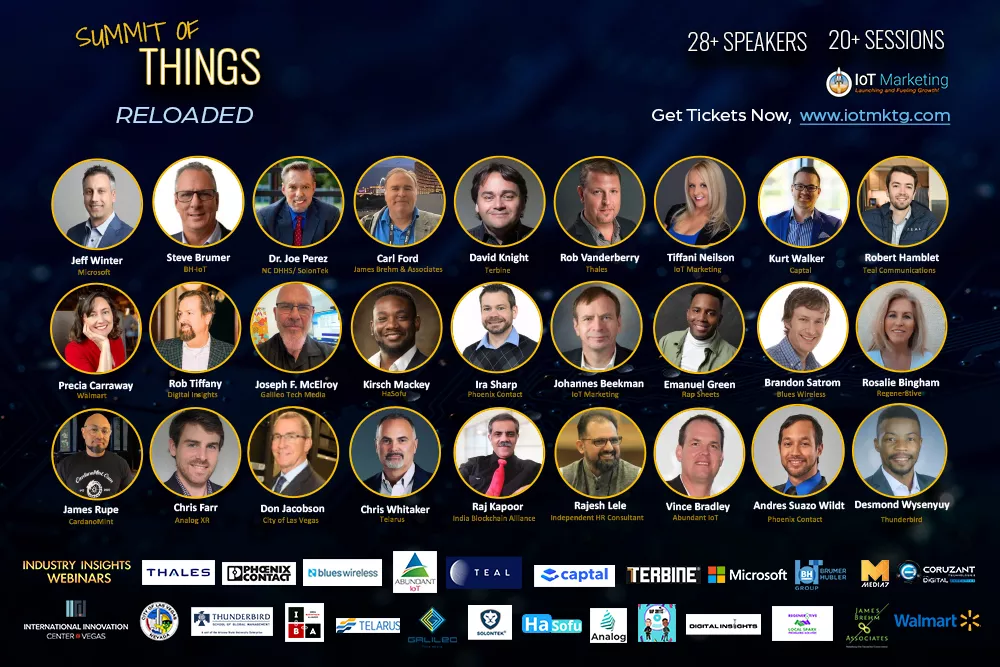
Explore the state of IoT and how it is used with other advanced technologies by purchasing a ticket for the Summit of Things.


Nikola Tesla’s Inventions

Nikola Tesla was a Serbian American inventor, electrical engineer, and physicist who is best known for his contributions to the design of the modern alternating current (AC) electricity supply system. But he also made several major contributions to the field of radio communication.

He patented the Tesla coil - a high-voltage, high-frequency transformer that is used in radio technology and other applications – in 1891. And in the same year, he demonstrated wireless transmission using the Tesla coil. With his newly created Tesla coils, Tesla soon discovered that he could transmit and receive radio signals when they were tuned to resonate at the same frequency.

Tesla designed an early radio transmitter and receiver, which he demonstrated in 1893. This was one of the first demonstrations of wireless communication. He also presented the fundamentals of radio in 1893 during his public presentation, "On Light and Other High-Frequency Phenomena."

In 1897, Tesla conducted a series of experiments in which he transmitted radio signals over a distance of several miles. This was one of the first demonstrations of long-range radio communication.

An article from pbs.org discloses a timeline of Tesla’s revolutionary demonstration for its radio patent. It mentions that at the Electrical Exhibition of 1898, in Madison Square Garden, Tesla staged a scientific tour de force, a demonstration completely beyond the generally accepted limits of technology. His invention, covered in patent No. 613,809 (1898), took the form of a radio-controlled boat, a heavy, low-lying, steel craft about four feet long. 

Inasmuch as radio hadn't been officially patented yet (Tesla's basic radio patent was filed in September 1897, but granted in March 1900), examiners from the US Patent Office were reluctant to recognize improbable claims made in the application "Method of and Apparatus for Controlling Mechanism of Moving Vessels or Vehicles." Confronted with a working model, however, examiners quickly issued the approval. Tesla's radio-controlled boat was an early precursor of modern drones and other remotely controlled vehicles.

Finally, in his 1926 interview with John B Kennedy, Tesla basically predicted the internet and smartphones.

"When wireless is perfectly applied the whole earth will be converted into a huge brain, which in fact it is, all things being particles of a real and rhythmic whole. We shall be able to communicate with one another instantly, irrespective of distance. Not only this, but through television and telephony we shall see and hear one another as perfectly as though we were face to face, despite intervening distances of thousands of miles; and the instruments through which we shall be able to do this will be amazingly simple compared with our present telephone. A man will be able to carry one in his vest pocket."


RFID

Radio-frequency identification (RFID) uses radio-frequency technology to identify and track objects. Connecting an RFID reader to the Internet allows us to identify, track and monitor the objects attached with tags globally, automatically, and in real-time. The foundation of modern RFID was developed during and after WW2.

In the decades before WW2, radar had taken a huge step forward as Dr. A. Hoyt Taylor of the U. S. Naval Research Laboratory experimented with high-frequency radio waves at the confluence of the Anacostia and Potomac Rivers. Soon after, the convergence of radar and broadcast technology formed the precursor to RFID. And in 1948 Harry Stockman published “Communication by Means of Reflected Power.” This paper, which many consider the first paper on RFID, highlighted the possibility of point-to-point communication using radio waves.

During the second world war, a military application of this technology was developed to identify enemy aircraft; the long-range transponder systems known as identification, friend, or foe (IFF). The first IFF transponders were introduced after the Battle of Britain. Some experts regard this as the original RFID application.

The 1960s saw the emergence of several companies devoted to RFID technology. Sensormatic and Checkpoint, for example, were founded in the late 60s. In an effort to limit theft, these companies developed tracking solutions we take for granted today — electronic article surveillance (EAS). Featuring tags attached to merchandise, this system can sound the alarm if unpaid merchandise is removed from the store or taken into the restroom.

The 1970s delivered an explosion of academic progress on RFID. In 1973 Mario W. Cardulla filed a patent for a rewritable active RFID tag, and in the same year, Charles Walton filed a patent for a passive RFID tag. The term RFID was, officially invented in 1983 by Charles Walton when he filed the first patent with the word 'RFID'.

It wasn't until the 1980s, however, that RFID began to be used more widely. During this time, RFID was used in transportation and logistics to track packages and containers, and it was also used in manufacturing to track parts and components. Since then, RFID has become increasingly prevalent, and it is now used in a wide range of applications, including supply chain management, inventory control, asset tracking, and even in consumer products like credit cards and passports.


The Arpanet

Electronic networking began with the Advanced Research Projects Agency Network (ARPANET), a computer networking project of the United States Department of Defense's ARPA (aka DARPA). The ideas for the first network of interconnected nodes were developed in 1966 by J.C.R. Licklider and Bob Taylor. They integrated their ideas with those of Donald Davies on packet switching to formulate a plan for computers to exchange data.

The first computers of this network were connected in 1969 at UCLA and Stanford Research Institute. Soon other nodes were added at the University of California, Santa Barbara, and the University of Utah School of Computing. ARPANET was declared operational in 1975 and expanded in the early eighties. It was decommissioned in 1990 after the formation of partnerships among telecom and tech companies led to the commercial development of the internet.


The First Connected Soda Machine

In 1982, students at Carnegie Mellon University developed the first soda machine to connect with the ARPANET. This experiment inspired a wave of inventors to embed IoT technology that connects with the internet into their products.

The Coke machine was set up with six columns of bottles that each had indicator lights that would turn red when a column was empty. The students installed a board that tracked the status of each light. The board was connected with the ARPANET, which only served less than 300 computers then. The system also tracked how many minutes bottles had been in the machine since restocking. Anyone on the ARPANET could access the machine's data. It saved students from a long walk when the machine was empty.


Launch of the TCP/IP Protocol

The adoption of the TCP/IP Protocol in 1983 marked the beginning of an ARPANET standard that continues for the internet through the present. The previous year, it had been declared a military standard by the Department of Defense. This set of standards defines how data is packetized, transmitted, and received. These standards are maintained by the Internet Engineering Task Force (IETF).

The TCP/IP Protocol was considered much more powerful and flexible than the earlier delivery system used to route data through the ARPANET. This transition was an important shift to what became known as the internet. The two main developers of the new system were Robert E. Kahn and Vinton Cerf, who had both also developed the existing NCP protocol.

The new system broke data down into packets that were sent through routers and then reassembled at the recipient's location. Data processing occurs at the TCP level then packets are transferred to the IP layer, which includes destination port numbers and IP addresses.


Autonomous Navigation

An early autonomous navigation project was at Carnegie Mellon University (CMU) in 1984 with a project called "NavLab". The goal was to create a machine with autonomous navigation controlled by computer vision. It was funded by DARPA, which aimed at building an Autonomous Land Vehicle (ALV).

At the time, the technology called for using indoor robots attached to cables. The first self-contained vehicle was the NavLab 1, developed in 1986 from a Chevy van, which cost $1 million. The follow-up model was designed to be an army ambulance, reaching a speed of 70 mph on rough terrain. These early models lacked sensor sensitivity and other modern features. Several engineers of these early models migrated to Google and other manufacturers working on self-driving cars. The Navlab project at CMU still continues to this day. The latest vehicle is Navlab 11.


Rise of the World Wide Web

Tim Berners-Lee at CERN began to envision the World Wide Web in 1989. It was built on a packet-switching network that soon integrated with satellite-based Global Positioning System (GPS) technology. Berners-Lee opened this system to the public in 1991. At MIT in 1994, he went on to found the World Wide Web Consortium (W3C), which is now the main international standards organization for the web.

The W3C was supported by DARPA and the European Commission. Within a few years of inception, the W3C expanded to offices around the world. Today, the W3C partners with hundreds of organizations to develop protocols and guidelines for the web, including HTML updates.

The popularity of the WWW exploded in the mid-nineties, fueling the dotcom boom. Soon every business needed a website and needed to communicate electronically through email. These changes alone were significant, even if businesses overpaid web designers for simple web pages. It marked the beginning of online storefronts such as Amazon.


Early IoT Devices

The first IoT device is often considered to be a remote control toaster made by John Romkey in 1990. The toaster could be turned on or off over the internet, as the toaster is connected to TCP/IP networking. Within a few years, webcams started to appear such as the coffee-monitoring Trojan Room Coffee Pot at the University of Cambridge in 1993.

The concept of smart home devices began to surface in 2005 with the Nabaztag, an early virtual assistant with an electronic voice, which communicated with homeowners on stocks and weather. Many tech historians consider 2008 to be the beginning of the modern IoT era. That's when the number of connected computers exceeded the number of people on the planet, according to Cisco IBSG.

The term "The Internet of Things" began to appear on Gartner's emerging technology lists in 2011. Starting in 2013, thermostats and home lighting began to incorporate IoT sensors, allowing homeowners to control temperature and lights from their smartphones.


Introduction of Wearables

Some people might credit the first wearable as an abacus ring worn by Queen Elizabeth I of England in the 16th century. But as far as electronic devices dialed into the internet, Steve Mann designed a backpack mounted to a computer in 1981. In 1994, Mann demonstrated an internet-connected camera that was able to capture images on a computer from the internet, ushering in the wearable webcam era.

As the internet grew in popularity in the nineties, several other internet-connected devices began to appear on the market. In 1996, DARPA hosted a "wearables in 2005 workshop" to give consumers a peek into the future. Then in 1997, Carnegie Mellon University, MIT, and Georgia Tech collaborated on hosting the IEEE International Symposium on Wearables Computers (ISWC), unveiling papers on new sensors and hardware capable of connecting online. Mann invented and introduced the first smartwatch in 1998.

Wearables have become widespread in the healthcare industry and have helped save many lives. It had become such a large market for IoT designers that by 2018 the term "Internet of Medical Things (IoMT)" had emerged. This class includes devices that monitor heart rate and blood glucose levels. It's a fast-growing market, projected to reach $176 billion by 2026.


Coining of the Term "IoT"

The term "Internet of Things" was coined in 1999 by Kevin Ashton, who was the Executive Director of Auto-ID Labs at MIT. He used the term during his product demonstration for Procter and Gamble. Ashton combined the ideas of RFID and the internet. His development of a network of academic research labs led to the RFID-based identification system called Electronic Product Code (EPC).

The term "IoT" started gaining media attention in 2004. But the popularity of the term took about a decade to blossom. In 2010, usage of the term began to pick up with Google's StreetView service, but it really wasn't until 2014 that there was a mass awareness of the term. That's when Google announced it was acquiring Nest for $3.2 billion.

Another sign IoT was going mainstream was its inclusion at the annual Las Vegas-based Consumer Electronics Show (CES) in 2014. As knowledge grew of the term, similar terms such as "Industrial Internet of Things (IIoT)" gained widespread use in tech publications. People now commonly use the term "IoT" when referring to smart energy meters, home automation and wearable devices. Any physical objects embedded with sensors and linked through wireless networks are considered IoT devices.


Internet-Enabled Appliances

After the development of Bluetooth 1.0 in 1999, the new century would begin to see an explosion of internet-enabled appliances. In 2000, LG announced the world's first internet-enabled refrigerator, the Internet Digital DIOS. Even though it wasn't a big hit, it's remembered as the beginning of internet-enabled appliances. One of the reasons it didn't sell well was its high price.

Soon many other internet-connected appliances began to appear on the market. The Sony Ericsson T36 was the first mobile phone to integrate with Bluetooth in 2001. As the press began to use the term "IoT" more in 2004, depicting warehouses full of hundreds of wireless sensors, interest, and demand for IoT devices began to grow. During this time awareness of RFID also escalated.


IoT is Born

In 2008, the IoT boom began. By 2009, Bluetooth 3.0 allowed for high-speed transfers over Wi-Fi and Google was testing self-driving cars. In 2010, a company composed of former Apple engineers called "Nest" began manufacturing smart home appliances. Its first product was a thermostat capable of learning user habits to develop a heating schedule. Today Google Nest makes smart speakers, smoke detectors, security systems and various other smart devices.

Using the things/people ratio as a metric, and defining the start of the Internet of things as "simply the point in time when more 'things or objects' were connected to the Internet than people", Cisco Systems has estimated that the IoT was "born" between 2008 and 2009, with the things/people ratio growing from 0.08 in 2003 to 1.84 in 2010.


LPWAN

Without LPWAN the Internet of Things wouldn’t be what it is today. LPWAN (Low-Power Wide-Area Network) is a type of wireless communication network that is designed to support low-bandwidth, low-power, long-range connectivity for IoT devices and other wireless sensors. LPWAN technologies are optimized for energy efficiency and can support devices that need to run on battery power for long periods of time. They are often used in applications where it is difficult or impractical to provide power to the devices or where the devices need to be deployed in remote locations. Some examples of LPWAN technologies include LoRaWAN, Sigfox, LTE-M, and NB-IoT.

The history of LPWAN goes back to the late 1980s and early 1990s. Although at that time they were not called LPWANs. ADEMCO built AlarmNet a 900MHz network to monitor alarm panels. The network was designed for low data rates. Similarly, Motorola built ARDIS: a low-speed wireless WAN.

Two decades later, interest in LPWAN technologies re-emerged when Sigfox, which started in 2009, built the first modern LPWA network in France. And of course, at that time radio technology had become less expensive, and the tools for integrating applications had become much easier to use. As new toolsets and platforms began to emerge, it became easier to build and integrate data from remote devices into applications.

So, it is true that a lot of recent technology looks similar to the sensor-driven networks we’ve seen in the past, but one of the major differences is the newly available online integration. This integration allows for real-time monitoring insights, which has propelled LPWANs forward.


The Emergence of Satellite IoT

While satellites have been used for asset tracking and remote telemetry application since the late 1970s, satellite connectivity for Machine-to-Machine and IoT applications was always considered to be a last resort alternative to terrestrial networks, mostly due to its higher costs. But recently, there has been a renewed interest in satellite-based IoT connectivity.

Satellite IoT is used in a variety of applications, including remote monitoring, asset tracking, and emergency communications. It is often used in remote or rural areas where it is difficult to provide terrestrial connectivity, or in situations where terrestrial networks are unavailable due to natural disasters or other disruptions. The renewed interest in satellite IoT is driven by the growing demand for connectivity and communication in these remote or hard-to-reach locations, as well as the increasing adoption of IoT technology in all industries.

In addition, the development of new satellite technologies and the decreasing cost of satellite hardware and services have also contributed to the growth of satellite IoT. These developments have made it more feasible and cost-effective to use satellite technology for IoT applications, which has helped drive the adoption of satellite IoT.

In the past four years, we’ve seen the launch of various satellite-based low Earth orbit (LEO) networks. Almost two dozen start-ups and existing satellite operators have announced plans to deploy or have commercially launched satellite IoT networks that promise to deliver low-power, low-cost connectivity to IoT devices directly from space.

Unlike terrestrial networks that cover only about one-fifth of the planet’s surface, satellite networks can provide coverage to nearly all of the Earth’s surface and help accommodate the increasing IoT connectivity needs in isolated or inaccessible areas.

Hybrid connectivity, which allows IoT devices to use cellular connectivity as their primary option and switch to satellites when moving to areas with no terrestrial network coverage, will take satellite IoT to the next level. Hybrid connectivity is possible due to the emergence of single communication RF chipsets that are supporting Satcom and cellular bands.


Conclusion

These key milestones in IoT technology helped chart the course of business networking technology through today. The more businesses want to learn how to make their operations more efficient, the more demand for IoT will increase.


Read More
two women working in the office
Internet Of Things

Tips for Your IoT Business: Getting Through a Gatekeeper

One of the most effective IoT business techniques is getting past a gatekeeper and communicating with a decision maker that will ultimately enable you to gain a new client. As you may know, it is very rare to get in contact with a decision maker on the first call. Instead, you are typically talking to an administrative assistant or an intern, which is also known as a gatekeeper. These employees are the primary obstacle between you and a successful sales transaction. Ultimately, the decision is in their hands if they decide to tell someone else in the company about the value of your product.

Understanding how to get a gatekeeper to let you talk to a decision maker is a critical step— that is usually the difference between a successful or unsuccessful sale. Here are a few ways that you can get them to buy into your vision, which will lead you into direct contact with a decision maker that can choose to use your services:

Provide Value

Providing value about the various ways that a company can use the Internet of Things is the first step in your sales process. Clearly communicating with a gatekeeper will help them understand the value of your technology and you will be much more likely to get into contact with a decision maker that can choose to use your product long-term.

One of the best ways to provide value is to minimize the risk involved and expand on the various rewards. You can also talk about the many problems that you can solve and how it can be of help in completing individual goals. As you know, each company has unique needs and the ability to identify these needs can be the difference in gaining a new client.

Create Trust

Another excellent IoT business tip is the ability to gain trust from a potential client. Building trust is not a complicated process, it simply consists of honesty and being straightforward. As you may know, a company has three needs that include company, department, and individual. Building trust in all of these compartments is critical in having a successful relationship that can help them save much-needed money and time. The use of testimonials is a great way to show a client that you follow through on your promises and that you are a trustworthy company. On the other hand, companies that fail to gain the trust of a potential client are at a severe disadvantage and will be unable to create a successful relationship with a potential client.

Counteract Objections

Throughout any sales process, you will always face objections and obstacles that you must overcome. The common objections can range from lack of time, bad experiences, low priority, and lack of information. All of these objections can be countered to use to your advantage. Being prepared for each one and taking the time to create a well-thought response can be a big factor into a successful sales pitch. On the other hand, if you fail to prepare for any counter-objections, you have a much higher chance of failing to get through a gatekeeper.

Conclusion

As you can see, creating an IoT business can be a challenging but worthwhile process. Understanding the various techniques to communicate with a gatekeeper can be the difference between a successful and unsuccessful sales transaction. Providing value, creating trust, and overcoming objections are three key steps to success. Begin using these techniques today and start experiencing the many benefits of effective communication that will lead you to many new sales in the future.

Read More
Proven Customer Retention
Internet Of Things

Proven Customer Retention Tactics for Your IoT Business

Enhancing customer retention is a crucial topic for IoT business owners. The focus of Internet of Things enterprises should be customer loyalty. Loyal customers have higher retention rates, spend more for services, and recommend others to your business. Therefore, it’s important to monitor customer service and make an effort to improve your customer loyalty programs.

Monitor Customer Satisfaction

Customer feedback is one of the best tools for determining your customer loyalty performance and for guiding your improvement campaign. A popular feedback system is customer surveys. These surveys should feature satisfaction measurements, intentions for repurchasing, and intentions of giving referrals. The data from customer surveys shows the leading indicators of your customers’ future behavior regarding your IoT company.

Customer Data from Surveys

When developing your customer surveys, consider the following metrics. These metrics provide the most accurate information regarding customer purchasing retention and referral intentions.

Are customers satisfied? – When you ask about customer satisfaction, it is a universal query about all your products and services. It’s a question that all your customers understand and can answer easily.

What are customer’s expectations? – Whether your customers are satisfied or not strongly relates to their expectations. The answers to this question help you determine how your customers perceive the quality of your services and what quality they expect.

Do customers feel they got what they paid for? – The replies you get from this question let you know how your customers perceive the value of your product. Do they believe they received what they were promised? These perceptions of the value of your services depend on the cost of the service, customers’ individual preferences and the personality of your customers.

Will customers refer others to your business? – When customers recommend your IoT business to others, you know they’re satisfied with what you offer. Word-of-mouth referrals are a good gauge of customer retention.

Do customers plan to purchase again? – This is the ultimate question for customer retention. If they do plan to purchase again, then you know you’re satisfying your customers. If not, then it lets you know that you need to do more about customer satisfaction and service. Although not all customers who say they intend to repurchase actually will, this question gives you a strong indication of their future purchasing behavior.

Building Lasting Customer Relationships

Analyzing data from customer surveys and working toward better customer service is only one piece of customer retention. Building trusting relationships with your customers is also necessary for customer loyalty. When you made the original sale, you went through a series of marketing strategies to develop trust and respect in your prospects. This must continue after the sale, in order to keep the customers, you worked so hard to get.

The following strategies can help you strengthen your bond with your customers:

  • Customer engagement – Continue communicating with your customers through updated newsletters, emails, blog posts, social media posts, and personal notes. Provide your customers with updated content that helps them with their concerns and educates them about your services. Make them feel that they made the right decision to choose your company for reaching their goals.
  • Customer loyalty programs – You can connect with your customers by creating customer loyalty programs that offer rewards to loyal customers. Creating personalized rewards, tailored to individual customers, makes them feel important and that you recognize their needs. With IoT technology, interacting with customers on a personal basis is easier than ever before. Develop customized loyalty programs for use with electronic devices that offer one-on-one communication with your customers.
  • Rise above the competition – Separate your business from your competitors by being genuine. Your honesty and personal response to your customers is more effective than making promises you can’t keep. Transparency sets you apart from your competitors because your customers believe in you and your business.

You can make sure that your IoT business retains customers by analyzing customer metrics, following up on surveys, and communicating with your customers regularly. If you show your customers that you care about their goals and give them the services they expect, your customer retention will continue to grow.

Read More
IoT Business
Internet Of Things

IoT Business Leaders Must Understand the Prerequisites for Diplomacy and Tact

The Internet of Things, known as IoT, is the wave of the present as well as the future. Fast forward to five years later and IoT business will have grown by leaps and bounds. Web-connected appliances and other devices are being implemented left and right. Yet, merely providing IoT products and services is not enough in and of itself. Those who work in this emerging field will find a little bit of tact and diplomacy proves quite beneficial in a number of regards.

The Importance of Diplomacy and Tact

It is often said highly communicative people are problem-solvers as well as problem-preventers. The sad truth is most people struggle to communicate or are unwilling to put forth the effort necessary to communicate to the proper degree. Communication can be improved with diplomacy and tact. This statement rings especially true in the midst of negotiations, marketing, and sales attempts.

Make an effort to be tactful and diplomatic and you will find your professional relationships with colleagues improve that much more. People really do respect those who are willing to put an effort to be tactful. Practice such mindfulness in the workplace and you will prove that much more tactful when dealing with others outside of work.

Let’s take a look at the prerequisites for diplomacy and tact:

The Prerequisites to Become Tactful and Diplomatic

Tact and diplomacy do not come naturally to most people. Those who are truly tactful are willing to admit there are some important prerequisites of note. For one, tactful and diplomatic people tend to have a high emotional intelligence. Those with a comparably high level of emotional intelligence find diplomacy and tact quite natural when interacting with others.

Emotional intelligence is distinct from traditional intelligence in that it measures how well one understands his or her emotions as well as others’ emotions. This emotional intelligence empowers people to empathize with others, interact with them in a careful manner and build/retain a meaningful rapport. This is the rapport necessary to satisfy team members and help your IoT business reach its potential.

Tact and Diplomacy Hinge on Listening Skills

It is not enough to listen to someone, remember what they said and respond in a respectful manner. It is not always the words that matter the most. Rather, it is the tone used when speaking those words. Key in on the subtleties of speech and you will be able to truly understand others and respond in a caring manner.

Be Polite

Courtesy is essential to understanding others. Be as polite as possible. Respect cultural differences— listen closely and you will be revered as a true diplomat.

Be Assertive

Part of the reason to be tactful and diplomatic is to convince others to act or think as desired. Assertive individuals are typically outnumbered by those who are non-assertive simply because assertiveness requires considerable effort. Apply yourself, be proactive, establish relationships with as many colleagues as possible and your assertiveness will convince others to act as you wish.

Everyone Has the Potential to be Diplomatic and Tactful

Too many people assume they cannot interact with others in a tactful manner as they are introverted or inexperienced. In reality, everyone can be tactful and diplomatic if they are willing to put forth the effort. Think of yourself and your IoT business as works in progress that will eventually culminate in diplomacy, tact, and most importantly, an improved bottom line.

Read More
IoT Business Fails
Internet Of Things

Seven Reasons Why an IoT Business Fails

The Internet of Things (IoT) has steadily become more popular in recent years, but it is still critical that an IoT business understands why many companies fail to succeed with this new technology. While some failure is inevitable, it is essential to rebound from these mistakes and learn from each experience.

Here are the seven most common failures for an IoT enterprise and the best ways to respond to each one:


1. Nonexistent Conviction

Conviction is the first ingredient in the recipe for a successful business. An IoT company that has conviction will be able to set goals and achieve them. Instead of letting excuses get in the way, they will overcome any obstacle through sheer determination and willpower. On the other hand, a lack of conviction will result in poor results and will lead a company to nowhere fast.


2. Lack of Persistence

The vast majority of business failures happen due to an organization giving up too quickly. Persistence can help you overcome challenges and is the primary difference between success or failure for your IoT company. Trying new approaches can lead to better results and set you apart from other IoT companies.


3. Failure to Learn from Mistakes

Mistakes are bound to happen, and the ability to learn from them can help your company glean the wisdom necessary to succeed in today's business environment. After each error, it is important to analyze what went wrong and make the necessary adjustments that may lead to future successes.


4. Discipline Deficit

Does your organization suffer from a lack of discipline? Another common source of failure for an IoT business is the lack of discipline within the company. Discipline consists of self-control and requires an organization to remain focus despite distractions. Companies that remain disciplined have a much higher chance of success and demonstrate the attention needed in today's business world.


5. Too Much Rationalizing

When failure strikes, many organizations try to rationalize their failures instead of analyzing what went wrong. While analysis is very beneficial, rationalization typically fails to identify areas for improvement, which leads to excuses. Instead of rationalizing, try to learn from your mistakes and discuss how your company can improve going forward.


6. Bad Attitude

A negative attitude can lead to a host of problems and make it difficult for any company to be successful. Bad attitudes manifest themselves in multiple ways, whether in an employee showing up late for a meeting, staff constantly complaining, individuals not being team players, or many other disruptive behaviors. The best way to counteract negative attitudes is with additional training, though sometimes you must simply eliminate employees who have no interest in being happy at work.


7. Low Self-Esteem

The final reason for failure is having employees who suffer from low self-esteem. Poor self-esteem is the result of lack of self-respect and/or self-worth. Obviously, this is a woeful combination that can severely limit the productivity of an employee. Just because you have experienced a setback, it is important to keep trying and believe in yourself. An IoT company with employees that have high self-esteem will be to overcome failures and achieve more than companies who fail to build up their employees’ self-esteem.

Failure is inevitable, but it doesn't have to ruin your IoT business. Instead, learning from past mistakes will allow you to become more resilient and create a strong organization that can weather any storm. Understanding the reasons businesses fail will help you avoid these common mistakes that can cause the downfall of the company. As you know, the IT world is highly competitive and learning how to reduce your mistakes will give you a significant edge over your competitors. Learning how to anticipate common mistakes can help you prevent these failures and set your IoT organization apart from the others and allow you to reach new levels of success.


Read More
IoT Business Leads
Internet Of Things

Qualifying IoT Business Leads

When it comes to IoT business, there are a lot of advantages that help sell the innovation. Many businesses have yet to make the transition, meaning there is a substantial sales "harvest" to be had. Projections have IoT devices outnumbering human beings on the planet 3 to 1 by 2024. Potential clients need the numbers on their side and you need to be able to make a presentation which demonstrates value to those prospective clients. But if said clients aren't really qualified for your company, then your sales team will be "spinning their wheels.” They'll be expending energy to no good cause. So, what you want to do is teach your salespeople to qualify clients.

Here is a downloadable list of 42 questions that you can give salespeople. This will help them inquire in a general sense to help narrow down whether a prospective lead is one you should seek to convert to your services or not. To abbreviate the proper approach:

  • Create customer profiles
  • Properly assess customer needs
  • Determine how clients make their decisions
  • Outpace any potential competition
  • Customer Profiles

The IoT business is going to have a window of effectiveness. Certainly, even the smallest business can benefit from, say, a security system which is accessible from a smartphone. But you've got to know whether your IoT solutions are advantageous both ways for clients or not. At a certain level, providing services to clients even if they close will be too expensive for your company to profit. You need to find a way of disqualifying service based on this initially. From there, you narrow down profiles based on the kind of business involved, and whether you can actually provide them value with your IoT solution or not. You can make a sell where value isn't provided, but that's a real long shot. You're more likely to sell clients if you can directly demonstrate the savings and advantages of IoT. With a good customer profile, you can do this factually, which can be very convincing. Teach your team to create proper customer profiles and you'll likely see an increase in closures.


Assessing Customer Needs

Once you've managed to acquire some qualified customer profiles, you need to be able to accurately assess their needs. With the Internet of Things, infrastructure, production, distribution, and expansion costs can all be curtailed even as profitability takes a jump. But if you can't show the customer how this is specifically true in their case, then your sales presentation won't mean anything.


Determining How Clients Make Decisions

Your client profile should follow a transaction history for your prospective clients--- especially the larger ones. Sometimes, the acquisition agent meets IoT providers like your business for information, then heads back to the home office to run the data by his higher-ups. Sometimes, acquisition agents buy on the spot if they like what they see. You need to know what regularly characterizes their decision-making process. With that information, you're likely to make more closures more successfully.


Outpacing Competition

If you've got competition, your salespeople need to be enabled to "scoop" them, as they say in journalism. A "scoop" is when a journalist gets a hot story before a bigger or different outlet and blasts it to the public preemptively. This gives that journalistic outlet an increase in readership, etc. Well, you need to know what your competition is offering, and you need to do it better. Include some flexibility in your IoT packages. Anticipate competition meeting prospective clientele prior you and be willing to offer a diminished price or a more competitive package.


Expanding Sales

The IoT business is sensible and competitive today. In 10 years, there will be three times as many IoT devices on the planet as people. In your home, this is already true. If you've got a laptop, a cellphone, and a smartwatch, there are already three IoT devices you’re using. When you consider networks, manufacturing, distribution, Big Data, and all the other potentialities realized via IoT, it's easy to see why streamlining client qualification processes is important. The harvest is ripe, and you want to reap as many plump clients as you can. So, qualify them for the picking!


Read More
IoT Business Tips
Internet Of Things

IoT Business Tips: Leveraging Technology Against Strategy to Expand Customer Retention

IoT business sustainability and expansion can really help a wide range of businesses. CEOs and CTOs of IoT agencies should consider several reasons why in order to most effectively inform their conversion strategies.

Starbucks provides an appropriate example. The owners originally focused on smells, sounds, and atmosphere to initiate buzz, security, and brand specificity. But eventually, Starbucks found themselves at a ceiling. Getting through it required innovation. One way they expanded beyond their previous ceiling was the Mobile Order & Pay feature. This was added to their app. What it allowed customers to do was make an order before they ever reached the shop. You don't have to be Nostradamus to see how that worked. Starbucks clients already had a schedule to keep in most cases. Making it easier to keep that schedule in such a way made them love the coffee shop even more.

When it comes to your IoT company, you want to provide services and products that give your clientele access. A good way to do that is to see what kind of people constitute primary clientele. This will help you better meet their needs. An additional lesson from Starbucks here that is extremely applicable is the use of IoT tech in compatible, organically-innovated applications. It's only natural for a cellular device to expedite payment and delivery of goods. Demonstrating such value to potential clients can help them see why IoT is ideal for them.


The IoT Revolution

Your IoT business provides a lot of advantage for diverse clients. The Internet of Things brings much convenience and expansion potential to them. Data of the type which becomes available via IoT can be used to fundamentally transform most businesses. This provides your clients value and convenience.

Providing these two things is one of the most important components any IoT agency can do for clients. You want to give them more value than competition. Additionally, you want to make that value convenient. Without convenience, value loses value--- strange as that sounds. If you've got to climb a mountain to get a cup of free coffee, you're more likely to pay ten dollars at the foothills. But if you can get a ride to the mountaintop for five dollars, maybe you'll make the transit--- and then you get to have your coffee and drink it too, in the midst of a gorgeous view.

With IoT, clients can expedite manufacturing, decrease transit costs, decrease shipping costs, streamline supply lines and infrastructure, optimize employee operations, and facilitate more secure networks through computing innovations. Edge computing, for example, is basically a private cloud floated on IoT devices which each process some quotient of data.


Demonstrating Convenience and Value

What you need to do in order to increase clientele and retain those who are already part of your business is communicate to them how and why what you do is valuable. A great way to do that is numerically. Get some of their operational numbers. For example, if you're trying to sell certain IoT solutions, you might ask potential clients the costs annually pertaining to distribution and supply. Beforehand, do a calculation which silhouettes known averages; this will help you "lead the witness"---they're likely to forget some collateral expenses. It's probably safe to say businesses who have the most minimal supply solutions spend $100k+ a year in vehicular acquisition, travel, and maintenance. If you can provide them more cost-effective operations through data analytics streamlining operations, that's convenient value. If you can expand that convenience by showing how IoT can cut infrastructure costs, operational costs, shipping costs, and other related expenses throughout your target client's business, you're likely to increase client retention and purchases. Furthermore, proper marketing of such practices (publicly posting reviews, etc.) leads to an increase in new client conversion.


IoT Optimization for Your Clients

IoT business is booming. In less than three years, there will be more than twice as many IoT devices on the planet as there are people--- that's over 16 billion. It makes sense; IoT users experience convenience, value, and collateral benefits. Provide these things for your clients and increase your competitive edge.


Read More
IoT Projects
Internet Of Things

IoT Projects: Common Mistakes and Key Tips

An estimated 58 percent of IoT projects for businesses fail, according to a 2020 study from Beecham Research. Only 12 percent of respondents claimed to be fully successful. The key to success points to working with IT personnel who keep learning about new technology. Here's a close look at why so many IoT projects in the business world turn out to be unsuccessful.


Main Causes of IoT Failure

About a third of all completed IoT projects have not been considered successful by business owners that implemented them. According to a 2017 study by Cisco, sixty percent of IoT projects stall at the Proof of Concept (POC) stage. The following are some of the specific reasons why projects fail at this stage.


1. Unclear Business Goals

If a business has not mapped out its goals, it's difficult to make a difference with technology. But if the company has clear goals, such as speeding up the shipping process, it can embrace specific technology such as automation. While it's important to develop big ideas, it's practical to start small and move at the fastest pace possible.

A business manager that wants to impress an owner must show improvements in profit margins over time. It's important for a manager to know the key metrics that are most important to an owner. IoT devices can help a manager focus on improving specific metrics that affect productivity and production efficiency. A company aiming for sustainability can set clear goals achieved through IoT monitoring.


2. Organizational Weaknesses

When an organization has a weak structure, to begin with, it can make an IT infrastructure difficult to mirror. Modern digital infrastructure calls for greater network efficiency. One way to get the most out of your network is to segment it into sections, giving everyone involved access to a section. Your IT team should take the full organization into account when setting up IoT devices to measure production processes for various business segments.

An organization can strengthen the more team members collaborate through data sharing. Collaboration and other forms of team interaction help make an organization more cohesive. Data sharing should be seamless on a business network. If too much big data is pushed through a network, but the data isn't being utilized by the organization, it may do more harm than good, using up precious bandwidth.


3. Unprepared for Technical Issues

When setting up a digital infrastructure, you need to plan for technical problems from the start. Every IT infrastructure has unique nuances that are typically too complex for people without proper IT training to understand. That's why you need a professional tech support team you can turn to for resolving technical problems in a timely manner. It's advantageous to work with an IT team that's already familiar with your technology.

Deploying IoT devices can require multiple configurations, in which an inexperienced technician can lose focus. Some companies, such as factories, set up thousands of IoT devices on their networks. These firms definitely need to work with certified IT specialists rather than just people who say they know about IT.


4. Customer/Vendor Issues

Resolving customer and vendor issues should be a top priority throughout your organization. Any type of slowdown involving suppliers can directly impact customer expectations. These days consumers expect websites to be on top of technical issues, particularly involving cybersecurity. All it takes is one late shipment or wrong order fulfillment for customers to start looking for competitors.

Consumers don't care about why their product arrived late. Many times, it's because a store or warehouse did not estimate demand accurately. The most modern IoT systems can integrate with machine learning programs to improve demand forecasting.


Taking the Human Factor Into Account

Cisco's survey that found nearly three-fourths of IoT projects are failing pointed to the human factor. Even though IoT seems like it's just about technology and data collection, it deals closely with people and relationships. It may involve collaborations between an IT team and financial staff members. In that sense, IoT expertise is of major concern, as you want to get sound advice from experienced experts when dealing with a high volume of confidential data.

So, is it possible for an IT team to lead a company into chaos? Yes, if it's an inexperienced team such as a fly-by-night operation just trying to get quick business. Not all IT teams are created equal, especially with the rise of IoT devices, which create a modern class of businesses that have access to valuable real-time data. What analysts and decision-makers do with data is just as crucial as technology.


Why You Shouldn't Venture Into IoT Alone

The IoT revolution has created a wave of new developers serving a wide range of industries with smart devices that collect vast data. Since IoT is becoming a complex topic, it's best to work with an IT team that stays on top of the latest smart technology. Implementing an IoT project is often too complex for in-house inexperienced IT personnel to handle, as many such employees aren't expected to keep up with new technology.

Relying on an in-house IT team can hold your company back in multiple ways unless the team is constantly testing new technology. It's more efficient to outsource to an experienced IT team full of skilled technicians who have the training and knowledge to resolve technical issues quickly. An outsourced IT team that specializes in modern solutions is more likely to deploy a new computer network with IoT sensors correctly and quickly.

Since IoT is a relatively new technology, it's best to learn as much about it as possible through the help of IT experts. IoT is valuable because it provides real-time data that can cut losses and waste quickly. Sharing insights within an organization about its operational performance can instantly pinpoint areas that need improvement. That's why companies with digital infrastructures are improving efficiency at a rapid pace.


Microsoft Study on IoT

An IoT study published by Microsoft in 2019 revealed many fascinating insights about IoT projects. The study partnered with the design agency Hypothesis Group, surveying over 3,000 business and IT decision-makers around the world. One of the eye-opening findings was that 88 percent of IoT adopters believe smart technology is critical to their company's success.

Many decision-makers now expect their companies to explore new technologies such as edge computing, AI and 5G as part of an IoT ecosystem. Edge computing is of major importance to any business that wants to use IoT sensors for generating real-time data. Instead of sending vast amounts of data to the cloud for computing, the computing is done at or near the IoT device. Then it's stored in a nearby resource, which reduces the amount of big data transmitted over limited bandwidth.

Another interesting finding is that different industries use IoT for different reasons. Manufacturers commonly embrace IoT for automation, quality, compliance and production planning. Industries that use heavy-duty equipment use IoT to create safer workplace conditions.

In many different environments, IoT is useful for tracking people, places and products. The transportation industry uses it to track fleet vehicles carrying items shipped to retail stores and customers. The healthcare industry uses wearables to track the biological data of patients. IoT sensors are extremely useful to large warehouses for tracking inventory.

The study found that the main reasons for IoT adoption included optimization of operations, improvement in employee productivity and safer conditions. Other leading reasons dealt with supply chain issues, quality assurance and asset tracking. Meanwhile, retailers focus on using IoT to optimize their supply chains and inventory management.


Conclusion: Challenge to Embrace Edge Computing

Staging IoT projects is widely supported by today's business community, but deployment is often rocky without the help of IT experts. An IT team that understands edge computing can streamline an IoT system quickly, cutting costs and speeding up data transmission. Working with IT experts will help your business get past technical mysteries and move more quickly toward company goals.


Read More
Executive Presence
Internet Of Things

Why Executive Presence Matters for an IoT Business

When the average person is asked whether he or she has executive presence, there is usually a short pause and an answer in the affirmative. Just about no one rapidly responds in the negative. There is no shame in thinking you have executive presence. Executive presence is the same for an IoT business and those who work in all other realms of business: it is “it” --- meaning command of the room. Those with executive presence are immediately engaging. These leaders speak with a voice and tone that inspires others to listen closely. Just as important is the fact that their word choice, tone, and elocution inspire others to act.


Perceived Executive Presence

It is interesting to note those who are perceived as inspirational or authoritative tend to be promoted to positions of leadership. Executive presence really does go a long way in helping one climb the corporate ladder at an IoT business or elsewhere. If you can convince others, you exhibit grace under fire, remain confident at all times, stay poised, and are consistently decisive, you will be perceived as a leader.

Perceived executive presence is also centered on one's ability to communicate with clarity. Those who are skilled elocutionists, assertive and skilled at reading others tend to lead in an effective manner. Furthermore, perceived executive presence is partially attributed to image. Those who look the part tend to be perceived as natural leaders. Do your best to appear professional at all times and others will view you as worthy of a promotion.


How to Determine If You Really Have Executive Presence

If you do not have executive presence or are unsure if you have it, do not panic. It is possible to gradually develop executive presence. What matters is that you have self-confidence, are willing to deal with the unexpected, and communicate in a clear and cogent manner. These are the challenges that go hand-in-hand with executive leadership roles. Jump at every opportunity to refine your public speaking skills. If you become comfortable speaking in front of others with your executive voice, your communication skills will quickly become one of your most important strengths.


The Wow Factor is Within Your Reach

The "wow factor" of executive presence refers to one's ability to draw in others. This magnetism empowers one to influence others. If you are struggling to be a social magnet, alter your approach. Raise the volume of your voice, speak with conviction, smile, be passionate, display energy and use clear body language. Do not be afraid to make eye contact, press the flesh and establish yourself as a legitimate authority. If others revere you for your intellect, social graces and attitude, they will perceive you as a genuine leader.


You Have the Opportunity to Establish Executive Presence

If you are not satisfied with your leadership abilities or are looking to establish executive presence, your willingness to change will ultimately prove to be what matters most. Those at your IoT business will hold you in high regard if you lead by example and make an effort to listen. Become a leader and it will not be long until your colleagues hold you in high regard, praise your executive presence and proactively help you make the most of your opportunities.


Read More
Green IoT
Internet Of Things

All About Green IoT and How It Makes Businesses More Sustainable

The emerging concept of green IoT serves multiple purposes with the goal of improving the quality of life through technology and eco-friendly practices. IoT stands for the "Internet of Things" which comprise real-time internet-connected devices designed to collect specific data. Meanwhile, green IoT involves the use of sensors that monitor the environment to ensure the safety of natural resources such as clean water, air, soil and food.


Green IoT Explained

Green IoT encompasses energy-efficient techniques that IoT uses to lessen the greenhouse effects of emerging technologies. 

Everyone is fairly aware that environmental elements such as air and water are vulnerable to greenhouse gases. An often understated drawback of industrialization is the toxic chemical pollution it spreads across the planet. Even computers contribute to pollution in the form of end-of-life e-waste if they end up in a landfill. Federal state and local governments are investing in green IoT as a step toward cleaning up the environment.


Technologies Used for Green IoT

Growing environmental concerns are driving the development of apps designed to monitor environmental conditions. IoT devices that connect with smartphone apps are used to measure temperature, humidity, and wind speed along with the quality of air, water and soil. Many farmers have adopted IoT devices to monitor agricultural conditions.

When combined with machine learning software, IoT data can lead to calculated weather and crop growth forecasts. Here are some key emerging green technologies associated with IoT:

  • Green RFID - Decreasing the size of RFID tags is a step toward sustainability since it helps cut waste. Designers of green RFID technology have made advancements in energy-efficient algorithms for tag estimation.
  • Green WSN - As an integral component of green IoT, a green wireless sensor network (WSN) is a series of multiple computing devices that share limited power and storage capacity.
  • Green Cloud Computing - Migrating business operations to the cloud opens up several possibilities for reducing your carbon footprint. You don't have to invest in as much expensive hardware, which likely contains toxic materials.

An entire book can be written about how the cloud itself makes business activity more efficient and eco-friendly. The only major environmental concern about the cloud is many large data centers around the world are powered by fossil fuel energy. When cloud usage becomes congested, it can strain the traditional electric grid system.

On the other hand, Apple, Microsoft, Amazon, Google and other large tech companies have invested heavily in large facilities powered by renewable energy. In 2022 Amazon became the largest buyer of renewable energy on the planet. The company has been on a green buying spree as part of its goal to be "net-zero carbon" by 2040.


Environmental Advantages of Cloud Computing

The cloud frees up your physical space since you can store digital documents in a secure data center. Cloud computing allows for remote work from home, reducing the need for morning and afternoon commutes across town.

Another green advantage of the cloud is it can cut your energy bills by using less hardware, electricity and office space. Allowing employees to bring their own devices helps reduce the need to invest in computers that generally have a lifespan of 5-10 years before becoming e-waste or getting recycled.

On one hand, hanging on to legacy computing systems gives you the most for your investment. On the other hand, old computing systems are the most vulnerable to cyber-attacks. The cloud offers a balanced solution in the sense it makes computing efficient as long as individual IoT devices on your network have their own or nearby computing capacity.

Ultimately, the cloud cuts environmental waste and risk. Moving to the cloud means there's less need for paper, which helps preserve forests. Developing a cloud-based digital infrastructure reduces the need to store a growing stack of hard-copy documents. Since the cloud allows for low-cost communication, it also reduces the need to print marketing material for mass distribution.

Social networks such as Facebook, Twitter and LinkedIn are powerful cloud services that help businesses cut the costs of marketing by connecting directly with patrons. It saves businesses from doing costly large print runs to promote themselves. The ink used in print is typically a toxic material, although many print shops are seeking greener solutions.


How to Optimize Green IoT

Eco-friendly solutions are possible for an organization the more it deploys IoT devices that monitor environmental activity. The three main qualities for electronic devices to be considered sustainable are how lean, efficient and durable they are. A machine learning program can scan volumes of data from sustainability studies and experiments to provide concise reports on which solutions deliver the most eco-friendly results.

Amazon Web Services (AWS) has been a notable pioneer in making IoT more efficient and secure. Its platform called AWS IoT Core allows multiple IoT devices to securely interact with each other in the cloud. With the help of device communication protocols, the system allows users to publish data in the cloud and offers subscriptions for accessing the data.

According to a study by 451 Research, AWS reduces its carbon footprint significantly in its data centers thanks to more efficient use of servers. Another reason why AWS IoT Core is considered a sustainable cloud solution is it uses less code on IoT devices, which requires less maintenance. The system is secure due to its zero trust policy and its robust Transport Layer Security (TLS) mutual authentication protocols that all AWS traffic is routed through.

For companies seeking to keep data as localized as possible, Amazon offers AWS IoT Greengrass, a service that expands the capacities of AWS IoT Core. This more advanced monitoring system allows for greater flexibility with offline capabilities and managing data remotely. The service utilizes components that make coding more efficient, such as runtime installers and libraries. Essentially, electronic devices no longer need to be designed with code for one purpose.


Challenges Facing Green IoT

Today there are billions of IoT devices connected to the internet. During this decade the number is expected to surpass 40 billion. Many of these devices are designed to be compatible with 5G wireless networks, although there are still countless sensors operating on 3G and 4G. The advent of 5G makes it possible for companies to integrate machine learning technology with IoT.

But cluttering up the cloud with too much big data can be a digital pollution problem that creates latency. So, the alternative when it comes to using IoT devices is edge computing, in which sensors or nearby nodes process the data instead of sending millions of packets over long distances to the cloud. The combination of 5G and green IoT allows for vast data monitoring with the help of edge computing.

The challenge for data centers to shift to renewable energy and greener practices mainly involves financial barriers. Otherwise, many data centers and businesses of all types are on board with green energy.


Conclusion

The rise of green IoT is changing the way companies of all sizes are running their businesses. A growing wave of organizations is expressing their concern about protecting the environment, making IoT significant for going green. Not only can tech developers contribute to a greener world, but so can organizations that embrace smart technology.


Read More