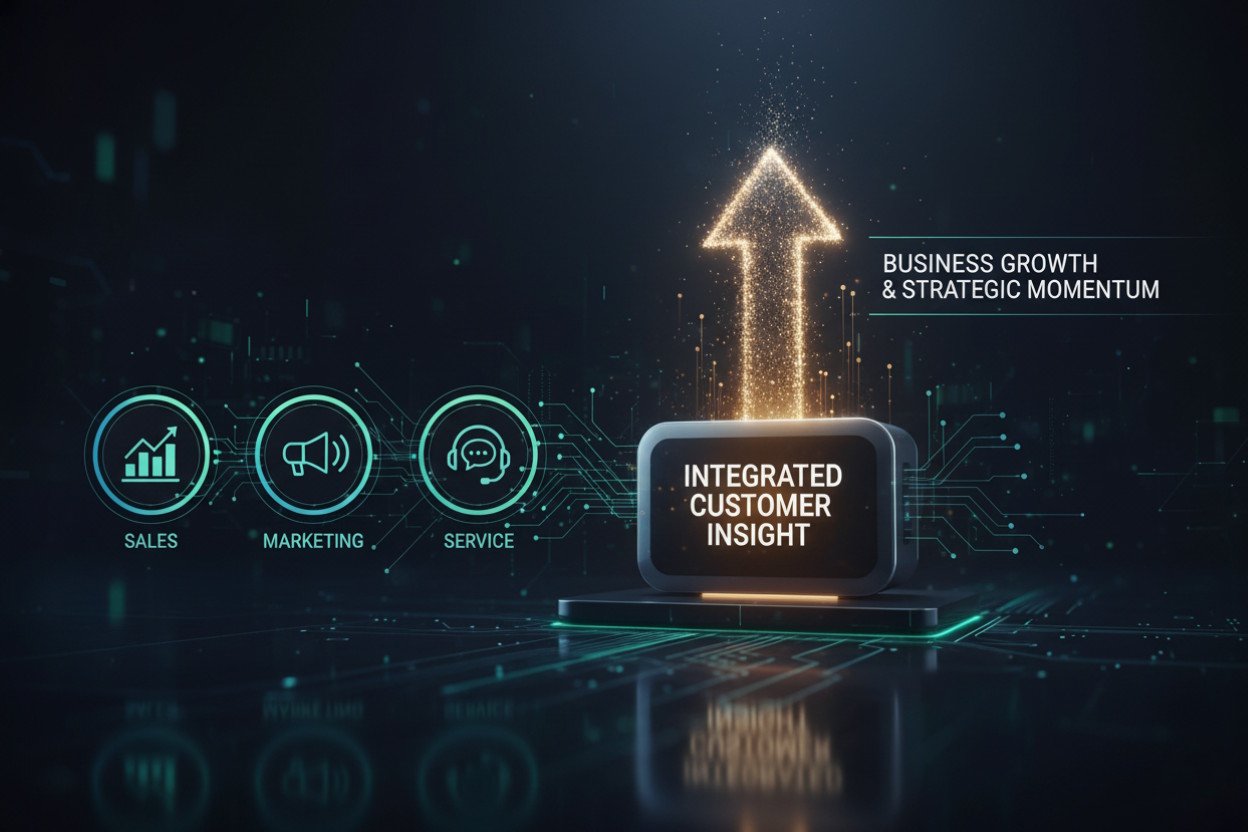
crm integration image concept
Lead Generation

CRM Integration: From Basic Connections to a Fully Unified Growth Engine

Key Takeaway: CRM integration evolves from simple data connections into a unified growth engine when customer information flows seamlessly across teams, supports shared insight, and guides strategic decisions. The shift happens when integrated systems reveal the full customer journey, allowing organizations to move beyond basic syncing and use connected data to strengthen relationships, improve alignment, and create more intentional paths to growth.


From Plugged-In Tools to a Unified Growth Engine

CRM integration sits at the center of so many conversations about growth, yet it still feels vague for many teams. You hear phrases like “connected systems,” “unified customer data,” or “integrated CRM platform,” but what does that actually look like in day-to-day work?

If you have ever wondered, “Our tools talk to each other, so why does everything still feel disconnected?” you are not alone. Many organizations link their customer relationship management system to email, marketing software, or other applications. On the surface, everything appears integrated. Underneath, though, important details still live in separate places, and teams still scramble for context.

This gap between “plugged in” and truly “unified” is the real story. The difference is not only about technology. It is about how your organization uses connected customer information to guide strategy, strengthen relationships, and support smarter growth decisions.

In other words, the journey is not just about connecting tools. It is about turning those connections into a genuine growth engine for your business.


Why CRM Integration Matters to Everyday Business Teams

When people ask, “Why does CRM integration matter if my team already has access to customer records?” they are really asking a deeper question. They want to know how better connections change their daily experience at work.

Think about a typical week. A salesperson prepares for a call and checks recent activity. Marketing wants to know which campaigns actually led to qualified conversations. A service agent tries to understand a customer’s history before answering a support request. Each person touches the same relationship from a different angle.

With only basic connections, each team member pieces together the story alone. They open several systems, copy details into notes, and try to guess what happened last. Information exists, but it does not feel like a single, living picture of the relationship.

When CRM integration matures, the experience shifts. Context appears in one place, in a way each role can understand. Teams spend less time hunting for details and more time asking better questions. Which customers look ready for an upgrade? Who needs education rather than another sales pitch? How do recent interactions affect the next step in the journey?

The real value sits in that shift. Integrated information supports more thoughtful conversations, more relevant outreach, and more confident decisions. The technology fades into the background, and the relationship comes forward.


Three Stages on the Path to a Unified Growth Engine

Every organization starts from a different point, yet many follow a similar path. If you wonder, “Are we behind, or is this just normal?” it helps to think in stages rather than a single finish line.


Stage One: Simple Connections and Spreadsheet Patches

In the first stage, systems connect in basic ways. Data may move between tools through simple syncs or imports. Someone on the team probably maintains a spreadsheet to fill in gaps or track special cases.

At this level, information often arrives late or incomplete. A campaign might generate leads, but sales only sees part of the story. Service teams log issues, yet those notes rarely flow back to marketing or leadership in a structured way.

Leaders in this stage rely on manual reports and individual memory. They can answer questions about specific deals or customers but struggle to see patterns across the full pipeline.


Stage Two: Shared Insight across Sales, Marketing, and Service

In the second stage, organizations begin to treat connected data as a shared resource, not just a technical feature. Dashboards show more than numbers. They show context.

Teams start asking questions like, “What happened just before this customer reached out?” or “Which touchpoints tend to lead to a second purchase?” They can see the impact of campaigns, content, and conversations in a single place.

Workflows may support smoother handoffs. When someone books a meeting, the account owner already sees recent engagement. When a service issue arises, the agent understands the account’s overall health.

The experience still has rough edges, yet the organization no longer feels blind. People trust the information enough to use it in planning, not only in reporting.


Stage Three: CRM Integration as a Strategic Growth Engine

In the third stage, CRM integration becomes part of the growth strategy itself. Leaders design campaigns, offerings, and experiences around what they learn from connected customer insight.

Instead of asking, “Can we connect this tool?” they ask, “What kind of relationship do we want, and what data supports that vision?” New initiatives start with the customer journey in mind, then align systems to that journey.

Teams experiment more confidently. They can test new messages, partnership models, or onboarding paths, then actually see the impact across the lifecycle. The organization moves from reacting to customer behavior to guiding it with intention.

This stage does not require every advanced feature on the market. It requires alignment around a shared picture of the customer and a willingness to build on that picture over time.


How to Tell Where You Are Today

You may wonder, “So which stage are we in right now?” A few simple reflections can give a useful clue.

Think about your last major decision related to growth. Maybe you entered a new market, launched a webinar series, or shifted focus to a different segment. Did your teams lean on integrated customer insight, or did they rely more on intuition and scattered reports?

Consider also the last time a customer surprised you. Perhaps they churned unexpectedly, or they closed a large deal faster than expected. Did your systems explain the story behind that surprise, or did you piece it together from separate notes and conversations?

If most of your decisions still feel disconnected from what your systems know, you are likely in the earlier stages. If you can trace clear lines between customer behavior, team activity, and results, you are moving closer to a true growth engine.

The goal is not to label your organization as advanced or behind. The goal is to see your current stage clearly, so each next step feels realistic and useful.


Getting Started without Overhauling Everything at Once

A common worry sounds like this: “Do we have to rebuild our entire tech stack to improve CRM integration?” In many cases, the answer is no.

Early progress often comes from small, thoughtful moves. For example, you might bring a single team together to agree on core customer fields that matter to everyone. Aligning on what you track can make existing connections more meaningful, even before you add anything new.

Another starting point involves everyday workflows. Where do people copy and paste information between tools? Where do they export data just to reformat it for another system? These friction points reveal places where better integration would immediately relieve pressure.

Communication also plays a role. When teams understand how integrated data supports their own goals, they are more likely to log information consistently and use shared views. Culture and process shape the value of your integrations as much as the technology behind them.

You do not need a perfect plan on day one. You only need a clear sense of direction and a willingness to improve the way your customer story flows through the organization.


Conclusion: Turning Connected Data into Connected Growth

As customer expectations rise, the gap between basic connections and a unified growth engine becomes more visible. CRM integration gives organizations a way to close that gap, not just by linking tools, but by creating a shared understanding of each relationship.

When teams can see the same story, they make better decisions, hold richer conversations, and move in the same direction. That shared view turns data from a background resource into an active driver of growth.

If you want to explore where you are on this journey and what a more unified approach could look like for your organization, contact us if you want to learn more about CRM integration.


Read More
people discussing in front of a tv with graph
Lead Generation

How to Validate and Refine Your Ideal Customer Profile (ICP) for Long-Term Growth

Key Takeaway: Validating and refining your ideal customer profile is an ongoing process that helps you stay aligned with the customers who actually deliver long-term value. By watching for fit issues in your pipeline, gathering insight from sales and service teams, and making small, thoughtful adjustments as markets shift, you keep your ICP accurate and useful. This living profile strengthens marketing focus, improves sales efficiency, and gives your business a clearer path to sustainable growth.


Why Your Ideal Customer Profile Is Never “One and Done”

Your ideal customer profile should never be a static document that you create once and forget. In most organizations, the ICP, target customer description, and buyer profile start as educated guesses. They come from experience, past wins, and internal opinions. That is a useful beginning, but it is still only a starting point.

As your market shifts, your best-fit customers often change with it. New technologies appear, budgets move, and decision-makers rotate roles. The clients who looked perfect three years ago may not be the ones driving results today. When that happens, an unchanged ICP quietly drifts out of alignment with reality.

This article walks through how to recognize that drift and what to do about it. You will see simple, low-friction ways to test whether your current ICP still fits, and how to adjust it without tearing everything down. Think of it as a light, practical guide for asking, “Are we still focused on the right people?”


Are You Still Attracting the Right Customers?

One of the clearest signs that your ICP needs attention shows up in your everyday pipeline. Deals may still arrive, yet something feels off. The conversations drag. Prospects ask for discounts that make little sense. The customers who do sign do not stay long or expand.

If your sales team is spending a growing amount of time with poor fits, the issue may not be the team. It may be the picture of the customer you are asking them to pursue. When that picture is outdated, marketing messages and sales outreach will attract the wrong crowd. They respond, but they are not the kind of clients your business needs now.

You might also notice tension between departments. Marketing insists they are sending many “qualified” leads. Sales replies that most of those leads never close. Customer success teams quietly share that even closed deals churn faster than expected. These frictions often trace back to misalignment on who the ideal customer actually is today.


Simple Signals Your ICP Is Out of Date

You do not need complex dashboards to notice the early warning signs. A few basic questions often reveal them:

  • Are your highest-revenue accounts the same types of companies you describe in your ICP?
  • Do your happiest clients match that description, or are they different in size, industry, or needs?
  • Has your product or service changed in ways that make it valuable to a new type of buyer?

If your best accounts do not resemble the customer in your ICP, the profile needs a second look. Likewise, if new segments keep showing up—such as a niche industry you never targeted before—that is a signal. Your “real” ideal customer may have shifted while your documentation stayed in place.

These quick checks offer early clues that it may be time for a more thorough review.


Lightweight Ways to Validate Your Customer Fit

Once you sense that something has changed, the next question usually sounds like this: “How do we test our ICP without a massive research project?” At this stage, you do not need an academic study. You simply need quick, honest feedback from the people closest to your customers.

Customer-facing teams see patterns that reports often miss. They hear objections, enthusiasm, and confusion in real time. They know which prospects light up during demos, and which ones seem disengaged from the start. Capturing those observations is one of the fastest ways to check whether your profile matches real life.


Talking to Sales and Service for Fast Insight

Start with your sales and customer success teams, even if that sounds obvious. Ask them which customers feel like a natural fit today. Get specific names, not general categories. Then ask which accounts drain time and energy.

You will likely hear recurring themes. Certain industries may embrace your messaging quickly. Certain company sizes may move through the buying process faster. Some roles on the buying committee may show a stronger sense of urgency. These clues point toward what your current ideal customer looks like in practice.

Support and service teams add another important angle. They see which clients use your solution fully, and which ones struggle or disengage after onboarding. When a particular type of customer needs repeated hand-holding or rarely reaches success milestones, that information matters. It suggests that your ICP may be describing someone who does not naturally thrive with what you offer.


Listening to Customers Without a Formal Study

You can also validate your assumptions by listening directly to customers in everyday conversations. You do not need a large survey to start. Short, focused questions in check-in calls or post-project reviews can reveal a great deal.

Questions such as “What made you choose us over other options?” or “When did you realize this was the right fit?” uncover decision triggers. Asking “What nearly stopped you from moving forward?” surfaces real objections and concerns. The goal is not to “sell” during these conversations. The goal is to understand how your best customers see the world.

Over time, patterns emerge. You may notice that ideal clients share similar pain points, internal pressures, or success metrics. Those patterns provide live confirmation—or contradiction—of what your ideal customer profile claims to be true.


Refining Your Profile Without Starting From Scratch

Validating your profile is only half the story. The next step is refinement. Many teams hesitate here because they imagine a complete rewrite, with new templates and presentations. In practice, small, thoughtful adjustments often make the biggest difference.

You might adjust the size range of companies you focus on, based on where deals close fastest. You may update the typical job titles involved in decisions, now that roles have shifted in your market. You might refine the core problems you highlight, reflecting what customers actually mention, not what you assumed in the past.

The key is to treat your ICP as a living reference, not a museum exhibit. Each update brings it closer to the real people who buy from you today. That live accuracy helps marketing craft clearer campaigns, and it helps sales recognize true fit earlier in the process.


Turning What You Learn into a Sharper Ideal Customer Profile

As you collect insights from teams and customers, write them into the profile in plain language. Replace vague statements such as “mid-sized companies in tech” with more concrete descriptions. Include what those customers are trying to achieve, the pressures they feel, and the outcomes they value most.

This does not require advanced analytics. It simply asks you to capture what you now know, instead of leaving it scattered across inboxes and meeting notes. When that knowledge sits in a shared, updated ideal customer profile, everyone pulls in the same direction.

Over time, your profile becomes a quiet filter. It helps you recognize which opportunities deserve more attention and which ones you should gracefully release. That focus saves time, protects morale, and supports sustainable growth.


Conclusion: Keep Your Customer Picture Alive

Validating and refining your ICP is less about perfection and more about staying honest. Markets move. Offers change. Leadership sets new priorities. When your picture of the customer remains frozen while all of that shifts, growth becomes harder than it needs to be.

By watching simple signals in your pipeline, listening to customer-facing teams, and capturing what you learn, you keep your profile current. You give marketing, sales, and service a shared view of who you serve best right now. That shared view becomes a foundation for stronger relationships and healthier revenue over the long term.

If you want to learn more about how to validate and refine your ideal customer profile, contact us today.


Read More
form optimization
Lead Generation

Beyond the Submit Button: Post-Submission Strategies for Smarter Form Optimization

Form optimization isn’t just about getting someone to click “submit.” It’s also about what happens next. Once a user completes your form, the real work begins—because that moment is your chance to start building a relationship, not just capture a lead.

If you’ve focused all your energy on getting people to complete forms—but haven’t thought much about what comes after—you’re not alone. Many businesses optimize their form design and layout, but completely overlook the post-submission experience. That’s where you're missing valuable opportunities to guide, nurture, and convert your leads.

This article explores beginner-friendly post-submission strategies that support smarter form optimization—without diving into complex tech or automation tools.

Summary: Post-submission strategies are a crucial part of form optimization that many businesses overlook. After a user clicks "submit," your job isn’t done—it’s just getting started. A strong follow-up experience, including thank-you pages, confirmation emails, smart redirects, and trust-building cues, helps turn form completions into lasting relationships. By focusing on what happens after submission, you enhance user experience, reinforce trust, and guide leads toward meaningful next steps.


Why the “Thank You” Page Is More Important Than You Think

The moment a user completes a form, they’re likely expecting some kind of confirmation or next step—and that’s where your thank-you page comes in. While often overlooked or treated as an afterthought, this page plays a surprisingly important role in your lead’s first impression. It confirms their action was successful, reassures them they’re in the right place, and provides a natural transition into the next phase of their journey with your brand.

A well-crafted thank-you page can subtly guide the user toward deeper engagement without coming across as pushy. For instance, you might use this opportunity to direct them to a helpful blog post, offer a downloadable resource, or preview upcoming content they may find valuable. Even a short message explaining when they can expect a reply builds confidence and trust. This small moment, when done right, makes your organization feel attentive, transparent, and organized—qualities that contribute directly to higher conversion rates down the line.


Don’t Forget the Follow-Up Email

While the thank-you page offers immediate acknowledgment, the follow-up email is your first chance to land in the user’s inbox and stay top of mind. It creates a second touchpoint and, more importantly, keeps the momentum going beyond their initial interaction with your site. This is your opportunity to reinforce your value, remind the user who you are, and gently nudge them toward the next action—whether that’s exploring your services, scheduling a consultation, or simply learning more.

A well-timed follow-up email should do more than confirm receipt. It should also reflect your brand voice and set the tone for the relationship ahead. Including useful links, contact information, or even a personal note from your team helps humanize your company and shows you’re genuinely interested in helping. When done consistently, these emails become more than transactional—they become relational, which is where true lead nurturing begins.


Smart Redirects: Guide Your Visitor’s Journey

Redirecting a user after form submission may seem like a small technical detail, but it has a significant influence on how a user navigates your site—and how long they stay engaged. Instead of keeping them on the same page or sending them to a generic confirmation, you can strategically guide them toward content or experiences that match their interests.

For example, someone who downloads a white paper might appreciate a link to a related blog post, a webinar invitation, or a case study showcasing your work in their industry. These kinds of redirects extend the user’s session and encourage deeper exploration, which helps signal relevance to search engines and boosts on-site engagement. Redirects are also an opportunity to segment your audience early by interest, setting the stage for smarter follow-ups in the future.


Encourage Action Without Being Pushy

It’s tempting to use every interaction as a moment to push for a sale, but not every lead is ready to buy—and forcing the issue can backfire. Instead of overwhelming users with aggressive calls to action, try offering them a clear and low-friction way to stay involved. Invite them to explore your blog, sign up for a newsletter, or follow you on social media. These gentle invitations help keep the conversation alive without pressure.

This approach is especially important in early-stage interactions, where the goal is to build trust and credibility rather than close a deal. Giving users room to engage at their own pace often results in stronger long-term relationships. A helpful next step—offered without expectation—can leave a lasting impression and make your brand feel more approachable and authentic.


Post-Submission Forms and First Impressions

What happens immediately after a form submission can shape how users perceive your brand—sometimes more than the form itself. If the experience feels seamless, responsive, and considerate, visitors are more likely to associate your business with professionalism and reliability. On the other hand, a cold or confusing post-submit flow can leave people second-guessing their decision to reach out in the first place.

This is why form optimization should include not just the interface before submission but also the experience that follows. Every part of the process communicates something about your company, whether you intend it to or not. A well-designed thank-you message, a thoughtful email, and a helpful redirect are all small touches that add up to something bigger: a sense of trust that builds momentum. When the post-submission journey feels intentional, users don’t just feel acknowledged—they feel valued.


Keep It Simple—Then Build From There

You don’t need a complex system or advanced automation tools to make a strong post-submission impression. In fact, simplicity is often more effective, especially for businesses just starting to refine their process. Begin with the basics: a clean thank-you page, a timely email confirmation, and a redirect that adds real value to the user. These foundational elements can go a long way in shaping perception and encouraging continued engagement.

As you gain confidence and see what works, you can introduce more advanced tactics like segmented follow-up sequences, behavior-based triggers, or CRM integration. But the key is to build a system that feels purposeful, not overwhelming. By starting small and staying user-focused, you can create a scalable post-submission experience that grows with your business and supports every part of your form optimization strategy.


Conclusion: Form Optimization Doesn’t Stop at Submit

Here’s the big takeaway: form optimization isn’t just about what happens before someone clicks submit. It’s also about what happens after.

Post-submission strategies help you build trust, guide your leads, and keep the conversation going. Even small tweaks—like adding a thank-you message or a helpful email—can make a big difference in your conversion journey.

So don’t treat “submit” like the finish line. It’s just the beginning.

Contact us if you want to learn more about smarter post-submission strategies and how they fit into your form optimization efforts.


Read More
lead capture image concept
Lead Generation

What Is Lead Capture Design? Let’s Cover the Basics!

Have you heard about lead capture design and wondered what exactly it is? Lead capture design involves creating forms, pop-ups, landing pages, and other digital elements specifically designed to gather contact information from potential customers. Often called lead generation or form optimization, it's a crucial first step in turning curious visitors into actual prospects.


The Basics of Lead Capture Design

Let's dive into the basics of lead capture design, uncover its benefits, discuss common pain points, and clear up a few misconceptions along the way.


What Is Lead Capture Design?

Simply put, lead capture design refers to the practice of strategically designing digital elements like forms and landing pages to encourage visitors to share their contact details. Think of it as the digital equivalent of handing someone your business card after a great conversation. Examples include sign-up forms for newsletters, gated eBooks, webinar registrations, and more.

Great lead capture design is intuitive and visually appealing. It reduces friction, encouraging visitors to willingly provide their details without hesitation or confusion.

How Can Lead Capture Design Benefit You?

Wondering what's in it for you? Good lead capture design provides several advantages:

  • Boosted Conversion Rates: Better-designed forms and landing pages make visitors more likely to share their information. Even slight improvements in form layout, clear instructions, or a compelling call-to-action can significantly increase conversion rates.
  • Higher Lead Quality: Well-crafted designs attract more genuinely interested prospects. By customizing forms to request specific information, you can filter out less relevant leads, ensuring your sales team engages only qualified contacts.
  • Improved Customer Insights: Capturing detailed information helps you understand your audience better. Understanding audience preferences and behaviors through lead data allows you to tailor future marketing campaigns, boosting engagement and success.
  • Cost Efficiency: Increasing conversions from existing traffic reduces your overall marketing costs. When your lead capture processes are optimized, you make the most out of every marketing dollar, decreasing the need for additional advertising spending.
  • Enhanced User Experience: Effective lead capture design focuses on providing users with a smooth experience. When visitors encounter easy-to-use forms and clearly articulated benefits, they leave with a positive impression of your brand, increasing loyalty and retention.

Struggling with Lead Capture? Common Pain Points

Even though lead capture design sounds straightforward, businesses often run into common issues:

  • Low Conversion Rates: Poorly designed forms or unclear calls-to-action often result in missed opportunities. Complex or confusing forms frustrate users, causing them to abandon the form midway.
  • User Frustration: Complicated forms or too many required fields discourage visitors from filling them out. If users perceive that you're asking for more information than necessary, they might abandon the process altogether.
  • Mobile Issues: Designs that aren't responsive or mobile-friendly lose many potential leads. A majority of web traffic now comes from mobile devices; hence, mobile optimization is essential.
  • Privacy Concerns: Visitors may hesitate to share personal information without clear privacy assurances. If your forms lack clear, visible privacy policies or statements reassuring visitors of secure data handling, your conversion rates may suffer.
  • Technical Glitches: Even minor technical issues, such as slow loading forms or errors during submission, can significantly impact conversions. Regular testing and technical audits help prevent these frustrating user experiences.


Common Misconceptions About Lead Capture Design

Let's clear up some common misunderstandings:

  • “Shorter Forms Always Win”: Short forms might improve completion rates, but sometimes longer forms yield higher-quality leads. Balance is key—longer forms can deter casual submissions, but they gather valuable, targeted information from genuinely interested prospects.
  • “Only Big Businesses Need Lead Capture Design”: Whether you're a solo entrepreneur, small startup, or large enterprise, effective lead capture design boosts your growth. Even small-scale businesses benefit immensely by turning web visitors into potential leads.
  • “Pop-ups Always Annoy Users”: Not necessarily! Strategically timed and well-designed pop-ups can significantly increase conversions. By setting proper triggers—such as exit intent, scrolling, or timed delays—you can engage users effectively without disrupting their browsing experience.
  • “One Design Fits All”: Lead capture design should always be tailored to your audience and specific campaign goals. Different audiences respond to varied approaches; testing multiple designs can reveal what works best for your specific context.
  • “Lead Capture is Set-and-Forget”: Effective lead capture design requires continuous monitoring and optimization. Regularly analyzing user interaction data and making incremental improvements can dramatically enhance your results over time.


Wrapping Up: Why Lead Capture Design Matters

Lead capture design isn't just about pretty forms. It’s about strategically guiding your visitors towards taking that crucial step to become prospects. By understanding the basics, recognizing the benefits, addressing pain points, and busting common myths, you can start making smarter decisions to capture more and better leads.

Want to learn more about improving your lead capture design? Contact us—we’re happy to help!


Read More
man infront of a laptop with a web form
Lead Generation

7 Common Form Optimization Mistakes That Could Drive Visitors Away

Ever abandoned a form because it was just too frustrating? That's exactly why form optimization is crucial. Optimizing forms, improving form conversions, or simply creating better forms—no matter how you phrase it, the goal is the same. You want visitors to complete your form, not abandon it halfway. If your forms aren't user-friendly, you're potentially losing valuable leads every day.

In this article, we're sharing seven common mistakes you might be making in form optimization—and how fixing them can make a huge difference.


1. Asking for Way Too Much Information

Ever started filling out a form only to wonder, "Why do they need to know my life story?" If your form feels like an interrogation, visitors will quickly bounce. Lengthy forms not only overwhelm users but can also lead to mistrust. Users value their privacy, and asking too many unnecessary questions might lead them to question your intentions.

Keep it short and sweet. Stick strictly to essential questions that directly support your business goals. If additional information would be useful but isn't crucial, consider making those fields optional. You can always follow up later to gather more details. Research consistently shows shorter forms have higher conversion rates. Prioritize simplicity and efficiency, and you'll see more visitors completing your forms.


2. Ignoring Mobile Users

Over half your visitors might be viewing your form on a smartphone or tablet. Ignoring mobile optimization means you're potentially alienating a significant portion of your audience. Forms that aren't optimized for mobile can be frustrating, with fields that are too small, text that's hard to read, or buttons that are difficult to tap.

Ensuring your form looks great and is easy to fill out on mobile devices is essential. Implement responsive design practices so that your forms automatically adapt to any screen size. Test your form across multiple devices and browsers to confirm usability. Small touches like clearly defined buttons, larger input fields, and minimizing scrolling can greatly enhance the mobile user experience.


3. Poorly Worded or Confusing Labels

Ever encountered a form and thought, "What exactly do they want me to put here?" Confusing labels can quickly frustrate visitors, leading to form abandonment. Labels that are vague, overly technical, or jargon-heavy create unnecessary friction.

Always use clear, straightforward language tailored to your target audience. Instead of labels like "Your Info," specify "Full Name" or "Email Address." Avoid internal terminology that your customers might not understand. To validate your form's clarity, test it with actual users. Observing user interactions can help you pinpoint confusing labels and correct them before they affect your conversion rates.


4. Not Offering Clear Error Messages

Imagine clicking submit, only to get a vague error message saying, "Oops! Something went wrong." Frustrating, right? Ambiguous error messages provide no guidance and leave users guessing what went wrong, increasing the likelihood they'll abandon the form entirely.

Clear, helpful error messages guide users precisely in correcting mistakes. Explain exactly what's wrong and how to fix it. For example, rather than saying "Invalid entry," say "Please enter a valid email address." Highlight problematic fields clearly to show exactly where corrections are needed. Providing helpful suggestions and actionable instructions turns a potentially frustrating experience into a positive one.


5. Slow Loading Forms

Every second your form takes to load, you're risking losing visitors. Slow forms can frustrate users who expect quick interactions. People simply won't wait if your form takes too long to appear.

Optimize your forms by reducing file sizes, compressing images, and removing unnecessary scripts. Ensure your form code is clean and efficient to minimize load times. Consider leveraging caching mechanisms and content delivery networks (CDNs) for faster performance. Regularly test form load speeds to ensure a seamless user experience. Faster-loading forms keep visitors engaged and significantly boost conversions.


6. Missing Trust Signals

Would you confidently provide personal information if you weren't sure it was secure? Neither will your visitors. Trust signals reassure users that their data is safe and handled responsibly. Without these signals, users might feel uneasy or hesitant to submit their information.

Incorporate simple but effective trust indicators such as secure SSL badges, privacy policy links, or third-party security certifications. Clearly display your commitment to data protection. Additionally, social proof like customer testimonials or reviews near your form can enhance trust. When visitors feel secure, they're far more likely to complete your forms.


7. Poor Design and Layout Choices

First impressions matter immensely online. If your form looks outdated, cluttered, or visually unappealing, users might question your professionalism and leave. Poor layout choices like inconsistent spacing, misaligned fields, or distracting visuals can significantly hurt user experience.

Choose clean, visually appealing designs with clear typography and plenty of white space. Organize form fields logically, grouping related information together. Clearly distinguish required fields, and minimize unnecessary visuals or distractions. A well-designed, professional-looking form builds trust and encourages completion.


Conclusion

Form optimization isn't just technical jargon—it's about creating a pleasant, frustration-free experience for your visitors. By avoiding these common mistakes, you're already on your way to better conversions and happier visitors. Want to take your form optimization even further? Contact us if you want to learn more about form optimization and how we can help you maximize your conversions.


Read More
content marketing
Lead Generation

What Is Content Syndication? How It Works and Why It Matters

Have you heard about content syndication, but you're not exactly sure what it means or why it's important? You're not alone! Simply put, content syndication (also known as content repurposing, redistribution, or content sharing) is when you take your original content and share it on other platforms or websites. Think of it as giving your content extra mileage by reaching new, wider audiences without having to constantly create fresh material.


Understanding Content Syndication: What's the Buzz?

Imagine you've just published an incredible blog post. You've shared it on social media, and your regular readers have loved it. But then you think, "Could I reach even more people?" That's exactly where content syndication steps in. It helps you put your content in front of audiences who might not know your brand yet.

Syndicating your content means partnering with other websites, platforms, or media outlets to republish your articles, videos, or infographics. It's not about duplicating your content randomly; it’s a strategic choice to boost visibility, engagement, and traffic.


How Does Content Syndication Work?

Great question! Let's break it down. First, you produce high-quality, engaging content. Next, you find relevant partners or networks willing to republish your content on their platforms. These partners typically have a similar audience or industry focus, ensuring your content resonates.

For example, say you're a tech startup with great insights into cybersecurity. Syndicating your articles to tech blogs or industry forums can amplify your reach significantly. It's like speaking at multiple events without traveling.

Before you start syndicating content, it's smart to consider SEO best practices. You want to ensure search engines know your original content source. Many platforms offer "canonical tags" that show search engines the original content source, protecting your SEO rankings.

Additionally, content syndication networks and services can streamline the process. These specialized platforms connect content creators with publishers looking for high-quality material. By using such networks, you can efficiently find multiple opportunities to syndicate your content without manually contacting each site or platform.

Some popular content syndication platforms include Outbrain, Taboola, Medium, and LinkedIn. Each offers different formats and targeting options, allowing you to tailor your syndication strategy to your marketing goals. Once you've chosen your partners, you'll often agree on specific terms, such as content exclusivity windows, republishing frequency, and attribution requirements.


Why Content Syndication Should Be on Your Radar

The most significant benefit of content syndication? Exposure. Imagine writing an article once and having it shared across multiple reputable sites, dramatically boosting your brand’s visibility. It positions your company as an industry thought leader, builds credibility, and generates valuable backlinks.

Content syndication can also lead to increased website traffic and more qualified leads. Readers introduced to your brand via syndicated content are likely already interested in what you offer, making them warmer leads.

Moreover, syndicated content can drive audience growth and brand consistency. Regular exposure on reputable sites helps reinforce your brand message and identity, ensuring audiences recognize and trust your content across various channels. This consistent presence builds familiarity, making it easier for audiences to engage and convert into customers.


But Wait, Isn't Syndicating Content Duplicate Content?

Good catch! Duplicate content concerns many marketers. But remember, syndication isn't copying and pasting everywhere. It's strategic redistribution with proper attribution. When done correctly, search engines understand the relationship between the original and syndicated content, so your SEO won't suffer.

Google clearly differentiates syndicated content from duplicate or plagiarized content when canonical tags are used properly. Canonical tags help Google recognize which version of your content is original, thereby preserving your SEO rankings. Additionally, syndication usually involves agreements clearly defining how and where content appears, further minimizing risks of duplicate content penalties.

Another effective tactic is slightly modifying syndicated content—such as creating shorter summaries or excerpts—to further distinguish syndicated versions from your original content.


Getting Started with Content Syndication: Quick Tips

Here are quick tips to kickstart your syndication strategy:

  • Choose your best-performing content to syndicate.
  • Partner with reputable platforms relevant to your industry.
  • Always request a canonical tag pointing back to your original content.
  • Monitor analytics to understand which partners drive the best results.
  • Regularly assess and update your syndication strategy based on performance data.
  • Experiment with different types of content (blogs, videos, infographics) to discover what resonates best.
  • Clearly define your goals and KPIs for syndication campaigns—are you aiming for increased visibility, traffic, or lead generation?


Conclusion: The Power of Content Syndication

Content syndication is a powerful strategy for boosting your content’s reach, brand awareness, and traffic. It's a smart move for marketers who want maximum exposure without constantly creating new content from scratch.

As you explore syndication, focus on creating quality content, choosing the right partners, and tracking your results. Want to get started with content syndication but still have questions? Contact us if you want to learn more about content syndication strategies that can amplify your brand's reach effectively.


Read More
lead generation
Lead Generation

Lead Generation in the Age of Algorithms: How Social Platforms Are Changing the Game

Lead generation has evolved dramatically with the rise of algorithm-driven social platforms. Today, algorithms shape who sees your content, when they see it, and ultimately, how effective your lead generation strategies are. If you've noticed dwindling engagement or fewer leads from your usual social posts, you're not alone. Many businesses face significant pain points navigating this algorithmic landscape, from declining organic reach to unpredictable visibility.

In this article, we’ll explore these challenges and offer actionable solutions to thrive in today’s algorithm-influenced environment.


Social Algorithms: The New Gatekeepers

Social media platforms have transformed into sophisticated gatekeepers of content. Previously, posting regularly and having a sizable follower base guaranteed visibility. Now, algorithms prioritize posts based on engagement—likes, comments, shares, and saves.

For example, LinkedIn recently adjusted its algorithm to favor posts that encourage user interaction, specifically longer dwell times and meaningful comments. Similarly, TikTok’s algorithm prioritizes content that maintains user attention through high retention rates.

This shift creates a pain point: valuable content may never reach your audience, stifling your lead generation efforts.


Why Traditional Lead Generation Tactics Struggle on Today’s Social Platforms

Traditional lead generation methods struggle because platforms like Facebook, LinkedIn, Instagram, and TikTok increasingly restrict organic reach. Content overload exacerbates this problem—your posts compete with millions of others for limited attention.

Paid amplification costs are also rising sharply. Businesses now spend more to maintain the visibility they once achieved organically. This makes generating leads not only challenging but also expensive.


Crafting Content the Algorithm Likes (Without Losing Your Brand Voice)

You can adapt by aligning your lead generation tactics with what algorithms reward:

  • Native formats: Algorithms favor short-form videos, carousels, and first-person stories. For instance, LinkedIn boosts posts that share authentic professional insights rather than promotional links. Creating content native to each platform ensures alignment with algorithmic preferences.
  • Engagement-driven content: Encourage interactions by posing questions, prompting discussions, or creating interactive polls and quizzes. These tactics increase dwell time, signaling algorithms to boost your visibility. Additionally, thoughtful replies and timely engagement in comment sections improve your algorithmic favorability.
  • Consistent Timing and Frequency: Posting when your audience is most active enhances visibility and increases engagement rates. Use analytics tools to pinpoint optimal posting times, ensuring your content surfaces precisely when your audience is primed to engage.
  • Content Testing and Optimization: Regularly experiment with content formats, headlines, visuals, and CTAs to discover what resonates best with your audience. Iterative improvements based on audience feedback and algorithm signals maximize lead generation effectiveness.
  • Brand Authenticity: Maintain your unique brand voice consistently across all platforms. Authenticity resonates strongly with audiences, driving deeper engagement and loyalty.


The Blend: Organic + Paid = Modern Lead Generation Strategy

Purely organic strategies won't suffice. Effective lead generation today involves a strategic blend of organic and paid methods:

  • Boosting strategically: Amplify only posts already performing well organically to maximize ROI. High-performing organic content tends to scale better with paid promotion, reaching broader yet targeted audiences.
  • A/B testing: Experiment with different audiences, visuals, and CTAs to find winning combinations. Use iterative testing to continuously refine your paid campaigns, significantly increasing their lead generation potential.
  • Building retargeting lists: Capture and nurture leads who engage with your organic content through retargeting. This strategy enables you to re-engage interested prospects with tailored ads, improving conversion rates.
  • Leveraging lookalike audiences: Platforms like Facebook and LinkedIn offer lookalike audience features that target users similar to your existing high-value prospects. Leveraging these tools effectively broadens your lead generation reach with relevant and high-quality leads.
  • Budget Allocation and Optimization: Regularly review your paid media budgets to ensure optimal allocation. Monitor performance analytics to shift resources dynamically, ensuring maximum lead generation efficiency.


Channel-Specific Lead Generation Tactics: What Works Where

Each platform has distinct rules and user behaviors influencing lead generation:

  • LinkedIn: Share thought leadership content regularly, and prioritize professional narratives. Encourage dialogue through meaningful questions and discussion-based content. LinkedIn Live sessions, newsletters, and carousel posts are particularly effective. Sponsored InMail and lead generation forms also streamline the conversion process directly within the platform.
  • Instagram: Utilize Reels and Stories for behind-the-scenes glimpses and interactive Q&A sessions. Incorporate shoppable tags and swipe-up links to drive direct action from engaged viewers, turning interest into immediate lead opportunities. Instagram ads and collaborations with influencers amplify your reach, further boosting lead generation.
  • TikTok: Create concise, visually appealing educational snippets tailored to rapid consumption. Use trending sounds and hashtags strategically to boost content discovery. Encourage user-generated content challenges to exponentially increase engagement and lead generation potential. TikTok's Spark Ads feature allows businesses to leverage popular organic posts for paid promotion, effectively combining organic reach with paid amplification.
  • YouTube Shorts: Leverage short-form videos to capture quick attention and link to deeper content. Embed strong CTAs within videos and utilize pinned comments to funnel viewers toward longer-form content or gated offers. Regularly engaging with viewer comments and providing value-driven responses can significantly enhance audience trust and lead quality.

Recognizing and adapting to these channel-specific preferences boosts your lead generation effectiveness significantly.


New Metrics, New Mindset: Lead Generation Beyond Likes

Algorithm-driven platforms emphasize new metrics. Leads aren’t measured merely in likes or follows. Pay close attention to:

  • Watch time and retention: Indicates genuine interest. Platforms reward content that keeps users watching, which boosts visibility and organic reach.
  • Shares and saves: Suggest deeper engagement and content value. Content frequently saved or shared by users is perceived as valuable, resulting in increased algorithmic distribution.
  • Comment quality and depth: Reflects real engagement rather than surface-level interactions. Detailed discussions indicate highly engaged leads who may be primed for conversion.
  • Click-through rates and conversions: Ultimately, leads should translate into measurable business outcomes. Track how social engagements correlate to website visits, form submissions, and sales inquiries to refine strategies effectively.
  • Follower growth versus engagement growth: Focus on growing active, engaged followers rather than mere follower counts. An engaged community significantly boosts long-term lead generation effectiveness.

Tracking these metrics helps refine your content strategy, making your lead generation efforts more efficient and impactful.


Conclusion

Algorithms have unquestionably reshaped the landscape of lead generation. While this creates pain points such as reduced organic reach and increased costs, adapting your strategies to algorithm preferences can turn these challenges into opportunities. By blending organic and paid tactics, optimizing content formats, and adopting platform-specific approaches, you can maintain and enhance your lead generation effectiveness.

Contact us if you want to learn more about generating leads through smarter social strategies.


Read More
appointment mistakes image concept
Lead Generation

10 Mistakes Hurting Your Appointment Conversion Rates

Are your appointment conversion rates lower than you'd like? You're not alone. Many businesses struggle with booking conversions, missed appointments, or no-shows, leaving potential revenue on the table. If your appointment-setting efforts aren't turning interested prospects into confirmed appointments, it's crucial to identify and fix these common mistakes.

Here are ten appointment conversion killers—and exactly how you can avoid them.


Mistake #1: Slow Response Times

In today's digital age, people expect immediate responses. Waiting too long to confirm an appointment makes prospects lose interest quickly. One study showed that contacting leads within five minutes drastically increases appointment conversion. Delays in responding signal to potential clients that their business isn't valued, causing them to look elsewhere.

Solution: Implement automated confirmation tools or AI chatbots that instantly engage and confirm appointments. If automation isn't possible, ensure staff consistently monitor inquiries, ready to respond swiftly, ideally within five minutes. Immediate acknowledgment boosts confidence and signals reliability to prospects.


Mistake #2: Vague Appointment Details

If your prospects aren't clear on what to expect, they may hesitate. Ambiguous details lead to uncertainty, reducing conversion. Lack of clarity about appointment specifics such as timing, duration, location, and agenda creates confusion and can result in no-shows or last-minute cancellations.

Solution: Clearly outline date, time, duration, and agenda upfront. Send confirmation emails with explicit details immediately after booking. Consider including a detailed FAQ section within your appointment confirmations, covering common questions prospects might have about preparation and expectations.


Mistake #3: Lack of Personalization

Generic messages make prospects feel undervalued. Personalized interactions significantly boost appointment rates by creating a connection. When interactions lack personalization, potential customers perceive them as automated and impersonal, reducing their emotional investment.

Solution: Customize communication using names, referencing previous interactions, or highlighting specific interests. Utilize customer relationship management (CRM) tools to track past engagements, preferences, and personal information to enhance personalization.


Mistake #4: Complex Booking Process

If scheduling an appointment feels complicated, prospects will abandon the process midway. Lengthy forms or too many steps cause frustration. Complexity adds friction, and each unnecessary step can significantly drop the appointment conversion rates.

Solution: Simplify your booking process. Use intuitive online scheduling tools that require minimal steps. Regularly review user experience (UX) on your booking pages, streamlining interactions wherever possible. Allow integration with popular calendar applications to further ease the booking process.


Mistake #5: Ignoring Mobile Users

Overlooking mobile optimization can severely hurt your appointment conversions. Many potential clients book appointments from their smartphones. Poor mobile experiences, such as unresponsive pages or buttons that don't work correctly on mobile devices, frustrate prospects and drive them away.

Solution: Ensure your booking system is fully mobile-friendly. Regularly test the process on different devices. Optimize load speeds, use clear and legible fonts, and simplify mobile navigation to improve user satisfaction significantly.


Mistake #6: No Reminders or Follow-ups

Without reminders, prospects may simply forget their appointments. Missed appointments are costly in both time and lost opportunities. Lack of consistent follow-ups also signals a lack of organizational professionalism.

Solution: Automate timely reminders via email or SMS. Confirm the day before and the morning of the appointment. Provide easy options to reschedule or cancel, which reduces last-minute disruptions and allows you to fill openings swiftly.


Mistake #7: Poorly Trained Staff

If your staff lacks training, conversations become awkward or ineffective. Poor interactions discourage prospects from committing. Inefficient communication skills, lack of product knowledge, or inability to confidently answer questions can significantly damage appointment conversions.

Solution: Provide regular training sessions. Equip staff with clear scripts and effective communication techniques. Role-play scenarios and offer feedback regularly to refine skills continually. Invest in professional development to ensure your team consistently delivers engaging interactions.


Mistake #8: Ignoring Analytics

Without analyzing booking conversions, you can't identify what's working or not. Guesswork won't improve your results. Ignoring metrics such as response time, cancellation rates, or conversion funnel drop-offs leaves valuable insights untapped.

Solution: Regularly review data to identify trends. Use insights to refine your appointment-setting strategy continuously. Utilize analytics tools to monitor specific KPIs, adapting your strategies based on precise data rather than assumptions.


Mistake #9: Ineffective Call-to-Action (CTA)

A weak or unclear CTA won't prompt prospects to book appointments. Your conversion suffers when your CTA doesn't compel action. Generic or vague CTAs, such as “click here,” lack clarity and urgency, reducing the effectiveness of your messaging.

Solution: Craft clear, persuasive CTAs that highlight benefits. Place CTAs strategically across your website and marketing materials. Include action-oriented language, such as "Schedule Your Free Consultation" or "Book Your Spot Today," emphasizing immediacy and benefit.


Mistake #10: No Contingency for Cancellations

Cancellations are inevitable, but without backup strategies, they cause significant disruptions. Empty slots cost money and lower operational efficiency.

Solution: Establish a waitlist or quickly offer alternative times. Promptly fill canceled appointments to minimize downtime. Consider automated systems that notify waitlisted individuals immediately when a slot becomes available, reducing manual intervention.


Appointment Conversion Trends: Leveraging AI Assistants

One exciting trend in boosting appointment conversions is using AI-driven booking assistants. These tools instantly respond, personalize interactions, and handle cancellations smoothly, greatly enhancing conversion rates and client satisfaction. Incorporating AI not only improves responsiveness but provides valuable analytics, enabling more precise adjustments to booking strategies.


Conclusion

Avoiding these common mistakes can dramatically improve your appointment conversion rates. By responding promptly, personalizing interactions, simplifying bookings, and using analytics effectively, you'll transform potential leads into confirmed appointments efficiently. Investing in continuous improvement through training, technology, and data analysis is key to sustaining high conversion rates. For more strategies to enhance your appointment conversion rates, contact us today.
Read More
man in front of a laptop with influencer marketing as laptop background
Lead Generation

Maximizing Your ROI: How to Measure Influencer Marketing Success

Influencer marketing can supercharge brand visibility, but measuring influencer marketing success remains challenging for many businesses. Brands increasingly lean on influencer collaborations for genuine connections and expanded reach. Yet, tracking actual return on investment (ROI) from these efforts can feel elusive. Whether you're initiating influencer partnerships or fine-tuning an established strategy, clearly measuring your results is critical.

Let's unpack precisely how to measure influencer marketing effectiveness and optimize your strategy for consistent growth.


Why Measuring Influencer Marketing ROI is Critical

You might wonder, "Isn't creating buzz enough?" Unfortunately, buzz alone doesn't guarantee business success. Influencer marketing goes beyond exposure; it’s about tangible outcomes like increased sales, customer loyalty, and improved brand perception.

Accurate measurement gives you clear data to justify your spend and helps refine future campaigns. Without tracking, you might waste resources without even realizing it.


Common Pain Points in Measuring Influencer Marketing Success

Before optimizing your influencer marketing efforts, it's crucial to understand common challenges brands often encounter:

Are Likes and Comments Enough?

Many businesses mistakenly equate influencer campaign success solely with engagement metrics like likes and shares. While these metrics suggest popularity, they often don't reflect meaningful business outcomes like actual conversions or customer retention.

The Mystery of Attribution

Another persistent issue is accurate attribution. Determining precisely whether a sale or signup resulted from an influencer campaign or other marketing activities can be complex. Without robust tracking, your marketing data remains murky.

Lack of Clear KPIs

Influencer marketing efforts without defined goals frequently result in confusion and lost investments. Without specific key performance indicators (KPIs), you'll find it tough to evaluate your campaign’s true effectiveness.


Solutions to Clearly Measure Your Influencer Marketing ROI

Here are actionable solutions to clearly evaluate your influencer marketing success:

Clearly Define Your Influencer Marketing KPIs

Begin by clearly defining your influencer marketing goals. Are you aiming for increased web traffic, higher sales, stronger customer loyalty, or improved brand recognition? Establish clear, measurable KPIs for each goal:

  • Brand awareness KPIs: Measure reach, impressions, follower growth, and brand mention frequency.
  • Engagement KPIs: Track click-through rates, comments, shares, direct messages, and video views.
  • Conversion KPIs: Monitor sales, email subscriptions, downloads, form completions, and inquiries.

Moreover, setting timelines for these KPIs helps you assess influencer marketing effectiveness against clear milestones. Regularly revisit your KPIs to ensure they remain relevant as your marketing strategy evolves.


Use Tracking Tools for Accurate Attribution

Accurate attribution helps trace the customer journey from influencer content directly to your sales funnel. Implement tracking tools to resolve attribution challenges:

  • UTM Parameters: Use these on influencer-shared links to precisely track traffic sources within platforms like Google Analytics.
  • Custom Promo Codes: Offer unique discount codes or affiliate links to track influencer-specific sales.
  • Influencer Marketing Platforms: Tools like Grin, CreatorIQ, or Aspire.io provide comprehensive analytics specifically designed for influencer campaigns, making it easier to understand your ROI.

By integrating these methods, you'll clearly identify influencers who deliver tangible results, helping optimize future budgets and strategies.


Beyond Vanity Metrics: Embrace Deeper Analytics

Surface-level metrics, often called vanity metrics, may mislead businesses. To gain deeper insights into influencer marketing effectiveness, embrace advanced analytics:

  • Sentiment Analysis: Platforms like Brandwatch offer sentiment analysis to evaluate audience emotions toward your influencer campaigns, helping you understand audience reception more accurately.
  • AI-Driven Analytics: Artificial intelligence tools analyze extensive influencer data to forecast campaign performance and optimize influencer selection, improving efficiency and results.
  • Audience Demographic Insights: Delving into audience demographics and psychographics provided by analytics tools helps fine-tune content alignment, boosting campaign relevance and impact.

Incorporating deeper analytics into your influencer strategy provides richer, actionable insights, significantly enhancing decision-making accuracy.


Benefits of Accurately Measuring Your Influencer Marketing ROI

Accurate measurement brings significant, tangible benefits to your influencer marketing campaigns:

  • Budget Efficiency: Clearly measured results enable informed budget allocation, reducing waste and increasing returns on investment.
  • Strategic Agility: Real-time analytics empower quick adjustments during ongoing campaigns, swiftly addressing ineffective strategies and amplifying successful ones.
  • Enhanced Decision-Making: Data-backed insights guide your choice of influencers, platforms, and content types, minimizing guesswork and maximizing effectiveness.
  • Increased Internal Confidence: Demonstrating tangible results fosters greater internal trust and support, facilitating smoother approvals and increased budgets for future influencer initiatives.

Accurately measuring ROI positions your influencer marketing strategy as both credible and impactful, reinforcing its long-term viability and effectiveness.


Practical Steps to Implement Today

Here’s a straightforward checklist to immediately strengthen your influencer marketing ROI measurement:

  • Set Explicit Campaign Goals and KPIs: Clearly document your campaign’s objectives and corresponding metrics for easy reference and evaluation.
  • Integrate Tracking Technology: Immediately apply UTM parameters, promo codes, and influencer marketing software to ensure precise tracking.
  • Leverage Influencer Analytics Platforms: Select and onboard platforms designed specifically for influencer analytics to regularly monitor your campaigns’ performance.
  • Regular Performance Reviews: Schedule regular intervals—weekly or monthly—to analyze data, spot trends, and identify opportunities for campaign improvement.
  • Adjust Strategy Based on Insights: Commit to swift adjustments based on collected data, continuously optimizing your approach to maximize results.

Applying these actionable steps immediately enhances your influencer marketing efforts, ensuring that every decision is grounded in solid, measurable data.


Turn Your Influencer Marketing Insights into Action

Influencer marketing offers tremendous potential, but only when accurately measured and optimized for real business outcomes. Clearly defined KPIs, sophisticated tracking tools, and deeper analytics provide the transparency you need to confidently demonstrate your influencer campaigns' true value.

As you move forward, remember that influencer marketing isn’t guesswork—it's a measurable, strategic endeavor. Equipped with precise insights, you'll leverage influencer partnerships to effectively drive meaningful business outcomes.

Contact us if you want to learn more about measuring influencer marketing ROI effectively.


FAQ

How long does it take to see results from influencer marketing campaigns?

Results vary by goal; brand awareness can improve quickly, within weeks, while direct sales may require several months of consistent effort. Regular monitoring ensures you spot trends and adjust tactics timely.

What's the difference between influencer marketing ROI and traditional advertising ROI?

Influencer marketing ROI often includes qualitative outcomes like brand trust and long-term audience engagement, in addition to traditional sales metrics, making it broader and more nuanced than conventional advertising ROI.

Should influencer marketing KPIs always focus on sales conversions?

Not necessarily. While conversions are critical, KPIs can also include brand awareness, customer loyalty, and engagement rates, depending on your overall marketing objectives.

Can smaller brands effectively measure influencer marketing ROI without expensive tools?

Yes, smaller brands can effectively measure influencer marketing ROI using free or low-cost tools like Google Analytics with UTM parameters, customized promo codes, and basic platform insights to track key outcomes.

How can sentiment analysis enhance influencer marketing ROI measurement?

Sentiment analysis evaluates audience emotions toward your influencer content, helping you better understand brand perception and tailor future campaigns for improved results and greater audience resonance.

Is influencer marketing ROI easier to measure on certain platforms over others?

Yes, ROI can be simpler to measure on platforms offering detailed analytics and direct click-through tracking, such as Instagram or YouTube, compared to more indirect platforms like TikTok, where attribution might require additional tracking tools.

What should you do if your influencer marketing campaign isn't meeting expected ROI targets?

Review analytics closely, identify underperforming elements (e.g., influencer choice, platform selection, or messaging), and quickly adjust your strategy to refocus resources toward what delivers measurable outcomes.

Read More
a/b test image concept
Lead Generation

How to A/B Test Your Landing Page for Maximum Conversions

You've designed a landing page, but it's not converting as expected. Maybe your web page generates clicks, but visitors leave without taking action. Sound familiar? You're not alone. Many businesses face the frustration of underperforming landing pages. Fortunately, there's a solution—A/B testing, a simple yet powerful way to improve your landing pages by comparing two versions to see which converts best.

For a broader overview of conversion optimization, check out our article Boosting Conversion Rates with A/B Testing.


Why Bother? The Benefits of A/B Testing Your Landing Page

Let's address the pain directly: Low conversions cost you money and opportunities. A/B testing helps pinpoint what's working and what's not, removing guesswork. It boosts conversions, maximizes ROI, and delivers insights into visitor behavior. Simply put, it makes your landing page more effective.


Step-by-Step Guide: How to A/B Test Your Landing Page

Ready to transform your landing page into a high-performing conversion tool? Follow this clear, step-by-step guide to systematically test and refine your landing pages for maximum results:

Step 1: Define Your Goals Clearly

Before changing anything, ask yourself: "What am I trying to improve on my landing page?" Maybe you want more signups, increased downloads, or better click-through rates. Clear goals help measure success accurately. Break down your broader goals into specific, measurable objectives. For instance, rather than simply "increasing signups," aim for "increasing signup rates by 20% over the next month." Understanding your primary metrics, like conversion rates, bounce rates, or engagement metrics, also guides your testing focus. Defining clear goals from the outset helps ensure everyone involved understands what success looks like.

Step 2: Choose One Element to Test

Resist the urge to test everything at once. Pick one element, such as your landing page headline, CTA button color, form length, or images. For instance, you might test whether a "Start Now" button converts better than "Learn More." Prioritize elements based on their potential impact and ease of implementation. Headlines and CTAs usually yield significant insights quickly, whereas testing subtle design elements or layout might require more time and traffic to show clear results. Develop a hypothesis for each test. For example, "Changing the CTA button from blue to green will improve click rates by making it stand out more against our design."

Step 3: Create Your Landing Page Variants

Use tools like Google Optimize, Optimizely, or Unbounce to create your test variations. Remember to change only one element per test. Keeping other variables constant ensures reliable, actionable results. Ensure your variants load equally fast and offer the same responsive design across different devices. Small technical inconsistencies between variants can invalidate your results. Before launching, thoroughly review your landing page variants to confirm that only your chosen element differs. This careful approach ensures the data you collect accurately reflects user preferences rather than technical discrepancies.

Step 4: Launch Your Test and Collect Data

Run your landing page test for a sufficient period. Typically, two to four weeks is ideal, ensuring enough traffic to yield statistically significant data. Avoid prematurely ending your test, as it can skew results. Monitor your tests continuously, noting any unexpected user behaviors or technical issues. Be mindful of external factors such as seasonal trends, special promotions, or significant market events that might influence your test outcomes. Ensuring data quality is as important as quantity—use analytics tools like Google Analytics to track user interaction patterns and confirm the reliability of your data.

Step 5: Analyze the Results and Implement Changes

Examine the data collected. Did Variant A outperform Variant B? Was the difference significant enough to warrant changes? Apply successful elements to your primary landing page and start another test to refine further. When analyzing, look beyond basic metrics. Investigate deeper insights such as bounce rates, time on page, and secondary interactions. Use statistical analysis tools to ensure your results are statistically significant and not due to random chance. Document each test's outcomes, noting what worked, what didn’t, and why. This documentation becomes invaluable for future optimization efforts.


New Trend Alert: Leveraging AI in Your Landing Page Tests

A fresh trend is the integration of AI tools to analyze user interactions dynamically. AI can uncover subtle visitor preferences, enhancing your understanding of what genuinely drives conversions. For example, machine learning algorithms can identify patterns in user behavior that humans might overlook. AI-powered tools like Dynamic Yield or Adobe Sensei personalize landing pages in real-time, adapting elements such as headlines, images, and CTAs based on individual user profiles. This hyper-personalization significantly boosts conversions by creating highly relevant user experiences.


Common Mistakes to Avoid in Landing Page A/B Testing

While A/B testing is powerful, common mistakes can derail your results. Be aware of the following to ensure your landing page tests deliver accurate, actionable insights:

Mistake 1: Testing Too Many Variables

Changing multiple elements simultaneously can leave you confused. Stick to one element per test to keep results clear and actionable.

Mistake 2: Not Waiting for Enough Data

Jumping to conclusions without adequate data can be misleading. Ensure statistical significance before making changes.

Mistake 3: Ignoring Mobile Users

Today's audience heavily relies on mobile devices. Test your landing pages specifically for mobile responsiveness and performance to maximize conversions across all devices.


Practical Example of a Landing Page A/B Test

Imagine you have two versions of a landing page:

Version A: Short form with minimal fields.

Version B: Longer form collecting detailed information.

After running your test, you find Version A gets twice as many submissions. This clearly indicates that visitors prefer simplicity and speed over detailed forms. But don't stop there—dive deeper into the analytics. Check how many of these submissions converted into genuine leads or customers. Consider user feedback and secondary actions, like page dwell time and bounce rate, to confirm your results. This comprehensive approach ensures your chosen landing page truly delivers maximum conversions and not just surface-level engagement.


Conclusion

A/B testing is a proven method to optimize your landing pages effectively. By systematically testing different elements, clearly defining your goals, and analyzing the results, you can significantly improve your conversions. Remember, the best landing pages aren't created overnight—they're refined through continuous testing and improvement.

Contact us if you want to learn more about optimizing your landing page for maximum conversions.


FAQ

What’s the best time to run a landing page A/B test?

The best time to run a test is when your site is experiencing consistent traffic, ensuring you gather statistically significant data. Avoid testing during major promotions or holidays unless that timing reflects your typical user behavior.

Can I A/B test more than just visual elements on my landing page?

Yes. In addition to visual elements like colors or images, you can test copy tone, user flow, trust signals, and even different value propositions. Just be sure to isolate one variable per test for accurate results.

How much traffic do I need for reliable A/B test results?

You’ll generally need several hundred conversions per variant to achieve statistical significance. Use online A/B testing calculators to determine the minimum sample size based on your current conversion rates.

Is it possible to A/B test without using specialized tools?

While it’s technically possible using manual methods and URL tracking, tools like Google Optimize or Optimizely greatly simplify setup, randomization, and data collection—ensuring cleaner, more accurate results.

Should I use landing page A/B testing for paid ad campaigns?

Absolutely. Testing landing pages connected to paid ads can boost ROI by improving relevance and conversion rates. Just be sure to align your test elements with the messaging of your ad.

How do I know if my A/B test results are statistically significant?

Use a statistical significance calculator or built-in tool analytics to determine if your results are due to actual user preferences or random chance. Aim for a confidence level of 95% or higher.

Can A/B testing hurt my SEO rankings?

When done properly, no. Google recommends using rel="canonical" tags and temporary redirects (302) to avoid indexing duplicate content. Also, keep tests limited in duration to minimize any SEO risk.

Read More