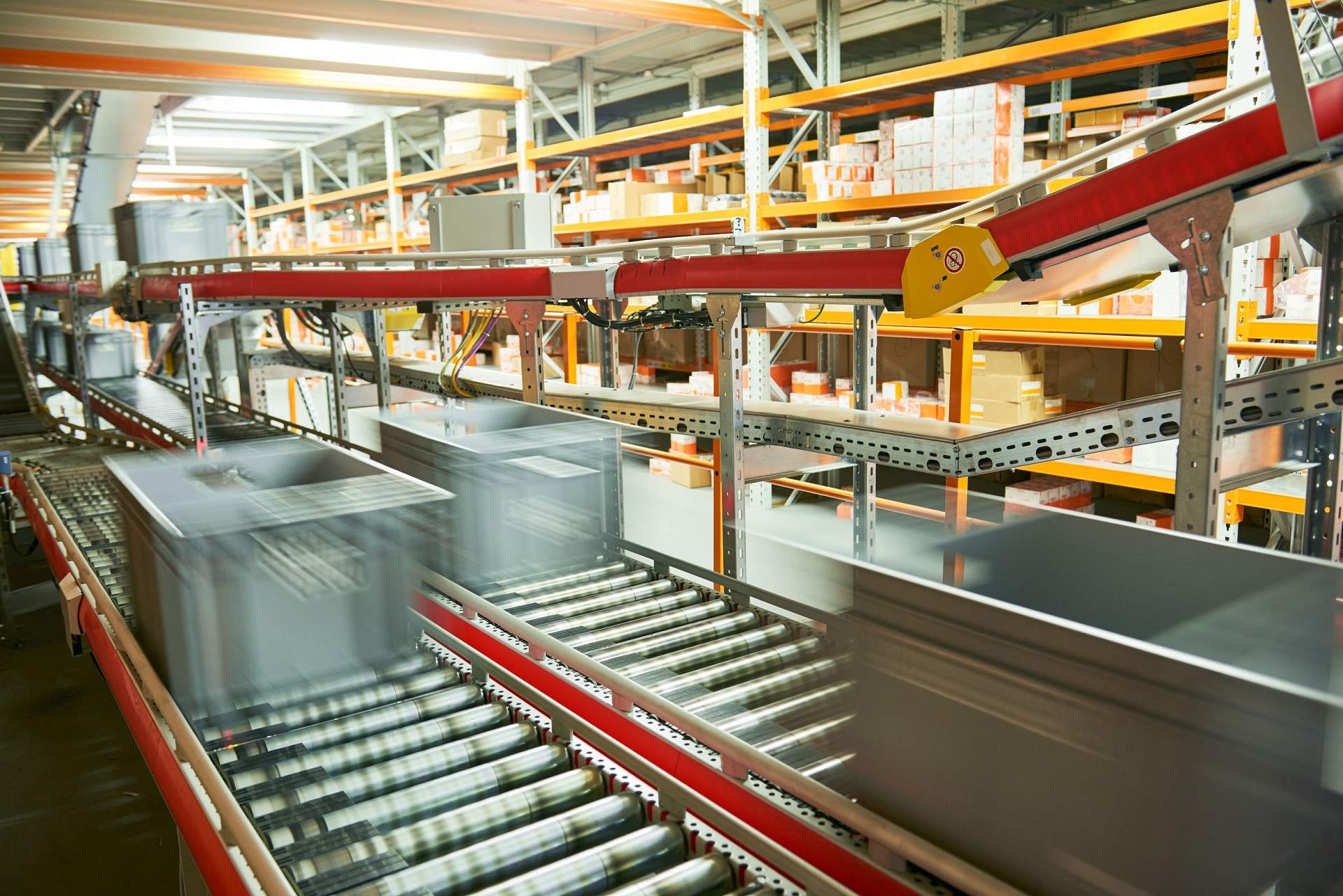
micro distribution centers
Supply Chain

Supply Chains Move Closer to Customers with Micro Distribution Centers

Consumers now expect faster deliveries when they order online products compared with just a few years ago. The solution to speed up last-mile delivery has been micro distribution centers, which are much smaller and more economically efficient than a typical warehouse. Here are more details on how these convenient centers use automation equipment to pick, pack and deliver packages to end consumers.


Small Automated Storage Facilities

At the core of this transformation is the use of small micro distribution centers with automated storage facilities. This more concentrated infrastructure in local areas cut the costs of delivering merchandise for both the manufacturer and the consumer. The concept of micro-fulfillment has been pioneered by Amazon, which has expanded to over 175 fulfillment centers around the world. Meanwhile, Walmart's strategy is to use its existing 5,000 stores to speed up customer deliveries on a local level.

The model of placing smaller stores in multiple locations within a big city has further been refined by Apple with its minimal retail footprint, yet close connection with target followers. It's a particularly useful model during the pandemic in which social distancing must be part of the equation to stay in business. Prior to the pandemic, only 3 to 4 percent of grocery sales were attributed to online orders. Since then, however, the percentage has practically doubled.


How Micro Distribution Creates Retail Efficiency

  • Real-time inventory - Combining micro distribution with smart technology is helping small centers analyze product sales and adjust marketing strategies at a faster pace. Tracking inventory status in real-time takes pressure off retailers and their suppliers to ensure storage efficiency and timely order fulfillment.
  • Faster order fulfillment - Walmart uses an automation system called Alphabot, which can move ten times more products than a human in a warehouse. The company emphasizes stocking its most popular items, such as packaged foods, at fulfillment centers. America's largest grocer is further partnering with startup Alert Innovation to build in-house micro-fulfillment centers at its large stores.
  • Last-mile savings - As delivery speeds increase and supply chains cut costs, micro-fulfillment centers will be part of bigger objectives for companies to achieve greater sustainability. This point is very important to investors who like to see constant improvements in cutting wasteful spending. Manufacturers will be in a better position to improve product quality and customer satisfaction at a faster pace due to accelerated distribution cycles.
  • Multiple small centers cut costs - Various global retailers are now experimenting with the Amazon model of distribution. Nordstrom is partnering with robotics company Tompkins to implement parcel-sorting technology. It will help cut costs on staffing while improving productivity. Smaller stores don't require nearly as much energy costs as warehouses and can be placed in areas where certain products are in high demand.
  • Better customer experiences - One thing that remains consistent through marketing and distribution evolution has been the goal of improving the customer experience. Speeding up the order processing and delivery phases have been crucial areas for retailers to drive efficiency and optimization.


Projecting the Evolution of Micro-Fulfillment

Micro-fulfillment centers need smart technology such as autonomous last-mile delivery machines to gain an edge over competitors. Some retailers have taken the extra step to install interactive virtual technology in stores, which can lead to faster comprehension of product capabilities. The most likely distribution model to expand for retailers will involve hubs that rent space to multiple retailers that work with last-mile partners.


Conclusion

Online retailers have helped pave the way toward a more efficient shipping infrastructure. The emerging model of micro distribution centers or pick-up centers has gained a successful track record of speeding up the delivery process of ordering online. Now that same-day and next-day delivery has become the norm, retailers taking advantage of this more integrated distribution model will be able to remain competitive in the market.

Read More
smart supply chain
Supply Chain

Making the Case for Establishing a Smart Supply Chain

The COVID-19 outbreak has put pressure on manufacturers and suppliers to make their operations more digital and IoT-based. Because of this, a smart supply chain is definitely one solution that should be considered.

Using disruptive technologies, a smart supply chain helps reduce stress surrounding issues, such as costs, compliance, and training.

Here’s how a smart supply chain can help manufacturers transform their business to meet demands successfully and efficiently both now (during the health crisis) and in the future.


Building an Intelligent Supply Chain

The concept of the smart supply chain centers on digital methods for practical solutions, such as gathering performance data in real-time. The ability to gain real-time data speeds up maintenance cycles and contributes to proactive decision-making to streamline operations. The intelligent supply chain is based on a digital transformation focused on achieving greater efficiency and productivity through richer, more efficient data collection.

Automation will also play an increasingly more significant role for every imaginable supply chain concern. It can help reduce or eliminate waste, while increasing quality and productivity for designers, manufacturers, and management analysts. Automation will further be useful for logistics, as well as after-sales to maximize value in brand experiences.


Today’s Intelligent Applications for Suppliers

Learning from customers about their experiences in real-time speeds up timeframes related to product development, as products can be refined at a faster pace.

Ultimately, the merging of cloud platforms with digital processes is defining the supply chains of the future. And the adoption of machine learning and IoT devices will play a significant role in supply chains in the decade ahead.

Here are supply chain applications being used today:

  • Intelligent asset management (IAM) – This activity is essential for researching deeper customer insights, sales performance, and new services. IAM covers the entire scope of an asset’s lifecycle, from engineering to upgrading, and beyond.
  • Monitoring and connecting fleets in real-time – When vehicles share connectivity, they can be managed more efficiently in terms of routing. Weather and traffic conditions have always been factors in shipping, and digital intelligence allows for smooth last-minute changes.
  • Sensor networks for global tracking – The placement of IoT sensors throughout business networks is necessary to adopting intelligent supply chain principles. These sensors can not only respond to logistics insights, but they can also connect business events through IoT infrastructure.
  • Automating redundant warehouse tasks – Collaborative robots are already taking over repetitive warehouse tasks. Many companies are combining collaborative robots with augmented reality (AR) in the packing process to speed up the time between order and delivery.
  • Planning and scheduling manufacturing orders – Machine learning algorithms now play a key role in both the planning and scheduling of manufacturing orders. Smart data is used for the automated routing of products.


How Digital Processes are Shaping the New Supply Chain

It’s crucial for manufacturers to know how consumers respond to their products. This information can, for example, be used to shape product upgrades. Paying attention to market response has increasing vitality when supply chain costs shift toward uncertainty. Market data can help diversify product designs as well. The faster that data is collected, and actionable insights are gathered, the sooner manufacturers can enhance customer experiences.

The idea of continuous market feedback is in its infancy but, as the adoption of intelligent supply chain technologies grows, it will surely become the norm at some point in the near future. Suppliers can prepare for this revolutionary model by investing in IoT software and sensors.

Collecting real-time data on product performance in the background, without disrupting systems, is part of this valuable seamlessness.

The smart supply chain is the answer to many of today’s business infrastructure problems. The more suppliers can be interconnected through common platforms, the more information they can share for refining operations. Smart technology is here to stay, so the more that manufacturing firms embrace it, the more likely they are to achieve greater reach and agility.


Read More