IoT Architecture
Internet Of Things

What IoT Architecture Is and Its Impact on Businesses

The term "Internet of Things (IoT)" has already confused enough people, making it difficult to see the bigger picture of IoT architecture. Understanding the broader view of how a real time monitoring system that collects data from sensors works will help demystify various IoT terminology.

Here's a look at how sensor-driven architecture can modernize and streamline a business.


Defining IoT Architecture

There are various components of IoT architecture that enable a business to collect valuable data in real time. Data insights captured from IoT sensors alone do not tell the full story of what IoT is about. In order for a business to justify an IoT investment, the company needs to understand the various layers and deployment stages of IoT architecture. Mixing them up can lead to expensive mistakes.

The architecture layers for IoT are the sensing, network, processing and application layers. First, a physical layer within the environment must be established through connected devices and objects. The Internet of Things would not exist without smart technology such as smartphones or technology that converts analog information into digital data.


Layers of IoT Architecture

Part of the confusion over IoT is that it's not just one technology or process. It's a collection of technologies and processes categorized in layers. Each software architecture layer simply encompasses different types of devices, apps and methods that can be grouped together to serve a certain purpose. Here's a deeper look at what these layers mean:

  1. Perception/Sensing Layer: Wireless sensors and actuators make up the perception layer. While a sensor collects and delivers data, an actuator measures changes recorded by the sensors. These sensors and actuators can be connected through Local Area Networks (LANs) and Personal Area Networks (PANs).
  2. Network Layer: This layer encompasses the platform that facilitates data transmission through various connected devices. It allows devices to communicate with other servers and devices. The network layer allows you to monitor how data moves throughout a software application. It includes Data Acquiring Systems (DAS) and Internet/Network gateways. A DAS is responsible for the functions of data aggregation and data conversion from analog to digital.
  3. Processing Layer: The analytics gathered from an IoT ecosystem are made possible due to data processing. IoT data is typically pre-processed and stored before it is delivered to a data center. Edge computing is becoming an important part of the processing layer since it involves IoT devices with data processing capabilities.
  4. Application Layer: When users interact with IoT software, they are operating in the application layer. This layer includes smart apps that are used to access IoT data.

Each of these software layers works together to make IoT technology possible. In order to call a system IoT-based, it needs devices that run on a network, where data processing is possible, then data can be accessed through smart apps.

When you put all the IoT layers together, it creates an architectural system that reflects how successful communication works. Sensors act as the senders of information, while data is the message. The data moves through channels such as edge networks where it's processed. End users receive the data through their smart devices. The main noise in the system that can disrupt data transmission is the latency from sending too much data to the cloud.


Planning for the IoT Architecture Model

Before investing in an IoT architecture, it's best to get a broad view of the different stages involved with deploying it. Understanding how IoT architecture is broken down into technology categories will help clarify how the components interact with each other. Here are the sequential stages of deploying sensor-based architecture:


Connected Objects and Devices

All the devices that connect with an IoT network are considered part of the first layer, which must be set up first before any other deployment. Connected objects can be anything generating information that can be converted into digital form via electronic technology. The sensors and actuators in the perception layer are among the first to be deployed when setting up an IoT system.

There are various types of IoT sensors now that can be used for different applications. Farmers use IoT throughout their properties to monitor environmental elements such as the quality of soil, air and water. The most advanced agricultural companies use drone equipment with sensors to take aerial photos of crop fields.

Many smart homes contain electronic devices equipped with IoT sensors, such as smart thermometers. Some sensors can detect proximity, such as when a pedestrian walks near home. Proximity sensors are used by physical retail stores to detect when customers come near the door or a certain section of the store layout. Other sensors can measure pressure, chemicals and gases.

Smoke sensors are found in modern smoke and fire alarm systems. While these sensors have existed for decades, they are much more reliable and effective in an IoT infrastructure. IoT-based smoke detectors have the capability of sending immediate alerts to homeowners on their smartphones when fire, gas, or smoke is detected on their property.


Internet Gateways

Once IoT objects and devices are determined, the next stage in deploying this powerful interactive system is to set up an internet gateway. A gateway is a device that converts analog data to digital data to allow data processing over the internet. Today's internet gateways collect raw data for IoT sensors before it is sent to the cloud or a nearby server. After the internet gateway converts analog information to digital form, it aggregates and protects the data.

The next features to deploy in an IoT system are analytics and security. Analytics software presents gathered data from various sources in a prioritized way to reveal system insights. Ultimately, analytics is the end product of an IoT system that allows business leaders to make quick improvements.

Data security is no longer an option, as it must be viewed as a requirement. Many early IoT systems lack the sufficient protection of a zero trust environment in which all devices connected to a network must be protected. Not only do internet gateways help protect digital assets, but they can also improve a company's performance and efficiency.


Edge Computing

The third stage in the deployment of IoT architecture deals with the pre-processing phase and methods that enhance analytics. Edge computing is the use of network devices that have data processing capabilities, so that data does not need to be transmitted long distances. Sending big data to the cloud creates network congestion that can lead to latency and higher costs for bandwidth expansion.

So far edge computing has proven to be more efficient than cloud computing for the processing of IoT data. Edge IT systems often incorporate machine learning technology in which data analysis of patterns can be accelerated to reach quick conclusions and solutions. By using self-processing IoT devices, an edge IT system reduces strain on your core IT infrastructure.

Another advantage of edge computing is that it allows for data visualization techniques to deliver compelling system insights. In other words, it's a system that can that easily facilitates graphic displays, which are powerful tools that accelerate learning curves. Studies show people can grasp information faster from viewing an infographic or a video than from reading several paragraphs of text.


Cloud Storage

Many cloud providers operate from large data centers where processed IoT data ends up. In the cloud, the data can be evaluated further for final analysis and reporting. Through data centers and cloud service providers company data can be easily managed and made available to customers. The cloud is often used as a place where customer data can be transferred through applications.

Private clouds offer a much safer and more secure haven for confidential data than public clouds. But public clouds often allow for free storage, which is why many companies use them. Choosing a hybrid approach is sustainable because private clouds make critical data safer while public clouds help cut IT costs for storing less important big data.

The combination of the cloud and IoT is a powerful solution for any business that generates a wealth of data. As long as the bulk of remote IoT data doesn't have to travel to the cloud, the cloud can be utilized as a hub for an entire business. Making sure you keep big data under control from IoT sensors is an essential piece of the sustainability puzzle.


Conclusion

People and organizations can connect with each other more swiftly and seamlessly through IoT architecture. This system of data-collecting sensors helps businesses detect system problems in real time while offering immediate solutions through the use of machine learning software. A lot of IT companies are already emerging around the globe that offer services to design your business’ systems that are aligned with IoT architecture. So, this shouldn’t be a problem once you decide of doing so.

Read More
Smart Manufacturing Trends
Internet Of Things

Improve Business Sustainability With These Smart Manufacturing Trends

Would you like to make your organization more sustainable so you can save time, money and resources? Consider regularly monitoring the latest smart manufacturing trends. It will give you ideas on what types of smart technology fit your operation or can make it better.

Here are some recent trends in smart manufacturing that have made the production processes more efficient.


Modernizing Supply Chain Management

Any organization in the logistics field these days must consider digital transformation or lose market share. One of the keys to effective supply chain management now is for manufacturers to choose suppliers who share data through smart technology. It allows everyone throughout the supply chain to have full visibility as to what supplies are available.

Outsourcing to third-party logistics (3PL) firms has become a growing solution for manufacturers that aren't up to speed with modern logistics. It's an affordable option if you don't have the budget to invest in IoT or other smart technologies. An advanced 3PL uses a wide range of smart solutions including IoT, automation, machine learning and robotics.


Seeking Superior Connectivity

One of the most significant smart manufacturing trends of the past few years has been the rising demand for and deployment of high-quality connectivity. Due to the expansive use of data on a daily basis, businesses face either conserving bandwidth or paying higher costs for more of it. Quality and quantity matter when it comes to connectivity because they both affect pricing and performance.

Manufacturers are steadily adopting 5G wireless networks, which handle big data much more efficiently than previous Wi-Fi generations. In response to the pandemic, 75 percent of manufacturers have adopted some form of smart technology, according to the 7th Annual State of Smart Manufacturing Report issued by Plex. The report further states that smart manufacturing adoption is increasing at an annual rate of 50 percent.


Capitalizing on Predictive Analytics

Data visualization has become a necessary science for today's business leaders to understand and utilize. Manufacturers must build upon data visualizations from IoT analytics to streamline their operations. Knowing the number of terabytes of data per day your factory generates is an important metric to track.

In a smart infrastructure, your analytics will track so much data that it would be impossible for one person to manually sift through all the data in a day. But with a machine learning program, you can get summaries of performance activity, along with predictive analytics for future output. AI and automation have empowered warehouses and transportation companies to reduce or eliminate waste and lost opportunities by generating more accurate inventory projections.

Warehouse managers must be accurate most of the time at demand forecasts to avoid losses from unsold inventory. Machine learning software can analyze millions of historical data points rapidly to detect patterns and trends in customer demand. It scans data from multiple sources and generates reports that include estimates for future demand to help managers order the appropriate number of supplies.


Automating Quality Assurance

One of the best ways to improve quality assurance in a factory is to monitor the network automatically and remotely. When an IoT device detects a bug or suspicious visitor in the system, smart alerts will be sent to management and IT personnel immediately. Factories are increasingly shifting to an Industrial Internet of Things (IIoT) infrastructure, which means populating a factory with IoT devices. It also means video can be used in many locations of the facility for visual inspection.

Robotic process automation (RPA) for light administrative tasks such as inventory management is growing in importance among manufacturing plants. Automakers have used robots since the 1960s for redundant or dangerous assembly line tasks. On September 30, 2022, electric vehicle manufacturer Tesla unveiled its human-like robot called Optimus, which waved and danced. Tesla CEO Elon Musk said it will eventually walk and help build cars. Ultimately, the company plans to manufacture millions of these robots as human assistants.


Utilizing Wearables for Medical Patients

The healthcare industry has advanced quickly in recent years with wearables worn by patients. These devices monitor the patient's biological processes such as heart rate, blood pressure and blood sugar level. Wearables come in various forms including smartwatches and headsets. Fitness trackers are typically worn on the wrist or around the neck. Pocket devices such as smartphones are also considered wearables.

The concept of a wearable computing device goes back to the 1970s when it was introduced by University of Toronto AI/engineering professor Steve Mann, the "father of wearable computing." In the 2020s some of the most talked about wearables include the Apple Watch and Fitbit's fitness tracker. The primary components of a wearable computing device are the visual display, the computing processor and user controls.


Reducing Data Distance with Edge Computing

Big data keeps getting bigger. The bigger it gets, the more it threatens to cause network congestion and latency. An effective solution has been edge computing, in which data is processed on or near the device that captures it. Instead of sending massive data to the cloud, data can be collected from IoT devices and sent to a nearby server for storage. By shortening the distance data has to travel, edge computing helps overcome latency issues.

The essence of edge computing is to avoid transmitting data over long distances. Not only does edge computing make real-time data easier to access, but it also makes it more secure. Fusing edge computing and AI together is another cost-cutting solution called "edge AI," which is part of IIoT.


Turning to 3D Printing for Short Runs

Additive manufacturing (AM) in the form of 3D printing has made it possible for more inventors to conduct more frequent prototyping. A 3D printer can be an all-in-one manufacturing machine that generates finished products, typically in a plastic form. Other materials, including foods, can become products of a 3D printer.

A major reason why 3D printing is highly efficient and eco-friendly for short-run production is that it eliminates production waste. The machine simply builds products layer by layer without leaving residue. It's excellent for on-demand production. It's a sustainable alternative to the traditional method of producing a high volume of units that take up space and might not ever sell.

The value of the 3D printing market is expected to triple to $44.5 billion between 2022 and 2026, according to the "3D Trend Report 2022" published by Hubs. An interesting finding was that 68 percent of engineers increased 3D printing from 2020 to 2021. The use of these machines makes it possible to innovate and refine new products faster.


Replicating Factories with Digital Twins

A digital twin is a software program that generates a digital replica of a physical environment such as a manufacturing plant. It constantly updates in real-time. Digital twins are used for fixing factory problems, optimizing floor layouts and testing new devices. Combined with machine learning, digital twins can predict the performance of factory equipment or processes.

Another way to look at a digital twin is that it's a virtual representation of something from the physical world. The three elements of a digital twin are a physical product, its virtual simulation and connections between these two items. Without connectivity, digital twins would not exist.


Using GPS and RTLS for Location Tracking

Transportation companies now commonly use GPS to track fleet vehicles on deliveries to estimate arrival times. While GPS works well for outdoor applications, it still faces challenges with indoor operations. Signal interference from tall buildings and certain materials can hinder GPS performance.

Manufacturing plants and warehouses have widely adopted Real-Time Locating Systems (RTLS), which can automatically track the location of inventory units in real-time. RTLS, which is separate from GPS, encompasses radio frequency (RF) communication equipment such as transmitters and receivers. Warehouses use scanners that can locate any specific inventory product instantly, which accelerates the order fulfillment process.


Optimizing Energy Consumption

Traditional energy costs have been rising and can be very volatile. So, it's essential for manufacturers to cut energy costs in every way they can and still produce quality products that meet public demand. Smart technology helps keep energy costs under control through real-time smart metering. Managers can monitor energy consumption at any time on a smart device.

Energy and environmental concerns are at the heart of smart technology, which is all about sustainability. As the population grows, an increasing strain will be placed on traditional power generation systems. This dynamic is forcing many utilities to adopt digital transformation as a way of preventing energy losses and automating alternative energy sources when necessary.


Conclusion

Bring your company's IT knowledge base up to date by studying the latest smart manufacturing trends of the century. It will put you in touch with the technology that's poised to influence business activity for years to come.


Read More
IoT Devices and Applications
Internet Of Things

Understanding IoT Devices and Their Applications

Everywhere you turn, IoT devices are popping up as they increasingly populate workplaces and homes. The number of active IoT devices is expected to reach 22 billion by 2025, nearly tripling the amount in 2022. IoT systems operate on layers, with the first being sensors embedded in IoT devices. Let's explore what these devices and their applications are.


IoT Devices

What IoT devices are capable of performing depends tremendously on the quality of the technology. Small IoT devices usually operate on low power, limiting the amount of data they can process in a specific time frame. IoT devices may also be limited by memory and size constraints.


IoT Device Components

The five components that make up IoT devices are sensors, computing, connectivity, power and housing. Here's a closer look at these five components:

  1. Sensors, actuators, and indicators - These components define the first layer of any IoT system. Their role is to convert information from the analog world into digital signals. Sensory devices such as meters are included in this initial layer. The term "things" in "internet of things" refers to network endpoints where raw data is collected. Sensors work with actuators such as automated switches in response to conditions that threaten physical objects. They can trigger responses that affect indicators such as an alert light turning red or the sound of an alarm. While sensors are not necessarily specific to applications, they are often designed for specific applications.
  2. Computing power - In order to process data at the endpoint where it's collected, IoT devices need a certain level of computing power. The choices for high-quality IoT are between microcontrollers and microprocessors. Microcontrollers don't require as much power and are generally cheaper than microprocessors. The main disadvantage to microcontrollers, which are often used in small devices, is they have less memory.
  3. Connectivity - An IoT device needs to have a way to transmit data to the cloud or a data center so that real-time data is available for access. Traditional connectivity includes ethernet cables, but today Wi-Fi allows for wireless transmission. The factors that affect selection of a connectivity method include how much power is available, transmission range and data volume.
  4. Power - It helps to know and plan for the power needs of an IoT device to avoid poor performance. You should know the voltage and current requirements of each device, as well as whether it runs on batteries or plugs into AC power. This information will help you plan for potential power interruptions. Ideally, the power source is reliable, such as AC or a long-lasting battery. The power needs of a device are affected by its durability, connection frequency and peak power load capacity.
  5. Housing - Where the sensors are installed can affect performance as well. It's best to keep sensors protected from extreme temperature, humidity and moisture. Sensors should also be free of contact with chemicals, UV rays and mechanical stress. Exposure to liquids or vapor can be troublesome for the lifespan of a sensor. To establish the right housing of a sensor, it's best to first understand the environment where it will be placed.
summit of things

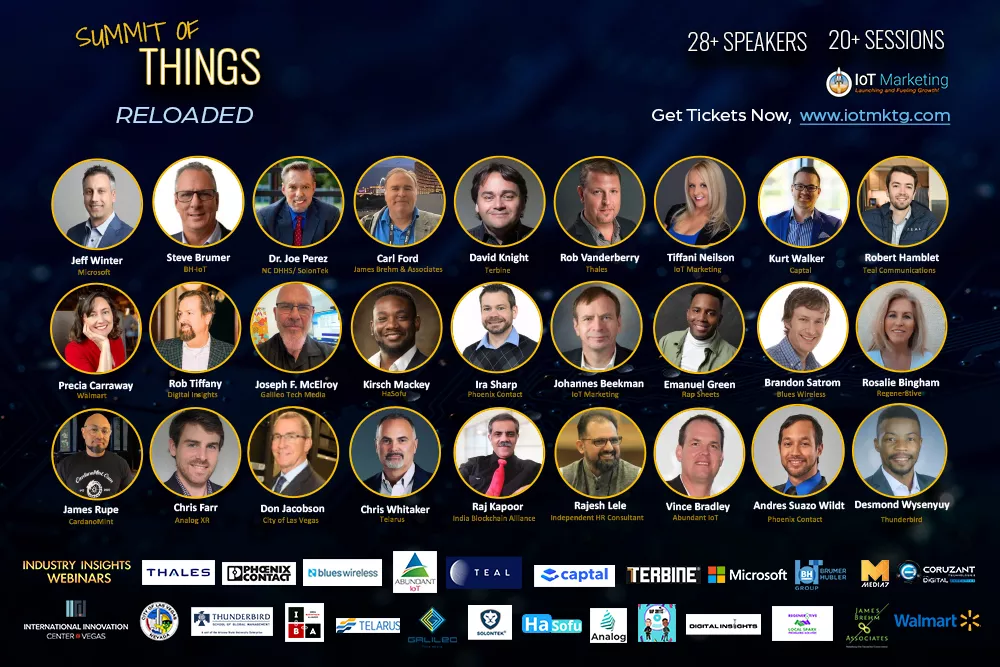
Explore the state of IoT and how it is used with other advanced technologies by purchasing a ticket for our on-demand event, the Summit of Things.


Advanced IoT Devices

Some of the more advanced devices that interact with IoT platforms include autonomous vehicles, robots and drones. Autonomous machines have existed for several decades in the form of industrial assembly line equipment. The advances in IoT in recent years have helped speed up the development of self-driving cars. But the use of autonomous vehicles is mainly still limited to industrial and logistics operations.

Robotics is a field that has rapidly advanced in recent years after many decades of slow development. The combination of artificial intelligence and IoT sensors is now the foundation for modern design of advanced robots. Adding connectivity to a robot makes it much smarter than classic robot models. With the help of machine learning software and an internet connection to hundreds or thousands of IoT sensors, a robot can report a wealth of knowledge. A mobile robot, such as a drone or autonomous vehicle, potentially has even more powerful data collecting capabilities.

Technology that facilitates connectivity for advanced devices includes Wi-Fi, Bluetooth and NB-IoT, along with 2G, 3G, 4G and 5G networks. Key considerations for selecting an IoT platform include whether the communication will be indoor or outdoor and in a private or public place. Another consideration is reliability for connectivity and uptime.


Demand for IoT Devices

Today, half of IoT platform manufacturers have sharpened their focus on producing sensors for manufacturing and industrial use, according to IoT Analytics. As business leaders become increasingly aware of the economic benefits associated with IoT, demand is expected to grow exponentially for the production of sensors in the next few years. The healthcare and retail industries also project high demand for IoT devices. As satellites populate space, it will attract new companies that integrate satellite and IoT technology.


Applications for IoT Devices

IoT devices come in various sizes. Some IoT devices are tiny, such as temperature sensors. Others are large, such as self-driving vehicles. The design of any IoT device is typically based on its application. Here are some of the many applications for IoT devices:

  • Enterprise solutions - A multitude of business activities can be monitored by IoT sensors to improve an enterprise. Customer relations can improve significantly by tracking customer responses to store layout and marketing strategies. Cybersecurity uses IoT sensors to collect threat information that can then trigger a solution to prevent or mitigate a disaster. Companies may use IoT devices to track employee location and performance.
  • Smart home integration - Homeowners are increasingly adopting smart technology to improve energy efficiency. A smart thermostat can automatically adjust the temperature of a room if it gets out of desired range. Many modern homes across America already have smart meters that monitor energy and water consumption. Homeowners can access this information on their smartphones. Facebook CEO Mark Zuckerberg's home is set up for voice-activated commands for turning on lights and other functions. His security system uses facial recognition technology.
  • Modern agriculture - IoT sensors can monitor several aspects of the environment to assist farmers with harvesting insights. The sensors can monitor soil composition, air and water quality and levels of harmful pollutants. This data can help farmers determine appropriate fertilizer. A farm can have sensors embedded in animals, as well as machinery to protect assets. Farmers use water data for irrigation planning. Agricultural professionals must also be cognizant of climate change, in which IoT sensors monitor weather patterns and trigger alerts for sudden storms and floods. They can get aerial views of their property from drone photography to evaluate harvesting conditions.
  • Formation of smart cities - Resource management is a major reason many local governments are adopting smart city infrastructure. Cities can monitor pollution and traffic congestion, as well as resolve parking problems with strategically-placed IoT devices. Infrastructure elements such as street lights can use IoT sensors to report issues such as when lights need replacing. Disaster management is another area that calls for local officials to study IoT data to evaluate damage and help locate victims.
  • Supply chain improvements - Effective supply chain management (SCM) is a major concern among manufacturers to ensure inventory gets transported safely from point A to B. Real-time trackers are used to locate products in warehouses and during deliveries. They can help determine smart routing choices and manage fleets remotely in real-time.
  • Wearables for healthcare - These electronic items are worn by patients at home so that doctors can monitor them remotely. The real-time aspect of wearables can greatly improve medical research on top of saving lives. Telemedicine became more prominent during the pandemic, as remote meetings with doctors on smartphones helped reduce the strain of crowded hospitals. Wearables include smartwatches and fitness trackers, as well as various devices that track biological activity such as heart rate and blood pressure.
  • Smart grids - Utility companies are steadily embracing smart grids and alternative energy to deal with growing power demand. When sensors detect power disruptions, they can trigger the use of alternative energy. IoT devices embedded throughout power plants can send alerts to identify power transmission problems. The sensors monitor energy consumption of the power plant as well as customers. Smart grids are destined to help energy producers go more green as they have sensors that analyze the operation's carbon footprint.
  • Connected factories - Manufacturers use industrial IoT (IIoT) to streamline operations and resolve system vulnerabilities as they appear. IoT technology enables a cost-cutting strategy known as cost-based maintenance (CBM), in which maintenance is conducted only if necessary. Managers can use IoT data to prioritize maintenance issues. Factories also use IoT devices for product testing and development.


Conclusion

IoT is about collecting and transmitting real-time data, but in order to be useful, it must accompany competent data analysis, by humans, machines or both. Investing in the right IoT devices and hiring appropriate talent can elevate your business beyond traditional expectations.


Read More
IoT Changing Business and Society
Internet Of Things

Significant Ways the Internet of Things Is Changing Business and Society

These days, the internet of things (IoT) has become a top consideration for businesses trying to gain a competitive edge. IoT technology delivers useful information quickly to help businesses improve operational efficiency. It's based on sensors that communicate through radio waves.


More About the Internet of Things (IoT)

The internet of things is a system of interconnected physical and digital worlds. It relies on electronic sensors that collect and transmit data over wireless networks. Physical objects of any kind can now be embedded with sensors, turning them into digital devices. IoT sensors are capable of tracking environmental, biological, chemical, mechanical and electronic data, making them valuable tools for a wide range of industries.

summit of things

Explore the state of IoT and how it is used with other advanced technologies by purchasing a ticket for our on-demand event, the Summit of Things.


Why Is IoT So important?

IoT sensors can be used to monitor the performance of systems and components. Managers can analyze the data to determine system flaws swiftly and move faster at decisions on improvements. Not only can this data provide insights about a system's vulnerabilities, but the data can also be fed into machine learning software to generate quick recommendations to resolve complex problems. The combination of artificial intelligence (AI) technology and automation empowers an organization even more, as certain data can trigger automated actions.

The payoff to investing in IoT technology is that it streamlines operations, elevates productivity and increases profit margins. Valuable insights captured from real-time IoT data beyond internal operations include what customers think about products and services. Digital infrastructure including IoT is now used by many warehouses and transportation firms, allowing consumers to track deliveries online in real time.


What Technologies Have Made IoT Possible?

The concept of IoT has existed for many decades, but recent advancements have helped accelerate its adoption among major corporations. Here are the key technologies that have paved the way for IoT's rapid deployment:

  • Access to affordable low-power sensors - Affordable sensors that don't use much energy make it easy for manufacturers to invest in IoT.
  • Easy connectivity - Network internet protocols have made it easy for wireless data transmission from sensors to the cloud.
  • Cloud platforms - The proliferation of various cloud-based software services has made business operations more seamless and scalable.
  • Analytics - Data collected from sensors can be used in multiple ways. The key is to prioritize data relevant to improving the company's bottom line and culture while avoiding the trap of sorting through too much irrelevant data.
  • Machine learning software - This software can scan millions of data points in seconds to generate reports that reveal valuable insights. Ultimately, it can draw data from various integrated remote sources connected to a network. The existence of this technology has pushed the boundaries of what IoT can do.
  • Conversational AI - IoT devices can include natural language processing (NLP) software, allowing for conversational AI. Many consumers have already explored conversational AI through digital assistants such as Alexa, Siri and Cortana.


How to Unlock Business Value with IoT

A company can improve its financial health and stability by paying attention to what IoT data reveals about its processes. Here are key ways that IoT unlocks value for businesses:

  • Use data-driven insights to cut costs and waste
  • Digitize the physical world, making it easy to track real-time value
  • Increase output and efficiency, leading to increased profits
  • Formulate new business models and revenue opportunities


Industries That Can Benefit from IoT

Various industries can streamline operations via IoT technology by studying real-time and historical data generated by sensors embedded in objects. Tech companies that manufacture IoT devices are in a game-changing position to help the entire business and social landscape save time and money. Here are the key industries that have already played a huge role in IoT advancement:

  • Manufacturing - It's important for manufacturers to cut waste as much as possible in the production process. Production efficiency allows for lower prices for consumers while raising profit margins for the manufacturer. IoT sensors measure production performance and can detect system vulnerabilities in real time. The faster producers fix production problems, the faster they cut losses.
  • Utilities - Power and water plants use IoT to detect leaks and other flaws in delivery systems. An electric utility can now automatically switch to alternative energy sources when traditional sources have shortages or dropouts. Water utilities used to suffer massive water loss from pipe leaks, but can now detect leaks early, thanks to IoT. Many utilities have adopted smart meters to gauge energy and water consumption more accurately.
  • Automotive - Not only do automakers use IoT to monitor assembly lines, but they also use it in the vehicles they manufacture. IoT sensors in cars alert drivers on system and component performance and when it's time to get service. Automakers also use IoT to connect with their suppliers and dealers. The digital connections between auto manufacturers, dealers, suppliers, repair shops and consumers have aggregated vast amounts of valuable data for everyone involved.
  • Transportation and Logistics - Trucking and shipping companies use IoT to track vehicle performance, fuel efficiency, speed and geolocation. Transportation companies can streamline operations by hiring good drivers who pay attention to real-time vehicle data. Geolocation data can be shared throughout the supply chain to estimate delivery times. Logistics firms further benefit from IoT in being able to track the location and status of every inventory item being stored or shipped.
  • Retail - Many retail outlets have warehouses or backroom storage areas to maintain a supply of inventory. With hundreds or thousands of products to track, IoT, RFID and a barcode scanner simplify the search for any item. Retailers tap into supply chain networks that use IoT to instantly answer questions about product availability. The retail industry also uses IoT devices that monitor consumer behavior in stores to improve the layout and customer experience.
  • Healthcare - Hospitals have embraced IoT in the form of wearables that track patients. It's helpful for locating patients in wheelchairs that have gotten lost in a hospital. IoT devices can save lives as doctors remotely monitor a patient's heart rate, blood pressure and other bodily functions. Alerts are sent to medical professionals when a connected patient needs immediate medical attention based on biological data.


How IoT is changing the world with connected cars

Now that cars connect to the internet, the relationship between automakers and consumers is changing. It used to be when you bought a car from a dealer, you went to the dealer for service instead of the manufacturer directly. Now with connected cars, automakers have continuous access to customers via wireless communication. Modern cars equipped with automated self-correcting features help cut down on downtime and maintenance.

One of the most eye-opening IoT developments is self-driving cars. AI, automation and connectivity combine to make autonomous machines revolutionary with the capability of remote operation. This technology makes it possible for an individual to control their car with a smartphone. If you add voice recognition technology, you can actually talk to your vehicle from any location and tell it to do simple tasks.


Conclusion

While the internet of things may still be invisible to many people, businesses can gain powerful advantages by investing in it. If you want to learn more about how IoT is changing businesses and beyond, join us for the Summit of Things. It's our largest event this year that is highly focused on IoT, and attended by IoT leaders and experts from leading brands for panel discussions, keynotes, training sessions, and more. To register and to find more info about this event, go to: https://iotmktg.com/summit-of-things/


Read More
3D Printing Transform Business
Internet Of Things

How 3D Printing and IoT Will Transform Business

One of the most understated developments in modern technology is the 3D printing of IoT devices. The 3D printer is helping spark the growth of IoT in various ways and is becoming increasingly more useful to businesses seeking to innovate. Here's a look at the impact 3D printing has had on IoT technology.


More Efficient Prototypes

It's no surprise that 3D printing of IoT prototyping continues after all these years. The 3D printer's original main role in the late eighties was prototyping. No longer did prototyping have to be so expensive and generate waste. It opened the door for inventors, engineers, and designers to experiment more often and freely. Designs can be simple or complex and turned around quickly in the world of 3D printing.

These days, it's possible to manufacture a wide variety of IoT devices in a few days with a 3D printer. Testing out a prototype simplifies production and reduces errors. If a prototype is bad, it doesn't cost much to replace it with an improved prototype. Many times a prototype can be made by a 3D printer with lightweight but strong and durable parts.

The 3D design files are saved as either CAD or STL files so that they can be easily loaded into a 3D printer. Any number of units can be produced by the printer, but keeping runs short is key to greater efficiency. It's not difficult to make adjustments to the design if a flaw has been identified.

summit of things

Explore the state of IoT and how it is used with other advanced technologies by purchasing a ticket for the Summit of Things.

Lower IoT Costs

Designers of new products can feel relieved that 3D printers lower production risks in numerous ways. The machine keeps production consistent yet flexible. The materials used in 3D printing are typically recyclable, reducing production costs.

By producing 3D-printed plastic circuits, you can reduce the cost of making an IoT device. One of the main reasons managers hesitate to invest in digital transformation is the high cost of new technology. But lowering the cost of IoT devices is a step toward wider acceptance.

Another reason why costs are lower with items made by 3D printers is that the design process is more energy-efficient. Furthermore, the parts of a device can all be made in one place by one machine, eliminating the need to transport different machine parts through different delivery services. This streamlined process contributes to a more eco-friendly production system.


Smaller Higher-Quality IoT Devices

One of the most compelling ways that IoT is changing businesses is with the use of tiny sensors that can be installed in a multitude of places. The 3D printer allows for making sensors as tiny as they need to be. Smaller shapes and sizes reduce costs for the consumer.

The shrinking of IoT sensors has played a major role in revolutionizing the healthcare industry, particularly with wearables. Not only can IoT devices be developed efficiently with 3D printers, but so can human body parts. Medical professionals are in a better position to save lives with printed hearts, livers, and kidneys when necessary.


Easy Production of IoT Devices

Many of the problems manufacturers have encountered in traditional production processes have become streamlined by 3D printers. These modern machines make it possible to efficiently do short runs on production orders. They also allow designers to keep improving a product at low cost without generating waste.

The on-demand model of production has positive qualities linked to sustainability. The idea that products are only produced when ordered reduces the problem of inventory taking up space until it's sold. You won't have to pay for the production of a product until it's ordered, so items pay for themselves. This new thinking reduces the odds of debt or loss from unsold inventory.

Tech companies that invest in 3D printing technology for creating different solutions have the opportunity to disrupt markets. There's a growing demand in the business world for both IoT devices and more efficient production. The stage is set for many new independent development companies to thrive by marketing IoT innovations.

The IoT market will grow exponentially in the next decade, particularly to meet the needs of advanced security systems. The merging of artificial intelligence (AI) with IoT will take the technology to an even more profound level. Ultimately, 3D printers are making it possible to run an efficient factory and warehouse without taking up so much space.

The adoption of IoT in the business world will accelerate with the 3D printing of IoT devices, making "always on" systems more affordable.


Read More
How IoT Technology Works
Internet Of Things

Understanding How IoT Technology Works

The Internet of Things (IoT) is a system of interconnected devices that transmit data over a digital network. At the foundation of IoT technology is radio frequency (RF) communication, in which data is transmitted from wireless sensors through the air to a database or online storage hub. Here's a look at how IoT is rapidly improving business efficiency.


How IoT Functions

The main elements that IoT technology is built upon are sensors, network connectivity, data processing and a user interface. The sensors in IoT devices collect data that is delivered to cloud servers so it can be accessed remotely anytime from any device. Today, a wide range of products have embedded RF chips, making them easy to track through IoT devices.

The data generated from IoT devices can be accessed by analysts in real-time, which helps identify and correct problems quickly. Large complexes such as factories and warehouses can maximize this technology using machine learning software that scans vast amounts of data in seconds. The software can survey historical data to answer immediate questions about patterns in the data.


How a Smart Car Works with IoT

A smart car is embedded with many sensors that track data about the vehicle, such as overall performance and fuel efficiency. Safety features included in smart cars are collision sensors, environmental control, and alert services. One of the major advantages of a smart car is that GPS provides routing directions to desired destinations.

Another advantage of smart car technology is it provides automated alerts that tell you when auto parts are not functioning properly or when it's time for a tune-up. Smart cars can monitor technical details about themselves, making troubleshooting much easier for technicians. The car also senses movement in the environment, which is the foundation to self-driving vehicles.

While there is increasing talk about autonomous vehicles, they have mainly been used for industrial purposes so far. Robots and autonomous machines have been used by manufacturers for decades, but in the past decade have they become integrated with IoT sensors to improve self-driving capabilities. It's now possible to remotely control a smart vehicle through the cloud.

summit of things

Explore the state of IoT and how it is used with other advanced technologies by purchasing a ticket for the Summit of Things.

IoT in Agriculture

Farmers are steadily integrating IoT into their systems for analyzing crop development and maximizing natural resources. During a drought, farmers need to conserve and optimize water usage as much as possible. Smart technology helps farmers monitor temperature, humidity, water levels and soil conditions. This data can help farmers cut costs.

Thanks to IoT, drones and GPS, farmers can take aerial photography of their properties to evaluate which areas yield the most efficient crop output. IoT devices can also help farmers measure pesticide levels, as well as the health of livestock. Sensors can be embedded in fences surrounding livestock and crops for control options.


Warehouse IoT

Warehousing is becoming much more streamlined through digital transformation, which includes IoT. Due to the complexity of a warehouse that stores hundreds or thousands of inventory products, it only makes sense these days to invest in a warehouse management system embedded with IoT sensors. The combination of IoT and bar scanning devices makes it easy for warehouse workers to rapidly locate any inventory item.

The key for a warehouse to maximize IoT is to share data throughout the supply chain. IoT data can be sent to the warehouse's cloud servers from multiple sources. Not only can IoT accurately track inventory, but it's also useful for tracking logistics operations such as transportation for arrival and departure times. IoT sensors are what make it possible to check real-time delivery status.

Real-time data makes IoT very valuable to a warehouse when it comes to moving inventory in and out. Managers have real-time data at their fingertips to help gauge which supplies to order. In the past, it was much more difficult to conduct accurate inventory counts, but IoT makes it simple. When suppliers throughout a supply chain share their IoT data, it helps speed up ordering and avoid supply shortages.

The most ideal scenario for warehouse technology is investing in an enterprise resource planning (ERP) system that collects data from IoT sensors. The different business modules that feed into this system can facilitate data collection on product purchasing, accounting and distribution. It can also provide direct contact links with customers to get their feedback on order fulfillment. Ultimately, integrating ERP with IoT devices helps a warehouse manager predict supply and demand trends, which is essential to profitability.


Conclusion

The IoT revolution is steadily gaining attention in the business world for its streamlining qualities, especially with agricultural, manufacturing, warehousing and distribution outlets. Learn more about what IoT technology can do to streamline your business by joining Summit of Things. Find more info and get your ticket here: https://iotmktg.com/summit-of-things/


Read More
Satellite Commercialization
Internet Of Things

How Commercialization of Satellite IoT is Creating Market Opportunities

Satellite communications (SATCOM) has existed for decades in space, but now it enters a new phase of satellite IoT. The use of sensors in space to monitor activities on Earth is building a new economy. Here are ways IoT SATCOM is opening up new markets for adventurous enterprises.


Mixing IoT with Satellite Technology

The concept of satellite IoT is an outgrowth of Internet of Things (IoT) proliferation, in which the tech industry has found increasing ways to digitize the environment. IoT data is transmitted to databases and mobile devices all over the world, thanks to the blanketing of the planet with IoT sensors.

More than two-thirds of the current global population uses a cell phone, which accounts for over 5 billion people, according to DataReportal. Meanwhile, nearly the same amount of people use the internet daily. The advent of 5G internet will expand internet coverage even further. It will particularly help residents in rural areas gain better connectivity. By 2024, the number of 5G subscriptions in the world is expected to reach 1.5 billion.

At this point, about 2.7 million devices connect to the internet via satellite, as reported by EMEA Satellite Operator's Association. These devices are used for monitoring the environment, military, aviation, infrastructure and shipping. The ramp up for space IoT is expected to grow by eight times in the next few years, as this technology is poised for commercialization later in the decade.

The Future of Connectivity

Learn from experts on the evolving connectivity landscape and choosing the right connectivity. Watch "The Future of Connectivity" replay.

Due to the expansion of satellite IoT technology in space, launching a space IoT service will be affordable for many companies in the future. For this reason, SATCOM will be among the first markets developed in space. The industry has multiple untapped markets to fill, especially since cellular communication services currently only cover 15 percent of the planet.

Many different types of businesses will consider investing in advanced internet through satellite technology. While satellite internet currently has connectivity and latency issues in cloudy or stormy weather, satellite internet of the future will be more stable and seamless. It will inspire countless businesses to use satellite IoT for improving safety and production. Analytics are driving all industries toward better data collection and real-time system monitoring with IoT sensors.


Rise of Space Networks

Space networks will be shaped by the development of Low-Power Wide-Area Networks (LPWANs) such as LoRa and SigFox. These networks are designed to have low consumption costs and high reliability for space connectivity. The LoRa network is currently facilitating most satellite IoT services, but in the future, more services will go through NarrowBand IoT (aka NB-IoT). This emerging space network aims to connect 90 percent of LPWAN systems in the future, according to Lux Research.

Not only does NB-IoT offer better coverage than other LPWAN networks with its symmetrical channel bandwidth, but it also supports a multitude of devices. NB-IoT, which is designed to service IoT devices with weak coverage, is ideal for transmitting small amounts of data over long time periods. This wide-range cellular standard will help lower costs for device operation and power consumption. It already integrates well with GSM and LTE systems.

The coverage range of NB-IoT will expand even further when integrated with existing software-defined radio communication devices on small satellites known as smallsats. The smallsat market already contributes to aviation communications and crop harvesting. It also helps extend internet coverage to rural and other remote areas.


Major Satellite IoT Turning Points

The SATCOM market has been steadily reaching new milestones each year. In 2020, the market size was $737 million, which is a fraction of what it's projected to be in the 2030s. Here are other recent developments that are setting the stage for the future of satellite IoT:


Key SATCOM Benefits

Companies that enter the SATCOM market will find plenty of demand for satellite IoT. Here are some of the ways it will improve society and businesses:

  • Wider use of sensors: Satellite IoT will make internet coverage ubiquitous on Earth. The most remote areas will have high-speed internet, creating an actual connected global village.
  • Transform infrastructure: Urban planners and local governments will have higher-quality connectivity to facilitate smart infrastructure.
  • Growth of smart cities: Smart technology will improve cities on many levels, such as real-time rerouting to manage traffic congestion.
  • More reliable connectivity: Future 5G mobile satellite services will offer faster data transmission speeds and more reliable coverage.
  • Lower cost: Mobile satellite services will help cut internet costs around the world.
  • Easy integration: IoT technology developed for the SATCOM market will be designed for easy integration with existing and future carrier systems


Outlook for the Satellite IoT Market

The satellite IoT market already consists of major players in top industries. Some of the early adopting industries for commercializing SATCOM include defense, energy, transportation and healthcare. Utilities, farms and other large facilities are expected to invest billions of dollars in the satellite IoT market over the next decade. Overall, the satellite IoT market is expected to reach $6.14 billion by 2031, according to Transparency Market Research.

A key driver to global satellite IoT growth is existing growth and new innovations in wireless technology. Satellite IoT already serves a growing market for security sensors placed throughout large complexes. It fills in gaps that the traditional infrastructure of cellular technology fails to reach. Demand is rising for satellite IoT to serve areas where cellular coverage is weak or nonexistent.

SATCOM will play a major role in agriculture going forward, as it can be used to find areas of the globe where growing crops is ideal. It will lead to a system for offsetting droughts and other environmental disruptions that threaten agriculture. Farmers will have more powerful digital tools to measure environmental conditions involving soil, air and water. Thanks to the spread of sensors on Earth that communicate with satellites in space, ideal harvesting will be within reach.

Companies that have already taken the lead in SATCOM development include:

  • Iridium Communication
  • ORBCOMM
  • Inmarsat Global Limited
  • Globalstar
  • Airbus S.A.S.
  • Astrocast
  • Intelsat Corporation

North America is on pace to be the leading global market in satellite technology, which will encourage wider international adoption. Not only are satellites widely embraced by logistics firms, but they could also help ease supply chain bottlenecks in the future.


Conclusion

Today, there are already over ten billion internet devices on the planet and in space. By 2030, there will be exponentially more, as the satellite IoT era begins and the boundaries between Earth and space dissolve. Wireless communication will travel through space at lightning speed, reaching the most remote places on the globe. Keep yourself up to date on the exciting development of commercial SATCOM.

Read More
Success in IoT
Internet Of Things

Practical Steps to Take to Achieve Success in IoT

One of the biggest challenges for businesses today is to experience IoT success. It's very difficult to pull off unless you work with seasoned IoT experts who understand how to properly deploy smart technology. Here's a look at the factors that lead to a successful IoT implementation.


Establish an IoT Roadmap

The most common path to IoT failure is to start working on the project without a roadmap. You need to follow the traditional process of carefully planning a major deployment with specific details. Rushing into IoT deployment without proper planning and team coordination will likely culminate in a wasteful disaster.


Use Single-board Computers (SBCs)

A major key to IoT success is choosing the right hardware that will easily integrate with new software developments in the future. A modern IoT system should be able to facilitate automation and machine learning. Many companies have been successful using single-board computers as the foundation for their IoT deployment.

At one time SBCs started as educational tools, then evolved into ready-to use-platforms for IoT development. A huge benefit to SBCs is they provide high performance and low power consumption at the same time.

summit of things

Explore the state of IoT and how it is used with other advanced technologies by purchasing a ticket for our on-demand event, the Summit of Things.

Build System Modules

Smart technology is meant to be flexible with the capability of easy integration with other devices. One way to achieve these goals is to build an IoT ecosystem with small modules. You can add new modules that expand functions on existing devices. A module-based infrastructure helps with long-term budgeting for technology. Modules can be added as needed, which simplifies scalability.


Explore Off-the-Shelf IoT Products

Off-the-shelf means the opposite of custom-made and instead exists as mass-produced inventory available for consumers to purchase. When it comes to IoT products, it's helpful for businesses to experiment with off-the-shelf products to learn about their efficiencies and deficiencies. It allows you to find market holes to fill for improving IoT development.


Customize Silicon Designs

You should also be aware of IoT developers who are capable of customizing products to suit your unique business model. Customization for any aspect of business can be a factor that sets a company apart from competitors. But it's also more complex to build an IoT system from scratch or without a model to simulate, especially for short-term deadlines.


Become a Data-Centric Company

Steady adoption of IoT technology is harvesting a whole new world of data science, which is becoming a fundamental part of business. That's why it's important to become a data-centric company, especially if selling real-time data is part of your business model. But since not all data is equal, it's important to prioritize data based on how much it contributes to your company's success.

Data can be used in many ways that have yet to be explored. In order for data to be worth examining, it needs to serve some useful purpose. Too much useless data clutters a system, as it can drive up storage costs and waste server space. Prioritizing analytics is a building block to understanding your operation and your market better.

The reason real-time analytics have become monumentally important to many businesses is that this data gives clues as to what's working and what's not. Sensors measure performance and efficiency, which is knowledge that can tilt the organization toward greater profits. The more you know about what data reflects and which metrics matter most to your operation, the better position you'll be in to make your operation more efficient and profitable.


Strengthen Cybersecurity

Cybersecurity grows in importance every year, as cybercriminals find new ways to create online havoc. That's why no organization can afford to overlook cybersecurity as a top tech priority. Without strong cybersecurity, a network is destined to be hacked at some point. Anti-virus software alone only does so much and cannot be relied upon as a complete solution against cybercriminals.

Even though most Americans have read or heard news stories about cybercrime, there's still a sense that many businesses aren't too worried about it. Some managers are so overly excited about what smart technology can do that they forget what it cannot do. Even though it can detect cybercriminals, it cannot guarantee stopping them.

IoT devices that are "always on" raise concerns about data protection. Hackers regularly spy on businesses to find data they can steal, even if they have no idea what it's used for. Personal and business data is regularly stolen and resold on the dark web. One of the problems with installing thousands of IoT devices in an infrastructure is that each one needs to be tested for data protection.


Unify Team Members

When deploying IoT devices, it's crucial that your team is well-coordinated and can communicate in real time with members. By logging team efforts in real time, members can check to see what deployment actions have been taken to avoid redundancy. IT technicians need to be aware of what other team members have already accomplished.

Team cohesion is a necessary aspect of successful IoT deployment because so many things can go wrong with such a complex project. If an IoT device is configured inappropriately, it can generate misleading data. Each team member working on IoT deployment must have a deep knowledge of the steps involved with installing sensors. Some factories use thousands of sensors, making it incredibly difficult to ensure all components are configured correctly.


Conclusion

Use these keys to IoT success as part of your IoT roadmap. Without a roadmap or proper planning, deployment of smart sensors can be a disaster. Make sure you do it right the first time so you don't have to pay for it twice.

Read More
Successful Deployments
Internet Of Things

Don’t Let Your IoT Projects Fail! Here’s How to Make Your IoT Deployments Successful

IoT Deployments Need Careful Planning and Execution, Not Rush Jobs
Businesses are increasingly going more digital because they realize it's no longer much of a choice. IoT deployments are part of this digital transformation, but not all smart technology lives up to its name. Rushing IoT projects is a mistake that can lead to a snowball effect of multiple misfortunes, so it's best to put plenty of time into planning and executing IoT projects. Many businesses turn to tech consultants to minimize the complications that come with digital transformation.


Why IoT Systems Fail

Not all IoT deployments are successful, as some companies have dealt with hundreds of failed attempts to digitize parts of their infrastructure. According to Beecham Research, 58 percent of businesses surveyed said their IoT projects were unsuccessful, while only 12 percent boasted complete success.

IoT technology is about delivering valuable operational data in real time. Even though IoT has come a long way in a short time, it still presents deficiencies in certain applications. Poor planning and weak execution are two major factors for IoT system failures.

One of the keys for businesses to overcome major IoT challenges is to envision resilience through a complex transformation. It's important to realize IoT is still in its infancy and it has limitations, especially when it comes to cheaper products. The medical industry has succeeded with going wireless and digital because it contracts with advanced companies that design high-quality electronic products. Local governments have also invested in advanced technology to design "smart cities."

Many companies have set up their new infrastructures so that all data goes to a database in the cloud. But if they lack a filtering system to weed out spam and unnecessary data, the system can get cluttered with a mix of useful and useless big data. That's where an IT consultant can offer direction on steps to minimize the storage of useless data, as well as other proactive measures to improve efficiency.

summit of things

Explore the state of IoT and how it is used with other advanced technologies by purchasing a ticket for our on-demand event, the Summit of Things.


Reasons Why IoT Deployment Isn't Simple

Shifting to a digital infrastructure implanted with IoT devices is easier said than done, even for seasoned technicians. There are many technical challenges involved, which is why companies outsource to IT experts. Typical software programmers specialize in certain programming languages, but many are not up to date on developing IoT software. So you shouldn't just hire any software developer for your projects.

One of the main reasons to deploy an IoT device is to generate real-time data that can be used to make quick, actionable decisions. If network resources get strained, data transmission might slow down. With medical devices, hospitals need data to transmit in real time, which requires an investment in robust networking. Companies that try to cut corners by buying cheaper but less reliable technology can face serious complaints during network bottlenecks.

A major complexity involved with IoT deployment is getting systems to work with a multitude of components. Another problem with IoT is that it can't replace humans completely, so it needs to be downplayed as a job-destroyer. The problem with CTOs and CIOs who haven't learned much yet about smart technology is they can mislead their companies into either jumping in too fast or resisting IoT completely.

Cybersecurity is another complex issue that involves creating several layers of security, otherwise IoT sensors can be compromised by hackers. Even the most sophisticated cybersecurity systems can be vulnerable to a technically-skilled cybercriminal. Your company data can be exploited in many ways by nefarious players of the dark web. So you need an experienced IT team to handle the difficult tasks of digital transformation.


Sensors Spread Globally

The growth of IoT sensors around the world is expected to be exponential over the next decade. With data expansion comes deeper responsibilities of protecting the data from getting into the wrong hands. In order to move forward with digital transformation, it's crucial for businesses to choose the right tech partner that keeps up with IoT and cybersecurity advancements.

Companies face major risks when they turn IoT projects over to young technicians who lack expertise in the field of smart technology. There are plenty of newbies who want to make money off new technology, but it's not really a job for a computer science graduate who is fresh out of college unless they have deep experience with IoT deployment.

The most common reasons businesses are adopting IoT are related to improving business efficiency, according to Beecham. Top reasons include strengthening safety and security, as well as cutting operational costs. Deploying IoT also enables new business models and opens the door for disruptive players to enter the market.

An interesting insight from Beecham's study is companies that experienced lack of cohesion during IoT deployment tended to see the project fail. Meanwhile, firms that sensed cohesion had a higher rate of success in deploying IoT devices. Lack of experience in communicating with different departments can cause friction in the deployment process. Different departments have different views on what types of data they want to monitor.

It's best to work with tech professionals who understand how to communicate technical language to different types of clients. When you rely on an in-house tech team that doesn't stay ahead of the curve on new tech developments, it can create roadblocks to implementing smart technology. But a third-party tech team that has worked with various businesses on digital transformation can deliver more reliable results and get the project successfully completed on schedule.


Conclusion

Network latency can happen even with modern IoT devices, which defeats the purpose of collecting real-time data. But the more you gain insights from tech experts, the more you'll balance price with quality when it comes to investing in new digital technology. It helps to work with tech professionals to learn more about IoT deployments and deeper information on digital transformation.

Read More
3D Printing and IoT
Internet Of Things

What Happens When You Combine 3D Printing and IoT?

You can build a powerful business operation with 3D printing and IoT. It can give your business a huge competitive edge over competitors who resist change. Here are ways your business can benefit from smart 3D printing.


Combining Disruptive Technologies

The combination of disruptive technologies can be the key to a market boom. IoT technology encompasses sensors that receive and transmit data to a server or database in real time. IoT gives a business a wealth of information, usually to analyze internal or external processes. Meanwhile, 3D printing is disruptive because it can generate prototypes and short-run products quickly with zero waste.

Just as combining a computer with the internet was a revolution based on disruptive technologies, combining 3D printing and IoT opens the door to greater efficiency and productivity for a business.


IoT Data Collection Facilitates Customization

Fresh data keeps manufacturers updated on many areas of production, as well as consumer demand. IoT devices can help detect emerging trends in consumer purchasing behavior, which can be useful information for developers to refine products. Data also contributes to customization projects, allowing for specialized models that reflect market segments.

One of the primary advantages of a 3D printer is that it can generate detailed customized products quickly. The product design originates in a computer-assisted design (CAD) software program such as AutoCAD. The software allows for easy editing, making it practical to produce several different versions of a prototype or product.


Designing IoT Devices with 3D Printers

An IoT device includes an interface for human interaction, such as a touch screen or keypad. These controllers are categorized as commercial off-the-shelf (COTS) components and can be added to an IoT device. An IoT device also contains sensors that interact with the environment to collect data. In that sense, IoT devices blend analog with digital elements.

The circuits and components used in IoT devices can be manufactured with 3D print machines. Printing sensors directly on circuit boards is a more efficient process than etching and plating by hand. The 3D printing process is more accurate and takes less time to add COTS components to IoT devices.

An example of a useful customized design that can be made with a 3D printer is a custom antenna for a wireless communications system. Antennas can be designed to optimize signal strength of a specific application based on analysis of IoT data.

Manufacturing designs can be printed from an additive system of integrated 3D printing and IoT sensors to improve the production process. At the moment, this technological mix is emerging and evolving for enhancing low-volume 3D printing.

3d printing

Watch the replay of "Made to Order" to learn about the latest trends, challenges, predictions, tips and more, surrounding 3D printing technology.


3D Printing via Wireless Communication

Much of modern technology is being integrated with wireless communication technology, partly for security reasons. Products with embedded RF chips can be tracked to pinpoint their geolocation. A 3D printer can print an active or passive antenna directly on the substrate of a printed circuit board (PCB). This manufacturing process is efficient for LAN, WLAN, SD-WAN and other wireless communication systems.

FR4 is a popular substrate used to build PCBs due to its flame-retardant qualities. The material facilitates both dry and humid conditions, but due to its rigidity, it's difficult to make using a 3D printer. But a printed polymer substrate offers certain advantages over FR4, such as lowering absorptive losses at high frequencies.

Another problem with FR4 is that it's difficult to prototype with rigid circuit boards. Once again, 3D printing on a polymer surface is the superior option. This approach lets you test prototypes must faster so you can accelerate a product launch. Manufacturing IoT devices with a 3D printer is 90 percent faster than relying on a traditional assembly line production process.

At the moment, there are various types of 3D printers designed for different applications. The manufacturing of high-frequency antennas for IoT devices requires an inkjet 3D printer to provide high-resolution printing. Other types of 3D printers may not be suitable for this type of design that must be printed accurately according to size, dimensions, and pad size.


New Possibilities for Combining 3D Printing and IoT

Today a 3D printer can create a multitude of products up to a certain physical size and volume level. Even 3D-printed homes exist now with the help of assemblers. Since it's possible to print electronic circuit components with a 3D printer, there's a wide range of technology that can be improved by this process. Adding in IoT allows real-time monitoring to be part of the production process.

What's missing so far in the 3D printing industry is a framework of consistent standards for additive manufacturing processes. As the industry embraces more consistent standards with a degree of flexibility, it will become more vital in simplying production of sophisticated IoT devices at low volume. It's definitely cost-effective while producing zero waste for making IoT device enclosures that protect the circuitry.

The future of 3D printing technology will certainly involve much more use of the blockchain than today. Blockchain adds a strong layer of cybersecurity and provides timestamps on data transactions that cannot be changed. The combination of several innovative smart technologies is called "Industry 4.0". The main barrier holding back the mass adoption of this new paradigm is cost.

Automation is another area where the merging of IoT and 3D printing will become more powerful as technology improves. IoT sensors can collect data on customer feedback and determine quickly what the right supply level should be to fit demand. An automated 3D printing production process helps resolve high labor costs and shortages.

The most powerful factories of the future will be those that combine a broad range of Industry 4.0 technologies. The challenge for these factories will be to avoid getting sidetracked by irrelevant data. Factories will still require human analysts, aided by AI machine learning software, to evaluate production and quality control processes.


Conclusion

Manufacturing designs can be printed from an additive system of integrated 3D printing and IoT sensors to improve the production process. At the moment, this technological mix is emerging and evolving for enhancing low-volume 3D printing. 

Read More