urban mobility
Smart Transportation

Why Urban Mobility of the Future Matters Now

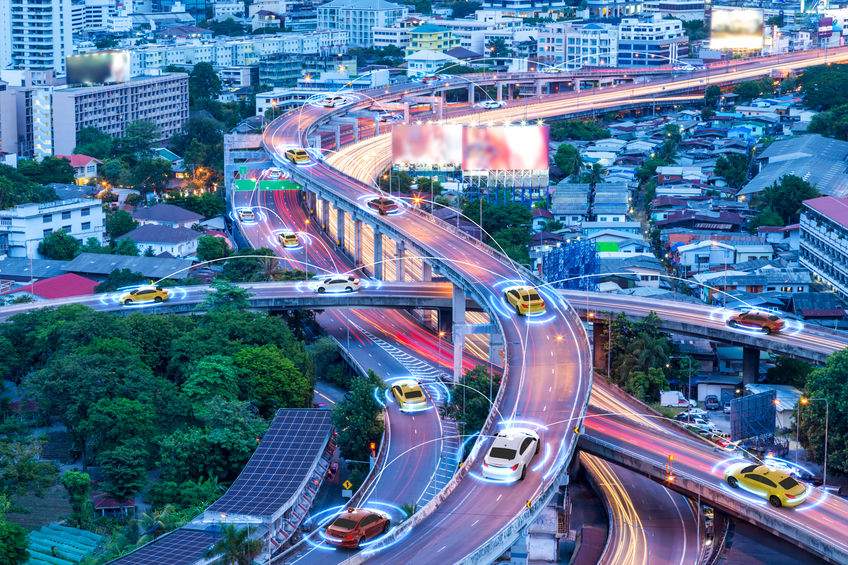
City planners across America face a huge transportation challenge in the next decade. They must build smart cities that seamlessly link individuals to transportation infrastructure through mobile communications. Factors that will influence future development include population growth, aging, and the need for more efficient public transportation. The term "urban mobility" refers to the combination of collective, individual, and freight transportation.

Large congested metropolitan areas particularly need modern city planning that calls for diverse forms of mobility, from bicycling to riding trains. Too much traffic congestion reduces organizational productivity, so promoting alternative transportation reduces the strain on city streets.

Meanwhile, more and more cars are populating the streets, which works against the need to reduce emissions. The total number of cars on the planet is expected to double to 2 billion by 2040, according to the World Economic Forum. Urban planners must act quickly in the coming years to offer a variety of transportation alternatives to driving an automobile.


Why System Transformation is Necessary

Megacities, which are giant metros of 10 million or more residents, will be home to 750 million people in the world by 2030, according to the United Nations. These major cities must meet an urban mobility challenge that calls for improved mobility that reduces the problems of congestion, pollution, and accidents. The solution requires envisioning an interconnected community ecosystem that supports various forms of transport.

At one point, cities looked toward on-demand, shared-mobility applications as solutions to traffic problems. But without municipal intervention, many cities often end up accepting proposals from a variety of sources that bid on local government contracts. The two most important components of an effective urban transport system are:

  1. Integrated mobility management system - The city's transportation infrastructure that gathers data from various sources, connecting with smart sensors in traffic lights, parking meters, and toll booths.
  2. Digital customer interface - This mobility platform dashboard displays the various transportation choices a city offers.

Transportation controllers of the future will be able to help residents and travelers meet their mobility requirements more reliably. Here are the key areas in which local leaders will be able to make transformative changes to local transportation systems:

  • Cross-Modal Transport Bundling - Travelers will have broader transport options through bundled services in which they can prepay for multimodal fares or use the pay-as-you-go method. People will also have the option to pay monthly subscriptions. Bundling will help travelers shift between transport modes seamlessly. The combination of bundling and ridesharing, along with other travel mode alternatives, can help reduce the need for people to drive their own vehicles.
  • Robust Wireless Connectivity - Smart cities will be designed to integrate with a wide array of mobile devices, facilitating a more productive society that saves people time. Smart connected vehicles will provide new options that speed up processes, such as parking, by allowing drivers to reserve parking spaces through digital communication.
  • Improved Traffic Management - Traffic control systems can now collect data and monitor traffic conditions, which can play a role in reducing accidents and congestion. Cities can place connected LED signs around town that alert drivers of detours and warn about weather conditions.
  • Cross-Modal Transport Optimization - Traffic officials can encourage citizens to use different forms of transport to deal with overcrowded streets. Emphasizing underutilized transport modes can help provide more balance in the ecosystem.


How Mobility Will Affect Businesses of the Future

  • Expand Worker Skills - One of the keys to business survival in the future, besides moving toward digital transformation, will be for companies to seek employees with evolving capabilities and skills. Workers who keep exploring new technology and learn how to accomplish tasks more efficiently will be in demand.
  • Maintain Strong Governance and Social Responsibility - Companies need to demonstrate transparency through governance. As the public becomes more concerned about sustainability issues, increased emphasis will be put on social responsibility as part of city planning for greater mobility. In other words, public safety must be prioritized.
  • Open Doors to Relevant Partnership Opportunities - Small businesses that partner with other small businesses will have competitive advantages. It can contribute to integrated transport solutions and community services.


Conclusion

It's up to local leaders to take the initiative toward enhancing urban mobility in cities across the nation. Success will depend on integrating new technology with real-time analytics to create solutions that prioritize the needs of residents. Strategic coordination of public and private partnerships is necessary to develop mobility solutions that produce the speed, flexibility, and sustainability residents demand. By actively working towards a shared vision of the future, municipalities can orchestrate collaborations that will create the urban mobility ecosystems of tomorrow, today.


Read More
e-bike
Smart Transportation

E-bike Technology is Coming Your Way!

E-bike technology includes more than just electric motorcycles and scooters. Electric bicycles are the transportation of the future. Take a look at an e-bike and you will immediately notice it is significantly different than other electronic vehicles. E-bikes look fairly similar to regular bicycles, yet they feature electrical components including a battery, motor, and controller. Each of these components is built right into the standard bicycle frame for optimal aesthetics and functionality. Perhaps the best part about e-bikes is that they offer riders three riding options: ride the e-bike just like a normal bicycle, ride the e-bike while the motor provides assistance with pedaling, and ride the e-bike in fully electric mode, where no pedaling is required. E-bikes can take on inclines and headwinds with ease.


The Global E-bike Market

The worldwide e-bike market surpassed $21.1 billion last year. This market is expected to hit nearly billion within the next six years— a compound annual growth rate (CAGR) of 9%. Much of the world is dealing with considerable traffic congestion due to the ever-increasing numbers of vehicles on the roads. In an effort to reduce the strain of the existing road infrastructure, a large number of cities around the world are encouraging citizens to use e-bikes.

In particular, urban dwellers are most likely to use e-bikes in crowded city spaces.

An e-bike occupies the same amount of room as a regular bike. Once more e-bikes hit the road, we will see a reduction in traffic jams and enjoy a less-polluted planet. It will also be that much easier to park as e-bikes are quite diminutive compared to automobiles.


E-bike Sales in the US

One would think the US market would be prime for e-bikes considering the number of heavily populated urban areas in the country. However, the majority of the top e-bike makers are not selling their bikes through conventional bicycle stores in the US. This is a missed opportunity for e-bike makers as well as bicycle stores in the US. E-bike sales in the US hit $134,000,000 last year. However, industry insiders who crunch the numbers are adamant the US sales figures could have topped $250,000,000 last year. About 150 unique e-bike brands are available to US consumers. Sadly, the top e-bike manufacturers insist non-traditional stores meet stringent criteria before they can sell these seemingly futuristic bikes.


Examples of E-bikes in Action

If you are wondering whether there is a legitimate market for e-bike technology, there are multiple use cases that prove the utility of these new-age bikes:

  • Police officers favor e-bikes over conventional bikes as e-bikes travel faster without forcing the rider to exert himself or herself.
  • Resorts and other destinations are getting in on the e-bike craze by offering vacationers complimentary e-bikes.
  • Individuals with physical limitations are drawn to e-bikes because they offer riders assistance with pedaling or a fully electric no-pedal option.


The Future of E-bikes

People are gradually warming up to the prospect of riding around town on an e-bike rather than a regular bike or car. As interest continues to grow, e-bike makers will invest more and more money into this breakthrough technology. In fact, the technology has already seen considerable improvements. The latest e-bike models have superior battery life, a more streamlined design, and better functionality than older models. Only time will tell how advanced e-bike technology will become in the years ahead.

Read More
telematics system
Smart Transportation

Telematics System Empowers Vehicle Technology Innovations at the CES Show

With the coming of the new year, consumers turn their eyes to the Consumer Electronics Show (CES) in Las Vegas for the latest in technology innovations. This year, telematics system is one of the technologies front and center. In the marketplace, telematics applies to a broad range of applications in vehicles, including GPS tracking powered by IoT technology, reporting on speed, idling times, and even fuel use.


Bosch’s Concept of Futuristic Vehicle

At the CES show, Bosch is showing off the transportation of the future – the world’s first concept shuttle vehicle which is driverless, electric and can be used to transport goods or people. Bosch solutions currently power the vehicle’s automation, connectivity, and electrification. Researchers say that by 2020, one million on-demand shuttle buses will be in service, and 2.5 million by 2025.

In the future, Bosch plans to offer the entire ecosystem for the shuttles bundled into one smart, seamlessly-connected ecosystem. The company plans to add mobility services such as reservations, sharing and connectivity platforms, parking, recharging services, and infotainment. With the advancement of telematics system technology, the company is taking this all-in-one principal further and has developed a universal connectivity unit for use in vehicle-to-everything (V2X) communications. This will enable all vehicles, regardless of manufacturer, to communicate with each other and with traffic infrastructure.


Other Car Companies Show Off Their Modern Cars

Not to be outdone, Aerospace company Bell introduced a flying taxi called Nexus during the show. Yes, the 6,000-pound vehicle really flies and has a top speed of 150 mph and a range of 150 miles. The flying taxi also features augmented-reality that displays real-time flight or sightseeing information either projected on the window or in passenger goggles.

Even BlackBerry rolled out its digital cockpit solution in Karma Automotive’s Revero, an electric luxury vehicle. BlackBerry powers the cars infotainment and digital instruments and manages cybersecurity updates through encryption, utilizing the company’s Certicom technology.

Hyundai showcased its newest innovation— a vehicle with moveable legs for use in disaster areas where cars are unable to traverse roads. Elevate is part robot and part electric car capable of taking first responders to the site of a disaster by climbing over concrete and flooded roadways. Hyundai envisions Elevate also may be utilized to aid those with disabilities get to areas without ramp access.


More Advanced Cars

Other vehicle innovations powered by telematics system technology unveiled at CES include a keyless access system by Bosch that will allow a smartphone app to grant access to a vehicle at a specified time, a monitoring system that alerts drivers when they aren’t paying attention or falling asleep, which is just one part of Samsung’s new digital cockpit; Nissan’s invisible-to-visible (I2V) technology that gives drivers a full picture of the roadway – even areas they can’t see such as downed branches blocks away or a truck making a U-turn at a nearby corner; and the continued growth of virtual personal assistants in vehicles, including those that allow commands to be sent from home to the car, enabling the car to start remotely or receive driving directions.

Read More
telematics system, telematics solution
Smart Transportation

Introducing a Telematics System to Improve Business Operations

A telematics system combines telecommunications with automotive technology as a way to monitor data about the machine. GPS is an example of telematics, as it can identify specific vehicle locations and operate as a navigation tool.

Here are ways that telematics can be useful for your business:


Vehicle Measurements

There are several reasons why it’s helpful to use a telematics system to collect data on your company vehicle usage. You may want to put limits on fuel spending or maintenance. Other data that can be tracked includes how the driver treats the vehicle and where the vehicle has traveled. The more the company knows about each vehicle, the more it can make decisions that cut usage or improve efficiency.


Solving Problems

Not only can telematics identify problems— it can solve them as well. It can monitor, for example, the length of time a vehicle has been idle or diagnose other problems and identify tools needed for maintenance.

Since the two biggest causes of accidents are driving behaviors and maintenance issues, it’s advantageous to track corresponding data. A telematics solution can send alerts to the owner when certain maintenance or behavior issues are triggered.

Companies that operate as a fleet connected through mobile communications can use telematics to plan out the most efficient routes that save time and money. Compiling information for Driver Vehicle Inspection Reports (DVIRs) is also essential for commercial fleets.

Through automated alerts, telematics can plan maintenance schedules and remind drivers when routine inspection is needed to keep the vehicle in top shape. These alerts are a result of tracking of data such as oil temperatures, fluid levels and tire pressure. They point out issues that need attention to avoid potential higher maintenance expenses.


Security Features

Another reason for telematics is to pinpoint the vehicle’s location if it is ever missing or stolen. A security system such as OnStar can prevent the vehicle from starting once the engine is off. The system also allows for the owner to slow down the vehicle to assist law enforcement. It’s possible to start your car remotely using OnStar’s MyLink app.

Modern systems include remote door and window locking, using a smartphone without a third party. The hardware for these communication systems is built into new vehicles, as many features are controlled with mobile apps. Key services that are triggered by sensors are vehicle-collision notification and emergency services. When an airbag deploys, an alert is sent to a telematics command center that contacts the vehicle’s operators. The command center can then send emergency-response units if necessary.


Conclusion

Adopting a telematics system for your vehicles (personal or company-owned) can help you save money on transportation. By staying up-to-date on vehicle, fuel, and driver behavior metrics, you will have better control of vehicle mileage and usage.

Read More