smart manufacturing
Internet Of Things

Merging Smart Cities with Smart Manufacturing

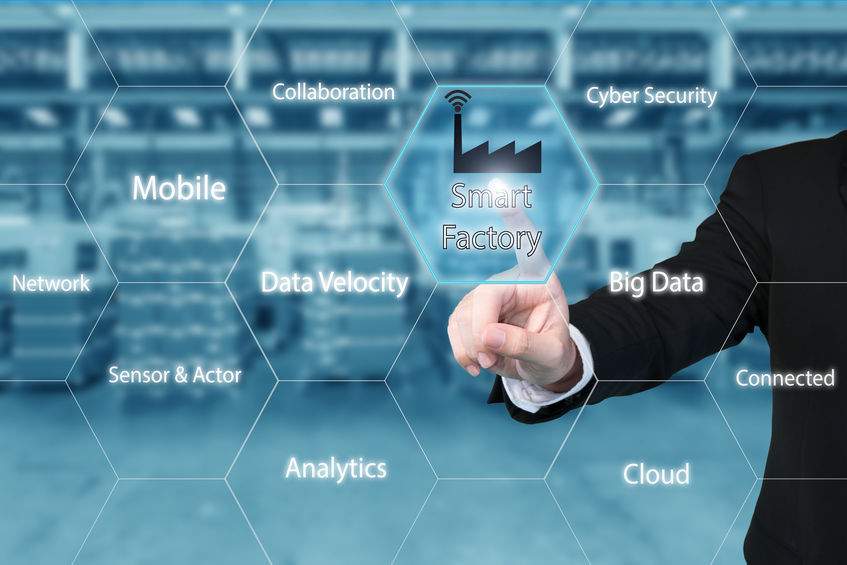
Early adopters of smart manufacturing are already rethinking production methods and how to build factories embedded with connected digital technology. In some cases, factories share the same IoT network as smart cities for synergy and achieving seamless integration. Here's a brief look at how smart cities and smart manufacturers are evolving together.


Improving Workplace Safety

The introduction of smart technology into factories is known as “Industry 4.0,” as the manufacturing shop floor changes from a hands-on centralized cloud-based system that includes automation and digital monitoring. In other words, it's transforming from a human experience to a machine-driven experience. Ultimately, this new technology will help promote workplace safety that reduces job injuries.

Smart sensors will be able to monitor every important physical aspect of the workplace and production process. When indoor pollution levels breach normal thresholds, staff can be alerted through digital reports. Once analyzed, this information can lead to improvements in the ventilation system and other decisions that improve employee health.

The use of robotics will also contribute to safer conditions, as robots will replace humans for dangerous work, while humans are used to make more analytical decisions. Furthermore, sensors can detect gas leaks and other health hazards before they harm workers.

At the foundation of automation systems are artificial intelligence (AI) and a subset known as machine learning (ML). A computer with ML software is able to take vast amounts of data and look for historical patterns that identify cause and effect relationships. The software can sort through historical data to find solutions with a high probability of success. ML is used to trigger automation when certain conditions occur. For example, when the temperature of a room gets too hot, the ML software will automatically reduce the temperature.


Aiming for Mass Sustainability

Another reason for the increasing rise of smart manufacturing is to contribute to sustainable solutions, which includes eco-friendly source materials that can be renewed. Equipment durability and waste reduction are prominent topics in discussions on making energy generation more sustainable. Sometimes what one industry considers to be waste can be reused by another.

The study of how resources flow within a city is known as urban metabolism (UM). This body of knowledge will help contribute to sustainable processes that affect each other. In other words, sensors will communicate with other sensors to identify waste, inefficiencies, and safety vulnerabilities. UM takes a broad view of the entire production process from origin, transformation, consumption, and post-usage. It then applies the principles of reusing, recycling, repairing, and sharing to the flow of resources to facilitate a circular economy.

The use of smart sensors can also protect the health of equipment as well as workers. In some cases, ML software can be programmed to fix glitches in the system automatically. Machine learning is driven by algorithms that review independent variables relating to input and dependent variables known as target labels to create a mapping function for projecting target labels.


Future of Smart Development

The future of smart technology will undoubtedly be more advanced than today because smart development is still somewhat in its infancy. As early adopters continue to demonstrate the benefits of smart technology, more factories will either have to join this revolution or be left behind. Surviving factories will inevitably adopt Cyber Physical Production Systems (CPPS), which incorporate components of Industrial Internet of Things (IIoT) technology to work independently or together to produce valuable data that improves overall systems.


Conclusion

The wheels have been set in motion for smart manufacturing to become a norm within the next decade. It will contribute to a broader system known as the circular economy, which involves recycling materials and getting the most out of production processes. While there are still certain social, economic, and technical challenges to overcome, the world isn't turning back, and the digital landscape is here to stay to improve the quality of life for society.

Read More
digital twin technology
Internet Of Things

Exploring the Importance of Digital Twin Technology

At one time, you needed hand drawings or blueprints to plan new buildings and products, which took plenty of time and effort to create. In the digital age, planning for these items is much more flexible, as you can use digital twin technology to design "what if" scenarios before committing resources to the production of a project. The result of this modern form of risk management has helped businesses save time, money, and energy in planning.

Every inventor, architect, engineer, or designer changes their mind at some point in the middle of a project. Using digital twins makes it easier to make adjustments to get the job done faster and more in line with your revised goals. As the name suggests, a digital twin is a virtual model that simulates the real world.


Evolution of Digital Twins

The idea of digital twins began to surface in 2002 after Challenge Advisory hosted a technology presentation for Michael Grieves at the University of Michigan. This event focused on the development of a product lifecycle management center. Topics on the new concept included real space, virtual space, and how data and information are exchanged between the two areas.

In 2019, digital market researcher Gartner included digital twins in its Top 10 Strategic Technology Trends of the year. NASA currently uses the technology for visualizing innovations in vehicles and aircraft, and it can even be used to analyze equipment in space. In fact, NASA was an early pioneer in formulating the idea of pairing technology that led to digital twins during the Apollo 13 mission.


What Exactly Is Digital Twin Technology?

The purpose of digital twins is to use virtual models of products, services, and processes to determine the most efficient ways to produce the real-world versions they represent. The Internet of Things (IoT) has accelerated the technology's advancement and created a bridge between physical and digital worlds to allow for greater efficiency.

A key function of this technology is to facilitate analysis of the virtual and physical worlds based on data monitoring. This pairing mitigates problems before they occur, such as preventing downtime. It also has the potential to open doors for new imaginative opportunities.


How Do Digital Twins Work?

Product data and manufacturing data are fed through machine learning software as AI algorithms and analytics converge to generate a virtual model of the product. Analysts can then figure out ways to make the product and manufacturing process more efficient. Virtual models essentially serve as new starting points for developing a more cost-efficient product.


What Digital Twins Are Used For

  • Manufacturing Plants - Factories can use digital twins to streamline the manufacturing process by cutting waste and costs while saving time.
  • Automotive Services - Digital twins track operational data of vehicle performance to help deliver a personalized experience for customers.
  • Healthcare Organizations - Personalization and patient monitoring can be enhanced using a combination of IoT devices and digital twins.
  • Retailers - Stores can use this technology to create a virtual model of a product as well as store planning to study new marketing concepts.
  • Smart Cities - With digital twins, you can plan the layout of a smart city for a large community consisting of homes, buildings, and roads, all integrated with IoT sensors. It's useful for government officials and engineers to implement an infrastructure with interconnected smart technology to help monitor HVAC systems, the environment, and building stress.


Conclusion

As more companies become aware of digital twin technology, it will help make business processes more efficient and improve ROI. When decision-makers have real-time data at their disposal, they can make faster and more accurate decisions around facility improvements, operations, and product development.

Read More
wearable technology
Internet Of Things

The Rise of Wearable Technology in Telehealth

The growing popularity of wearable technology is part of an emerging transformation toward telehealth. Wearables include wireless communication devices that continuously monitor a patient’s biological data and deliver it to medical professionals in real-time. These devices, however, are quickly evolving beyond just basic data collection.

As IoT devices get smaller, and 5G advances the low latency transmission of enormous data sets, the healthcare industry will see rapid increases in its digital capabilities.

How Wearable Devices Improve Healthcare

Physicians are increasingly offering patients the option to use wearable technology as an efficient way to gather in-depth information that can help lead to higher quality therapeutics. Patients can wear these devices at medical facilities or remotely at home while doctors monitor their vitals and treatment progress in real-time.

Here are descriptions for some emerging wearable medical devices, with manufacturers listed in parentheses as well:

  • ADAMM (Health Care Originals) – This combination of hardware and cardiopulmonary-tracking software is used to monitor respiration, temperature, heart rate, and other vital processes.
  • Ava (Ava Science Inc.) – Worn as a bracelet, this device tracks female fertility in real-time on a daily basis.
  • Embrace 2 (Empatica) – Used by epilepsy patients, this wrist-worn device detects seizures, which then triggers alerts sent to caretakers.
  • EVOLV (OMRON Healthcare) – This upper arm device connects with a smartphone to deliver reports on blood pressure.
  • KardiaMobile (AliveCor) – ECGs use this medical diagnostic tool to detect Atrial Fibrillation and other conditions related to heart rate.
  • Leaf Sensor (Leaf Healthcare Inc.) – This wearable is used for pressure injury prevention and tracks a person’s turn frequency, turn angle, and damage caused when blood flow returns to tissue.
  • Owlet Monitor Duo (Cheeky Rascals) – An infant’s heart rate and oxygen levels can be tracked by this device while connected with a smartphone.
  • SEERS’ Bio Patch (Seers Technology) – This wireless device tracks ECG, heart rate, respiration rate, and other biological processes in real-time.
  • TempTraq (Blue Spark Technologies Inc.) – As the name suggests, this wearable tracks the patient’s temperature.
  • VitalPatch (VitalConnect) – Small but powerful, this biosensor continuously monitors eight biological processes in real-time.

Evolution of Medical Devices

According to a recent P&S Intelligence report, the market for wearable technology is expected to surpass $65 billion by 2030. The growing trend in wearables will impact decisions made by insurance companies as well as health providers. Insurers view wearables as keys to lowering medical costs while boosting patient satisfaction. They also represent fewer trips to the hospital due to monitoring that influences better health decisions.

There are a multitude of reasons for patients to use wearables. For example, as nearly 70 percent of Americans are overweight or obese, wearing a device that tracks weight daily allows individuals to have more top-of-mind awareness of their physical fitness needs. Wearables can also track how far you’ve walked in one day, which is useful information for monitoring an exercise program.

Furthermore, wearables allow patients to conduct self-diagnosis and, where possible, self-treatment, which can significantly cut healthcare costs. The devices will play a vital role in managing preventable and chronic illnesses. Machine learning will contribute to this advancement, drawing from enormous historical data sets that give doctors deeper insights. As time progresses, wearables will continue to get smaller and less obtrusive.

Conclusion

Unquestionably, wearable technology is here to stay since it significantly upgrades the quality of patient care. The devices help identify health issues early, which leads to better decisions for treatment. Current technolgies are also evolving at a steady pace to become much more secure and efficient when it comes to collecting biological data.Ultimately, through the utilization of wearables designed to improve the patient experience, automated processes and IoT will gain traction and see continued integration into modern healthcare initiatives.

Read More
industry 4.0
Internet Of Things

The Impact of Industry 4.0 on Energy and Utilities Management

As history turns the page on traditional methods of how energy is produced and distributed, utilities and energy suppliers are shifting toward Industry 4.0. The end game of this transformation will be more efficient energy management. Industrial markets will feel the ripple effects of this transition toward smart factories, culminating in cost savings and an eco-friendlier landscape.

Energy producers will have much more data to analyze thanks to IoT, helping them meet power demands with less strain on the grid. And smart technology will also refine operational processes based on data from sensors that monitor electricity needs.

Another compelling component of smart energy management is the inclusion of clean, renewable energy. Solar and wind energy can provide additional electricity to power companies when demand for energy exceeds supply of traditional resources. Backup stored renewable energy can supplement the grid, filling power gaps that occur during transmission.

Intelligence collected from IoT devices can be analyzed by machines to alert utility officials when adjustments are needed to account for system imbalances. AI technology can analyze system performance, predict power fluctuations, and make decisions on accounting for shortages and overloads. More energy will be conserved per day, as utilities will see increases in profit margins and more reliable output.

At the foundation of all smart technology is a system of interconnected IoT devices that measure system activity. Industry 4.0 is bringing qualitative changes to energy and utility management that point to more reliable and sustainable solutions, such as the following:

  •  Comprehensive Monitoring - Operational monitoring through IoT sensors can speed up the process of locating system vulnerabilities. Tracking various production factors, such as applied power and harmonics, will help bring greater stability to power generation at lower costs.
  • Industrial Internet of Things (IIoT) - Just like IoT, similar IIoT technology designed for industrial use is the key to expansion of data gathering. IIoT is also a synonym for Industry 4.0, which consists of machine learning and automation to improve a factory's infrastructure. Sensors connect with other digital technology to measure processes and performance throughout the system.
  •  Big Data Analysis - Since a factory usually involves a wide range of processes, it takes thousands of meters to collect comprehensive data for system analysis. Machine learning is the root of this analysis, fueled by historical data that can generate intelligence on current conditions and carefully calculated future predictions.
  • Streamlined for Sustainability - Quality data is a powerful force for improving overall sustainability for large power plants. Algorithms can be developed to reduce negatives while boosting positives as far as system speed, noise and energy consumption.

Ultimately, the benefits from this modern technology will help utility management reduce greenhouse gases and improve financial conditions. Managers will have a wealth of valuable system information at their fingertips that wasn't available to them until recently. It will put utilities in a position to be more competitive and achieve greater customer satisfaction.


Goals for Energy Efficiency

The new and improved direction for energy management opens the door to leaner costs for utilities and greener effects on the environment. Part of the push for these changes comes from stronger government regulations, driven by scientific and public concerns. Utilities are leading the way for the entire business world to follow as far as putting a greater emphasis on improving energy efficiency.


Conclusion

The future of power generation management will raise the profile of industry 4.0 significantly in the not-so-distant future. High volume data generated from IoT sensors will be the principle key that unlocks the door to more efficient energy for utilities. Multiple meters across large facilities will provide the data that shapes real-time decision making so that utilities become more stable and sustainable.

Read More
IoT Technology
Internet Of Things

4 Ways to Digitally Transform Business Models with IoT Technology

Digitization is changing the way people do business. Beyond the factory floor is edge country, where technologies like Mobile IoT, LoRa, and eventually 5G provide the network connectivity necessary for greater visibility and monitoring of the supply chain. Combined with cloud computing, blockchain, and sensors, IoT technology is useful for a diverse range of solutions that address pain points and illuminate new opportunities. Equipped with the right combination, and a well-defined process, businesses can gain more ROI from each transaction, preempt threats to product quality, and elevate the customer experience.

Companies use IoT technology to create new services and bring added-value features to their business model. Because off-the-shelf IoT solutions are few and far between, legacy businesses need the IoT ecosystem of device makers, middleware providers, app developers, connectivity partners, and storage solutions to complete their digital transformation. While every company has different needs, here are a few business cases that illustrate a clear path to ROI using IoT technology.


1. Product-as-a-Service

In the movement towards circular economies, more companies are recognizing the value in bundling their product with on-going services rather than offering single one-off purchases. Depending on the product, companies can provide end-users with value-added services that bill based on usage or have the system prompt sales calls when specific issues are detected. In this model, edge devices, sensors, network connectivity, and cloud storage work together to collect data on usage rates, performance, and other metrics.

Business Case for Product–as-a-Service

Rolls-Royce turned engine sales into a product-as-a-service model with its CorporateCare program for business aviation. Instead of just selling a product, the company began outfitting its engines with an array of IoT devices and sensors that enable them to monitor engine health. By billing a fixed hourly rate per flight hour, the program covers all maintenance costs associated with the engine, as well as many other services. Streaming data combined with a 24/7 global service support network allows the company to proactively maintain equipment, predict failures, and adjust performance based on customer needs. As a result, planes with Rolls-Royce engines covered by CorporateCare sell for a higher price and spend a shorter time on the market when resold.


2. Identity Verification

Businesses can provide data to downstream users needing to verify a product’s source or authenticity with the help of blockchain technology. IoT provides unique identification and traceability capabilities while blockchain provides tamperproof chain-of-custody information.

Identity authentication is especially important for producers of low volume, high margin items. Custom and limited run products benefit from the ability to ensure product integrity. Increased visibility of this process can reduce counterfeits, knock-offs, and even secure intellectual property.

Business Case for Identity Verification

The Provenance platform brings verifiable authenticity and transparency to organic producers and brands selling artisan goods or sustainable fashions. Available with numerous tracing options, brands can tailor their needs using IoT to assess the lifecycle of products from design to raw materials, manufacturing, and distribution. Blockchains tamperproof architecture enables brands to create digital one-offs, which enhances uniqueness and desirability. Depending on the brand, product information is shared through a serial number, chip, or QR code accessible through an app. These applications allow companies to build digital histories for individual products and leverage this information to increase customer engagement.


3. Cold Chain Management

Visibility in last-mile delivery can be especially useful for high-volume, high-margin items such as pharmaceuticals or other perishable items that require condition monitoring to protect consumer health. Peripheral sensors will often enhance IoT solutions of this type by monitoring physical and environmental conditions such as temperature, vibration, humidity, and more.

Business Case for Cold Chain Management

Similar to Amazon Hub lockers for packages, the LastMile Hub from Panasonic is an end-to-end cold chain solution for fresh groceries. As online grocery delivery continues to grow, LastMile Hub provides food retailers a way to guarantee food freshness while securing customer data. Using the LastMile Hub pickup lockers, customers can order groceries and pick them up at their convenience. Customizable storage units can hold different purchases for customers depending on whether the item needs to be chilled, frozen, or kept at ambient temperatures.


4. Remote Monitoring

Rather than waiting until an issue has occurred, companies can react preemptively through actionable data from condition monitoring. Companies can outfit their products with IoT sensors that relay data to let critical staff know if the product is being maintained at optimal conditions. For other solutions, sensors can be set to trigger new shipments when volumes reach a pre-determined level. Coupled with GPS technology or Mobile IoT connectivity, the location of a product can be identified to make delivery and restock schedules easier and more efficient.

Business Case for Remote Monitoring

Alpha Acid Brewery worked with Oracle to implement an IoT solution into their beer brewing process. IoT-enabled sensors installed on the fermentation tanks gave brewery staff the ability to monitor tank pressure and temperature remotely. They also expanded supply chain visibility to the company’s malt, hops, and yeast suppliers to track each stage of the raw materials process using blockchain. Through the use of a simple QR code and their smartphone, consumers could see which suppliers contributed to the beer they are drinking and rate which one they like the most. Access to this data allowed the brewery owner to gain valuable insight into both customers and the quality of suppliers.

Customizable Solutions for Every Industry

Supply chain visibility and streaming product data provides new ways for businesses to share their products, promote unique selling propositions, hold vendors accountable, drive conversion, and win customer loyalty.

Some decision-makers may show resistance to investing CapEx into unfamiliar technology, but sharing business cases using straightforward IoT solutions with clear ROI may be more well-received.

The creation of a one-size-fits-all solution has not been realized, and IoT adoption continues to be implemented on a case-by-case basis. Because the needs and potential uses of IoT devices and edge connectivity technology vary greatly, implementation includes a mix and match of hardware and software solutions. IoT solution architects and other system integrators are essential partners for implementation due to the customizable nature of the technology. Because each company’s business model has its own set of unique needs and requirements, these partners help ensure solutions are built on well-defined processes that result in clear outcomes for both ROI and the customer experience.


Read More
IoT Solutions
Internet Of Things

How IoT Solutions Accelerate a Business Beyond the Cloud

Now that cloud computing has made its mark, CEOs and CTOs of IoT enterprises who want to evolve toward even greater efficiency should explore using and promoting fog computing to harness the Internet of Things (IoT). This concept helps conserve resources by getting data from the “edge” of a network. Here are reasons why learning about such IoT solutions expands your business model:


Understand the Evolution of Computing

The best way for CEOs and CTOs of IoT companies to understand fog or edge computing is to view it on the timeline of how business technology has evolved. At one time, large mainframe computers did all the computing. Then once everybody owned their own computer, computing became ubiquitous with the spread of personal devices. Now, there are sensors everywhere for computing data that can be placed outside of servers. Between the servers and the sensors is fog, which can deliver data faster than going to the data source.

The amount of available bandwidth is the key issue associated with the degree of efficiency you are capable of achieving. By utilizing the fog between the cloud and IoT devices, you can overcome bandwidth limitations. Bandwidth performance actually improves when a computer is moved closer to a device in which it has established communication. This concept corresponds with smartphone communication improving the closer the sender and receiver are to each other.


Bottlenecks in the Cloud

Even though the cloud has helped CEOs of IoT companies cut costs dramatically, bottlenecks and minor latency issues can affect business productivity. Businesses that rely on agility as a selling point need to overcome these issues while others may be able to live with occasional slowdowns.

The trend toward the cloud being a haven for big data will continue to be a viable solution across all industries. But for firms that need more agile IoT solutions, edge or fog computing is the next phase of fine-tuning for greater efficiency and productivity. Since IoT data is created at the edge of a network, fog computing can be thought of as a medium for delivering data to the cloud. Furthermore, fog computing can determine what type of data can be analyzed locally.


Closer to the Sensors

The key to strengthening a system designed to collect big data is to move the devices that collect data as close as possible to the sensors that generate IoT data. By moving communication devices closer to sensors, you can bypass unnecessary communication about minor details with cloud resources to make data collection more efficient. This form of data collection can be considered decentralized, which suggests that technological development can be analyzed in repeating cycles over long time frames.

One way to visualize how the cloud relates to the fog is to picture the cloud as a data center in the center of a circle. Outside the perimeter of this circle is the edge where sensors collect data that can then be accessed by the cloud.


Conclusion

Fog computing is what connects global endpoints with IoT where data is generated. It’s a place where you can limit communication with other resources and conserve bandwidth. Consider this— along with other IoT solutions you already have— for your clients so that they can keep pace with the latest
internet technology.


Read More
IoT devices
Internet Of Things

IoT Devices May Constitute a Lucrative New Horizon in Selling

IoT devices are downright pernicious today. They’re anywhere and everywhere, and it looks as though this trend will be growing, rather than decreasing. For a company providing IoT solutions, this is actually very good news— even if you don’t necessarily provide it for traditional items that people might use. Did you know there are devices which have been configured to send status updates to smartphones concerning the freshness of eggs? The problem is, devices like that which really only have one purpose and are likely a little bit costlier than the worth they bring aren’t likely to be as necessarily profitable as they could.

However, there’s a way to bridge the gap, here. The technology in the egg-maintenance IoT can easily be transferred to the fridge in which it rests. Most refrigerators have a section primarily devoted to eggs. If a system is incorporated into the fridge which monitors eggs, then the utility in the singular device can be transferred to the larger device— the refrigerator itself. Accordingly, the larger device becomes more valuable, as it can do more, and so it has an additional selling point.


Considerable Lessons

Now, this is an object example of a potential marriage between IoT devices for greater value. When you can optimize a refrigerator in terms of value, you’re likely to sell it over competitor options. Well, likewise, as an enterprise specializing in IoT, one thing you should be doing is figuring out how to maximize IoT tech. Consolidation of devices allows you to reduce production costs and expand profit while providing the clientele you serve greater value, accordingly stimulating your operation’s competitiveness in the marketplace.

As you already know, IoT is here, and barring any globe-spanning apocalyptic disasters which disable all satellites and halt modernity’s technological forward march, IoT is here to stay. What that means is that there are companies in the burgeoning stages of operable establishments now which will be institutional industry leaders in the very near future. Innovating and maximizing profit as well as cold email outreach will be key factors in that institutional establishment.


Considerable Steps to Take

What you should be looking at now is what kind of IoT is selling and where legitimate case-studies demonstrate added value. Additionally, you should look at common issues with IoT and how to address them in your company. One of the biggest issues right now is security. Unfortunately, this kind of devices open entry points for underhanded cybercriminal elements. While there are means of protection, presently nothing is quite so effective as to totally dispel the threat. Developing more secure devices will definitely be something positively definitive about a given company specializing in such tech.


Comprehensive Products

Other factors to consider include battery life, repair, lifespan, resilience, and operational consistency. You want the IoT solutions you provide to last long, need as little repair as possible, continue working for many years, and do their work consistency. IoT is a bit of a hybrid in terms of technology. You’ve got to replace most servers and computers every three to five years, but IoT devices are often in positions where they’ll never need exceptional computing power. Conceivably, some such devices could last decades. Ideally, your devices should be of this variety.


Read More
IoT Technology
Internet Of Things

How IoT Technology Can Renovate Supply Chains

The Age of Big Data

IoT technology, as facilitated through the cloud and big data innovations, is totally revitalizing business at virtually every operational level. It’s easy to see why when you get some perspective. IoT tech can be applied to essentially all machined aspects of operation, from assembly line robots to trucks, and just about everything in between. Naturally, that’s a lot of information to parse, but cloud arrays which link over a million servers together can process terabytes in essentially real time. This provides visibility where previously such visibility was impossible, allowing businesses to take advantage of key optimization tactics.

For CEOs or CTOs that run enterprises which specialize in IoT, focusing on such advantageous benefits in marketing seems essential. Key areas that can be explored include:


Optimization of Route

IoT technology can provide enough visibility that routes can be plotted, optimized, refined, and managed. Between road construction, weather, accidents, holidays, sporting events, and other traffic hassles, visible real-time route optimization can truly be a game-changer.


More Comprehensive Evaluation of Risk

This goes hand-in-hand with route optimization: when a business has a total IoT solution facilitating real-time visibility across a supply chain, risks can be identified and dealt with more effectively. Instead of nasty surprises, IoT can help operations properly redirect and avoid potentially risky situations.


Total Automation

Another prime selling point involves automation. IoT application facilitates nigh-total automation of supply line management. That’s an important selling point and can really save clients seeking IoT implementation a large sum of money. Perhaps emphasize case studies to potential clients or conduct some on your own if none are available.


Contextualization of Data

One of the most important things you’ll need to emphasize as you help clients make the IoT switch involves data contextualization. If you don’t offer any services of this kind, it would make a lot of sense to. When there are terabytes of data coming in, if there is no means of contextualizing that information, then it’s essentially useless. Contextualization acts like desalination of water for healthy drinking. When there’s an ocean of salty, unorganized data, a refreshing drink of visibility is difficult if not impossible to find. But when you can contextualize the information IoT devices make available through the cloud, suddenly the ocean of data becomes a reservoir of actionable possibilities.

Again, use of case studies makes sense if you have them. Commissioning them may be a good option. When you can plug some numbers into an equation’s variable position, then you can quickly and reasonably put a number on the value which a supply chain IoT upgrade may bring to clients.

A good suggestion might be to apply such protocols to your own production in terms of IoT. Then you can certainly show where supply chain management among your own operations reduced costs by “X” percent.


Conclusion

Those in IoT today are likely savvy of the market’s nigh-exponential growth. IoT technology is expected to continue similar rates of growth well into the next several years. It’s likely to become an integral, status quo component of operations in the very near future. Refining your IoT enterprise now can help make your operation a sustainable institution.


Read More
IoT solutions
Internet Of Things

Using IoT Solutions to Streamline Business

Facility managers are finding it increasingly important to use IoT solutions to make the workplace more efficient. In order to maximize workspace, businesses must capitalize on innovative ways to use data to save time and money. Using tracking devices to locate coworkers in real-time is an important way to reduce waste. Here are some of the trends in which IoT is playing a role in reshaping modern businesses.


Traditional vs. Digital Workspace

Due to the increasing popularity of mobile devices in the workplace and the convenience of the cloud, many company leaders are integrating IoT solutions into their business models. Traditional business culture is being challenged by the cost-cutting and morale-boosting advantages of mobility and cloud computing. Consequently, many businesses feel the pressure to move toward the digital workspace, which offers a more agile and productive work experience. Managers can gain deeper insight from analytics on which areas of operation need more or less attention.


Improving Flexibility and Productivity

Flexibility and productivity are driving forces in today’s economy. The more mobile a workplace becomes, the more likely workers will share workspaces, since digital environments do not require that individuals be associated with specific machines. Using indoor positioning system (IPS) technology that combines the strengths of IoT and mobility, managers can locate employees and assets in real-time. An effective location technology depends on the accuracy of information delivered through multiple sensory inputs. Here are some key benefits of IPS technology:

  • Increased mobility and productivity
  • Less operating costs
  • Ability for seamless collaboration among team members
  • Allows for better office space efficiency

By embracing IPS technology, CEOs and CTOs of IoT enterprises can take leadership roles in pioneering the transition toward using big data as a tool to streamline a business. One of the most effective ways to improve a work environment is to encourage collaboration. IPS applications help employees meet in specific rooms by sharing locations in real-time.

IPS technology is useful in large facilities such as hospitals and campuses because it can speed up scheduling and bringing people together. The software provides a GPS experience, allowing people to find their way more quickly to meeting places. It reduces the time wasted on trying to find a destination. This cloud-based solution can be managed from an easy-to-use dashboard with the ability to customize maps and directories. You can quickly find up-to-date data on the dashboard about employees and assets.


Creating a More Mobile Workspace

One of the first practical steps that CEOs/CTOs can take to implement an IoT strategy to streamline operations is to partner with a location-as-a-service vendor to handle hardware and software maintenance issues. The next step is to set up a “bring-your-own-device” policy that allows workers to use their personal mobile devices. This strategy can cut enormous costs on hardware and maintenance while giving employees a greater sense of comfort and choice. It allows for workers to communicate and collaborate from different locations.

Then you need to decide on IPS technology with an indoor mapping engine that can be used to schedule specific times in meeting rooms. Once you deploy an appropriate positioning platform, you can then monitor analytics and decide on further integration.


Conclusion

Leaders of IoT companies have various IoT solutions to choose from to make their workplaces more efficient and productive for employees. IPS software can cut down on wasted time by allowing team members to find each other more easily based on location technology that tracks sensors. Using IPS along with a cloud-based mobile workforce allows for a more flexible workplace that doesn’t rely on workers staying trapped in cubicles. Improving internal communication is an important building block to creating a loyal and comfortable business atmosphere.


Read More
IoT technology
Internet Of Things

Advantages Clients Will Experience from Your IoT Technology

IoT technology has taken the world by storm. These devices already outnumber people, and that trend is set to increase. It’s not just that IoT is a convenient novelty, either. This technological innovation can save money, increase security in certain respects, and generally optimize the operations of your clientele, making their tech experience much more satisfactory. As a CEO of an IoT enterprise, you want to emphasize positive aspects of IoT solutions to help clients understand this innovation’s full potential. Several customer experience focus-points include:


Facilitation of Competitiveness

IoT technology can make client business more competitive in relation to peers, and it can additionally help clients increase their level of competitive ability— which may even be better in the long run. If they’re doing better, they’re going to expand, which means they must necessarily purchase more tech from you. It’s an “everybody wins” scenario facilitating an upward spiral for both of you. Show clients how IoT facilitates competitive edge.

You’ve got to be adamant about security protocols and be diligent to properly apply them. This will also require some level of client education. Likely, you’ll need to proactively monitor client operations as well— more on that in a moment.


Client Personalization

IoT gives you the ability to more comprehensively personalize the IT solutions you provide for clients. Say, for example, you’re working with clients who run a production facility and are looking to streamline operations by shaving off hidden redundancies only visible through IoT application. This has a term: “smart” manufacturing. Every production facility will have its own idiosyncrasies and IoT devices of different kind and purpose can be put together such that they describe a sort of “form-fitting” arrangement for such a client. The same is basically true for any client with whom you work. Personalization is additionally a great selling point and another “everybody wins” scenario. The more they personalize, the more services and products they buy from your MSP. So, show them how— if you haven’t— they can personalize their IoT.


Prevention of Emergency

An IoT solution helps clients avoid emergencies. Consider the smart manufacturing facility. An IoT-enabled machine can continuously send data that can benefit your clients. They can monitor varying machines to ensure they are within safe operational limits. This will allow them to maximize their lifespan. Show clients how you’ve maximized other operations through machine lifespan enhancement. Clients get their fullest investment from such a strategy and you get the fullest profit from your clients, all while preventing emergencies.


Monitoring and Support of Operations Via Data

With the Internet of Things, you’re likely going to be monitoring client operations closely. This will help you to identify anomalies more quickly, stopping negative trends before they’ve got a chance to “metastasize” and become toxic to their business. When you stop something, tell the client— show how your company’s IoT provisions saved their bacon. In terms of security, proactive monitoring and support is a very recommendable service in today’s environment regardless. Oftentimes, catching anomalies, tracing them, and curtailing them represents some of the best cyber security. When you can do the same thing with the productive machines your clients must use daily, you increase your value to them.

Something else you can do with IoT in terms of monitoring and data is to show your own usefulness directly. You can demonstrate to them that you aren’t just a novelty upgrade, but that you have actually been making them money through reducing operational expenses, increasing competitiveness, maximizing tech investment, and helping them remain cutting-edge. Being cutting-edge is essential to business today for more than the convenience of operations and competitiveness: as technology marches on with no denouement on the horizon, remaining contemporary becomes essential. If you’ve got a floppy-drive computer today, good luck using it for… anything. The same will be true of today’s technology in 15 years.

IoT technology will make clients more successful than they could be otherwise by facilitating increased competitiveness, personalized data and tech application, emergency prevention, and proactive support solutions. Harnessing IoT and showing clients the ropes communicates value, improving customer experience.


Read More